
Every moment of your conscious experience arrives already interpreted.
Colors are named. Sounds are localized. Objects appear stable, continuous, and separate. Causes seem to lead naturally to effects. The world feels coherent.
But that coherence is not given. It’s constructed.
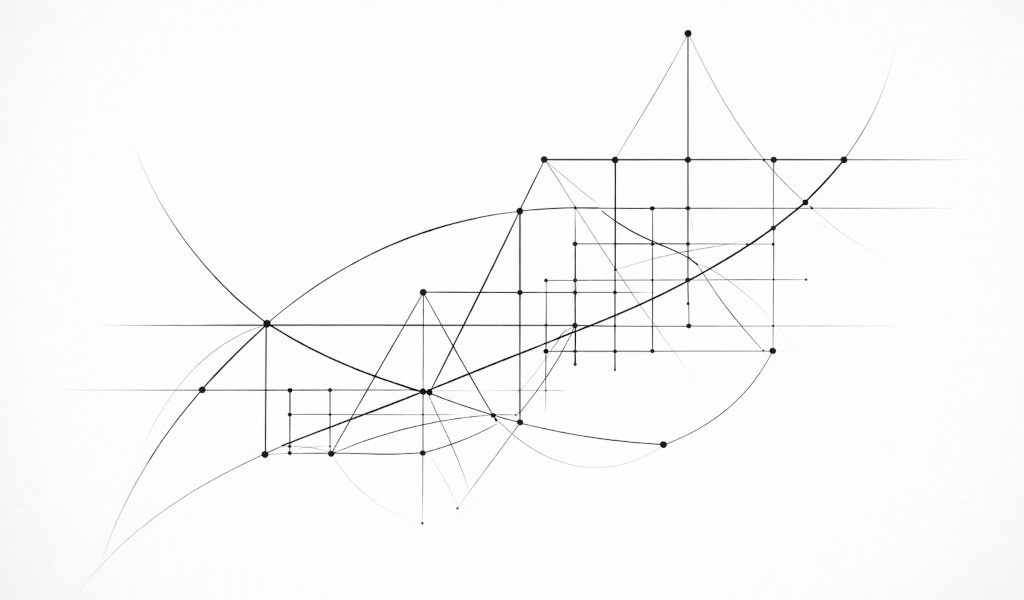
What you experience is not raw reality. It’s a continuously updated internal model; a living approximation built from incomplete, delayed, and noisy signals.
This model is astonishingly good. It allows you to navigate, predict, and act with remarkable efficiency. Most of the time, it feels indistinguishable from reality itself.
Which is precisely why it is so easy to forget that it’s a model.
Consider how effortlessly your perception fills gaps. How confidently it extrapolates motion. How readily it assigns intention, meaning, and causality (even when the available data is thin).
This is not deception .. it’s compression.
The mind cannot process the full richness of incoming signal in real time. So it does what all good systems do: it simplifies, stabilizes, and simulates.
It builds a working version of the world and runs it forward.
This internal construction is not static. It is constantly revised, nudged by new information, corrected by error, reshaped by experience. But at any given moment, what you are living inside is not the world, but your best current estimate of it.
Understanding this changes very little. And everything.
It does not make experience less real. It makes it more interesting.
Because once you notice that certainty lives inside a model, disagreement starts to look less like error .. and more like difference.
Comments
Nothing yet. Say the first thing.
Sign in to join the conversation.