
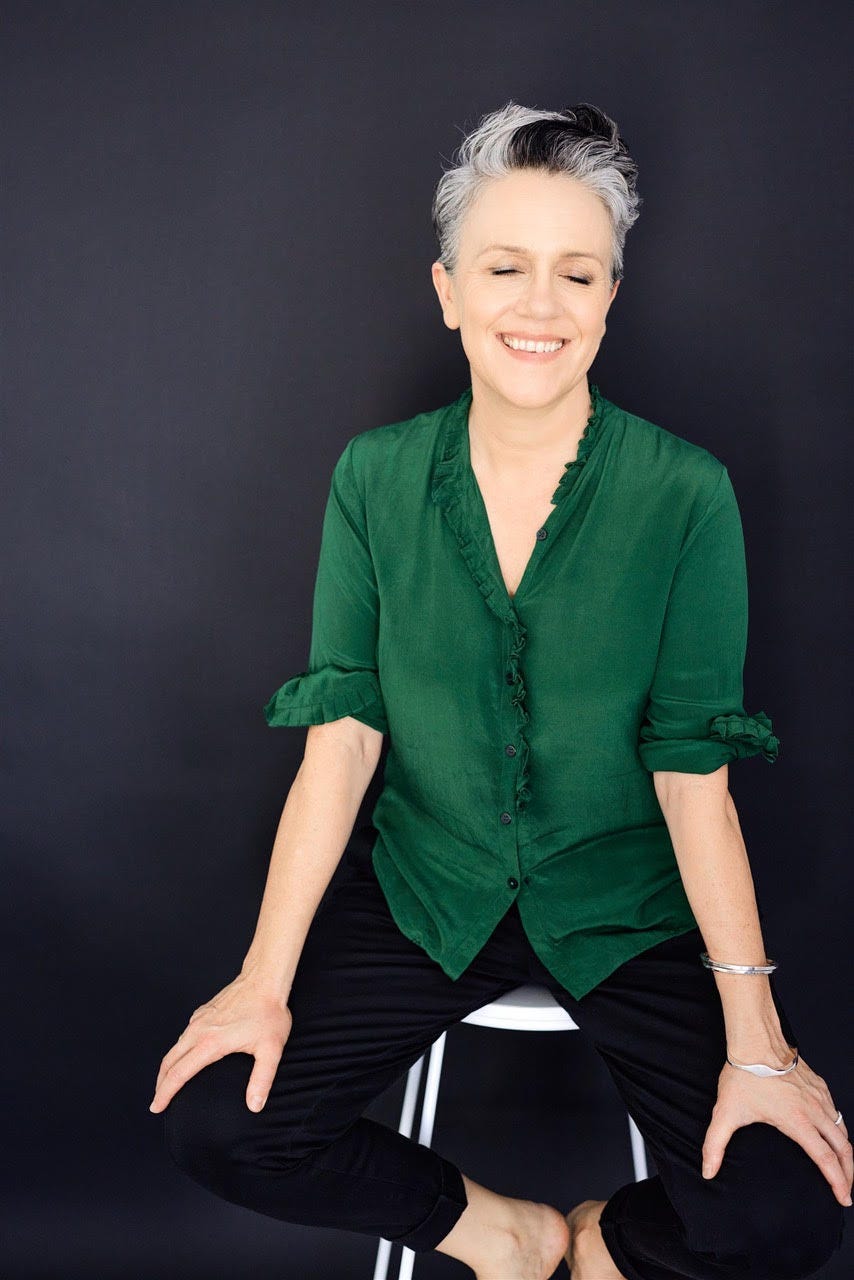
Q&A WITH SARAH ARMSTRONG Can you remember the kid's book/s that made you want to be an author?
In terms of a specific book, I do remember my mum reading me The Little Grey Men, and I can still recall that blissful feeling of being swept away by the story. I read it to my daughter when she was little and was surprised by how scary some bits were. I had to do some editing on the run!
When did you first decide you wanted to write a book and how did you go about it?
I just always knew! But because I didn’t know how to go about ‘becoming an author’ I ended up studying journalism and getting a traineeship at ABC Radio. I hoped that the writing I did there would fulfil me. And while it was super interesting being a journalist in ABC Radio Current Affairs (and then a researcher and occasional field producer on ABC TV’s Foreign Correspondent program), I still felt this huge longing to write fiction. But I had no time to do it. Basically, I didn’t want to look back at the end of my life and wish I’d had a shot at writing a novel. So I resigned from the ABC and moved to northern NSW where I wrote my first novel (for adults) Salt Rain.
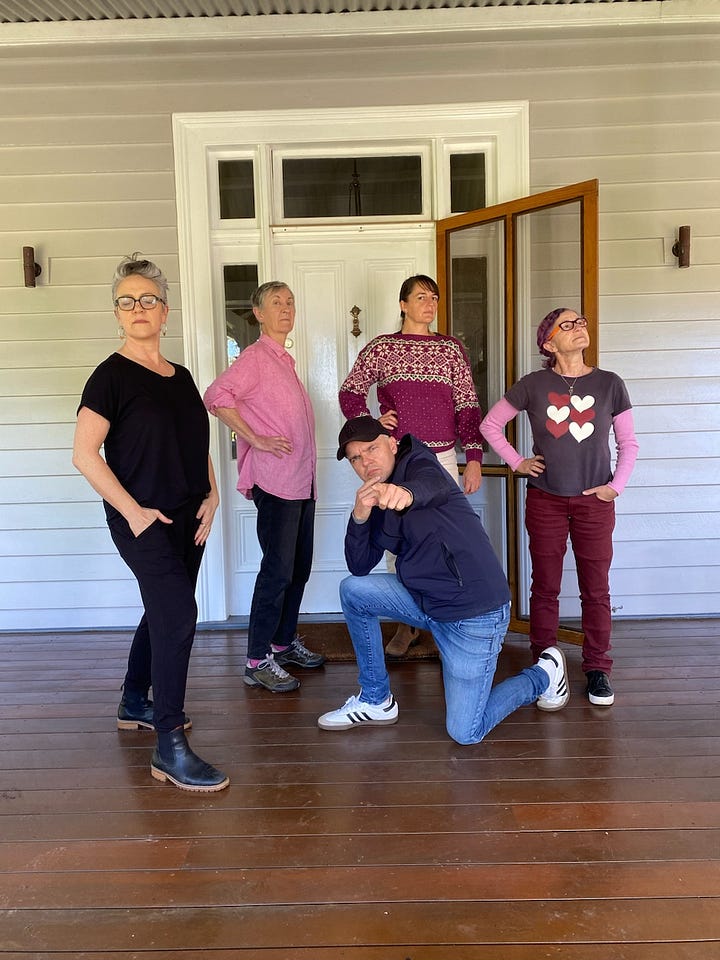

What is the best thing about living with another writer? Are there any challenges? The best thing is that when I come out to the kitchen to get a cup of tea while writing, he doesn’t try and talk to me! He knows I need to stay in the world of my story. Plus – after hours or over lunch – we can talk about writing, and he reads my work and offers thoughts. And when I am working silly hours for a deadline, he picks up the domestic slack. No challenges!
You and Alan used to run amazing writing retreats in Byron Bay and Bali together, why did you decide to do this and what was the experience like for you?
We loved running those retreats! They had yoga and sometimes also improvisation – two things I love and which help my creativity. It was fun teaching with Alan and we met some awesome people who came to our retreats : ) Once Amelia was born, though, it became trickier to run them and we took a step back. I sometimes fantasise about running them again, though.
You still teach writing, including workshops in schools and novel intensives. Does teaching influence your writing?
In terms of teaching adults, I love meeting the people who come to the classes and it feels like a privilege to see their work take shape and to support that. Basically, I love hanging out with writers! I also like nerding out and doing deep dives into aspects of craft (especially in the more advanced classes) and that definitely helps my own writing. Teaching kids in schools is huge fun. If I am ever feeling gloomy about the state of the world, hanging out with kids and talking over story ideas and seeing their incredible imaginations at work is the perfect antidote.
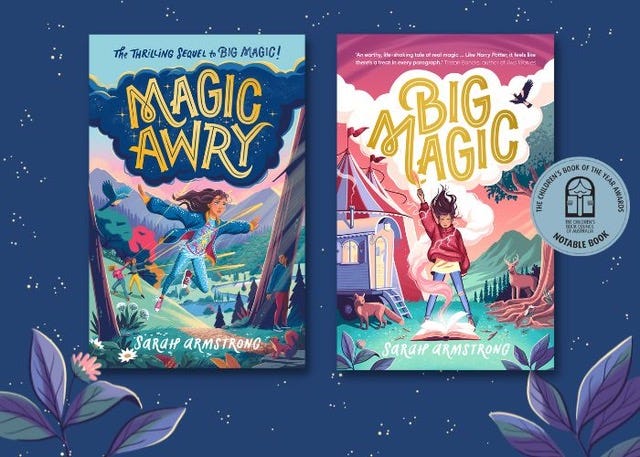
Tell us about the inspiration behind your first kids’ book, Big Magic. Was it a conscious shift into becoming a children's author, or a single idea you wanted to explore?
It was definitely a conscious shift into writing for kids. I’d had my daughter, Amelia, and was reading to her – which reminded me how deeply I loved reading as a child. I read her some of my old favourites like The Little Grey Men and The Borrowers but I was bowled over by the quality of the contemporary writing for young readers. Kids today are so lucky! As a new parent, I’d been learning about how important reading is for kids (as if I needed any persuading!) and I loved the idea of writing books for kids that explore interesting ideas as well as take them on an adventure.
I’d been playing with an idea for a kids’ book before I wrote Big Magic and my agent Pippa even sent that first idea around to a few publishers who made positive noises but didn’t actually want it. So I put it to one side and looked at my ‘ideas’ folder. I saw that I’d been playing with a parallel universe idea for my next adult novel (before abandoning it because it was too dark and heavy) and I decided to write a parallel universe story for kids. That became Big Magic.
What do you love about middle grade? Are you tapping into your experience as a parent, yourself at that age, or something else?
When I’m writing or reading middle grade, I’m definitely remembering what it was like to be 10, 11 and 12. I actually think I felt most like my true self at that age – before puberty hit! I remember how much I observed the world and the people around me, especially adults. I was way more aware than adults knew, and I remember that when I am writing for kids. I don’t want to write down to them. It’s also helped having a young person in the house while I was writing my first three middle grade books. She’s 15 now, though, so she’s leaving me behind. I won’t be writing YA any time soon though; I’m very happy to stick around in the realm of the younger reader.
Was there anything that surprised you about the publishing process when you were first published? Did the experience of publishing a kids’ book differ?
When I was first published (Salt Rain) I didn’t know anything about the publishing process. I was pleasantly surprised by the degree of detail and care in the notes I received for the structural edit. And I’d say that the editorial process at Hardie Grant – who publish my middle grade books – is really next level in terms of detail and care. I have long Zooms with my publisher Marisa and editor Luna and we brainstorm and talk over ideas for the rewrites. They are story geniuses, and having them engage so thoroughly in a story that I dreamed up – and help me make it better – is one of the great delights of publishing.

You've just been hit by a new idea in the middle of work/life/a shower/the night. What's next? How do you record it and how and when do you tackle it?
I jot down some notes in my ‘ideas’ folder (or record myself talking on my phone if I’m out and about) and put it to one side and go back to the work in progress. It’s too easy for me to be distracted by an amazing new and surely-so-much-easier-to-write idea when wading through the morass of a second act.
Do you jump between projects or follow one through til the end?
I follow it through to the end. I know other writers can jump between projects, and maybe this speaks to some lack of flexibility on my part, but I need to stay in the world of the story. I cannot leap between worlds (clearly my love of parallel universes is only theoretical).
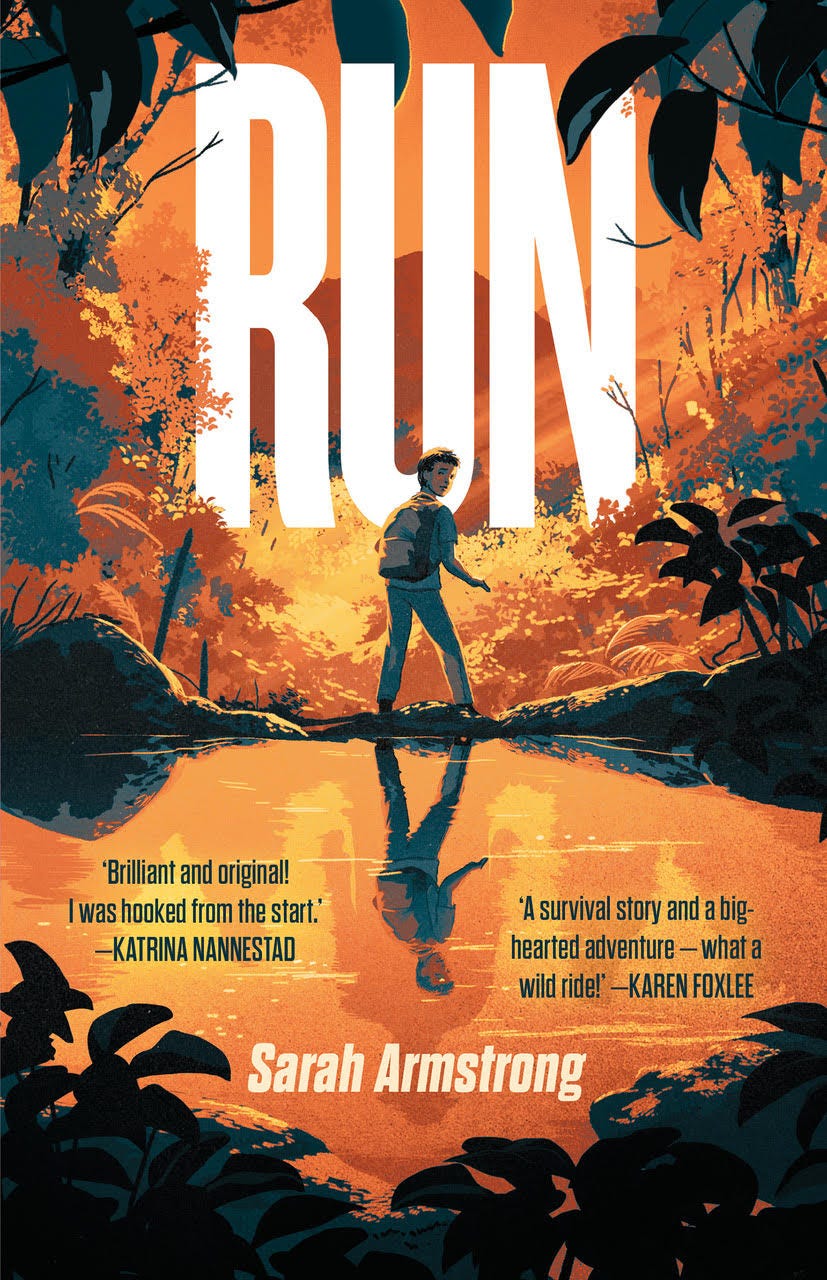
Huge congrats on your new middle grade novel, Run! When did the idea come to you?
Thank you! I’d always had in the back of my mind to write a survival/adventure story – because I LOVED those stories as a kid. I think it was when a writing buddy recommended I read Hatchet by Gary Paulsen (it came out when I was in my late teens, so I missed it) and I adored it, that I decided to have a go. And because I love playing with tension and stakes and pace… I decided to try and make it a real page turner. (I think each of my books has become progressively more tense and page-turning. Who knows where I will end up!) It’s not just a page-turner – it explores ideas around family and the law and forgiveness.
Run is the story of Cas who thought running away from home would solve all his problems. But he didn’t count on getting hopelessly lost in the Australian bush. Alone and afraid, he’s given up hope of rescue when he stumbles upon a strange family hiding out in the wilderness. He won’t survive without their help. But he discovers they’re also on the run – from something so big, they won’t even talk about it – and he realises his problems are just beginning.
What do you enjoy most about writing for kids? What do you enjoy most about writing for adults?
The kids are the best thing about writing for kids. Just hanging out with kids and librarians and seeing the joy young people get from reading. Receiving a message from a reader who has loved one of my books fills me with happiness every single time, and motivates me to write books that young people will enjoy and that also offer them the chance to ask questions and explore interesting ideas. Writing for adults – which I’m not doing at the moment – gives you freedom to explore aspects of life and use language that are not appropriate in a book for kids. But I’m absolutely okay not writing about sex and violence and some of the darker sides of human experience. Which is not to say that my kids’ books are saccharine, or that kids’ books shouldn’t explore difficult issues – but you have do have to tread with more care when writing for kids, and I think you need to offer hope at the end. It can be bittersweet hope, but hope nonetheless. My adult novels didn’t always end with hope and I think it’s better for me and my mental health to be writing books where I have to – very consciously – show the good in people.
What’s still on your writing/creative bucket list?
I would love to publish a picture book because I ADORE them. I have a few ideas but I need a gap between projects to explore them more.
Find out more about Sarah at saraharmstrong.com or follow her @saraharmstrongwriter
No posts
Comments
Nothing yet. Say the first thing.
Sign in to join the conversation.