
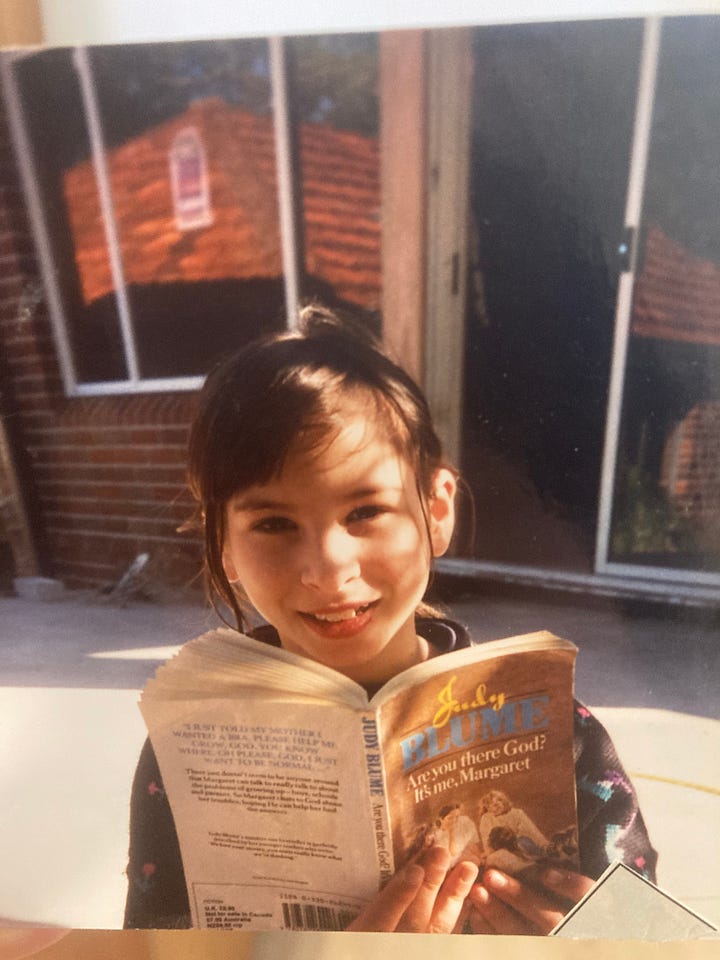
Q&A WITH DEBORAH FRENKEL Can you remember the kid's book/s that made you want to be an author?
When did you decide you wanted to be an author? How did you go about it?
In grade two or three, I remember getting blank notebooks as birthday presents and spending all my free time filling them up. Then my family bought a word processor (it was the mid-nineties, and my parents thought computers were a fad, go figure!) which was a massive thrill. I would type stories into the tiny green-and-black screen and then print them out and fold them into books. But I had no idea writing could be a career.
I chose to pursue advertising after a brief attempt at studying law that made me want to run a million miles in the other direction. At least advertising was creative, I figured. It was also a crash course in both the high of bringing ideas to life, and the low of constant rejection (and worse, the devastation when a most-certainly-brilliant campaign you’ve been working on gets pulled at the eleventh hour).
Until I had kids, I was pouring all of my creativity into my day job. But something miraculous happened when I was on maternity leave: actual mental space opened up. I finally remembered that once I’d wanted to write. Not just campaigns, but books. So I did some online courses, and gave it a go. That was seven years ago now.
Your books are all wildly original and very diverse. How do you decide which idea to follow?
Thank you, that’s generous of you to say! I honestly just follow my curiosity. Though actually, to frame it a different way: I think I’m quite easily bored, and reject my own ideas very fast. It's not something I'm proud of. Often first thoughts ARE a bit woeful by their very nature, and need mulling over to find the gold inside – but I’ve usually moved on to something else by then, so generally miss finding that gold altogether! But the flip side is, when I have an idea that feels exciting and new to me, I’m 100% committed. I write a lot of drafts in one sitting (that's possible with picture books!).
Was there anything that surprised you about the publishing process/the process of creating a book?
At first, I was staggered by how slow the process was. On one hand, it seemed frustrating; on the other, it was a lightbulb moment. Because of course: to make something truly good, you have to take your time, be deliberate, and not just rush headlong towards the finish line. It still feels amazing to me that publishers send through edit requests for a picture book, gently requesting that you get back to them within three weeks. Because my baseline is – three hours? Sure! Publishing feels very genteel in that regard.
The other thing the surprised me was the joy of collaborating with illustrators. I love this part of making picture books so much. Finding that balance between visual and verbal communication, and letting your words open up space where a hugely talented illustrator can take the story further – it’s wonderful. As a reformed concert band kid, the analogy that comes to mind is music.
A picture book is a duet, and once in the hands of its readers, it becomes a quartet: between author, illustrator, parent and child.


You've just been hit by a new idea in the middle of work/life/a shower/the night. What's next? How do you record it and how/when do you tackle it?
My phone is essential – that’s where all my brilliant (cough) ideas go first. My poor Notes app is stuffed with incoherent fragments. Let me pick some at random. ‘A bed of urchins – funfair. Gardening vs farming.’ No idea what I meant with those. Though if I ever do remember, that means it's probably worth pursuing!
Do you jump between projects or follow one through til the end?
I jump around like a madwoman. Everything is in pieces and fragments – it’s a miracle I finish anything!
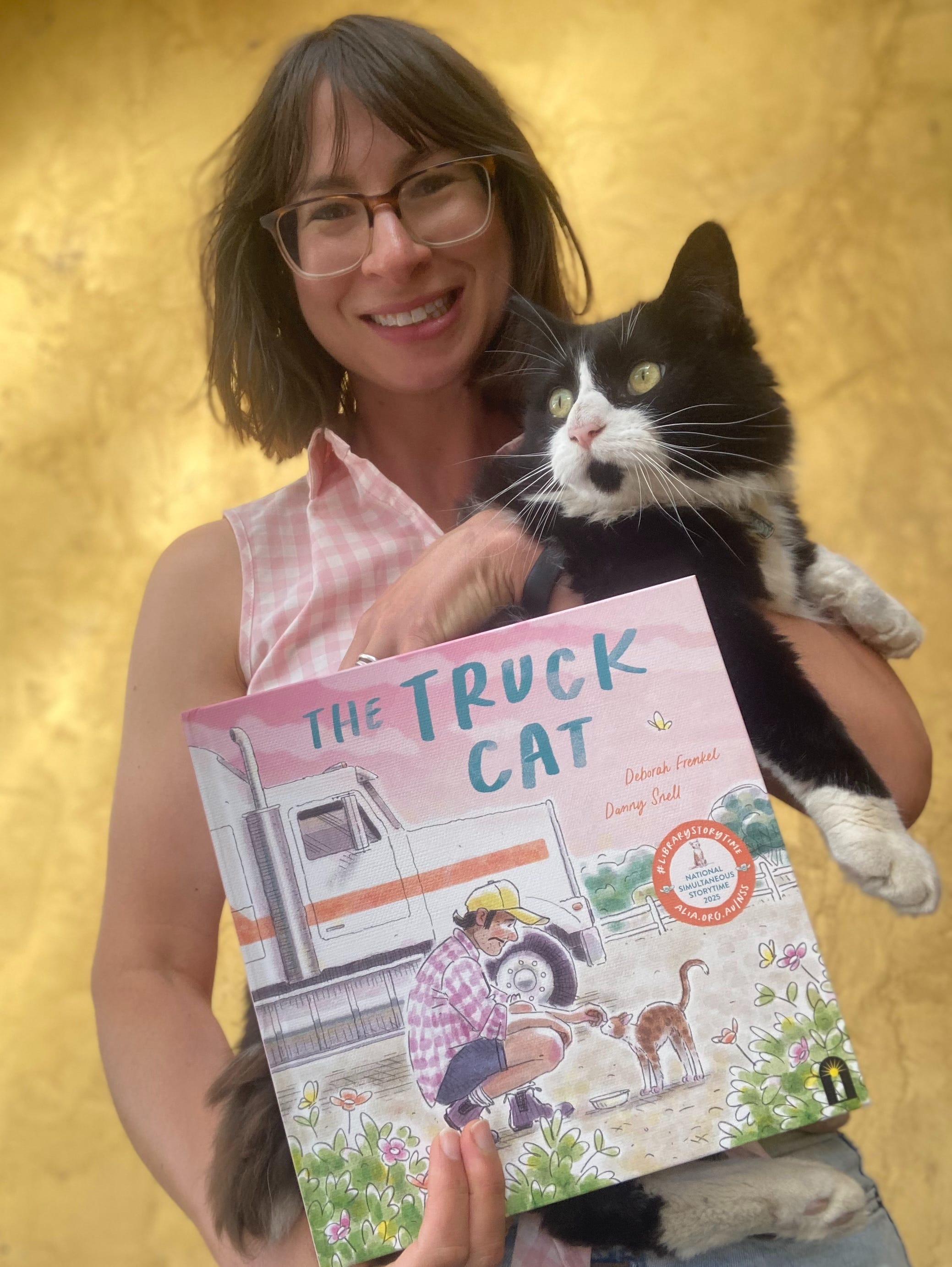
Huge congrats on The Truck Cat being this year's NSS book! What does it mean to you? Has it changed anything? Do you think it will?
Thank you! It brings a huge degree of visibility to the book, which is a real privilege given we’re all struggling to get our books seen and noticed. In practical terms, that’s translated to two things: a huge bump in sales (much appreciated!) and a lot of communication from kids, parents and teachers. It’s the latter that’s really changed things for me. This maybe sounds ridiculously obvious, but I don’t think I truly appreciated how much impact kids’ books really have on their readers. After all, we only rarely meet those readers, and most of the publishing process involves a lonely computer screen with an occasional email or Zoom with our collaborators. So it’s easy to forget that what we create really makes a difference. I’ve found this all a timely reminder of that. What a privilege to write – but eek, what a responsibility, too!
What's still on your writing/creative bucket list?
Every time I read a verse novel, a sneaky voice in my head says, ‘you should try this…how hard can it be?’ (LOL! I mean, the answer to that is: very.) But I’d love to give it a go, because I adore the format as a reader. Hats off to the extraordinary verse novelists we have in the world of Australian kidlit (including my current inspiration, Sandy Bigna – Little Bones is just wonderful; if you haven’t yet, go read it!)
Is there something you would love to be asked in an interview but haven't been yet?The world is so scary at the moment. And maybe it’s always been scary. But at the (very frequent) moments when I’m tempted to throw everything in and try to get a job doing something REALLY useful at this point in time, like climate research or community advocacy or regenerative farming or whatever, I keep coming back to how important books are. Especially kids’ books. It may be not-very-remunerative, it might be a rollercoaster of rejection and hope (but mostly rejection), but the books that result truly matter – for kids, and for the adults they'll become. Hey, maybe they actually matter the most. So keep going.*
No posts
Comments
Nothing yet. Say the first thing.
Sign in to join the conversation.