
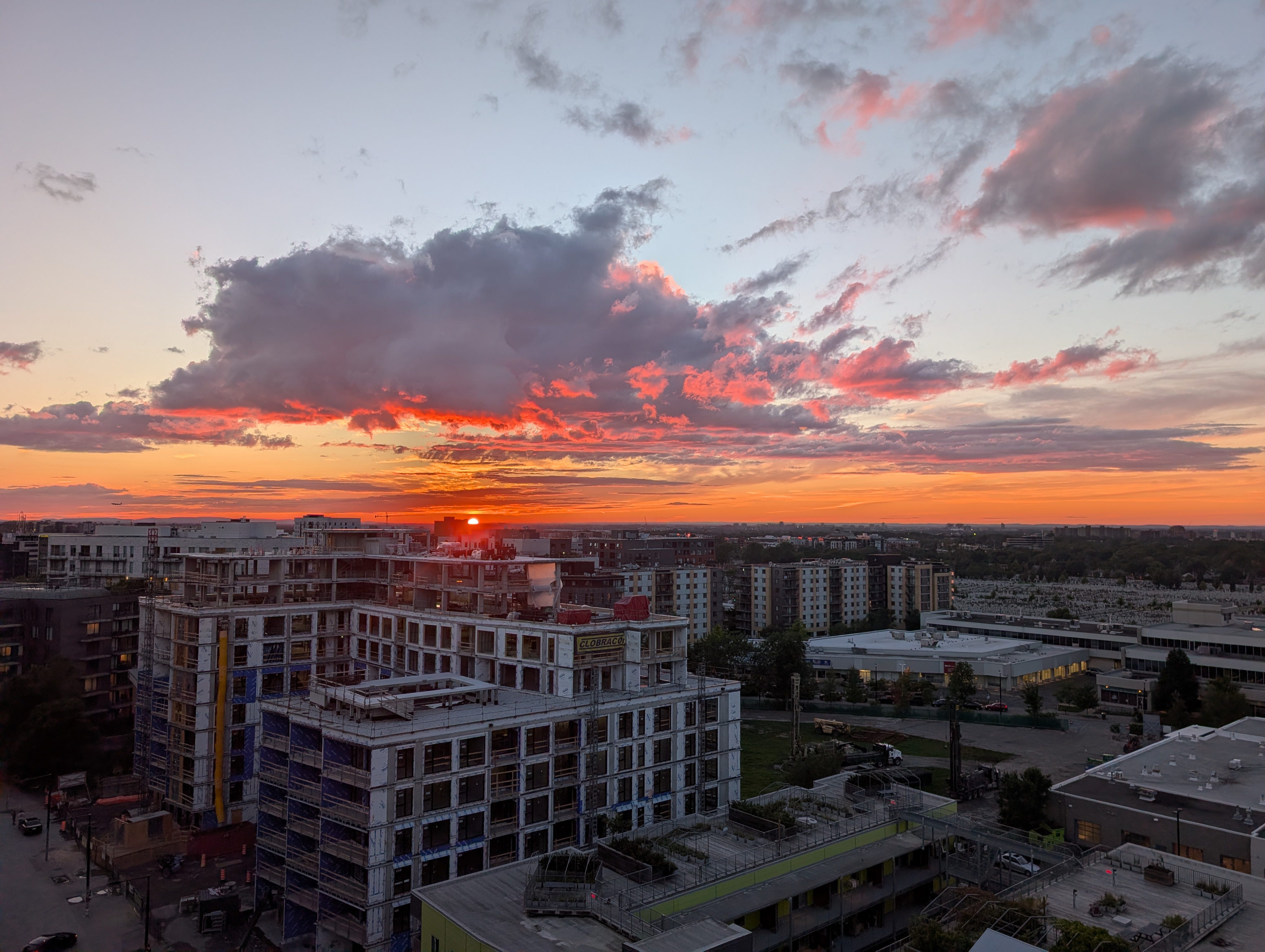
My neighborhood is undergoing a lot of construction. A LOT of construction. This area has been designated “Midtown”, and it’s one of the fastest-growing parts of Montreal, with condo developments and a large upscale shopping center replacing former industrial buildings that mainly housed garages, specialized mechanics, and other automotive businesses. This has historically been home to many high-end car dealerships. Before that, the Hippodrome horse-racing track dominated the area, as street names like “Rue des Jockeys” and “Avenue Ferrier” still attest. Now the former Hippodrome, located across the massive north-west Decarie highway, is one of the only wild green spaces left in the city. It has a vegetable garden that supplies foodbanks, and shelters for homeless people. And, of course, it’s slated for major development over the next ten to twenty years: condominiums, shopping areas, some “parks” which will be no more than urban lawns, links to transportation. I’m not holding my breath.
But in the immediate area where we live, a number of buildings are going up right now. It’s noisy and dusty, and much of what little green space there is is being swallowed up, in spite of the city’s promises to residents. This week we’re watching the only soccer field being closed off, torn up by trucks, and punctured by drilling rigs trying to control the water table. This will be the site of a new elementary school, an unfortunate trade-off between much-needed municipal services and much-needed green recreational spaces.
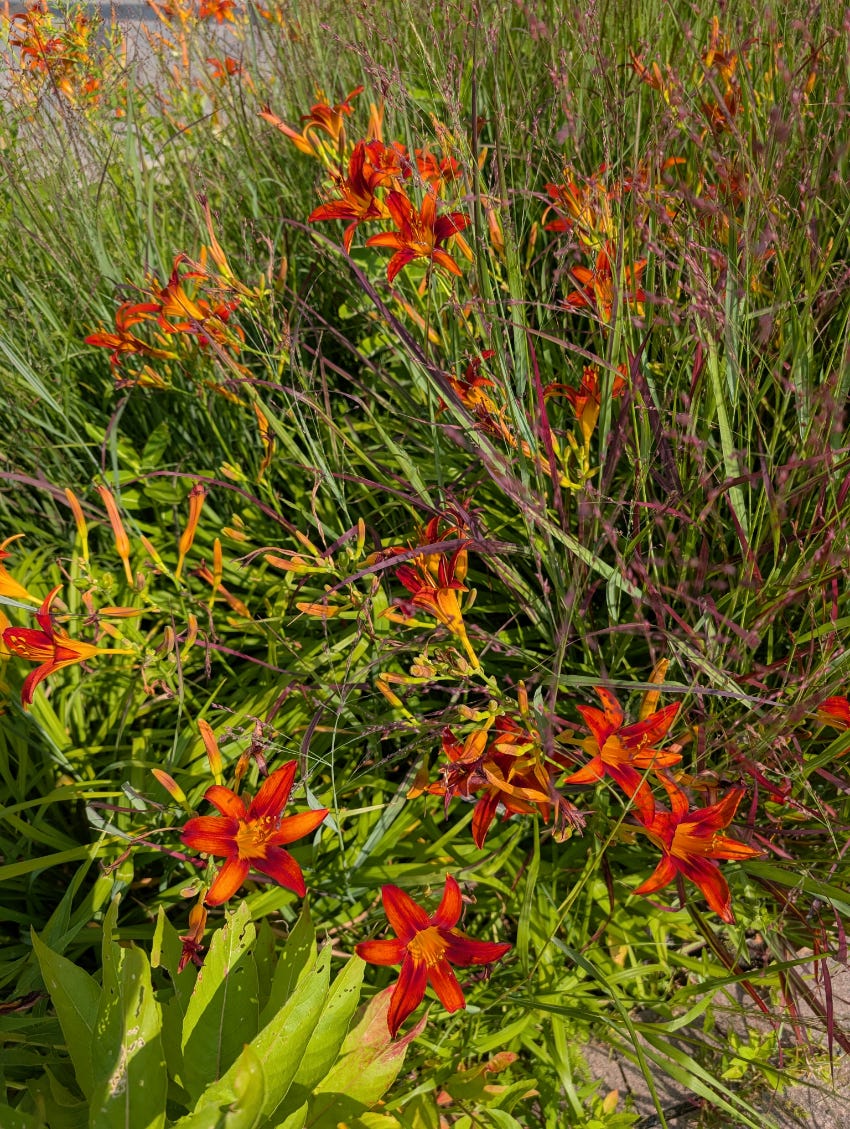
When our building complex was developed, the plan included a small park with a passive-solar community center building, and a grassy area bordered by plantings of native species of wildflowers and shrubs, grasses, and carefully-selected cultivated perennials.
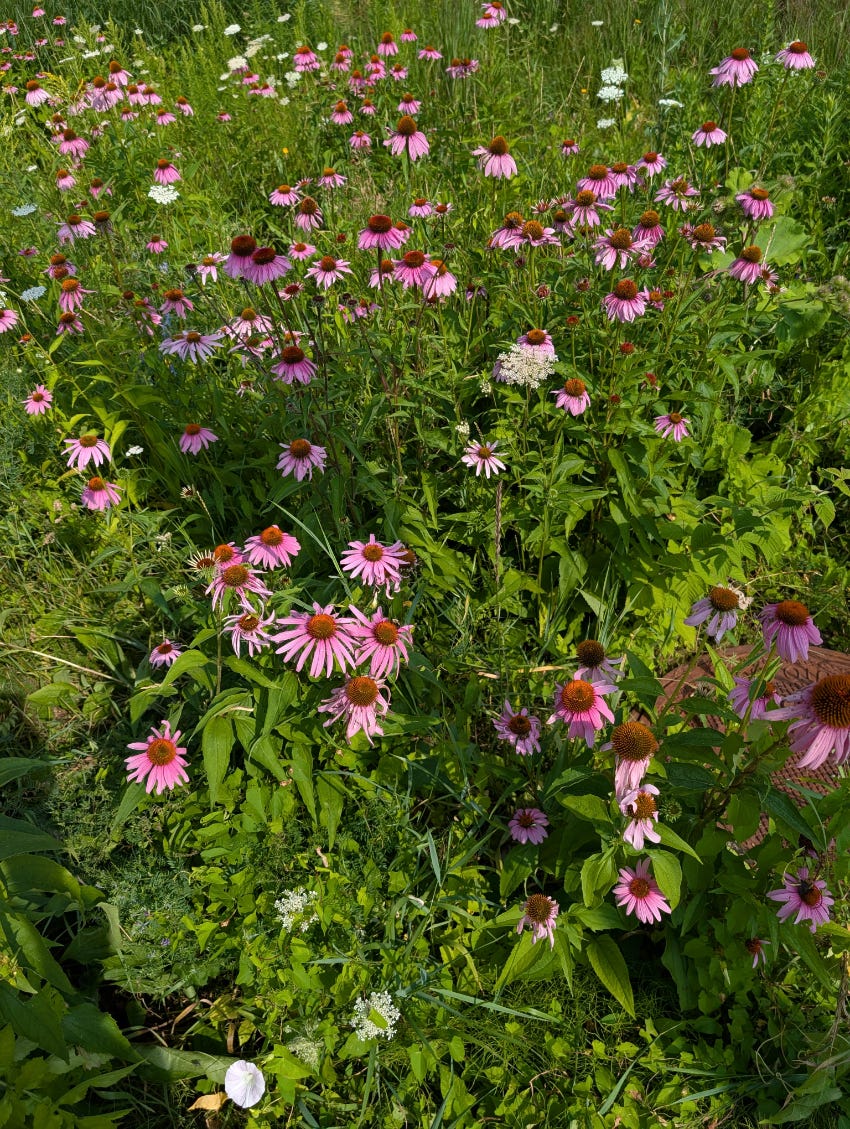
These were supported by underground “sponge parks” designed to retain rainwater as well as absorb the excess that might otherwise result in flooding.
The plantings were also done to encourage native insects and birds.
Six or seven years on, the structure remains, but the city is gradually replacing the native species with plantings that are easier to manage than the wild plants I was thrilled to find when we moved here. Rough borders of native anemones, Iceland poppies, and native wildflowers have been replaced by landscape fabric, mulch, and yellow ever-blooming daylilies. The area in the video above is now mowed regularly, rather than allowing the clover and wildflowers to re-seed, and the insects to flourish.
Shrub plantings have fared better: autumn olives, elderberries, rugosa roses, dogwoods, and many other species are all doing well, and have grown a lot since we moved here. New construction, though, will probably eliminate a lot of these plantings between the sidewalks and the streets.
I’ve complained in person and in writing about the changes. The city never responded, but the head gardener I spoke to shook her head sadly and said she agreed with me. She explained that the city feels it’s hard to train employees to recognize what’s a weed and what’s a wildflower, and that residents “want things to look neat.” I think the first response is true, and the second is dubious. If they were educated on the reasons why these plantings were done in the first place, most residents would be 100% in favor. The city is just doing what’s easier for them. And frankly, a wild garden is not hard to maintain so long as invasive plants are controlled.
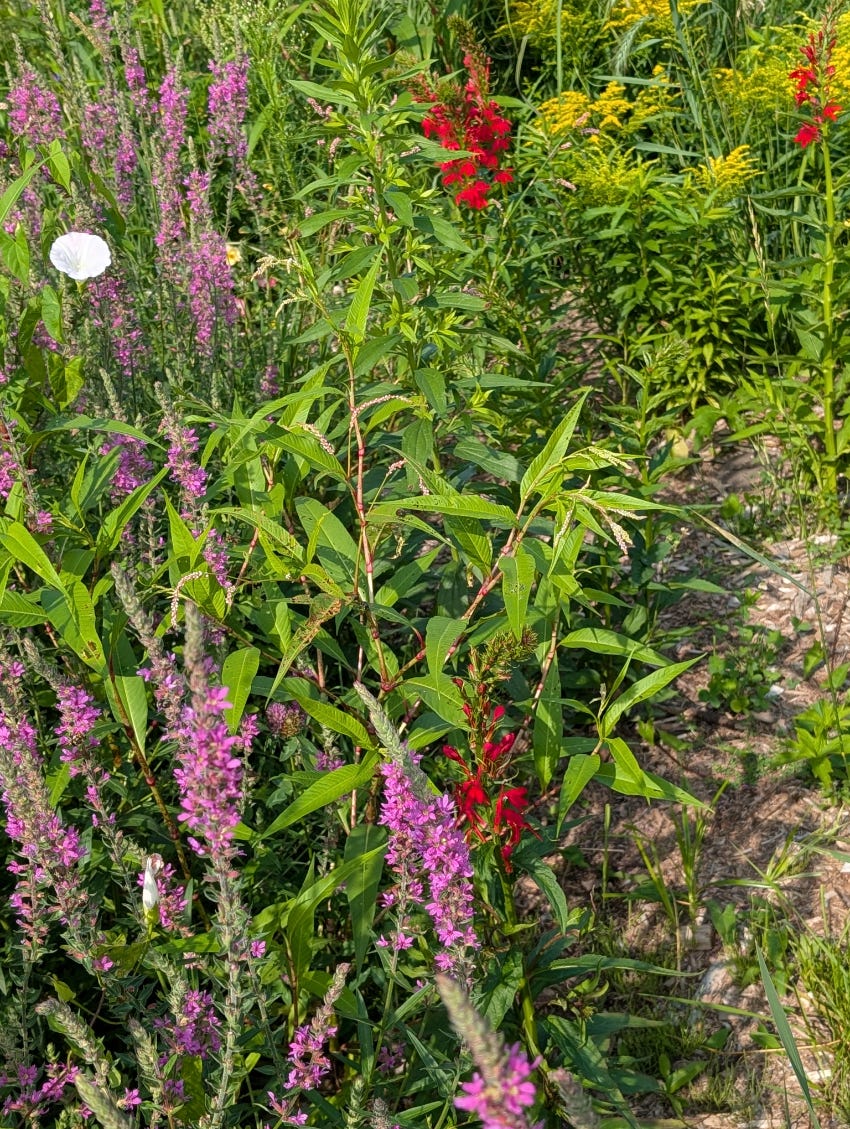
However, they aren’t attacking all the plantings yet. Big stands of milkweed, loosestrife, Queen Anne’s lace, and goldenrod are still doing well on a back street. I haven’t seen many monarch butterflies yet or found any caterpillars, but I’ve seen more butterflies than in the past two years. And I can still take a walk past raspberry bushes, native irises and lilies, and crimson lobelia that I wonder if anyone notices except me.
Comments
Nothing yet. Say the first thing.
Sign in to join the conversation.