
Introduction and NFTs — 00:00:04
I’m Casey Reas. I’m an artist. I work with code and images. I’m a generative artist. When I started doing this work around 2001, about 25 years ago, it was a very vibrant but very small community. It’s always been international, with people sharing work online and through the web, but typically there were only a few people in each region who were deeply engaged. Since 2021, there are now tens of thousands of people who are active and engaged. Seeing so many younger people with strong ideas and energy enter generative art has been the most vibrant development. When NFTs entered the picture—I became engaged around 2020—many of the early practitioners, people who had been working in this space 20 years ago, returned. That was exciting. At the same time, many new people came in. What I love is how different paths converge: some come from engineering and computer science toward art, others from art toward coding. These perspectives meet, generating ideas about visual systems, images, and simulation. Over the last five years, it’s been about sharing and new directions emerging. It’s been incredibly exciting.
Processing, Coding and Art — 00:01:27
I think coding and the arts have always gone hand in hand. Before artists used computers, they were already thinking in systems and algorithms—this goes back hundreds of years. More specifically, it’s been about 60 years since artists began writing code and building these systems. Traditionally, programming is taught through math or language. Around 2001, we created a new programming environment called Processing to bring these powerful ways of thinking into the visual arts. Instead of working with numbers and math, students make images from the first day you write code. We found this aligned naturally with how artists think and gave them access to the medium of code.
On Teaching — 00:02:29
Because technology changes so quickly, I focus on teaching fundamentals—ideas that have been around for decades. Once you understand those, you can learn new technologies with depth and speed. That’s the focus of my teaching. Teaching doesn’t keep me on the forefront of technology, but it keeps me engaged with ideas. Working with graduate students in the MFA program at UCLA and with undergraduates brings in new perspectives on what code and generative art can be. When you’ve been in the field a long time, you develop assumptions about its boundaries. People new to it move in unexpected directions—they push and stretch those boundaries. It’s the ideas, more than the technology, that matter.
Art and Experience — 00:03:54
I think the best art is subjective. Different people can come to an artwork and have different experiences. Many assume representational work—figures or landscapes—is better suited to emotional expression, but abstract works, including those made with code, can have the same effect. It depends on a certain openness. Generative art can be deeply emotional; it comes down to the viewer’s experience.
Different forms of art affect us in different ways. Sound-based and image-based works operate differently. Mark Rothko is a good example—if you spend time with one of his paintings, letting it wash over you, it can be a powerful emotional experience.
Coding is Writing — 00:05:19
I think of code as a form of writing. With language, we can write legal briefs, poems, novels—it’s a flexible medium for expression. Code is similar. It can produce work that feels cold or work that feels overwhelmingly sensual. It depends on what the artist brings to it. The medium itself supports a wide range of expressions.
Cycles of Energy — 00:05:45
From an artist’s perspective, I’ve seen several booms and busts. In the 1960s, there was a surge of interest in cybernetic art and art-and-technology, which later declined. Another surge came with the web in the late 1990s and early 2000s, followed by a quieter period. We’ve just experienced another surge. These moments change things permanently. As an artist, you stay committed to what matters to you. Whether or not there’s institutional attention or collecting, the work continues. And when energy returns—as it likely will—we’ll be ready.
Feral File — 00:07:25
We started Feral File in 2020 as a different approach to generative art. We began with group exhibitions, each led by a curator who brings in artists and develops a shared vision. Curators mentor artists, helping shape exhibitions and fostering growth. This model has created meaningful experiences for artists. We later added solo exhibitions, but group shows remain central. As an artist, working closely with a curator and forming a community with other artists is a powerful experience.
Marfa and Art Blocks Weekend — 00:06:52
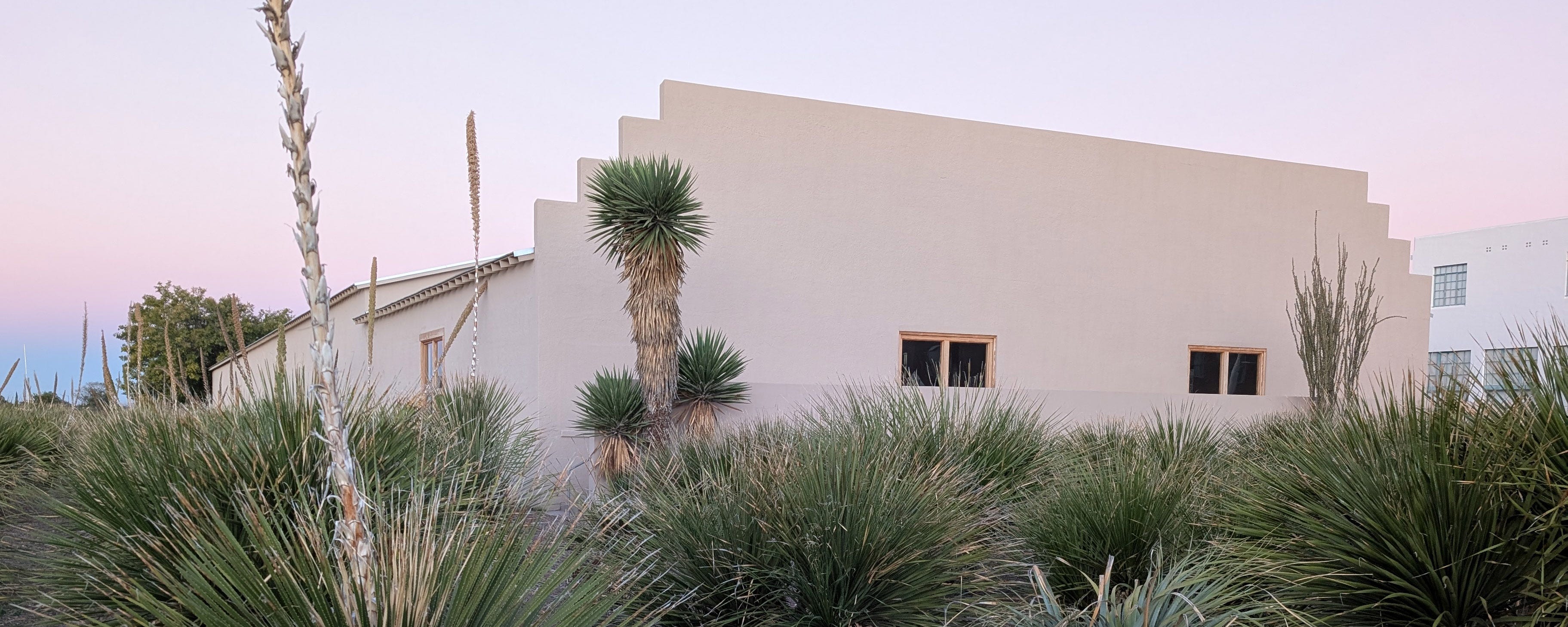
Being here in Marfa means a lot. After working in this field for decades, what happened in 2021 was life-changing for many artists. It was a period of growth, but also a deeply social moment. It’s about the work, but also about the people. Being in Marfa represents that community coming together. There’s a shared energy, an infectious feeling that we’re doing this together. It’s a special time and place.
No posts
Comments
Nothing yet. Say the first thing.
Sign in to join the conversation.