
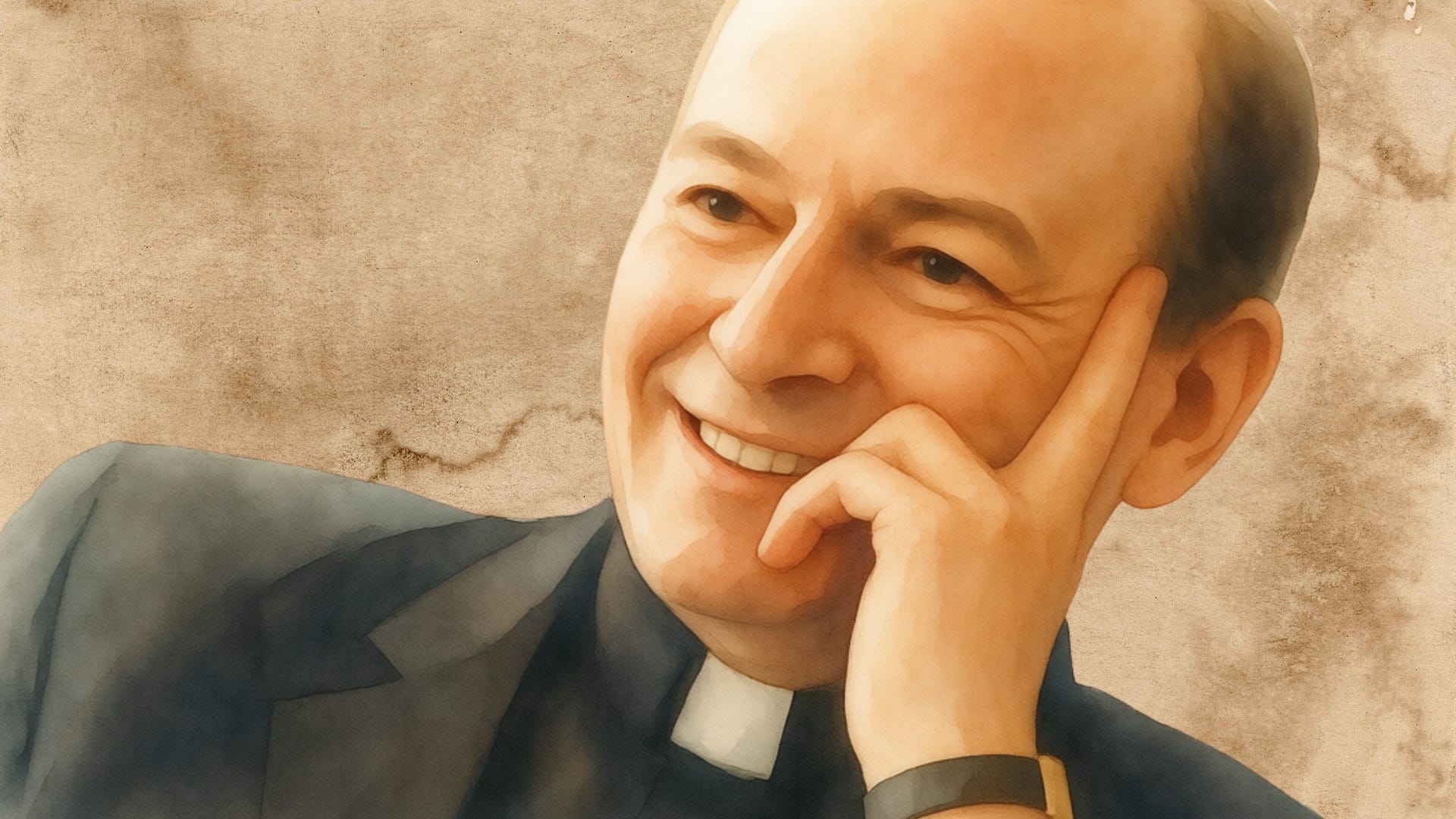
Who was he? Richard John Neuhaus (1936-2009) was a Canadian-born Lutheran pastor who became an American Catholic priest, transitioning from political liberalism to conservatism. His life journey blended diverse convictions and perspectives, resonating with many young adults today.
Neuhaus engaged in deep theological dialogue with evangelical Protestants, building coalitions on issues like life, marriage, and stem cell research. He protested the Vietnam War and was arrested at the 1968 Democratic National Convention. He rooted his activism in the same philosophy that inspired Dr. King’s march on Selma.
Neuhaus co-authored books with both liberal academics and evangelicals like Chuck Colson. Time magazine noted in 2005 that President George W. Bush quoted Neuhaus more often than any other living person in religious publications. Neuhaus is best known for his work on religion and public life, particularly through his 1984 book The Naked Public Square and the academic journal he founded, First Things.
As a young WASP preparing for future church service, college and graduate school brought a wave of liberalism and difference that challenged my deeply held, though undeveloped, beliefs about the church’s role in the world and the legitimacy of Christian intellect.
Looking back, I see that Neuhaus affirmed two crucial convictions for my adolescent faith, despite criticism of their narrowness, allowing me to navigate the academic world with confidence.
Through reading his work, subscribing to First Things, and attending his seminars at the Union League Club in New York City, Neuhaus taught me that religion has a rightful voice in the public square and that conservative and evangelical Christians possess an intellectual foundation that is sophisticated, comprehensive, and relevant.
He challenged the media and academia’s tendency to marginalize religious voices, arguing that the disregard for faith leaders creates a public square where religion is seen as irrelevant. Neuhaus championed the inclusion of faith in public discourse, engaging national leaders, appearing on mainstream news, and powerfully expressing his ideas through writing.
Today, as a pastor striving to engage the world with the Gospel, I see how Neuhaus, a New York Catholic intellectual, shaped the perspective of a Southern boy from Atlanta.
No posts
Comments
Nothing yet. Say the first thing.
Sign in to join the conversation.