
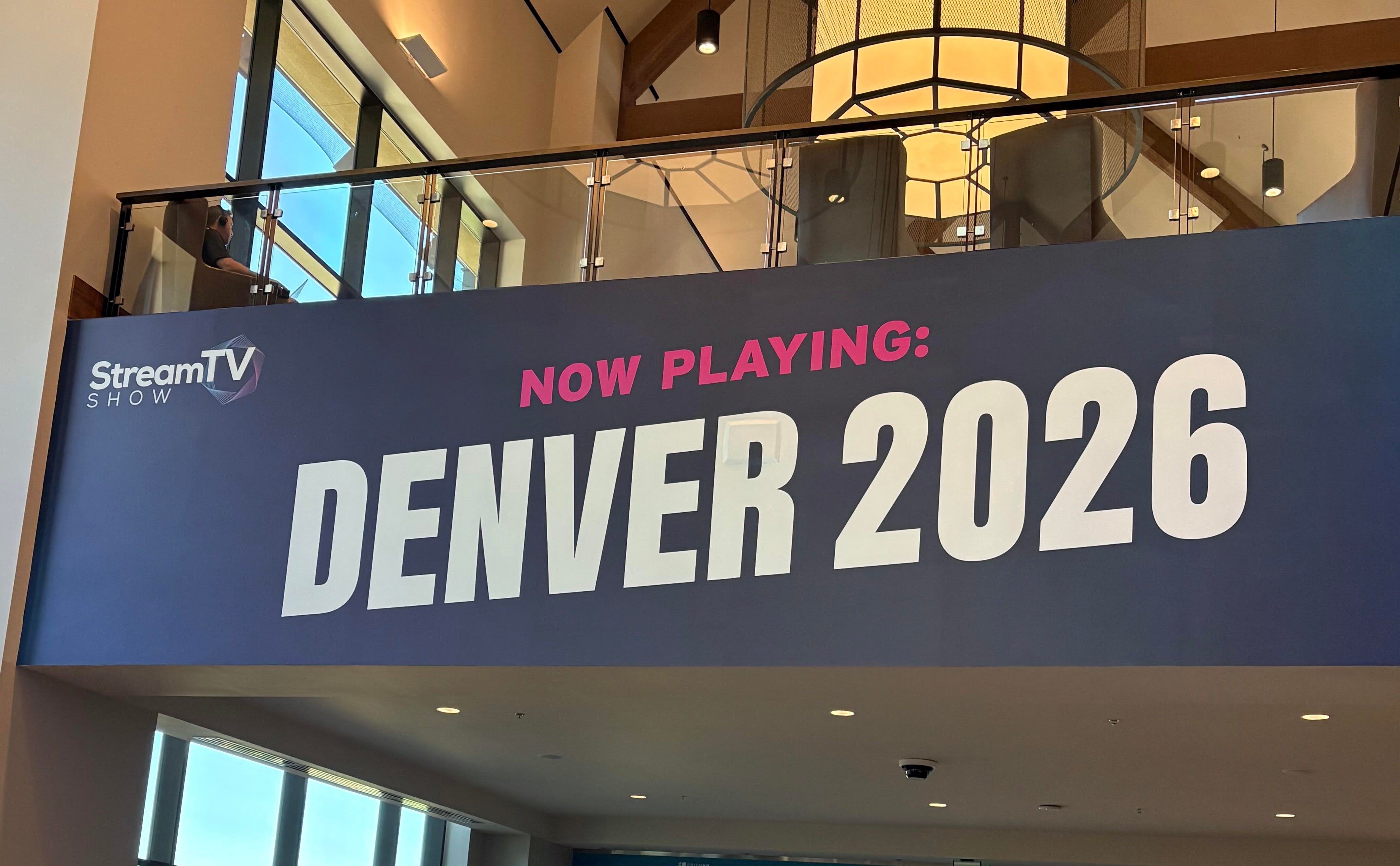
The collective sentiment on the ground at the Gaylord Rockies in Denver was unmistakable: the streaming industry has officially graduated from its “Act One.” We are no longer operating in an era of aggressive, unchecked subscriber acquisition. “Act Two” is defined by capital discipline, sustainable monetization, and data-driven engagement.
Across the sessions, panel tracks, and exhibit floor, three core themes emerged as the structural pillars for this next phase of the marketplace.
One of the most defining shifts of this year’s conference was the acknowledgment that the creator economy is no longer secondary to premium, long-form legacy programming. Platforms like Tubi and Samsung TV Plus are treating creator-led content not just as cheap inventory fillers, but as primary engagement drivers.
However, the real challenge discussed on the ground is moving past the novelty of social-to-TV migration and focusing on tangible value creation.
Fandom as the Business Unit: Streamers can no longer rely purely on deep back-catalogs; they must cultivate passionate, self-sustaining communities. The goal is moving a viewer from a passive watcher to an active community participant.
Infrastructure over Aggregation: For creators to thrive on the big screen, the industry must build stable monetization models, transparent revenue shares, and programmatic parity that treat independent studio operations with the same operational weight as traditional distributors.
A persistent tension throughout the panels was the fragmentation of success metrics. We are currently managing a ecosystem with two entirely different masters, and the math isn’t quite matching up yet.
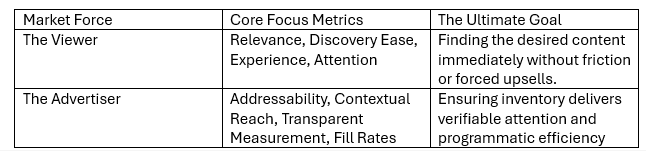
The consensus among product and ad-ops leaders is that advertising can no longer be decoupled from the user experience (UX). If we solve for the viewer by reducing fragmentation and utilizing AI for highly contextual, non-intrusive discovery, the premium attention metrics that advertisers are demanding will naturally follow.
The conversation around advanced CTV ad formats—specifically scene-specific shoppable TV—dominated the stage. The promise is enticing: a viewer sees a character wearing a jacket, clicks their remote, and buys it instantly. But having spent years inside major networks, I know that the gap between tech-demo capability and wide-scale operational reality remains massive.
While the technology is undeniably moving in the right direction, a true “rollout” faces a few stiff headwinds:
The Network Brand Paradox: Legacy media companies are notoriously protective of their premium content IP. There is deep-seated cultural resistance inside networks to turning a cinematic, high-production drama into a glorified infomercial. Many content teams firmly believe that flashing lower-third purchase prompts actively denigrates the premium environment they worked so hard to build.
The Asset Tagging & Scale Nightmare: Even if a network has a massive library of thousands of hours of content, inventorying and metadata-tagging every item in a scene—at scale—is an operational bottleneck. Who owns the data schema for what a character is wearing in episode 4 of a show filmed three years ago?
The Fulfillment Gray Area: This is the quietest part of the room. The tech stack can handle the click, but the backend logistics are still highly fragmented. Aligning network ad-servers with dynamic merchant inventories, handling product out-of-stock scenarios in real time, and managing the actual shipping and customer service backend remains a massive gray area.
The Verdict: Shoppable TV is no longer science fiction, but it is currently constrained to isolated, highly curated tentpole partnerships. For it to become a standardized, programmatic buy, the industry has to solve the logistical and brand-safety questions, not just the technical ones.
While the technical and programmatic architecture dominated the presentation slides, the actual execution of these strategies is visibly being led by an extraordinary roster of women.
From the Starz and Women in Streaming Media networking breakfast—where we discussed the critical importance of Education, Mentorship, and Allyship to support both young professionals and veterans migrating the business into the digital age—to the main stages of ad operations and content acquisition, women were the definitive voice of authority.
Whether diving deep into programmatic data transparency, leading discussions on content distribution workflows, or spearheading CTV ad innovation, the operational transformation of streaming isn’t just becoming more disciplined—it is becoming significantly more diverse.
The Bottom Line: Maximizing the value of the streaming ecosystem requires us to stop looking backward at linear television playbooks. The winners of “Act Two” will be those who seamlessly bridge the gap between user experience and advanced monetization—all while building active pathways to elevate the diverse talent required to execute it.
No posts
Comments
Nothing yet. Say the first thing.
Sign in to join the conversation.