
Platforms are being forced to rethink their business model due to AI agents automating more tasks. Growth is slowing, and new features can’t compete with the speed of new agents.
In a last-ditch battle to preserve their market, these platforms are now frantically building their own agents.
But in doing so, they sideline a strong competitive advantage: their existing customer base and an established way to sell.
As agent economics shift from ARR towards Gross Token Volume (GTV), to monetize them, platforms need to shift to the volume-based model that already exists in their ecosystems.
It’s no secret that the AI revolution is hurting large platforms the most. In the age of vibe-coding and AI agents, customers are rethinking what to buy, create, and automate. Users can now customize their workflows in unprecedented ways. This has been bad news for platforms as users have started to dial down their reliance on platforms and, in some cases, completely switch off.
The effects of this have been devastating for platforms: the long-held per-seat model is being crushed as users question the value of each subscription. The speed of innovation introduced by agents has also eroded moats and unearthed a whole slew of new competitors who seem to be playing by different rules. Now any external developer can compete with platforms on specific features in the form of agents that can run independently and use the platform as a basis for their innovation.
History tells us that the default reaction to technological inflection points like what we’re experiencing with agents is for platforms to cling to power. Some of the starkest examples played out when computing shifted to the cloud. Microsoft clung to the belief that Windows, with its developer ecosystem of tools such as .NET, was their key strategic asset, and they built their initial cloud based on that belief.
This decision positioned Azure as a cloud for .NET developers only, and when Big Data, ML, and other advancements accelerated on other platforms, Azure users were left behind.
It was only when Microsoft decoupled Azure from Windows and .NET, launched their third-party ecosystem, and brought competitors like Linux and Open Source into the fold that Microsoft was able to compete with AWS.
So it’s no surprise that some large platforms are taking a more conservative approach, opting to close access, resist external agents, and focus on developing their own. Much like Microsoft back in the day, the belief driving this strategy is that their product and its data are a platform’s greatest assets. Salesforce, for example, has recently restricted access and long-term storage and indexing of Slack messages to prevent external developers from running their agents. Salesforce has caught some flak from its announcement, but it isn’t the only party that has been guilty of deploying this tactic, with SAP and Meta also making similar moves.
Developing agents in-house is an important capability, especially as agents are becoming users’ form factor of choice. But the approach to developing agents and the rates of success have varied. Over the last few months, our team has worked with and consulted with a range of platforms, from industry market leaders to startups and scale-ups looking to disrupt those industries. They are all building agents, and we’ve had a courtside view as they face the question of how they fit into their businesses and with their users. Here are some key observations:
✅ Agents that enhance existing features
We’ve seen success when product or feature teams put their knowledge of users and their preferences and needs at the core of agent development. The result is a natural extension of existing products via agents that users find easy to incorporate into ways they are already using the platform.
One example that stands out is the feature team for a platform’s text editor, who were able to successfully and quickly spin up several agents for their users. Their knowledge of how their users engaged with the product and their strong focus on delivering what mattered to their users led to widespread adoption of the agents they developed.
✅ Well-defined agent use cases that tackle clear customer use cases
The example of the feature team above highlights how essential it is to have clear use cases when building an agent. Where we’ve seen great success is in teams that have a clear mandate for agent development that aligns with (or, even better, is incorporated into) their product roadmap and user needs.
In the playground of agents, it can be tempting to try all the new toys, just because they’re there. We’ve witnessed teams develop dozens or even hundreds of agents at warp speed. But they’ve all had trouble testing them with users who are by now tired of the influx of new agents in platform interfaces. As a result, most of these agents end up in the trash , as much as 90% in some estimations (McKinsey).
❌ Going all-in on agents
Platforms tend to be less successful when they prioritize agents as the central focus of their business strategy instead of focusing on customer needs. We’ve observed organizations shifting the focus of hundreds of engineers from developing product features to creating agents, which has led to the formation of new cross-feature and cross-product teams that build agents all over the platform.
❌ Agent free-for-all
Going all in quickly results in what we call “agent free-for-all” which was described by an engineer in one of those organizations as an “enterprise-scale social experiment” as entire teams compete with each other to establish their own agentic empires, stifling innovation in the process.
It’s natural to want to build capability and to show the potential of the technology. But in the early phase of experimentation, we are seeing organizations developing the same agents over and over again, without knowing it.
However, we have observed that individuals and teams have jumped headfirst into building their agents, rushing to outpace other teams and deploy them. While competition is a key driver of innovation and progress in a free market (like an ecosystem), it can lead to a toxic environment when it happens between peers, especially when KPIs are unclear or there is no segregation of duties.
❌ Treating agents as separate from feature development
Another common dynamic we saw is that agent teams put all their effort into an agent, only for the relevant product teams to block the integration. Reasons range from the agent competing with a capability they are working on to product teams not wanting to offer up their real estate and users as guinea pigs for an entirely new capability. Occasionally, there’s no explanation, just a refusal.
This internal tension is a problem that third-party tools in ecosystems rarely encounter, for several reasons: the relationship between the feature team and the ecosystem is clear, users have agency in selecting third-party tools, and in the end new tools are assessed by user adoption rates rather than competing internal opinions.
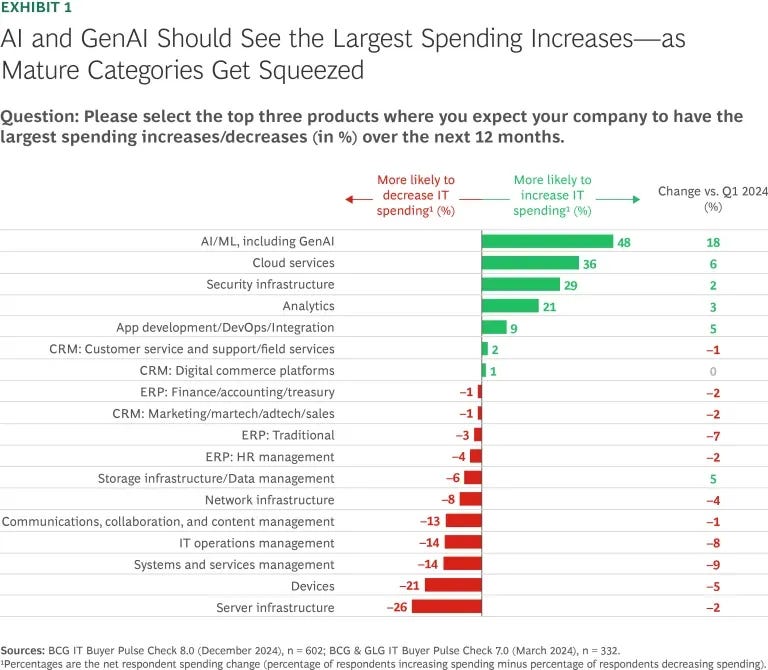
Agents are currently a cost center, especially for platforms. If not for the sake of their users and innovation, platforms must identify a more sustainable business model to incorporate agents. Despite it being the preferred strategy, throttling data like Salesforce, Meta, and others have done is not an effective method for monetizing agents. This is because that data is less valuable than the platforms believe it is. LLMs use proprietary data for context and are not dependent on it for training, which minimizes the need to store that data for the long term and index it externally.
“I think that the definition of platforms and ecosystems needs to be revisited in the age of agents,” says Avanish Sahai, who built and led ecosystems for Google Cloud, ServiceNow, and Salesforce. To survive in the new world of agents, platforms might need to adopt a more radical approach. Some disruptor platforms are already doing this. A great example is Linear, whose CEO, Karri Saarinen, recently posted his observations about their rapidly changing world: “Interesting to see Linear quickly becoming the platform for AI agents.”
While platforms are still trying to salvage their ARR, native agentic tools like Cline have realized that their main metric should be throughput for foundation models, measured by Gross Token Volume (GTV) (credit to Nick Baumann). The traditional platforms need to follow suit and start thinking about measuring and monetizing their throughput, however, their asset is not tokens but their customers, and the best way to monetize customers is via an active ecosystem.
The best platforms will learn from the lessons of the cloud transition by building on their ecosystem’s strengths and bringing external developers into the ecosystem fold.
Agents naturally fit within the thematic elements of integrations and workflows in ecosystems, and they are also becoming increasingly relevant to traditional ecosystem applications as these applications transition towards more agentic use cases. Integration providers such as Zapier, Workato, and n8n have already pivoted from rule-based workflow to agent orchestration. The distinction between product and workflow is a natural one, which makes ecosystems the most suitable environments for introducing agents and fostering innovation through competition among agent developers.
Platforms that win the agentic race will capitalize on partnerships and make it easier for third parties to build agents on their platform. It’s a precedent set by Microsoft, AWS, and Atlassian, who have opened up their APIs to external developers.
In our next blog post, we’ll dive deeper into agents economics and see how ecosystems have natural mechanisms to best capitalize on agents to deliver value across all the players: platforms, users, and third-party developers.
No posts
Comments
Nothing yet. Say the first thing.
Sign in to join the conversation.