
On Saturday, Cassie and I watched the Red Sox take on the Reds at the Great American Ballpark. It was a crisp, sunny day, and we were munching on popcorn and nachos. Spring training was over. Our darling Roman Anthony was at the plate. All was right in the world.
However, this was the first in-person game I’d watched with the new ABS system in effect. I gave it a fair shake, but it felt very disruptive, and it created some oddities such as Eugenio Suárez striking out twice in a single at-bat and the system overturning both calls.
So, after some deliberation, I want to TRIPLE down on my previous take, rebroadcasted below:
I confess. I’m a baseball Platonist. I believe—as many others do—that there is an essence to the game that transcends historical eras, fluctuating expressions, and prevailing strategies. At times, the essence shines bright, as when the perfect game is accomplished or spoiled in the ninth. Other times, the game strays from itself, as in the recent (and pathetic) trend of playoff teams being unable to execute a simple bunt.
The love of baseball involves a pursuit of Baseball (capital B), a striving toward expressing the game’s perfection, which is impossible to manifest yet always imaginable. As the game transforms over time, Baseball must be the guiding light; the essence of the game must be the standard by which all alterations to the rules and conduct are measured.
In certain cases, this has been successfully accomplished. For example, the pitch clock prevents the abuse of time. It requires the game to stay within its natural, conversational pace: pitch, adjustment, pitch, swing, adjustment, etc. The implementation of the pitch clock is not a successful change because it quickens the pace of play but because it corrects an aberration. As a consequence, the game becomes more enjoyable. This enjoyment is not a result of the “faster pace” (baseball is still comparatively slow). Instead, our enjoyment increases because the game conforms more precisely to Baseball.
The new implementation of robot umpires is a gross divergence from Baseball. It violates the essence of the game by making a fundamental conceptual error: It considers the strike zone a geometrical instead of relational reality. This issue is— as Nick Burns sharply outlines— an error about the “ontology” on the strike zone. In other words, we have misunderstood what the strike zone is, and therefore, we have applied an improper change.
A strike isn’t a strike because it lies within a box. It is ultimately a strike because the umpire has judged it to be a strike, and by announcing it as such (a speech act), he substantiates it as a strike. He is an indispensable participant in the game and must negotiate his position with every pitch.
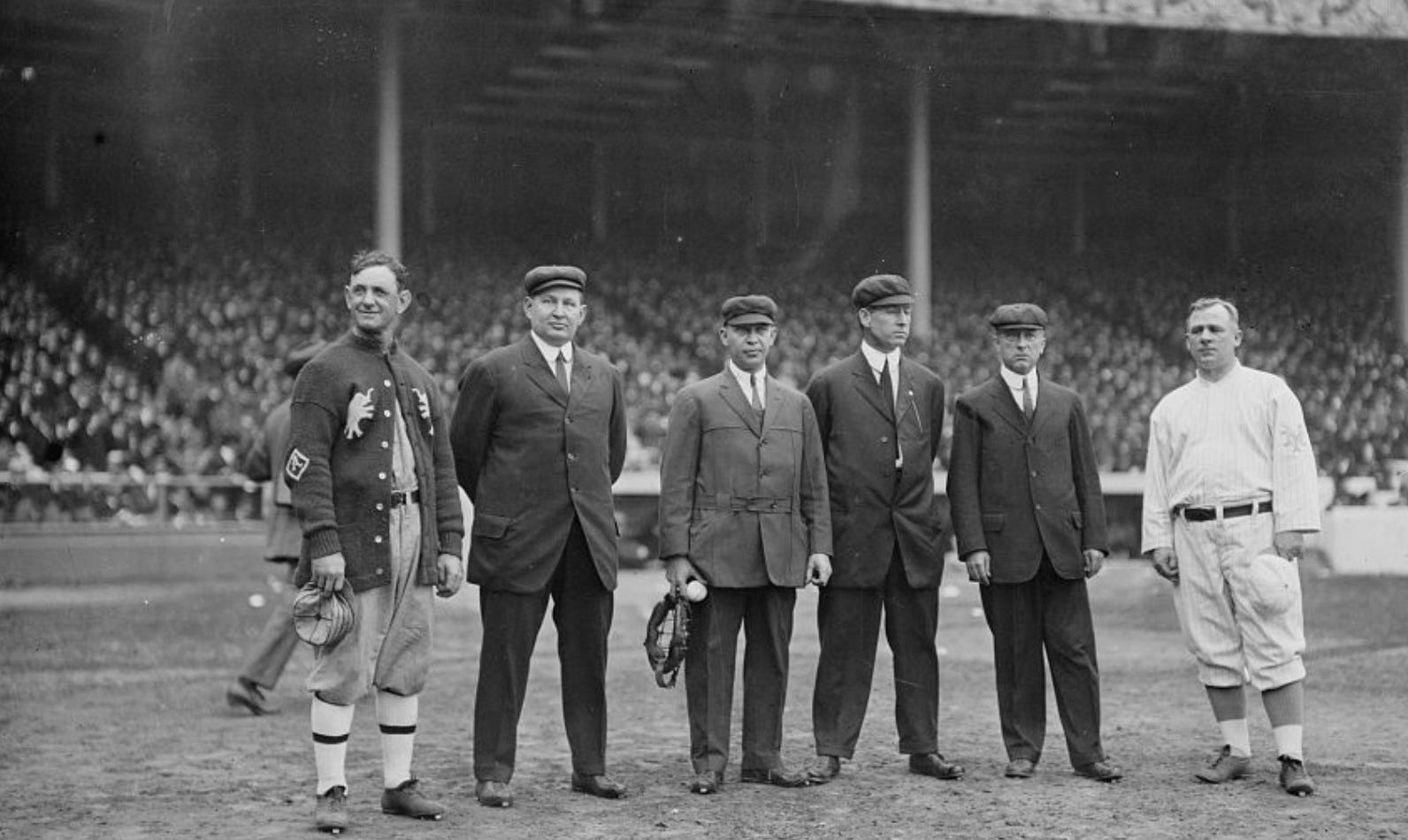
The batter, pitcher, catcher, and umpire are entangled in a relationship in which every individual action transforms the situation for the entire group: the catcher’s framing; the batter’s stance and swing discipline; the pitcher’s control or lack-thereof; the umpire’s feel for the bottom of the zone on that particular day. It’s all a conversation. It’s a relational high-wire act.
As my friend Alex Gergely said, “The strike zone isn’t a box. It’s an agreement.”
The robot disrupts this agreement by undermining the umpire’s authority and presence. The conversation-in-action must ultimately yield to a cold robotic judgment. However, if accuracy is paramount, why not replace umpires entirely? What about those pesky mistakes that no one challenges? If we want to see accuracy at all costs, why don’t we do away with the human element entirely?
Answer: because accuracy-qua-accuracy is not the most important element of Baseball, not even close. If we just wanted to watch mechanical perfection, we’d watch robots take the field. But I don’t want to watch a robotic game for the same reason I don’t want to watch a robot pretend to eat soup. They can’t truly eat. They can’t experience. Even if looked like they were playing, it would be just an expression of code. They wouldn’t be playing. That’s what humans do. And it’s good and beautiful. And it tells us a little more about life.
Baseball isn’t a math equation to be solved, neither is life. How can I be a good friend? How do I grieve a family members passing? These are not puzzles to be solved; they are, as the philosopher Gabriel Marcel wrote, mysteries to be lived in. Baseball is the mystery of human life lived in, played out on the field. Nick rightly describes this connection between life, injustice, and the game:
But in the final analysis, the search for justice in sports—one which leads us ever deeper into combining technology with a simulacrum of law—seems to be a kind of category error. Baseball is not murder: It’s no great outrage if a batter strikes out when he should have walked… Baseball is supposed to have a tragic element—it’s supposed to break your heart. It’s a play, of a kind, a simulacrum of life, with the injustice of the umpires standing in for the injustice of the world. Yet by that same token, perhaps the rule change simply updates the staging for our new circumstances. Appealing to the inhuman justice of the robot, the human creation unresponsive to human appeal: It’s the sort of thing we’ll all have to get used to doing.
One can hear the sadness in Nick’s voice. The fact that we’ll “have to get used to” justifying ourselves to the “inhuman justice of the robot” is astonishingly Kafka-esque. But here we stand. We can’t stop the train or pull the bureaucratic mechanisms that have gutted the umpires.
And so, like after a blown call, we’ll shake our heads and walk toward the bench, hoping that next inning the tides will change and the ball will find its way to the gap.
No posts
Comments
Nothing yet. Say the first thing.
Sign in to join the conversation.