
Disclaimer: I am a neuroscientist in an advisory capacity at Forest Neurotech, and I am founding technical staff at Merge Labs, but this is my personal blog. I wrote this in my own time, neither with nor on company property. I have been thinking and writing on these topics my entire adult life, and the opinions herein are my own and do not necessarily reflect those of my employer, though of course my colleagues and I think about these issues often.
I have been studying and working on neurotech since 2011, and never have seen more (justified) excitement about the progress of neurotechnology than in the last year or so. There was a hype cycle circa 2017, when Meta invested around $200 Million into a wearable Brain-computer interface (BCI). It was around this time that Neuralink was getting off the ground and Kernel was created — fNIRS (functional near-infrared spectroscopy - crash course coming soon) was looking somewhat promising as a technology.
So why the hype? Neuroscience is fundamentally a data-limited field, not a theory-limited one. It is incredibly difficult to measure the brain. Neuronal activity happens on a tiny scale, the brain exists in an immuni-privileged zone of the body, and of course we have our skulls.
Neuroscientists often say “The skull is the hardest problem in Neuroscience” — pun intended
As such, there is excitement in the field whenever it looks like we’re going to get new measurement technology.
This was somewhat the case in 2017, but the technological advances weren’t dramatic: larger and more flexible electrode arrays were being developed by Elon Musk’s Neuralink, Jose Carmena was working on “Neural Dust”, and Kernel was brainstorming a variety of new techniques. However, in my opinion ,there was also a confused attitude that machine learning would help us decode the brain even under extreme measurement limitations. We were getting faster processing and better compute, but we weren’t getting new physics. At the time, I consulted with several Neurotech startups, and basically told them all the same thing: unless you are planning to develop a new technology using entirely different physical principles, you aren’t going to make a general BCI. Maybe, you can find some niche application involving non-volitional signals for which your device is useful (such as monitoring crane-operator-attentiveness with EEG). But unless you can make the information bandwidth into or out of the brain larger, all the machine learning in the world isn’t going to help you. Discouraged by the state of the field, I turned down an offer from Meta to work on their BCI team, and left for Verily to work on a cool microscopy problem1 for several years.
Now, in 2025, it feels like Neurotechnology is once again a buzzword. In contrast to 2019, the current cycle feels a lot more exciting and a lot more realistic. In addition to the countless sprouting efforts using fully-noninvasive methods like EEG or fNIRS (which are unlikely to ever lead to high-bandwidth interfacing), an entirely new class of solutions has arrived This wave of efforts are employing entirely new physical mechanisms with which to measure and stimulate the brain. (such as the ultrasound-based approaches I work on) And with an impressive backlog of academic work spanning decades, there is no shortage of hope on the horizon. Many of these new technologies didn’t exist at all in the 2010s, and present entirely new sets of trade-offs that we’re just beginning to understand. In addition, the startup landscape has shifted dramatically. There are (many) more neurotech startups generally, runways are longer (read: there is more capital), there are fewer scammy consumer-product startups, and companies are working with clinical populations. Neuralink, Synchron, and Forest Neurotech, and Nudge have all done in-house research trials on human subjects with their next-gen devices. The confluence of new physics, fresh capital, and serious clinical efforts are potent ingredients for the fledgling field of Neurotech.
The thing that makes neurotechnology fascinating, promising, and scary, is that it sits so close to the heart of the human experience. Whenever, in a moment of distress or confusion, you find yourself wondering “was what happened all in my head??” - remember this: literally everything that ever happened to you was all in your head. All experience and interaction with the physical world is mediated by the brain. This means that, in some sense, the entirety of the human condition, can be impacted by neurotechnology, to either great benefit or great detriment.
Indeed, I can think of few other technologies that have such incredible potential for helping the average human and such massive potential for abuse. I hope to here name a few of these potential benefits and dangers, though I will certainly miss many. The field of Neurotech is developing fast right now, and there are many reasons it will develop faster in the future. You will hear arguments from VCs and founders that any technology that gives people more options is always good. Meanwhile, public sentiment towards technology companies has dipped dramatically in recent years, and not without reason. Rather than advocating techno-optimism or techno-pessimism, I hope that we can take a holistic systems perspective, be fully aware of potential dangers, and execute carefully — because the execution of any vision matters.
Incredible demonstrations of the potential of BCIs are what caused many, including myself, to dedicate our career to this field. One of the most iconic success stories occurred back in 2012, when I was still an undergrad in neuroscience at Caltech. Hochberg et al.2 successfully implanted a tetraplegic3 patient’s brain with a 100-microelectrode array that allowed her to control a robotic arm, with enough accuracy to drink a cup of coffee.
Neurotechnology to restore function to disabled patients is very exciting, both because these applications are most likely to benefit people in need, and because they will be some of the earliest applications developed. This is not just due to nobility, but incentive structure. Consider:
The first high-bandwidth neural interfaces will be the most risky and invasive.
For the foreseeable future, implantable neurotechnologies will be regulated as Class III medical devices.
As such, companies will develop the first high bandwidth neural interfaces according to Class III guidance: with the intention of providing demonstrable clinical benefit to a defined patient population such that the expected benefits justify the device’s risks and associated procedures.4 While a cynic might object that the industry is de-risking and developing dangerous technology on a vulnerable population, I think so far, the field has done well here. Most agree that the benefit of BCIs to disadvantaged populations has absolutely been worth the risk. To be able to reclaim even a small amount of agency for someone who has lost the ability to move or speak is incredible. See, for another example, the Chang lab’s great work with this stroke survivor who lost the ability to speak:
You cannot look at the joy on that patient’s face and tell me that this is an exploitative dynamic. Though I won’t deny that the profit incentive is sure to deliver on that exploitation eventually.
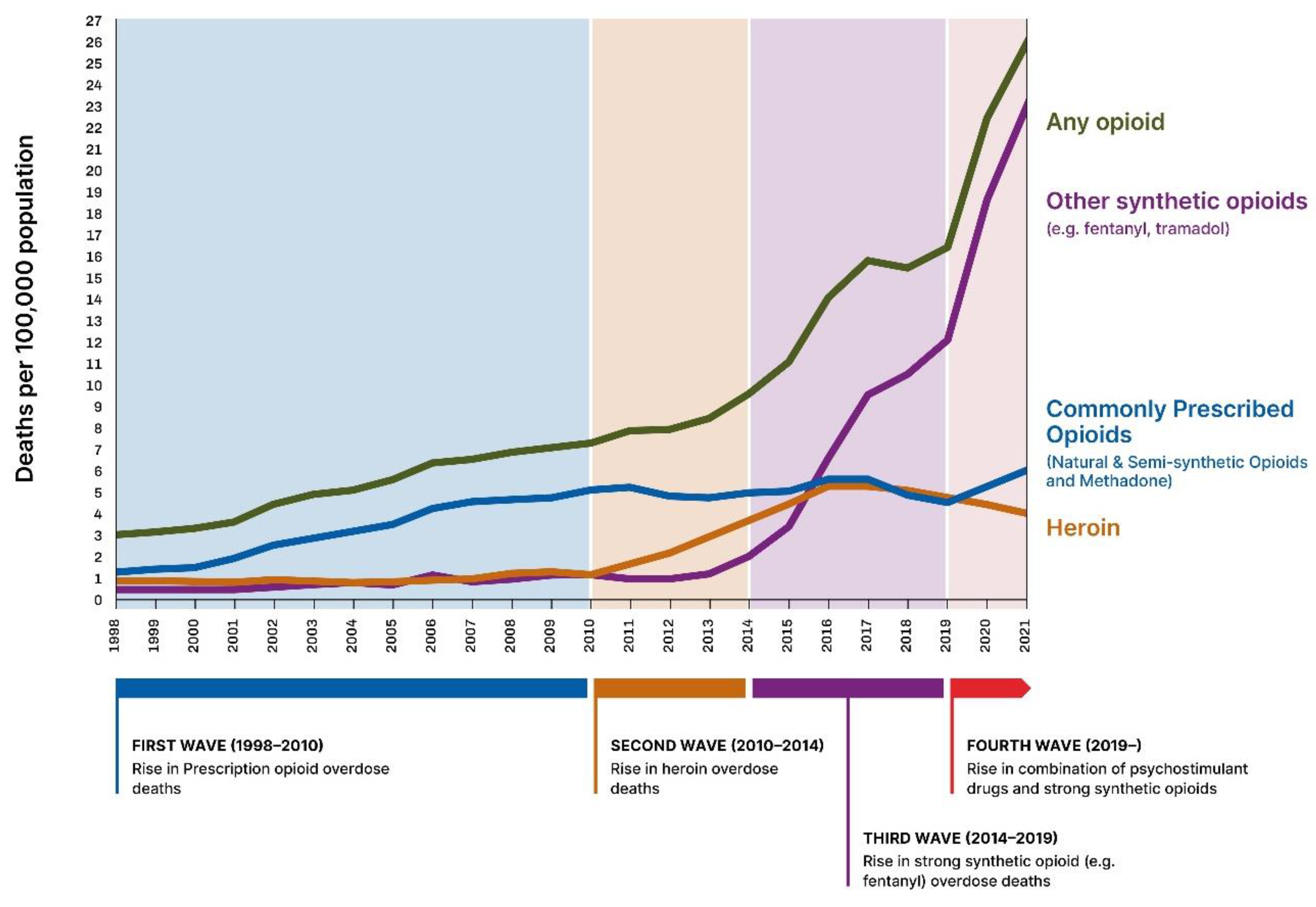
The inevitable pressure of the profit incentive brings me to a dystopian possibility. Like the above virtuous application of BCI, I discuss “The Mega-Heroin Scenario” first because our ability to actualize it is the most imminent. If history has taught us anything, it is that addictive things sell themselves. It doesn’t matter whether it’s cigarettes, heroin, gambling, or social media — there is a large class of products that in the long-term clearly hurt the customer, but nevertheless create a booming industry with massive profit margins. In absence of regulation, religious or cultural taboo, or some other external force, these industries will absolutely gut communities, and cause widespread suffering. Look to the British/Chinese Opium Wars, the history of Big Tobacco in the US, the AI-optimized doomscroll apps we sell to children, and of course, the current pharmaceutical-industry-encouraged5 Opioid Epidemic ravaging middle America.
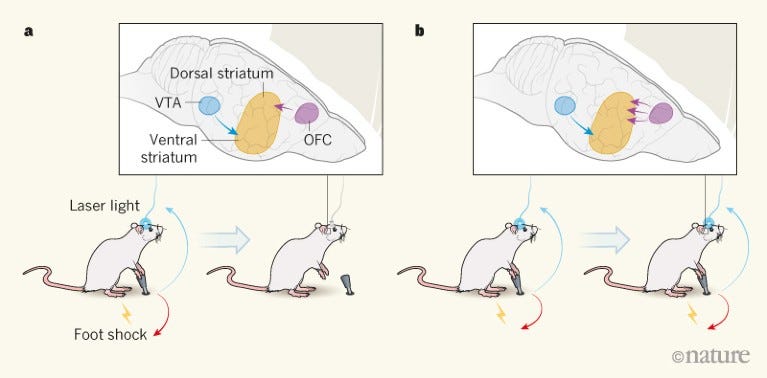
Well, I have some frightening news: making something really addictive with neuromodulation could be easy. In fact, we already have some evidence that the brain has an addiction button, and that we can press it. In a 2018 Nature study6, scientists gave mice the ability to optogenetically stimulate their own Ventral Tegmental Area (VTA), which is known to be involved in reward-reinforcement behavior. The mice quickly became addicted to pressing the lever, the same way they do when rewarded with cocaine7, but with an even stronger effect. Even when the lever also gave the mice painful foot shocks, the majority of mice persisted in lever-pressing, replicating the behavior of a junkie who knows a drug is bad for them.
But it doesn’t stop at mice. In human deep brain stimulation (DBS) patients, we have stimulated the VTA8 using implanted electrodes. Patients have generally described the experience as “orgasmic but unsatisfying”. It is believable that such a stimulus could be quite addicting. Luckily those studies were in a tightly-controlled clinical setting, where the patient was not given the option to stimulate themselves at will.
With a more advanced BCI, (such as the ultrasound-based BCIs that I work on), we could make things either more addictive, or equally addictive, but less obviously so. I think there’s a lot to say on what can be done about this, from the technical, cultural, and policy perspectives. But for now, note that there is an entire class of potential BCI products that would be not helpful to the user, but compel the user to buy and use them anyway. I and the scientists I work with are very conscious of this danger, and committed to creating no such thing. But do I trust an industry at large under the pressure of capitalistic competition to resist the temptation to sell (essentially) a drug of abuse? Do I trust the black market to not hack devices to use addictive sequences even if we could identify and disable them? Do you?
It almost feels like a cosmic joke, that addiction and liberation from addiction can have such a thin separating line. Nicotine patches and methadone seem to have done more good than harm9, but remember that heroin was originally marketed as treatment for morphine addiction. Then again, it makes sense that correcting the reward-reinforcement system requires interacting with the reward-reinforcement system. Well, may our discernment cut as clean as a razor, because early neuromodulation trials as a treatment for addiction are nothing short of astounding!
In a trial by Rezai et al10, several patients suffering from opioid addiction were treated with a single hospital visit administration of transcranial LIFU (low-intensity focused ultrasound), to the nucleus accumbens (an area right next to the VTA discussed above), while being shown images that elicit cravings, such as drug paraphernalia. You can think of this as an attempt to “break the association” of the craving with the drug. Well, it worked. The majority of patients reported a massive reduction in cravings for the next ninety days following the procedure.
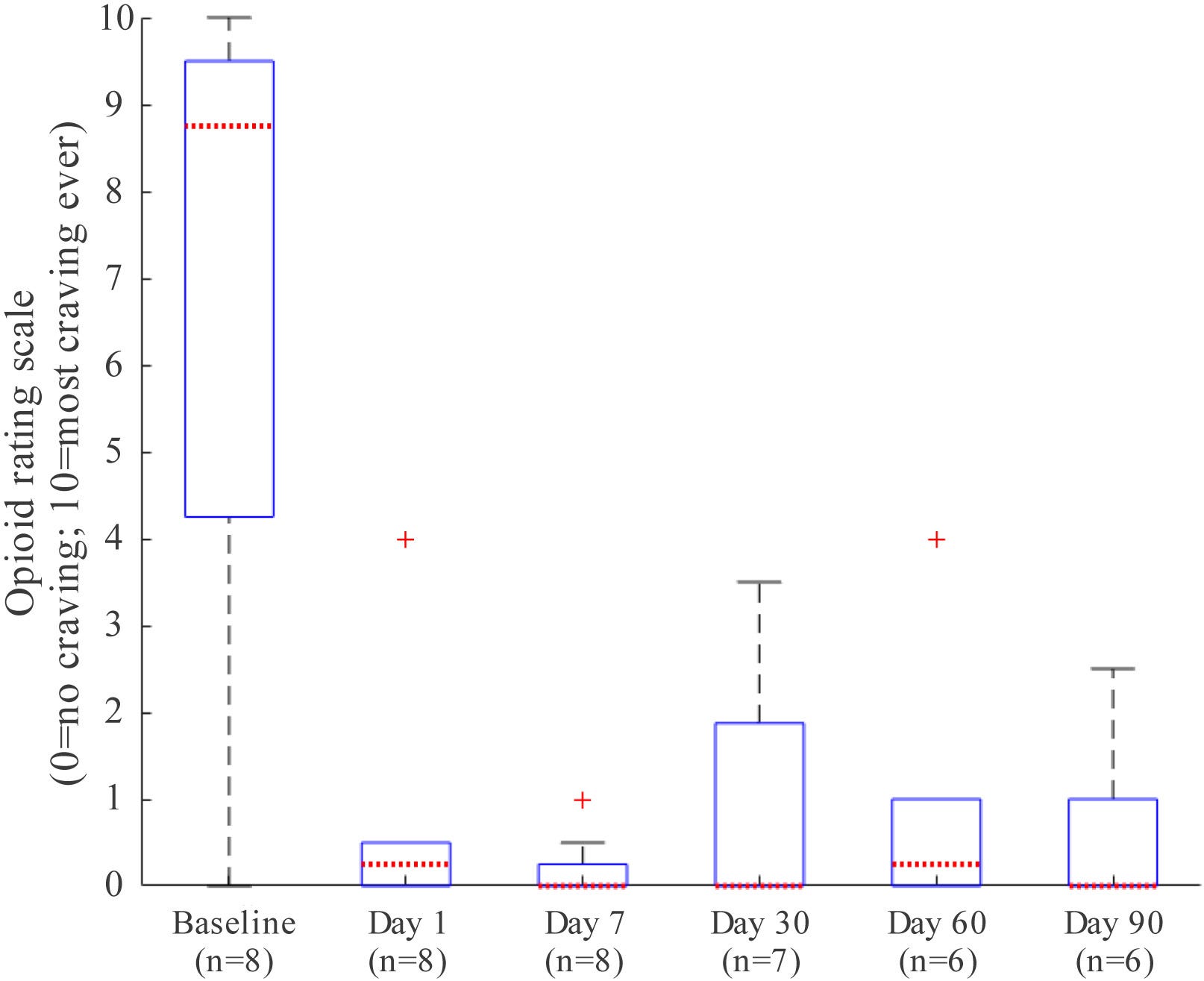
A permanent cure to an addiction involves many things, most notably, the improvement of someone’s life to the point that the conditions for the addiction arising in the first place are no longer present. This requires therapy, social work, and more. But a 90-day window to get your life back on track, that actually stops cravings? If the results hold, this is far more life-changing than methadone.
The applications of BCIs that I’ve so far discussed have all been about healing: the restoration of function to people unable to do what most people can. However, BCIs can and will be used to augment or “enhance” human ability sooner or later. This is in fact the explicit premise of several high-cap investments into BCIs. The trend began with Elon Musk’s ambitions of using Neuralink to allow humanity to “keep up” with AI.
Imagine that you could understand any language, project your visual imagination on a screen to share with others11, search (or, more disturbingly, autocomplete) any thought you’ve ever had with Google, enter a fully-immersive lucid dream at will, or — media favorite — compete in brutal futuristic sports with a bad-ass, sexy, robot body:
These applications are of course more speculative than the ones I discuss above. I’m not a tech CEO trying to sell you on an investment, so I’m not going to make claims about how close or far away these “augmentative” use cases are. But there is nothing physically impossible, or even scientifically infeasible about them as the information bandwidth, portability, and reliability of our BCIs increases.
They may come sooner than expected, and as investors, founders, and scientists in this space are strategizing towards these applications now, I think it’s critical that we think about their implications now.
The idea of the Technoking (or techno-aristocracy) is well-covered by sci-fi, but it still deserves mention. Perhaps the most prescient depiction was the award-winning 1997 movie Gattaca: In a future where gene-designed babies are available but expensive, the un-enhanced lose any hope of having the same opportunities as their enhanced peers. Social mobility collapses. In a different sci-fi work, 2019 Netflix show Altered Carbon, the wealthy use neurotechnology to become functionally immortal12. (at least to the outside observer — imagine copying your thought patterns from one body to the next) Death, the great leveler is conquered, and society ossifies. Generations of the lower classes live and die in filth while technocrats live in luxury for hundreds of years. Thus our second class of dystopic BCI products: those which are indeed beneficial and pleasant for the user, but are used in a way which is detrimental to the structure of society or culture.
Sci-fi well-covers this scenario simply because it is so plausible. It is already a dark mirror of the widening gulf between dynastic wealth and generationally poor in our modern society. Techno-optimists will claim that the commoditization of technology in the free market means that enhancements will be cheaply available to all. However, “just make enhancements cheap” isn’t a lever we get to pull. In our society, prices are determined by economies of scale, demand, and supply. Will neurotech be like cell phones, where 10x the money can’t get you a 10x better phone? Or will it be like sailboats, where it definitely can? My guess is somewhere in between. (unless leverage becomes linear with compute availability, in which case the sky is the limit) Some might ask, why does it matter? Shouldn’t we push the boundary of human potential regardless?
I don’t have all the answers here, but I suspect that most effective solutions here will be cultural — the values that we hold and the values that we share. I believe that what we should aim for is the happiness and harmony of all beings, not the glorification of human achievement. I like ecologically-themed solar punk more than cyber punk, and I find the cyclic spiritual dignity of Tibet more awe-inspiring than the expansionary ambition of the British empire. It is notable that cultures with more equality are happier, even, in a Pyrrhic twist, for the wealthy. They say it’s lonely at the top, and I believe them.
If you’ve read my other posts you know I’m a Buddhist. I am going to talk about “Enlightenment” in this section. If you are a skeptic of the idea of Enlightenment, then perhaps try to suspend your disbelief for a moment. (or skip the section) Imagine that what has been reported by thousands of spiritual practitioners in cultures around the world, for all of written history, is true: that there is a fundamental shift in perception that can eliminate 90+% of human suffering, without bad side-effects. This shift doesn’t seem to be the default state for most people, but various things can induce it, most notably, thousands of hours of meditation, done well, with a good teacher13. You may find that claim incredible, but given the consistency of its report, why aren’t we at least trying to study it more? Sasha Chapin and neuroscientist Kati Devaney discuss in this post:
Well, there is a funny overlap between the “study enlightenment” crowd, and the “ultrasound neuromodulation” crowd. Famous meditation teacher and author of “The Science of Enlightenment14”, Shinzen Young recently quit his teaching to pursue research into the induction of helpful meditative states using neuromodulation. In a recent study15, he and other researchers found that 12 minutes of ultrasound neuromodulation to the caudate nucleus of advanced vipassana meditators increased the depth, intensity, and accessibility of their meditation, as well as increased a series of factors that they (through their training) had learned to recognize as important on the path to enlightenment.
This raises many interesting questions. Will such a beneficial shift be induce-able in those who haven’t trained? Perhaps you can’t turn on a circuit that does not yet exist. Or, is this “cheating” spirituality? I think it remains to be seen. I believe enlightenment is, in some sense, a natural mode of existence, that has simply been buried under our trauma/karma. Even if the means are artificial, it is possible that any method of raising this mode to the surface could be a noble thing.
Perhaps such a shift could help the rich realize that all they were missing was connection with their fellow humans all along?
So, I’ve talked about the “Mega-Heroins” of Neurotech, and now I want to talk about the more complex issue of “Mega-Adderalls”. Imagine that we somehow solve the “Mega-Heroin” scenario of not-useful, but addictive BCIs, as well as the “Technoking” scenario of useful, but inequitable BCIs. Let’s imagine that BCIs become useful, cheap, and widespread. Indeed imagine that BCIs become so useful that their use becomes requisite to participate, or even survive in society. Now imagine that, like Adderall or dating apps16, there are side-effects. Thus, our third class: BCIs which are so useful as to be requisite for the user, but which are unpleasant or surreptitiously harmful to use.
This hearkens back to another piece I wrote, explicitly about Adderall and poetically about steroids:
What do I mean by surreptitiously harmful? Well, it is striking to me that many of the touted BCI ideas I hear are explicitly about disembodiment of some kind. To give us cyborg or virtual bodies. To upload our brains. To correct “bad” emotions. What if the BCIs used to edit our emotional state do so without us receiving the emotional messages that we needed, to learn and improve ourselves? What if they become a tool of suppression or distraction, just as smartphones have become17? What if they reduce our empathy, just as Adderall does18? Compassion, the urge to Justice, Kindness, and I’ll wager, most of morality comes from the human body19.
I think this scenario will be complex, and I can’t tell you in advance which applications or implementations of BCI will lead to this. But I can implore us to pull back from the desire to transcend humanity, to “escape” this beautiful Earth, or to “fix” our natural deficiencies. Instead, let us use this (coming) technology to participate in the present moment more vibrantly and wholly.
Let us use neural interfaces to make technology more human, not humans more machine.
If we cannot imagine how technology could be used virtuously, then we are bound to use it poorly. At the end of the day, I think the healing applications I talk about above are the most exciting. A fully-healed human is something incredible. Imagine how beautiful a society free from addiction could be!
However, I believe there are also more advanced neurotechnology applications that could be used to help us become more connected and understanding of each other. Imagine if we could “speak” in images — if we could project our visual imaginations onto screens in real time? This would unlock entirely new avenues of communication, including with people who speak different languages. Early fMRI research shows that this is certainly within the realm of possibility. See work by my grad school lab (The Gallant Lab)20, or more recent work by the MindEye project21. It is easy to imagine that a 10x bandwidth improvement (which is absolutely on the table) could lead to usable versions of that technology.

Imagine high-quality biometrics for emotional states. As a culture, we spend massive amount of time and money learning to be in touch with the emotions of ourselves and others. What if we could enter spaces where they are simply on display? (in the theme of our pharmacological analogues above, we might call these “mega-entheogens”) Imagine translation layers to help us understand the natural world around us, pooling and making accessible generations of knowledge about specific places. Is that bird in distress? Is this grove of trees healthy?
Humans are at our best when we are in tune with and caring for each other and the plants and animals around us. I think neurotechnology, if applied thoughtfully, could help bring those tendencies to the surface.
My examples here are only illustrative, and small corners of possibility space. There are other issues that I didn’t spend wordcount on, as I think they are clear enough that everyone will soon be talking about them. Consider:
The potential for direct damage to neural tissue. I trust that we will figure out this one, though, as with most medical technology, there will be some casualties along the way. In fact, there maybe already have been22, and the response within the field has been immediate23.
Non-consensual use of BCIs. We definitely aren’t on top of this one. There are already Neurotech startups aiming to contract with the military. What is sold as “advanced lie detection” now could easily become manipulation of the most abhorrent kind in a decade. That the Geneva Convention needs some additional lines concerning Neurotechnology is an understatement.
Instead, I have chosen to draw attention to these potential “dystopias” as they are the sort of thing that can happen even without anyone doing anything too evil. We will need proactive awareness to be spread, and thoughtful institutional action to be taken.
Mega-heroin: Harmful, but short-term pleasant.
Technokings: Empowering, but not equitable.
Mega-adderall: Effective, widespread, but in the hands of capitalism, a 0-sum competitive game. (with side-effects)
These all involve not just a technology, but the interaction of a technology with our political economy. I think the hardest and most important problems facing the world are cultural and political. Everything from AI X-risk to Climate Change are downstream of our systems of power. Unfortunately, like many scientists, I am a somewhat-awkward nerd with no real talent for rhetoric or politics.24 Yet, I do not think that we technologists can afford to not think about the implications of the things we build. Nor can we afford to be complicit in building tools whose use will not be in alignment with our values. As scientists and engineers, we often ask ourselves “what could be achieved with this?”. Let us continue to do so, but we must also ask “what will be done with this?”.
I deeply hope that we can seize utopia from the jaws of dystopia. To do so will demand that we don’t follow the Silicon valley ethos of “disrupt at all costs”. It will demand that we be thoughtful, balanced, and fiercely compassionate. Let’s do our best. 🙏🧠
Thanks to Sumner Norman, Jonathan Xu, and daiyi for your feedback and thoughts!
McNeil, Carson, Pok Fai Wong, Niranjan Sridhar, Yang Wang, Charles Santori, Cheng Hsun Wu, Andrew Homyk, et al. 2023. “AI-Enabled Virtual Hematoxylin and Eosin and Masson’s Trichrome Staining for Non-Alcoholic Fatty Liver Disease Activity Scoring from Single Unstained Slide.” Journal of Hepatology 78 (June): S671–72.
Hochberg, Leigh R., Daniel Bacher, Beata Jarosiewicz, Nicolas Y. Masse, John D. Simeral, Joern Vogel, Sami Haddadin, et al. 2012. “Reach and Grasp by People with Tetraplegia Using a Neurally Controlled Robotic Arm.” Nature 485 (7398): 372–75.
A tetreplegic is someone who cannot move any of their limbs.
This risk/reward tradeoff is evaluated by regulators and, for real-world use, by clinicians, hospitals, and payers.
Pieters, Toine. 2023. “The Imperative of Regulation: The Co-Creation of a Medical and Non-Medical US Opioid Crisis.” Psychoactives 2 (4): 317–36.
Pascoli, Vincent, Agnès Hiver, Ruud Van Zessen, Michaël Loureiro, Ridouane Achargui, Masaya Harada, Jérôme Flakowski, and Christian Lüscher. 2018. “Stochastic Synaptic Plasticity Underlying Compulsion in a Model of Addiction.” Nature 564 (7736): 366–71.
Guglielmo, Giordano de, Lieselot L. G. Carrette, Marsida Kallupi, Molly Brennan, Brent Boomhower, Lisa Maturin, Dana Conlisk, et al. 2024. “Large-Scale Characterization of Cocaine Addiction-like Behaviors Reveals That Escalation of Intake, Aversion-Resistant Responding, and Breaking-Points Are Highly Correlated Measures of the Same Construct.” eLife. https://doi.org/10.7554/elife.90422.2.
Ng, Yew-Kwang. 2022. “Stimulating Our Brains and Transforming Our Selves.” In Happiness—Concept, Measurement and Promotion, 125–32. Singapore: Springer Nature Singapore.
Druckrey-Fiskaaen, Karl Trygve, Tesfaye Madebo, Jan Tore Daltveit, Jørn Henrik Vold, Einar Furulund, Fatemeh Chalabianloo, Torgeir Gilje Lid, and Lars Thore Fadnes. 2025. “Integrated Nicotine Replacement and Behavioral Support to Reduce Smoking in Opioid Agonist Therapy: A Randomized Clinical Trial: A Randomized Clinical Trial.” JAMA Psychiatry (Chicago, Ill.) 82 (4): 406–14.
Rezai, Ali, Daisy G. Y. Thompson-Lake, Pierre-François D’Haese, Nathalie Meyer, Manish Ranjan, Daniel Farmer, Victor Finomore, et al. 2025. “Focused Ultrasound Neuromodulation: Exploring a Novel Treatment for Severe Opioid Use Disorder.” Biological Psychiatry 98 (1): 56–64.
As was an early ambition of my grad school lab:
They do this by copying their neural patterns from one body to the next. Whether this is “real” immortality, or if any one being or consciousness actually persists is a question for another philosophy discussion. What matters for this discussion is that to the outside observer society gets stuck with the same robber-baron for 10 generations.
And perhaps also, high enough doses of psychedelics, or so claims Ram Dass’s “Be Here Now.”: Dass, R. (2010). Be Here Now. United States: Harmony/Rodale.
Young, S. (2016). The Science of Enlightenment: How Meditation Works. United States: Sounds True.
Cain, Joshua A., Tracy Brandmeyer, Ninette Simonian, Jay Sanguinetti, Shinzen Young, Matthew Sacchet, and Nicco Reggente. 2024. “Facilitating Meditation with Focused Ultrasound Neuromodulation : A First Investigation in Experienced Practitioners.” PsyArXiv. osf.io. https://osf.io/3bzg6/download.
Bowman, Zac, Murray Drummond, Julia Church, James Kay, and Jasmine M. Petersen. 2025. “Dating Apps and Their Relationship with Body Image, Mental Health and Wellbeing: A Systematic Review.” Computers in Human Behavior 165 (108515): 108515.
Cho, Jinwoo, and Hoyoung Kim. 2025. “The Role of Impulsivity and Emotional Dysregulation in Smartphone Overdependence Explored through Network Analysis.” Scientific Reports 15 (1): 1852.
Zacher, Amelie, Josua Zimmermann, David M. Cole, Nicole Friedli, Antje Opitz, Markus R. Baumgartner, Andrea E. Steuer, et al. 2024. “Chemical Cousins with Contrasting Behavioural Profiles: MDMA Users and Methamphetamine Users Differ in Social-Cognitive Functions and Aggression.” European Neuropsychopharmacology: The Journal of the European College of Neuropsychopharmacology 83 (June): 43–54.
Keltner, D. (2009). Born to Be Good: The Science of a Meaningful Life. United Kingdom: W. W. Norton.
Nishimoto, Shinji, An T. Vu, Thomas Naselaris, Yuval Benjamini, Bin Yu, and Jack L. Gallant. 2011. “Reconstructing Visual Experiences from Brain Activity Evoked by Natural Movies.” Current Biology: CB 21 (19): 1641–46.
Scotti, Paul S., Mihir Tripathy, Cesar Kadir Torrico Villanueva, Reese Kneeland, Tong Chen, Ashutosh Narang, Charan Santhirasegaran, et al. 2024. “MindEye2: Shared-Subject Models Enable fMRI-To-Image With 1 Hour of Data.” arXiv [Cs.CV]. arXiv. http://arxiv.org/abs/2403.11207.
Rezai, Ali, Manish Ranjan, Aniruddha Bhagwat, Tasneem Arsiwala, Jeffrey Carpenter, Mark Schafer, Geoffrey Adams, et al. 2025. “Brain Injury during Focused Ultrasound Neuromodulation for Substance Use Disorder.” Brain Stimulation 18 (6): 2050–53.
You may consider essays like this one to be my attempts at practice.
Comments
Nothing yet. Say the first thing.
Sign in to join the conversation.