
There are still a few spots in my October Utah trips, in Grand Staircase Escalante National Monument! Details are here.
And I’ll announce next year’s Alaska trips in August- sign up here to be the first to know!
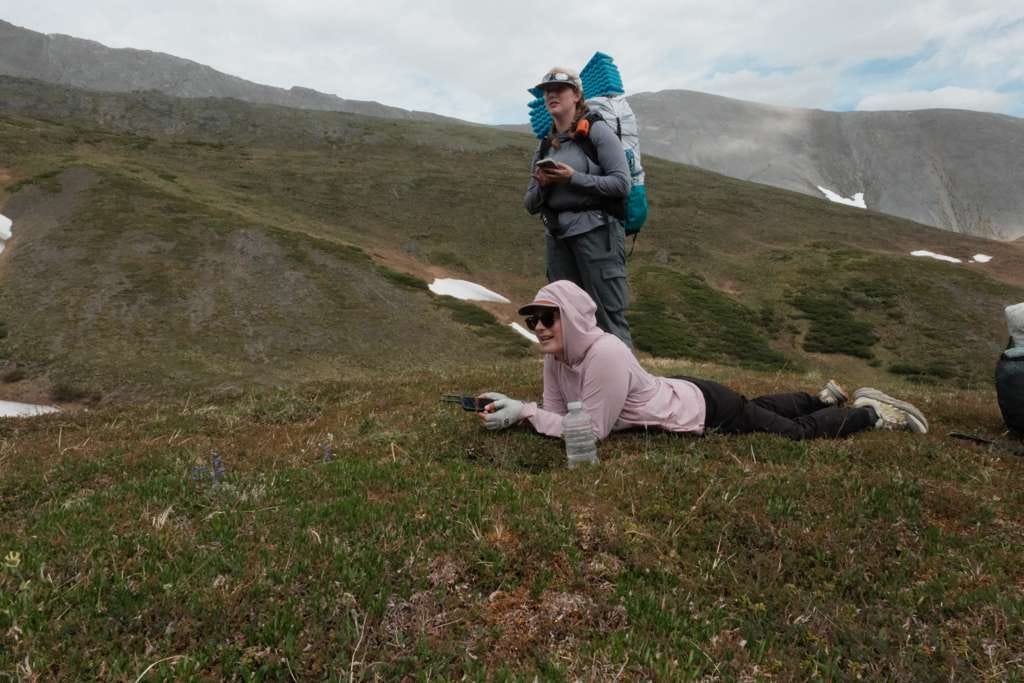
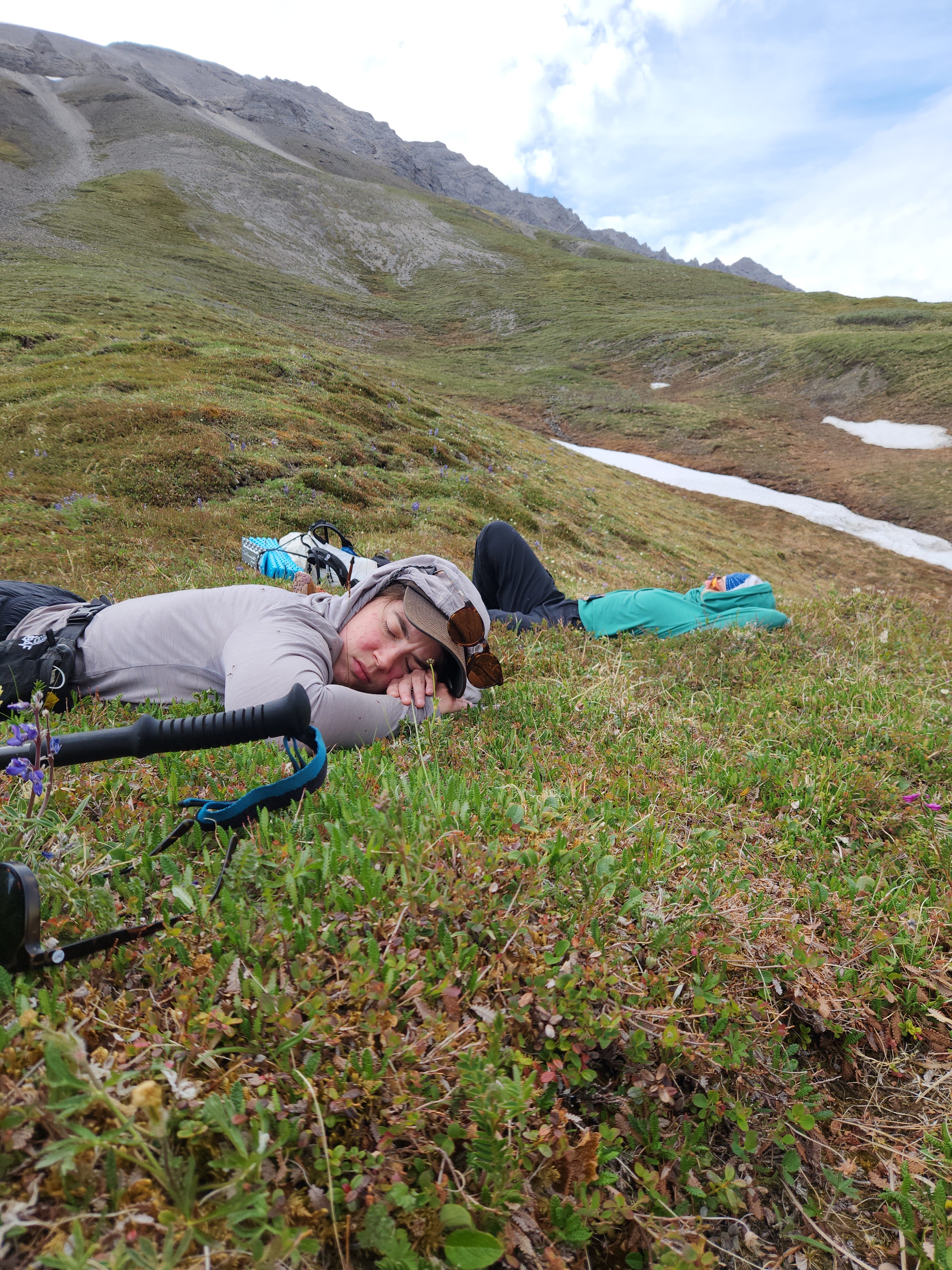
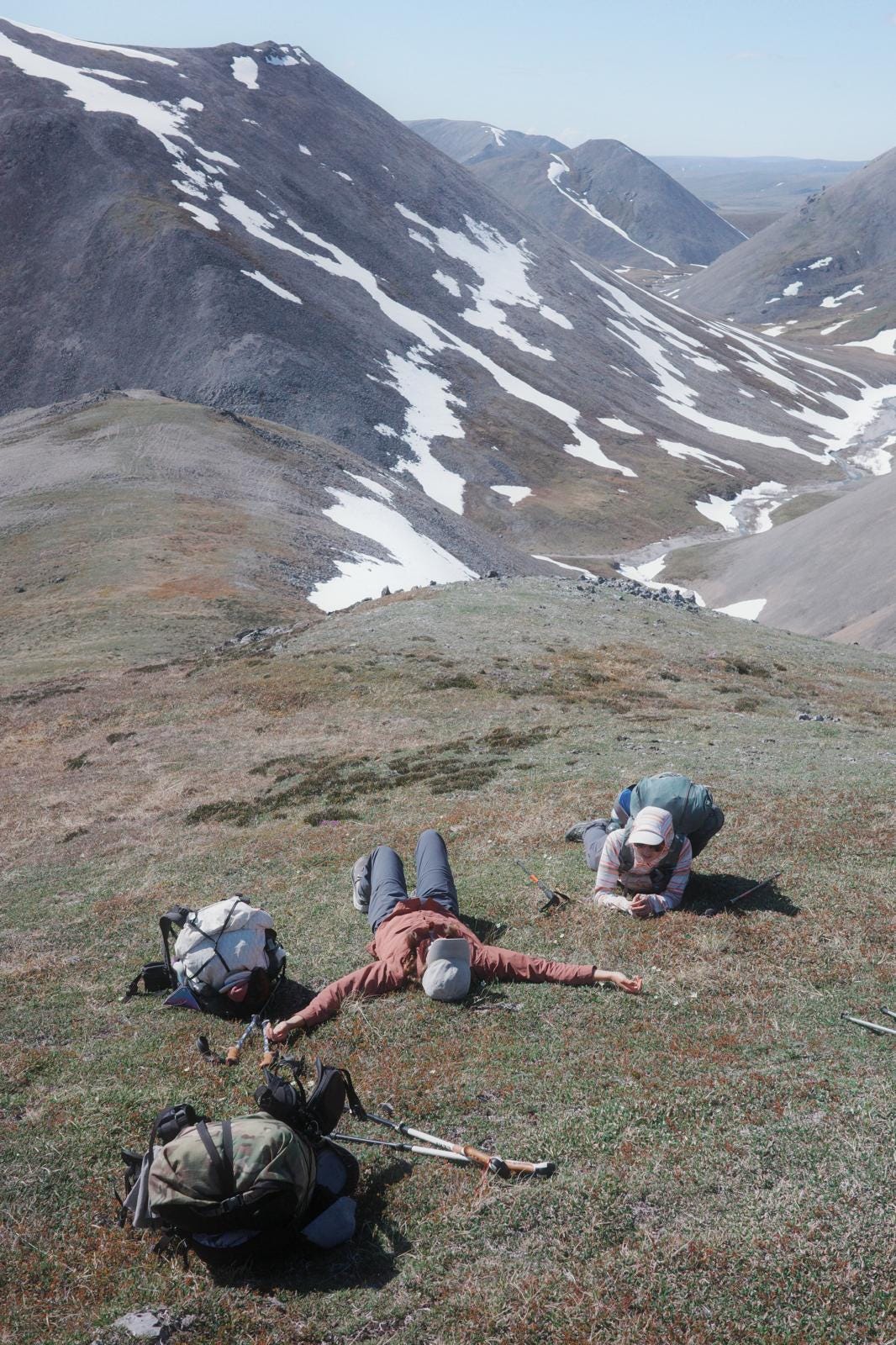
I go to the wilderness to sleep. At bedtime the sun turns my shelter into a solarium and I strip down, feel my muscles unwind in the warm. I sprawl on my neo-air on my stomach- baby cobra to unkink my back- always at the end of a day backpacking I must do baby cobra to unkink my back. Sometimes I also eat dinner this way, lying on the tundra propped on my elbows, shoveling instant refried beans into my mouth. One of my hikers calls it “tummy time”.
“Tummy time!” she says at lunch, flopping down onto the soft peat. You can eat on your stomach, look at maps on your phone, whatever. It stretches your spine into the opposite shape of what your backpack does. It’s great.
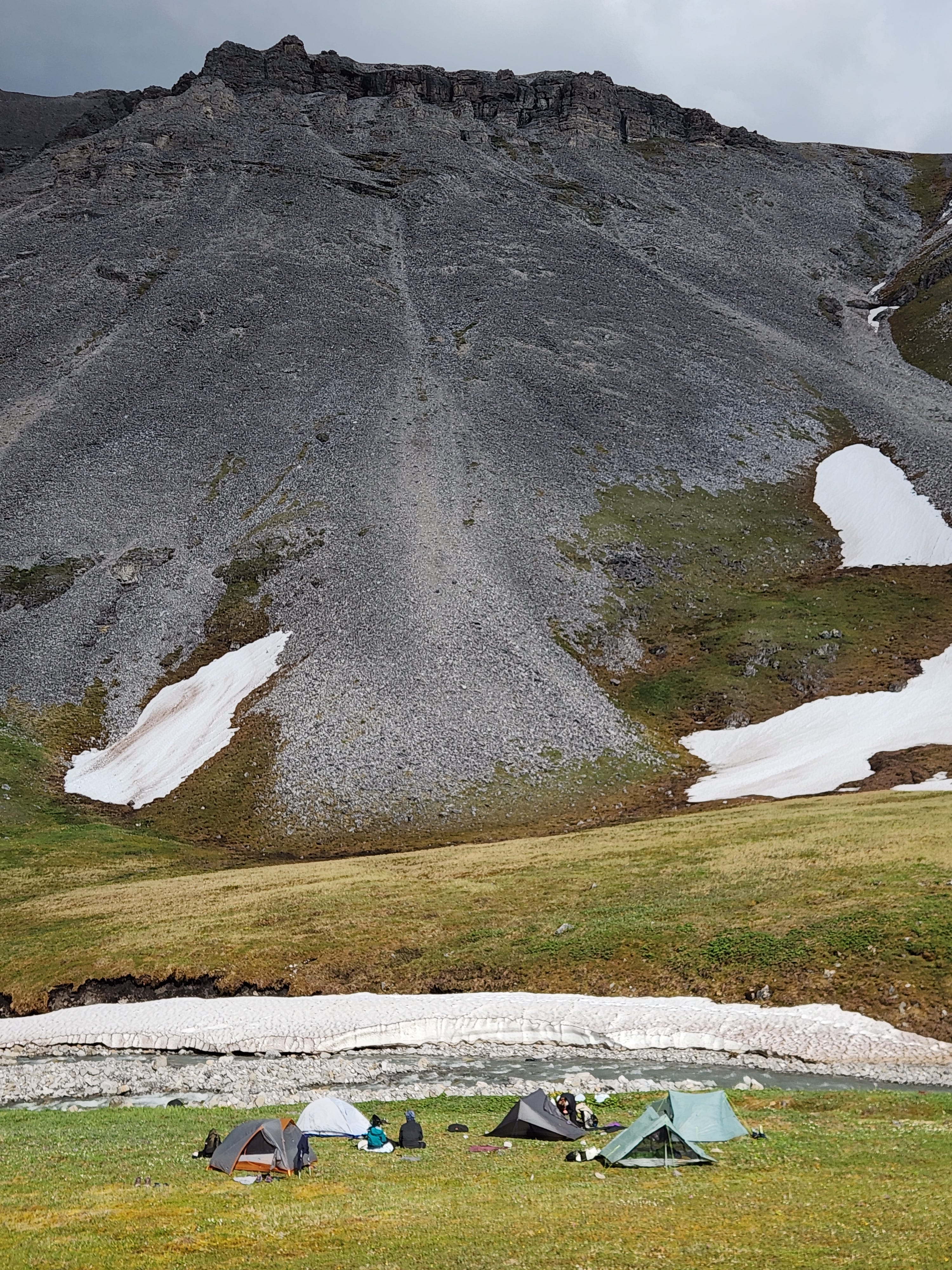
I can hear the hikers in this group rustling, and then snoring. I put my headphones in my ears and que up the thriller I’ve been listening to- I recently discovered Lisa Jewell. Her novels are cozy who-dunnits, mostly about relationships but there’s always someone who’s gone missing and a mystery which must be picked apart. I’ve been listening to her novels one after another. The sun may not set in the Arctic in summer but by and by it dips below the highest ridge and the temperature plummets. Shade is the new night. I pull my sleeping bag over me and drowsiness hits like a narcotic. I don’t feel drowsy at home in my bed, ever. For me, sleeping in a bed in a house is like fist-fighting god. It’s always been this way. These days I sleep better than I used to- god is tired or I am stronger, I’m not sure which. But never this sweet drug of drowsiness, carrying me away. Feeling euphoric, I turn off my audiobook and roll onto my back, pulling my beanie over my eyes to block the light. I know I’ll get nine hours, sometimes ten. I come to the wilderness to sleep.
I also come to the wilderness to walk. “Walking” can mean so many things. Not all miles are created equal. How do you walk on a hillside covered in boulders, slippery from the rain. How do you walk in a swamp. How high do you have to lift your legs to clear the dwarf birch. My hikers get nervous about choosing their own lines, but there are no wrong answers. There are only chunks. The surface of the earth cannot be measured. Its intricacy is exponential- the closer you look, the more of it there is. How do you quantify the empty spaces in a talus field? The way each step forward is a half-step back when you’re climbing a hillside covered in soft peat? The false summits of a pass? The optical illusions of distance; the way that climbs appear shortest from the bottom, and a contour around a bowl always looks farther than it is. Navigating chunks makes your legs tired in ways you can’t imagine. It exhausts the tendons in your feet. Your ankles swell, your knees squeak like hinges that need oil. Your hips ache at night. A few weeks of it, though, and you grow stronger. My trail runners are a half-size too big and I tie them loose enough to take them on and off without undoing the laces. I learned this from one of Ray Jardine’s tomes from the seventies, and it’s always worked for me.
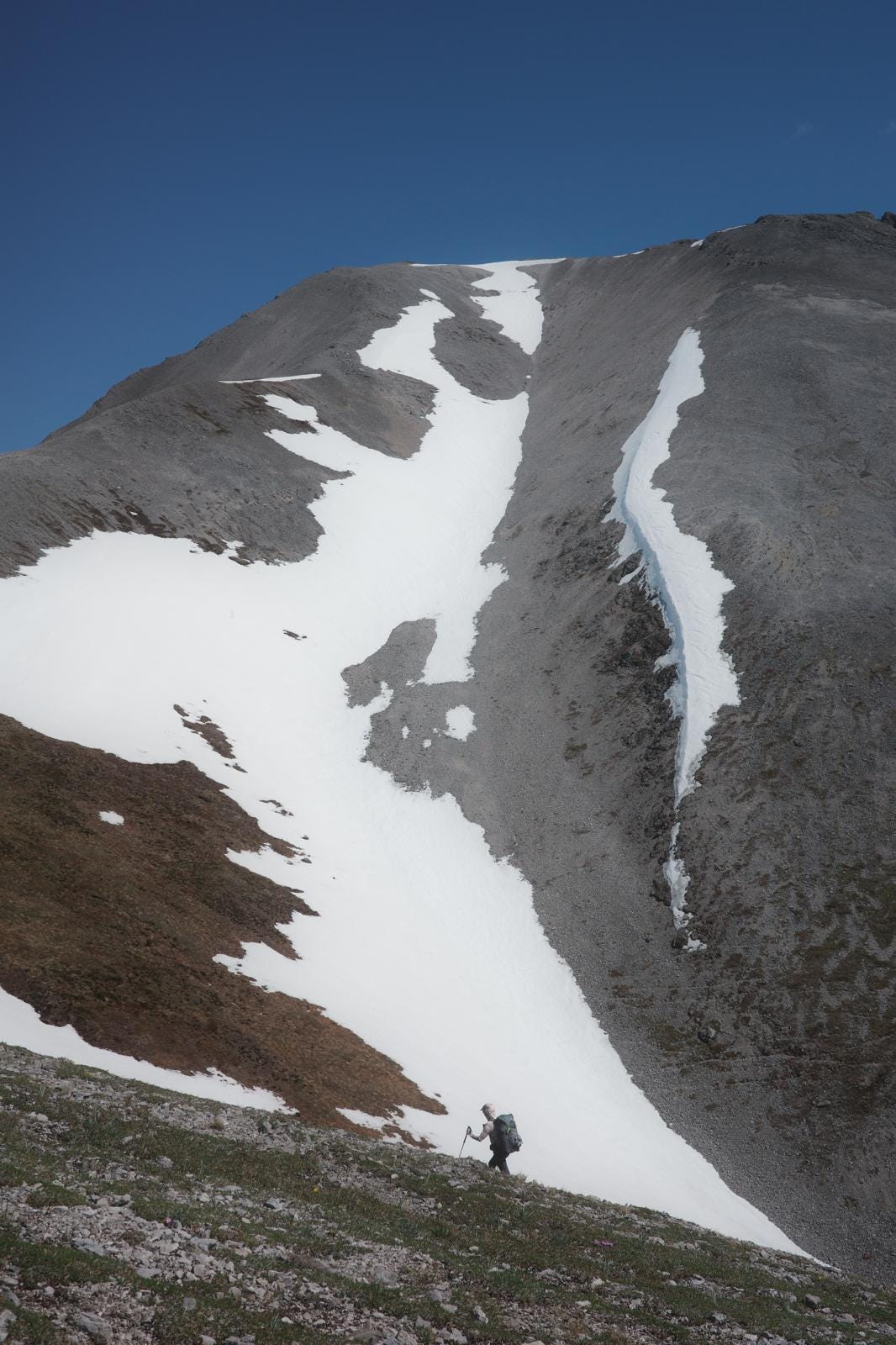
We’re side-hilling on yellow pixel tundra when one of my hikers says
“My shoes are twisting around my feet- what do you do to stop that? Tie the laces tighter?”
“No!” I say, alarmed. The long-distance hiker in me has a visceral reaction to the idea of tight laces- tight shoes on a long trail will give you infinity of problems. “I just let them twist,” I say. And then I remind myself that this is a seven-day trip. Probably no-one is going to get tendonitis from having their laces tight on a seven-day trip. And people don’t like a loosey-goosey shoe. “But you can tie your laces tighter if you want,” I add.
After a few weeks on these chunks your foot tendons will be stronger than the sun. Your shoe becomes an afterthought, just a loose foam slipper with good tread to help on the rocks. You can lift your leg over dwarf birch all day long, and wrench your feet endlessly from the swamps. You don’t mind the climbs. You look forward to them, because it’s crispier up there, the rocks and caribou lichen preferable to the tussocks.
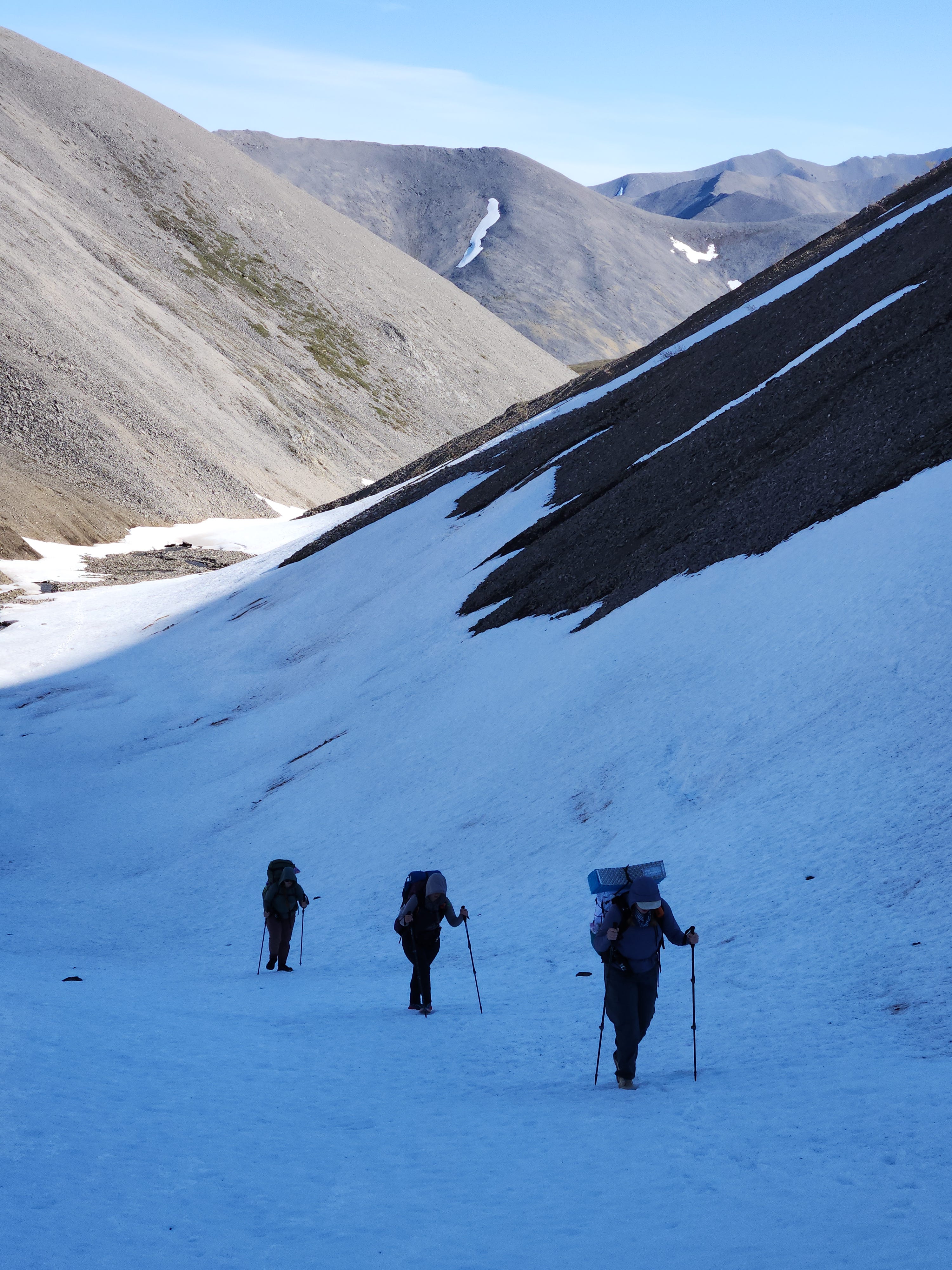
In the beginning of the world, there are no flowers. Neither are there mosquitoes. The deep snow lingers in the drainages and we use these as runways to get up and down the mountains, listen to water tinkle in the rocks underneath. The world is just waking up and the sun makes a lazy circle in the sky, erasing time. You see tracks, but no animals. The only bird is a golden-crowned sparrow, singing endlessly in the night.
“Why aren’t there any animals?”
“There’s nothing to eat here yet.”
There are so few mosquitoes that we joke about cowboy camping.
“You can’t cowboy camp in the arctic because you can’t wake up every two hours to re-apply sunscreen,” says one of my hikers, and then we can’t stop laughing.
There is no weather. One of my hikers says it reminds her of the landscape in the novel I Who Have Never Known Men. There are no traces of humans, either, save for once a day when we pass a random metal pipe, lying on the ground as if it fell from the sky, sitting long enough to be half-subsumed by tundra. A glitch in the matrix. we all take turns hitting the pipe with our trekking poles, the metallic sound ringing out in the bright, empty air.
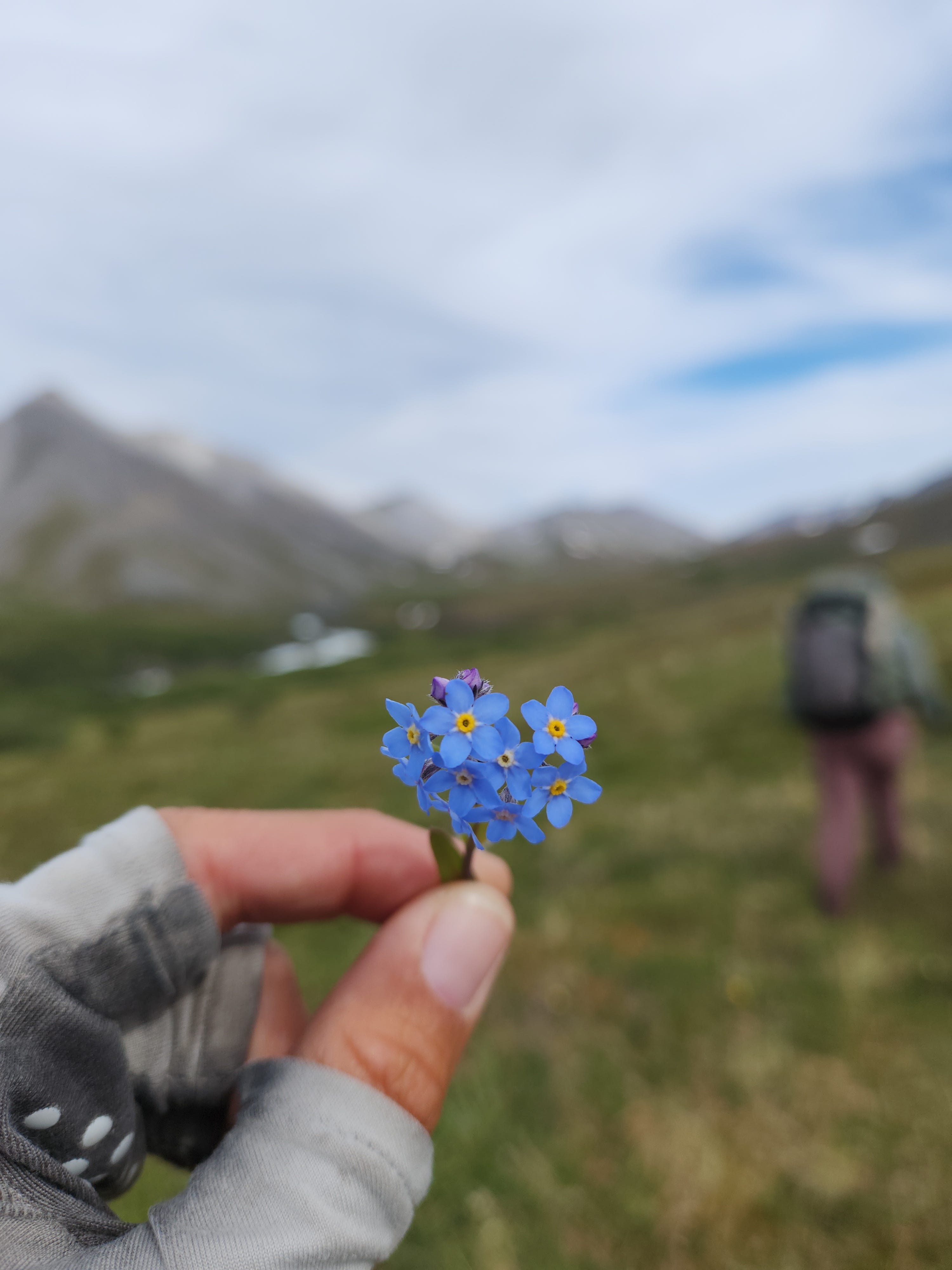
Then come the mosquitoes, only a few at first, together with the first of the flowers, the small bells of lingonberries. These mosquitoes don’t bite they only bump against you amicably, lazy and fat. Mosquitoes eat plant juices initially, they’re here to pollinate the flowers. The snow is melting in the drainages now, it’s rotten at the edges, we punch through to the rocks below. The sun’s circle in the sky tilts on its axis. The arctic circle delineates polar night and its inverse, this infinite day.
For my first two trips, to the western Brooks Range, we fly out of Kotzebue. Kotzebue is an Iñupiat village that sits on the edge of the sea in Northwest Alaska, in a spot where the people of the north have always come to trade. I love that the arctic is a circumpolar culture; if you turned the earth on its side, the top would be one place. People who eat seal and whale and once lived in sod houses lit with sandstone whale-oil lamps. Start in Kotzebue, and walk east- Iñupiat, Yup’ik, Alutiiq, Inuvialuit, Inuit, Kalaallit, Yuit- across the Bering land bridge and you’re back in Kotzebue again. You can still live in a sod house if you want. Some people do. You can also live in a regular house and hang salmon to dry on tiktok live. The youth tear around Kotzebue on their four-wheelers, kicking up dust. They wear sweatpants and false eyelashes, just like youth everywhere. Caribou sheds are stacked on the roofs of houses weathered grey by the sea. A clean wind blows cold off the ocean. Way in the distance is a white wall of sea ice.
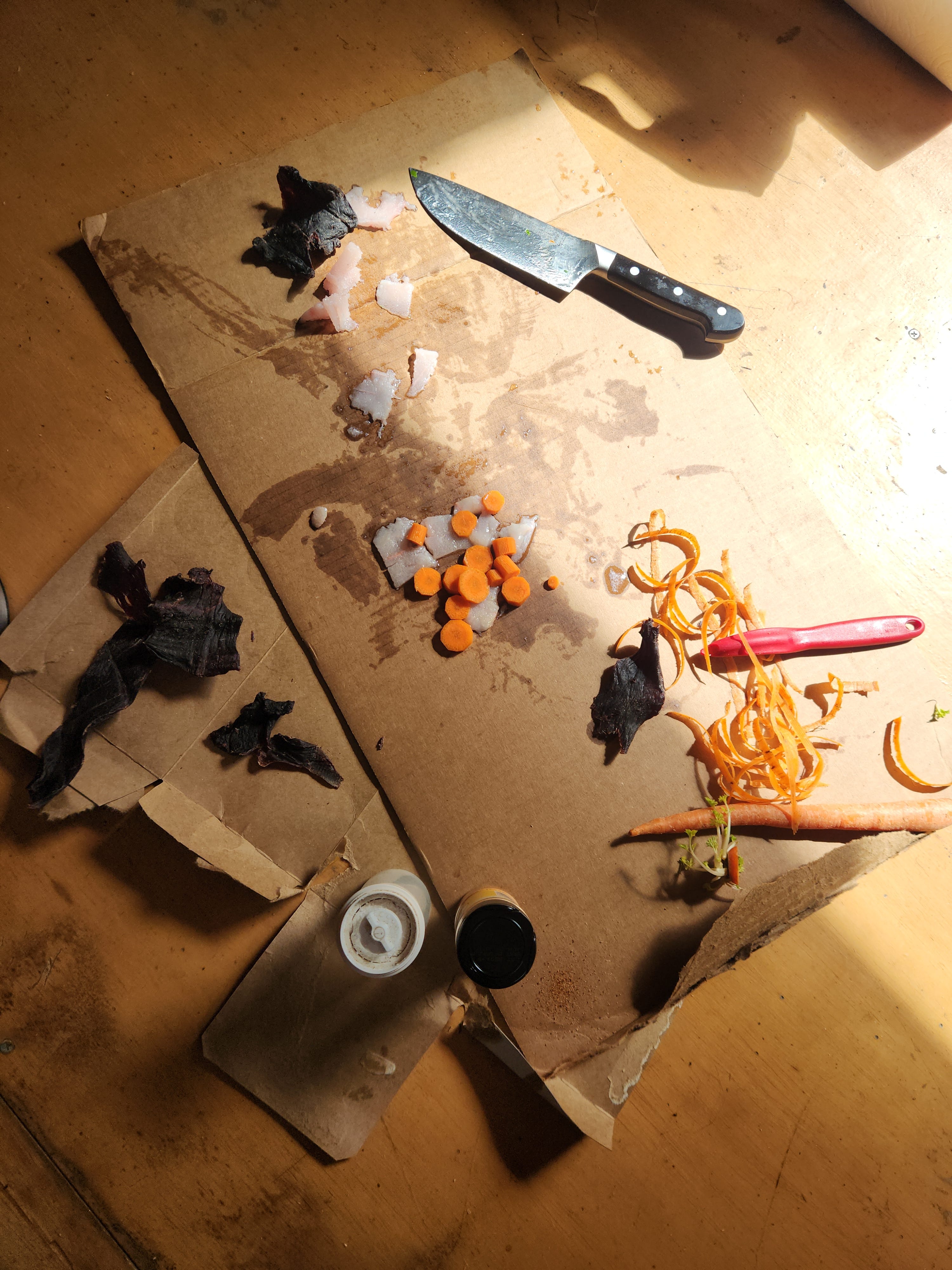
Seth grew up in a sod house. My friend is helping him build a deck in Kotzebue so we stop by- I’m with my first group of hikers and we have four hours until our bush pilot can ferry us to the start of our hike. Seth’s couch is covered in a muskox pelt and his writing chair is draped with a grizzly bear hide and he shows us mammoth bones and the riotous vegetables in his greenhouse. His girlfriend Aakatchaq makes earrings from seal intestines and tanned salmon skin. With my second group we’ll visit again and help them raise the wall in an addition they’re building, and Seth will make us coffee in his espresso machine and feed us muktuk and caribou dry meat on cardboard on the floor, with sliced raw carrots and sprinklings of seasoning salt. I’ve never had whale blubber before and it tastes clean and empty, like lard.
The land of I Who Have Never Known Men is not far from Red Dog Mine, one of the largest zinc and lead mines in the world. The juxtaposition of this sun-soaked mountain land, carpeted in tiny flowers, which has fewer signs of humans than anywhere I have traveled in my life, with the literal Eye of Sauron threatens to break my brain. I know that every aspect of my life is dependent on mining. And yet. And yet. I want someone to push the button. I keep reminding myself that a finite planet does not lend itself to a system built on infinite growth, that we’re about to fall off a cliff. But this cliff can’t come soon enough. I just hope it happens before these mountains, with their quiet more priceless than anything that can be dug from the ground, get gobbled up. It’s the only thing I believe in anymore, the only “hope” I allow myself to have. That we’ll get exactly what we deserve- for single use plastic, for factory farms, for combustion engines, for slave labor. And then, the earth will recover. And then.
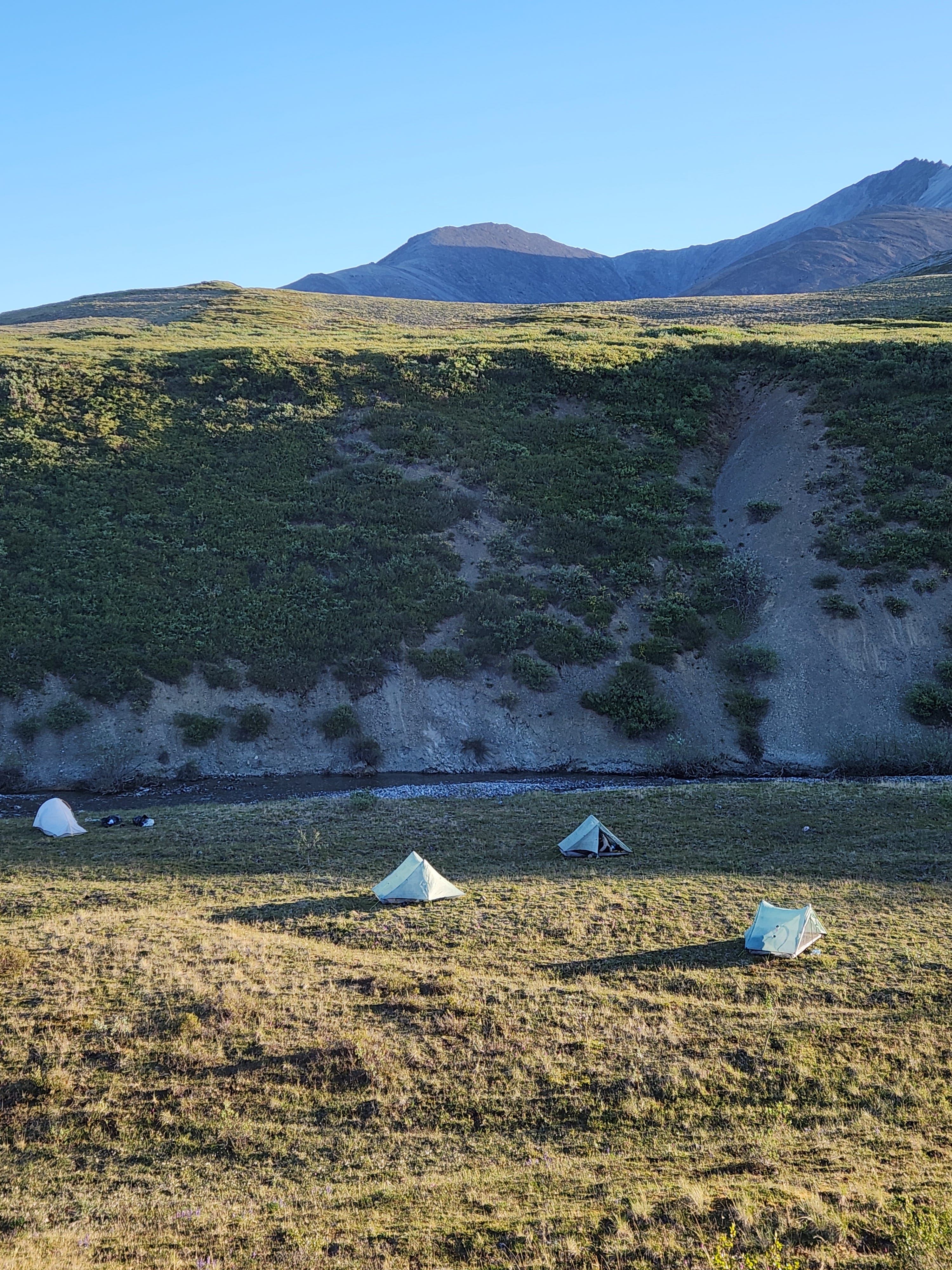
In the meantime we pitch our shelters on a crispy tundra bench above a perfect, burbling stream. There was a grizzly earlier, but it ran away. The most dangerous animal in the outdoors is us. And anyway, my hikers are more afraid of the talus and stream crossings than the animals. And wet feet. Everyone hates having wet feet.
“Tell your next group of hikers that the bears will be the least of their worries,” they say.
My third and fourth guided trips are in Gates of the Arctic National Park, in the central Brooks Range. “Gates of the Arctic” is an arbitrary distinction, a box drawn around a chunk of the mountains. That part of the Brooks Range is no more spectacular than the rest of it- the whole range is breathtaking. But people know what national parks are, it helps them conceptualize an area.
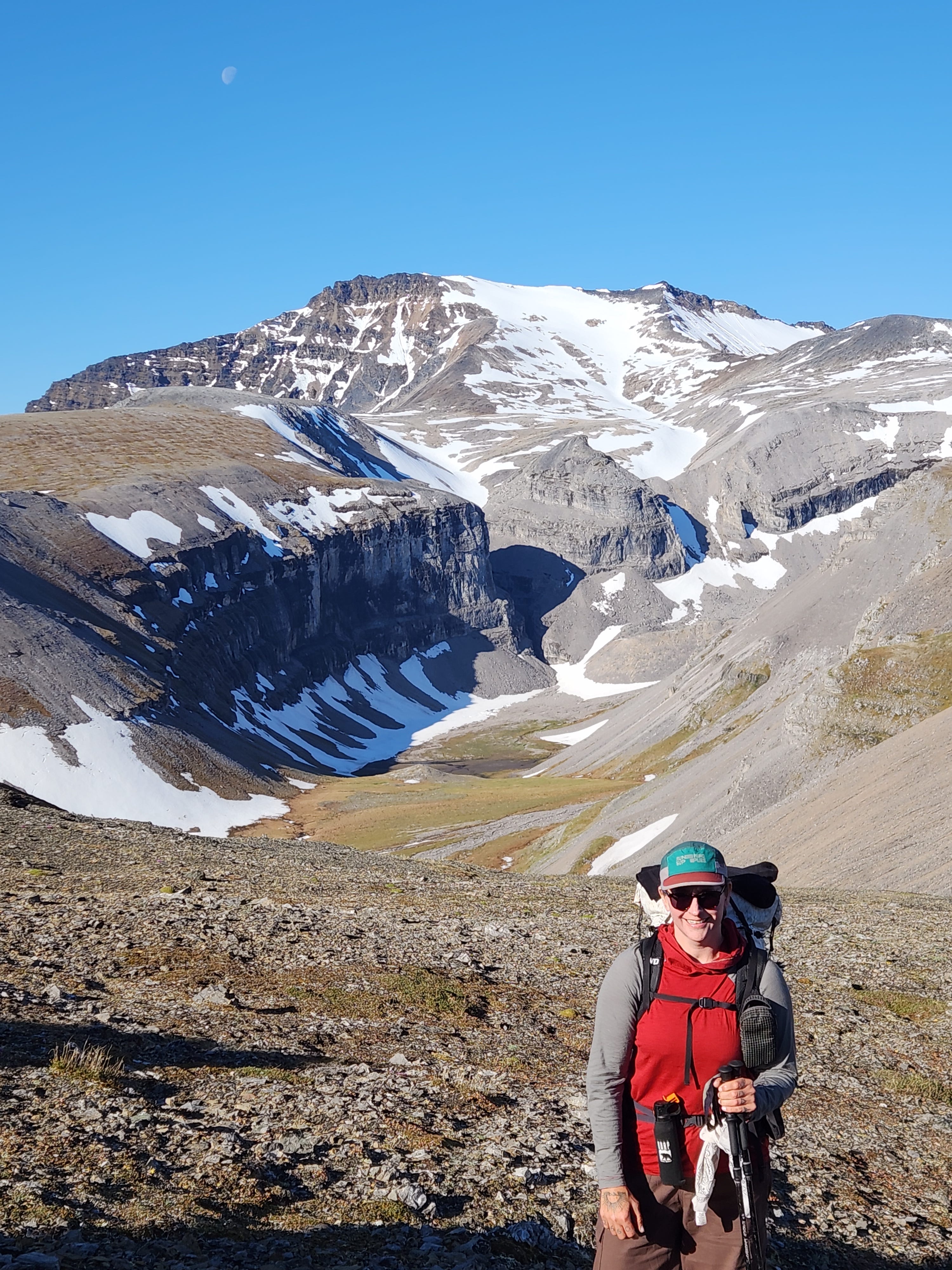
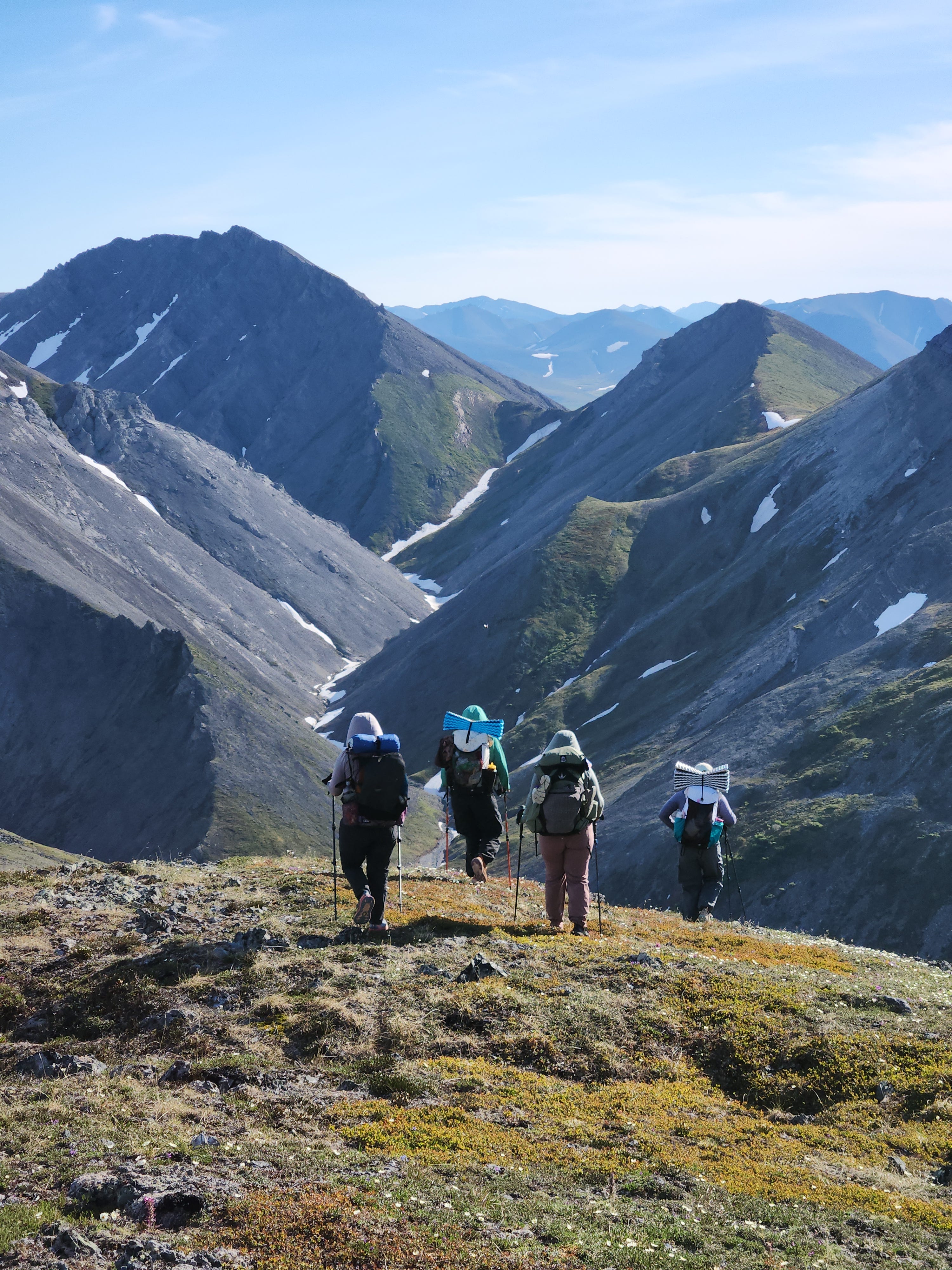
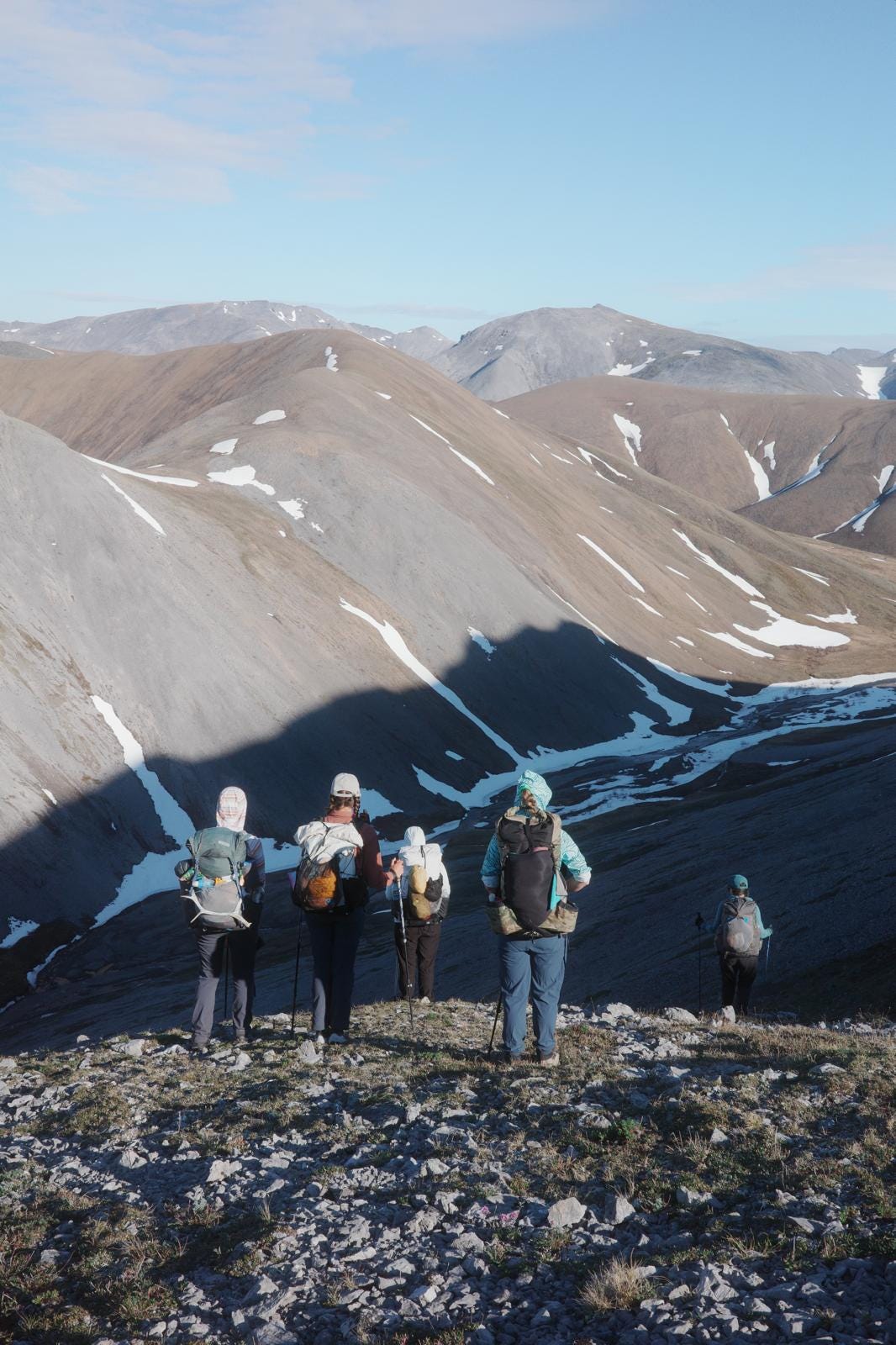
The weather is still good so with the first GOTA group we stay high, up on the ridges, having endless “uppy-downy” climbing and descending rocky passes. My priority on every Brooks Range trip is to stay high, out of the bog- it is a better overall experience, I have found, to do fewer miles with more elevation gain than to grind it out in the tussocks. The navigation is non-stop when you stay high- does the ridge go? The end of the ridge is red pixels, but is there a sheep trail off of it? Which part of the descent is least steep- where the snow is? Can we glissade? The people are overcome with decision-making fatigue, and they sleep like rocks in their shelters at night. I do too. I come to the wilderness to sleep.
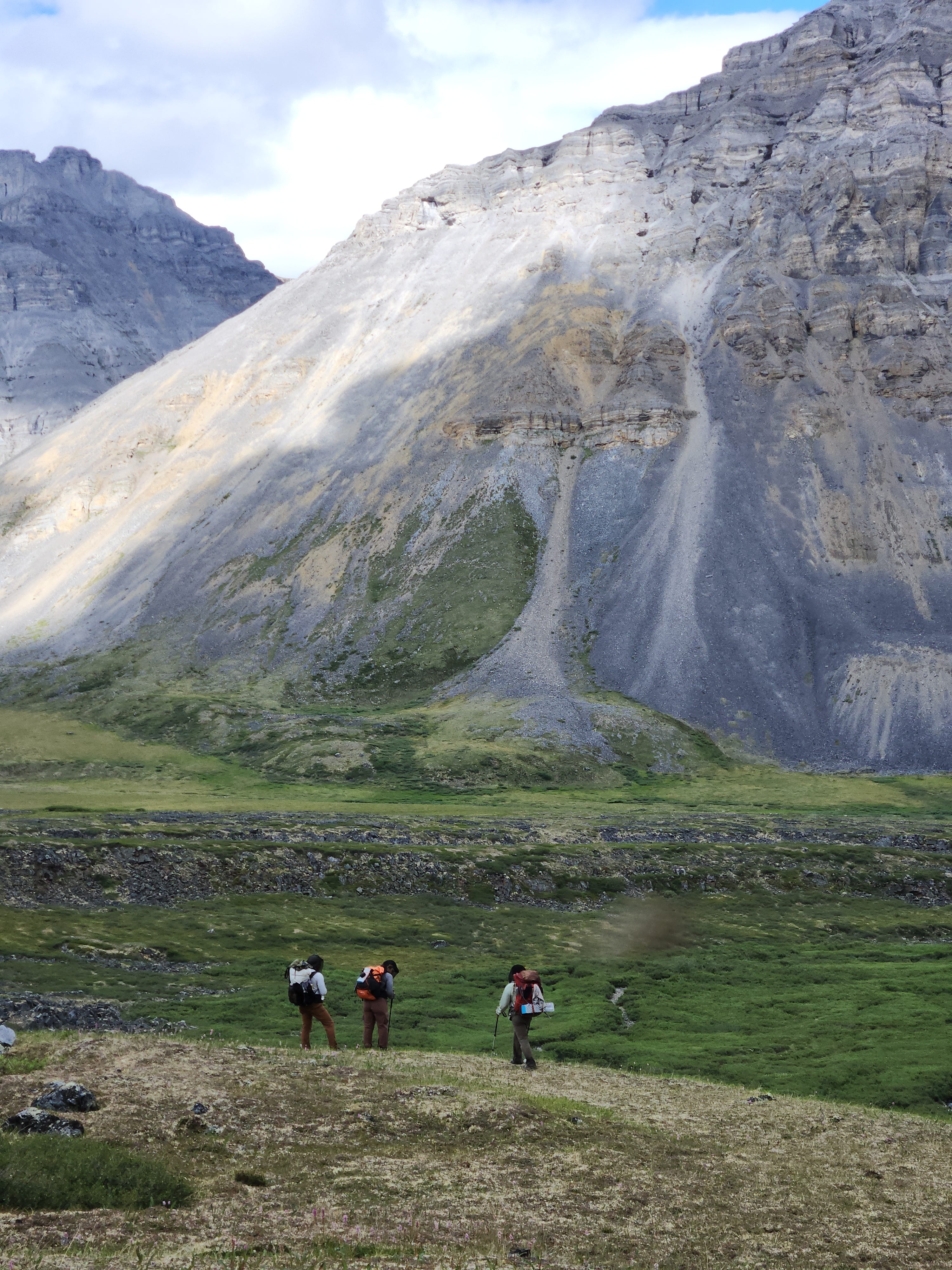
We see no bears but there is a wolverine, frolicking weasel-like along a creek below us one day. We watch in awe as this spiciest of badgers approaches us and retreats, approaches and retreats, finally scampering away.
I am pleased to discover that ranger Al is at home in Anaktuvuk Pass when we’re killing time before our flight at the end of the first GOTA trip. I tried to visit him last summer, but he was out doing a bee study. This man knows so much about the Alaskan arctic that he could probably teach a college course on it, or write several books. He is steeped in the complexity of it- the contradictions, the modern challenges it faces, the darkness and the light. I worry that Al is going to retire someday- then who will carry all this knowledge? He’s on hold with his phone carrier when we pop in, waiting to talk to a customer service representative about changing his phone plan, and yet he regales us for hours while the hold music plays softly in the background, passing around books and xeroxed photographs. Afterwards my head is spinning and I can barely stay awake while we pitch our shelters in the mossy, sheltered spots beneath tall alders that make up the visitor camping area next to the John river. The villagers have invited us to a game night but Pedro, the token gen-z hiker in our group, is the only one who’s not too sleepy to attend. He wanders off, munching on a bag of takis from the store, while I lay in my sleeping bag thinking about Al.
To truly know a thing is to fall into a web of complexity so dynamic that even looking directly at it alters it, I think.
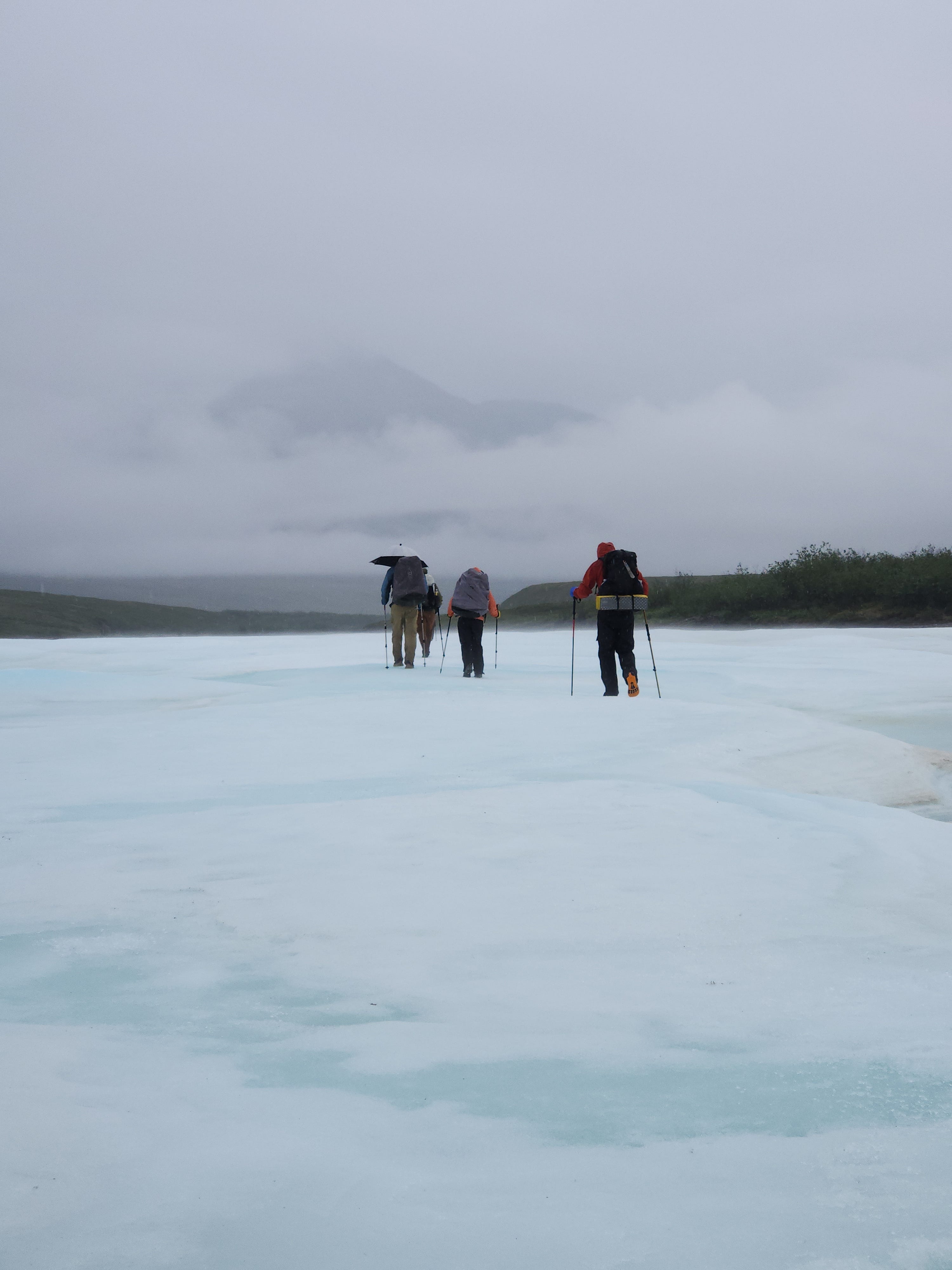
The weather turns in time for my second trip to GOTA, my fourth and final seven-day guided Brooks Range trip of the season. We go high and encounter what I call “danger rain”- rain that immediately soaks you to the skin and sucks the warmth from you. The forecast says it “feels like” 36 degrees F. You can’t stop walking or you’ll get too cold. You can’t eat, or drink, or pee, or rest. We descend back to the bog, and the sun comes out again. Looking high we can see the stormclouds, curdled around the highest peaks. They’ll stay there for all our seven days. We concede to make a route in what I call the “medium place”- a combination of river valleys and lower passes. In the end, it is squishy but it is breathtaking. It is warmish, with just a smattering of rain each day. I forgot how lush the lower valleys are. Walking the cobbles of the river and weaving in the corn maze of willows is a joy. There is dwarf fireweed everywhere. The flowers are insane and the mosquitoes are too. This group includes three Minnesotans with Alaskan-level mosquito tolerance. They don’t wear bugspray. I never wear bugspray, I just let the mosquitoes feast on me. I don’t react to Alaska mosquitoes anymore so it doesn’t bother me much, at least while I’m walking. I brought a thermacell on these trips on recommendation from some friends who did the Brooks Range traverse last year, and it is a lifesaver at breaks and camp. We call it “pesticide maxxing”, huddled around it like a campfire as we eat our dinners. I end up selling the thermacell to two packrafters headed down the John river right before we leave; I hope it affords them a little relief.
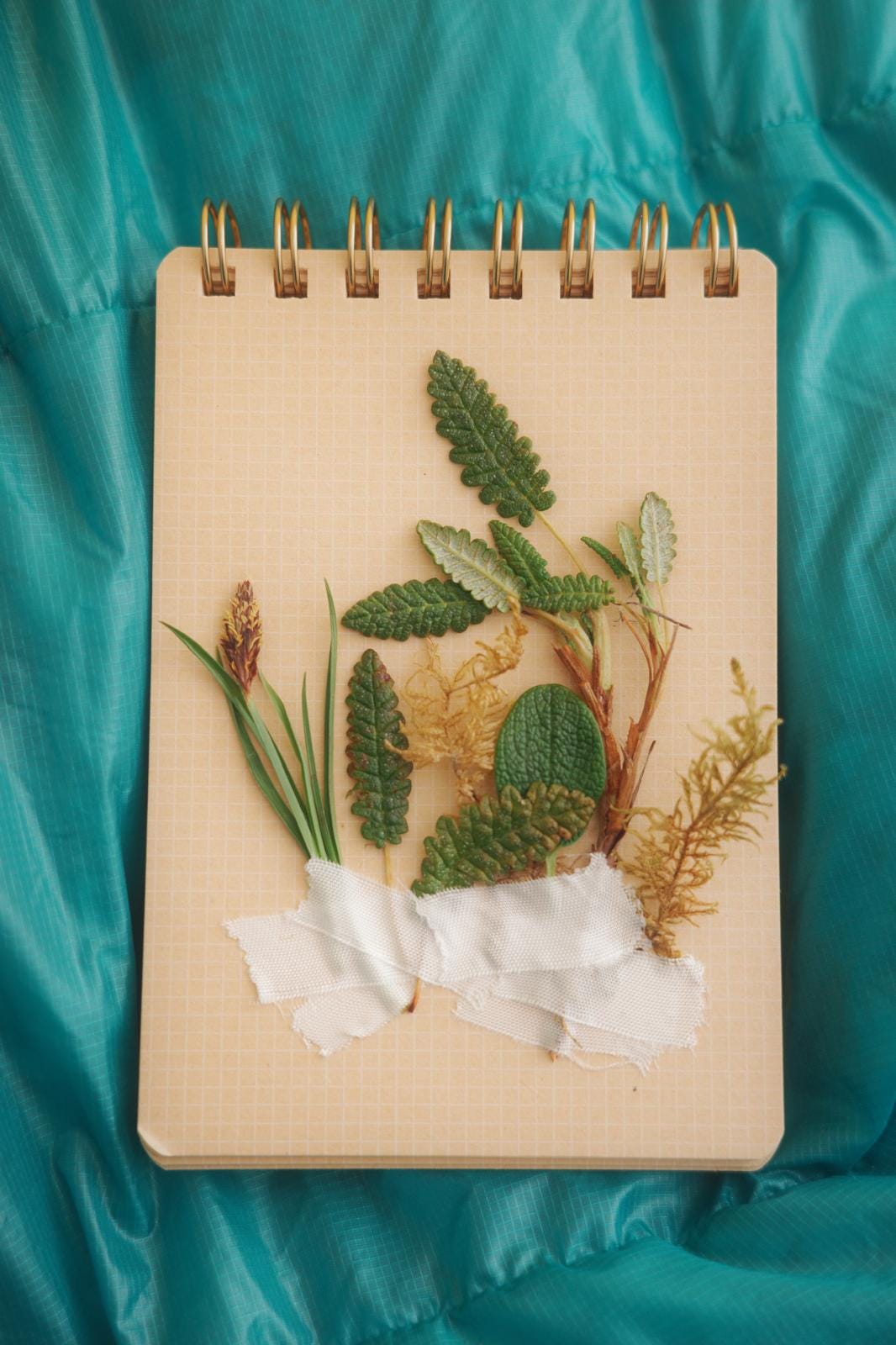
Returning home to my cabin in Fairbanks after a month of guiding, I pick up my dogs from the dogsitter and steel myself for several days of email and errands before my life settles again. I have a LOT of computer work to do in the coming weeks, and will I get a chance to go dipnetting? But my cabin feels claustrophobic after a month in the wide open and I can’t sleep in my bed and town is too loud and I’m at the water fill station filling my 5-gallon jugs when I just start crying. I miss the tundra. The tundra has a spirit, I swear to god. I can feel it. So does the forest. Anywhere that nature is bigger than concrete, bigger than people- you can feel it. It’s like an electrical connection, something you can plug into. Without it my heart just empties. And besides, the world is too busy. The horrors of humanity are too persistent. I’ve lost my thick skin. I’ve been where it’s quiet, I haven’t needed a thick skin. I’ve needed to open up, to feel- feel the land around me, to read the terrain, to listen to the wind, the murmuring creeks, that goddam golden-crowned sparrow. Now my skin is gone and the world is burning me. I cry while I fill my water jugs, I cry while I do my laundry. I feel better then, some of the cortisol purged from my system. My kindly boyfriend comes over and cooks us moose for dinner. We lay on the couch with the dogs and there is a knowing that everything is going to be ok. And not ok. And ok in it’s not-okayness, you know? I am falling down the rabbit hole of complexity, altering the thing just by looking at it. I need to be like the tundra, a collection of things working as one; sometimes contradictory things, both the darkness and the light. I need to be like the tundra and just vibe.
That’s all for now,
Carrot
Comments
Nothing yet. Say the first thing.
Sign in to join the conversation.