
I put all the reviews from my guided trips in one place! You can read them here. Going through these made me feel… really good. Teaching people new things in the outdoors makes me feel useful, and it’s so nice to feel useful, you know?
-The cost of my February beginner trips will go up to $3,000 if you register after October 1. So apply soon if you want to lock in the $2,500 price! I am doing this because the expenses for my beginner trips are MUCH higher than my other trips, because I rent an Airbnb with seven beds for several weeks and hire a private chef (The wonderful Kelly Kate, you can see pictures of her amazing meals here.) Details and the application for my February trips are here.
-I am discounting the remaining spots in my fall Utah trips to $2,000. This is because they’re happening soon so if you join at this late hour you won’t have as much time to prepare (although we will still of course have our two one-hour zoom calls). Details and the application are here.
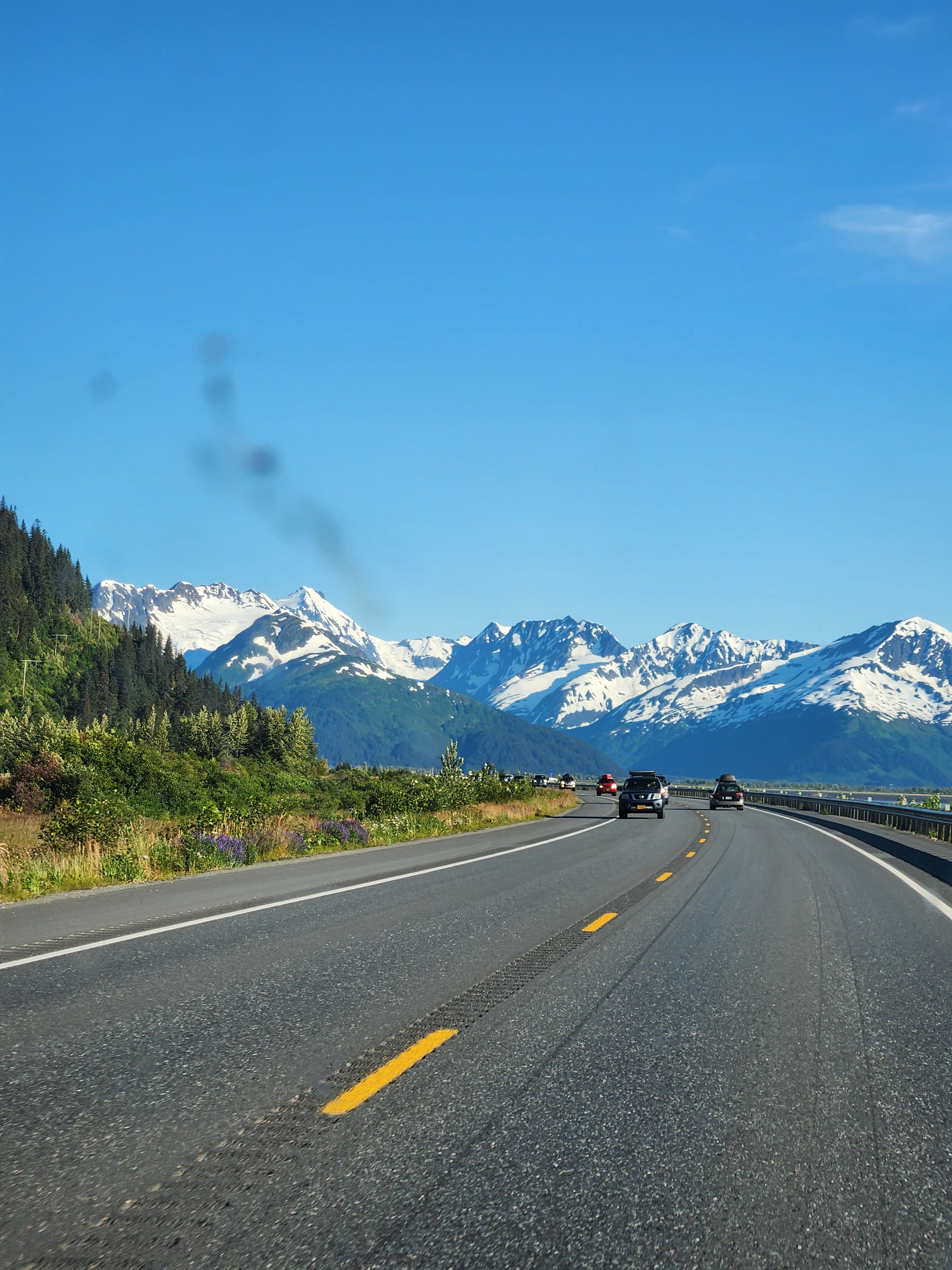
On the nine hour drive to the Kenai River I listen to The Vanishing Half. I brought a tent this time, so I don’t have to sleep in the back of the car- I have this huge six person tent you can stand inside and it’s fun to bring for car camping, kind of the polar opposite of something you would take backpacking. If it’s raining I can put a folding chair in there and have a place out of the weather, instead of just my stuffy car. Usually, people don’t go dipnetting by themselves- it’s a ton of work if you actually get fish- but all my friends got their fish already earlier in the dipnetting season- this is the last few days that the Kenai river is open- and I like to feel like I’m not reliant on others, so I didn’t think twice about going alone. I’ve always been independent like this, and sometimes it gobsmacks me, like I’ll be doing something that’s much more doable with help and suddenly I’ll be like why am I alone, like I could’ve waited until I had help- but then when it works out I feel really proud of myself, like I’ve proven something- but what? What did I prove?
Fishing at Chitina was fine because I didn’t get any fish- biking out in the rain with a hundred pounds of salmon in my backpack would’ve been rough. At the Kenai river I might actually get my 25 fish, and as soon as the fish are out of the water it’s like a timer starts. You have to keep the salmon cold and then process them within a certain time period, or else the quality degrades and your effort is wasted. The processing is more work than the fishing itself. What if I can’t do it? I think, as I drive south in the bright afternoon, the whole world a riot of green, the mountains bathed in light. Why am I like this?
The beginning of The Vanishing Half is hard for me to focus on because there’s no suspenseful element, but then halfway through a suspenseful element appears, and I am enthralled. The dogs sleep in the backseat, contented. The land I’m passing through is vast, populated lightly if at all, full of mountains, valleys, creeks known only to the locals. Then I’m in the sad seventies time-capsule of Anchorage, with its sprawl and slow decay, and beyond, onto the Kenai peninsula. There the vibe changes- there are people everywhere, the narrow road is crowded with RVs, it’s like Disneyland. Alaskans recreating and also gobs of people from out of state, here to sport fish. Only residents can dipnet, but everyone can come sport fish. I didn’t realize when I moved to the interior that I would get used to the quiet there, but now the bustling Kenai peninsula, which used to feel peaceful when I lived in Anchorage, is lowkey stressing me out. It’s funny how we lose our tolerance for things. I do feel like the interior is a better fit for my nervous system, which is a nice thing to feel, since I live there. It’s good to like the place you live.
At 9pm I find a campground near the fishing beach on the mouth of the Kenai river and set up my luxury car camping palace. The campground is literally just a big, empty field with some portapotties, but it has a dock nearby with fish cleaning tables, which is what I care about most, so it’s worth paying $45 a night. I live in a dry cabin and home is a nine hour drive north so I mean to process my salmons here. I use my little battery operated pump to inflate my big air mattress, feeling like a rich person. I take the dogs on a walk around the campground- at the RV sites one person brought a chest freezer, another person brought two of those really nice chamber vacuum sealers. I’m jealous. That’s the Alaskan dream right there. The dogs scrape their teeth along the dirt as we walk, using them like baleen to filter old fish particles from the earth, which is annoying, and I cross my fingers for no surprise vomiting in the middle of the night. Back at the tent, I am more than ready for bed. I plan to fish the outgoing tide first thing in the morning, and I should get some rest. As I’m brushing my teeth I suddenly stop- where is my sleeping bag? And that’s when I realize that I forgot to pack it. I’d planned to bring one for me, and one to put over the dog beds. But I brought none at all, and now all I have is a thin fleece dog blanket from the car. Well. It’s not cold, and I have lots of layers. How bad could it be?
Pretty bad. I’m curled into a ball under the fleece blanket with Quito, and I can’t get warm. Niknik is cozied deep into her bed. The temperature has dropped and I’m shivering, so tired but unable to sleep. In a few hours I have to get up to fish. Dammit! If I move to the car I might be warmer? I put down the backseats and shove the mattress in there. Me and the dogs relocate and I fall into a fitful sleep until 5 am, when the cold wakes me again. I run the car heater until I warm up and then sleep a bit more, before my alarm goes off at 6:30.
I feel like ass. Nothing that a little extra caffeine can’t fix, right? Wrong. Now I’m overcaffeinated and shaking with anxiety. I plan to fish on the north beach of the mouth of the Kenai river, which is apparently the best spot, and to get there is bit of an ordeal- you have to pay for parking ($22) but the parking area is not right at the fishing spot, so you have to drive down to the boardwalk to the beach, unload your stuff (giant cooler with ice inside, giant dipnet, waders, etc), drive pack to the parking area, park, and then walk back to your stuff. Then! You have to carry everything down onto the beach, across a long stretch of deep sand full of rotting fish heads. It takes me two trips to do this, because I can’t carry the dipnet and cooler at the same time. The physical effort helps me burn off some of the anxiety though, and by the time I’m putting on my waders in the warm sun I’m feeling a lot more positive.
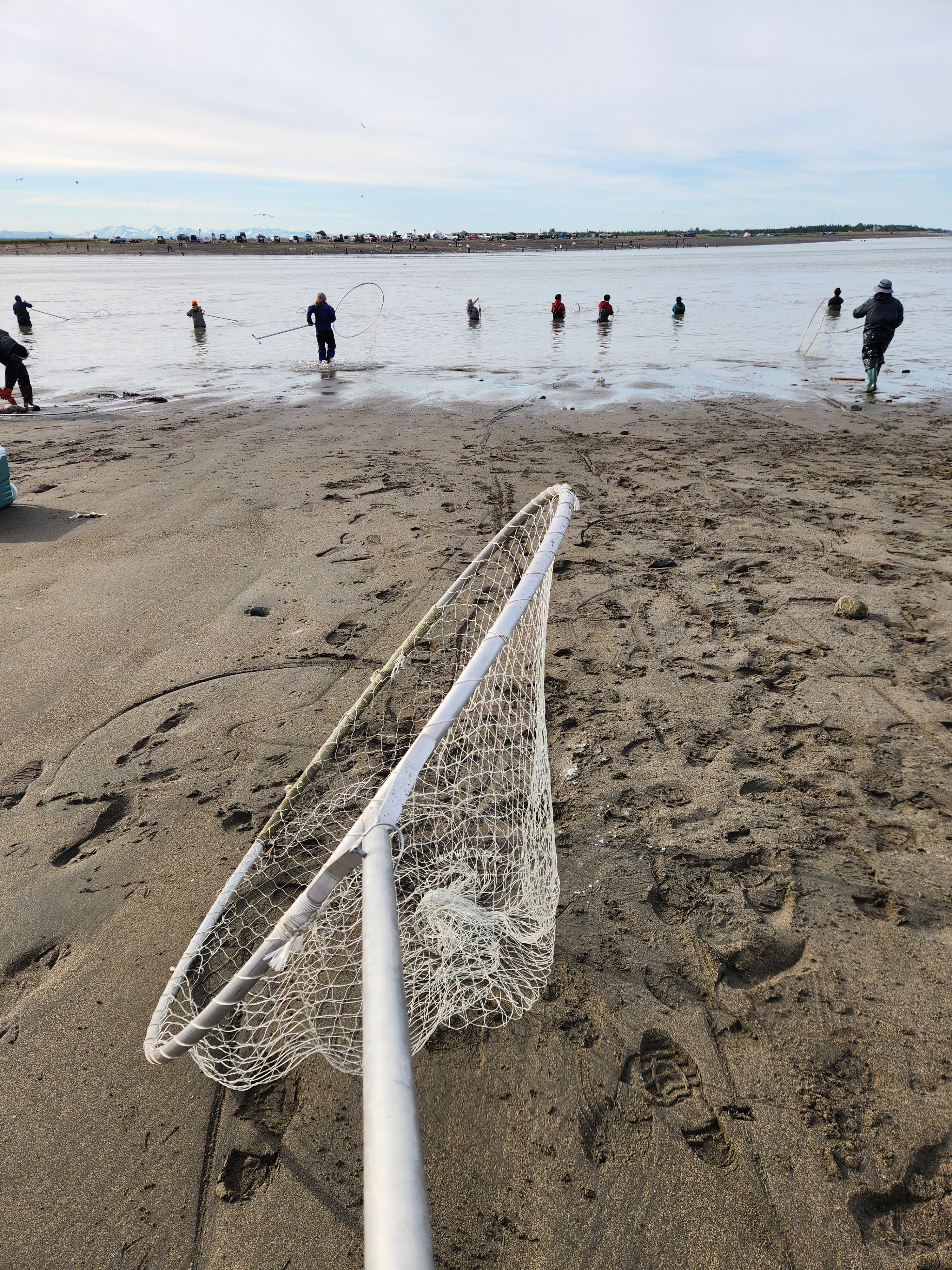
There are tons of other people on the beach and I join them in the water, pushing my dipnet ahead of me into the slow, silty current until I’m chest deep and we’re standing shoulder to shoulder, in a long line. Around me people banter is several different languages, call out to children, readjust their nets. This is something I love so much about dipnetting- everyone is here together, in the shared pursuit of their yearly salmon. And it’s just residents, people who actually live in the state year round. No hate to people who visit seasonally- I was one of those people before I moved back- but there’s a kinship among people who live in Alaska, a felt sense of place that feeds my soul in a way I can’t describe. And the Alaskan vibe is so humble and unserious- people wear sweatpants, their gear is utilitarian as opposed to flashy and new, they shout and laugh and are uncool. They know how to do absolutely everything and will help you learn how and yet think of themselves as knowing nothing at all.
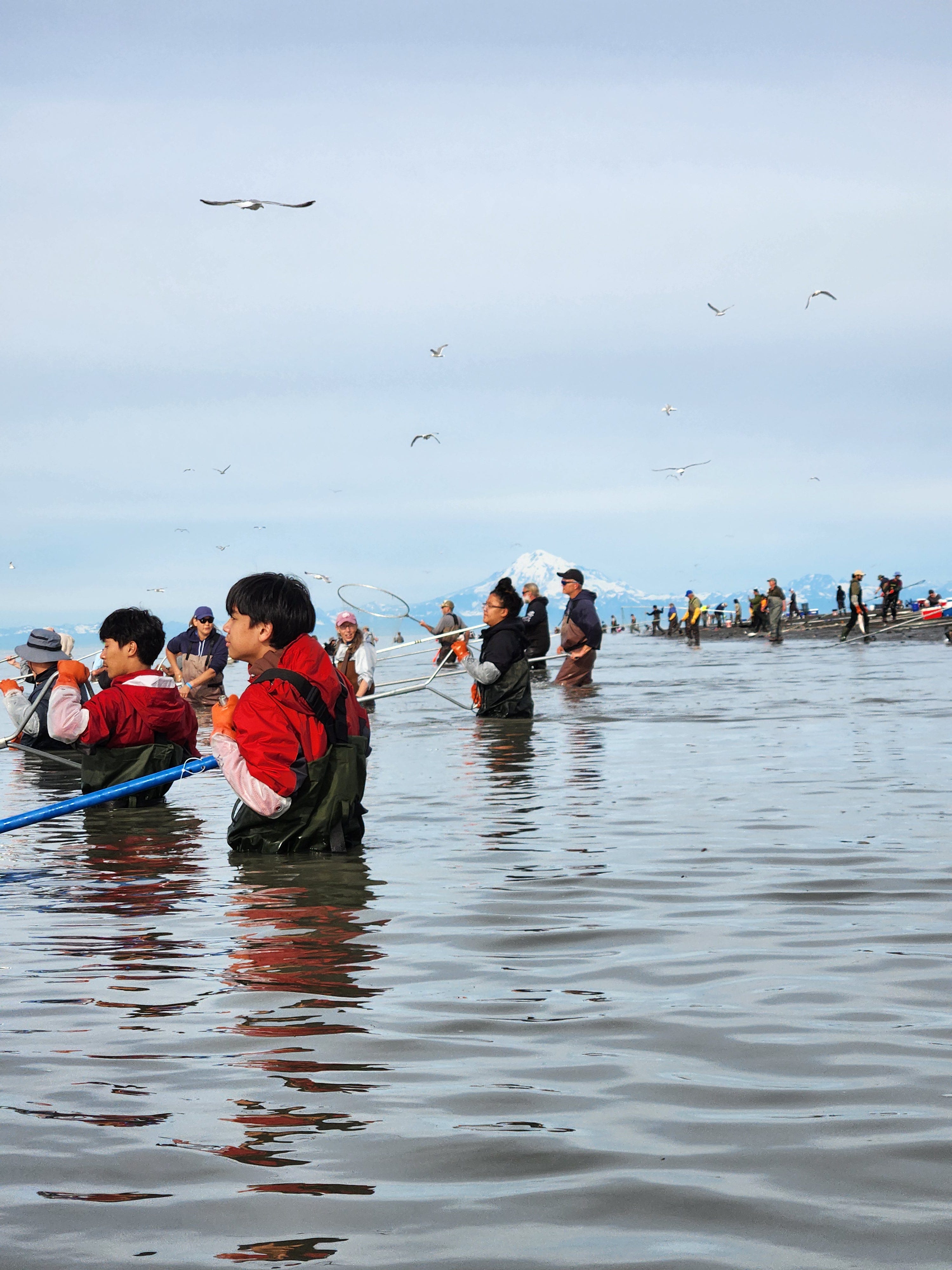
I’d been hearing stories of people limiting out in an hour here the last few days, because there are so many fish in the Kenai river this year- two million sockeye headed upstream so far, a record-breaking run. The fish do hit on occasion, shaking peoples’ nets as they move down the line, then much shouting as people struggle to get the heavy nets out of the water before the fish jumps out- but I only end up catching three, and one of them is so tiny I toss it back in. I lose more than that from my net, and I wonder what I’m doing wrong. Then the tide is done and the water stills, and the fish are gone. I’m disappointed but I’m more tired than anything, and I drag my big cooler with its two fish on ice across the beach, and then my dipnet, and then walk to the car to come back and pick everything up.
There’s something urgent I need to do before processing the fish. There’s a salvation army thrift store nearby, and I wonder if they have sleeping bags. I’m imagining a cute vintage sleeping bag for my glamping setup, but my expectations are low- thrift stores in Alaska, especially in remote areas, are not great. They’re often half empty and also overpriced, since goods are harder to come by here. Imagine my surprise to walk into this one and find a giant, sprawling space crammed with stuff. There’s a big section of vintage Alaska souvenirs, tons of Alaska art, a case of fur items (I ask the clerk if they have any wolverine- I’ve been looking for a piece of wolverine I can use to make a ruff for the hood of the puffy I wear when fatbiking in the winter, but alas they do not), and a whole room of outdoor gear- including half a dozen vintage sleeping bags, cool old external frame packs, vintage propane stoves and even tents. Everything is cheap- the sleeping bags are $15- and I find a synthetic kelty bag, one of those rectangular sleeping bags lined in fleece inside that remind me of my childhood. I make a note to come back here someday when I have more time, and happily carry my new sleeping bag to the car. I won’t be cold tonight!
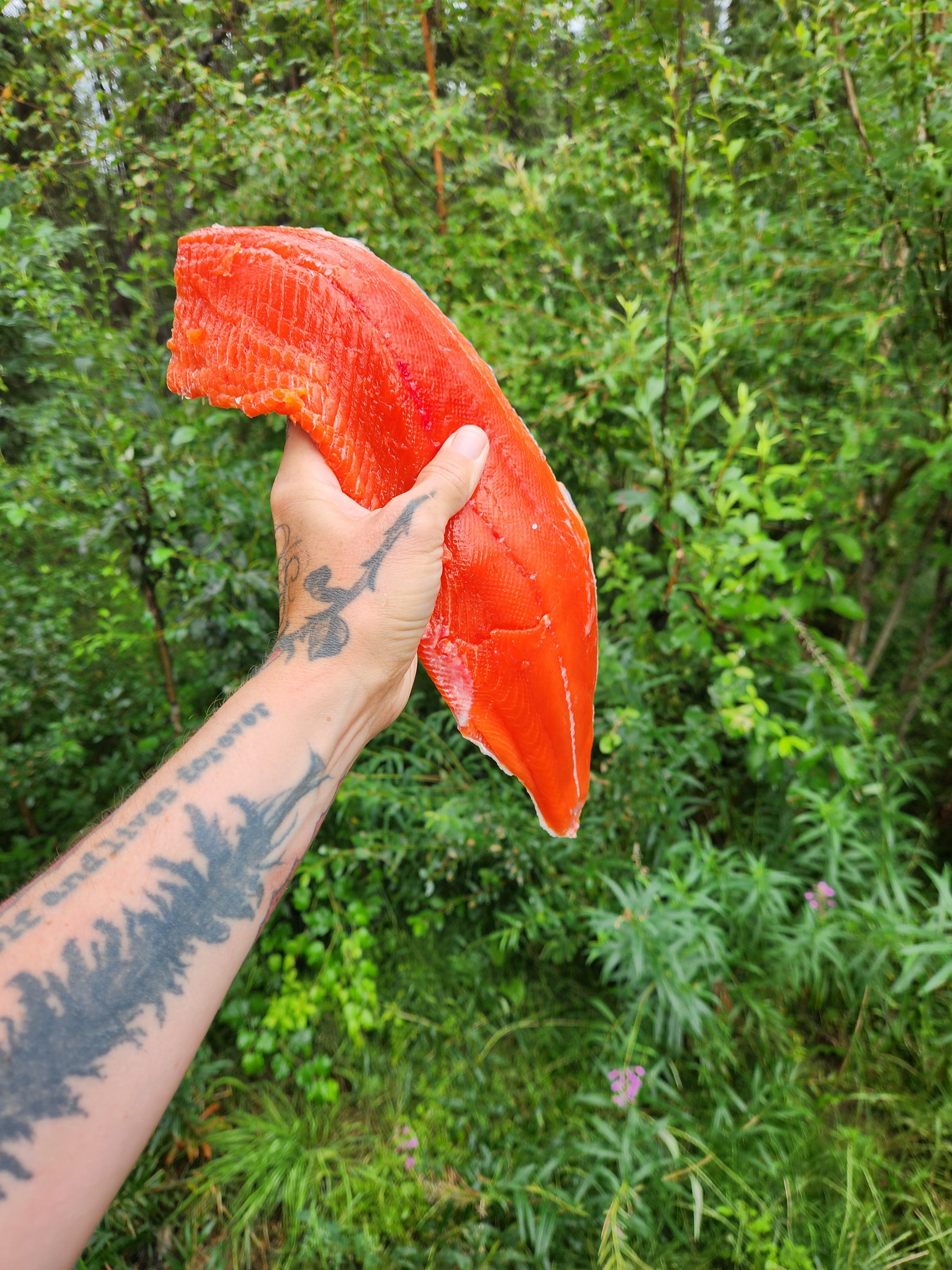
I fillet my two fish at the cleaning tables at the campground, metal things with pressurized hoses and a chute that drops fish guts right into the water, hundreds of seagulls screaming all around. It’s been a couple years since I last filleted- with Mickey at the cannery in Egegik when I was test fishing in Bristol Bay, sitting in the boat filleting salmon on a piece of bloody burlap as fast as I could and then passing the fillets up to Mickey in a trashbag on a rope so he could vacuum seal them in our storage locker before stashing them in the corner of the freezer the cannery let us use since we gave the employees as much salmon as they wanted. Filleting fish is something I never feel good at, even though I suspect I might be competent enough- it’s the kind of thing were the more you do it the more you notice little mistakes, like going from a blurry zoomed-out landscape photo to a macro shot where you can see a waterdrop on the back of a bumblebee.
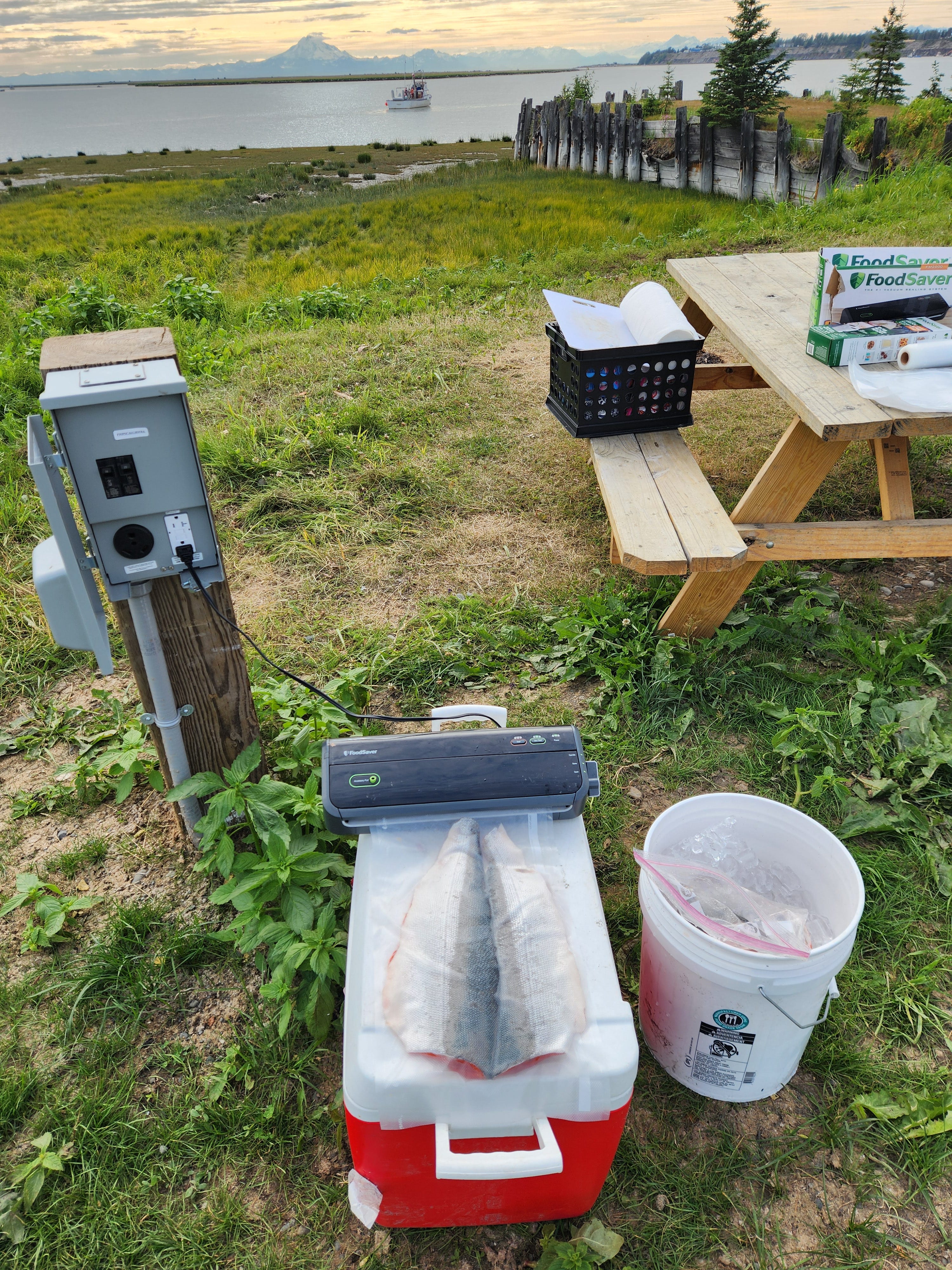
Since it’s a Monday the campground is nearly empty, and I carry my vacuum sealer to one of the RV sites that has an outlet to poach some electricity to vacuum seal my fish. I originally found something wrong with each of the four fillets, but now that I see the neatly vacuum-sealed stack of bright red fish flesh sitting on the picnic table on the campground I decide I probably did fine. At least I didn’t cut my finger off with the super sharp fillet knife- that’s the most important thing. I tuck the packaged fillets into some fresh ice in the cooler, feeling satisfied.
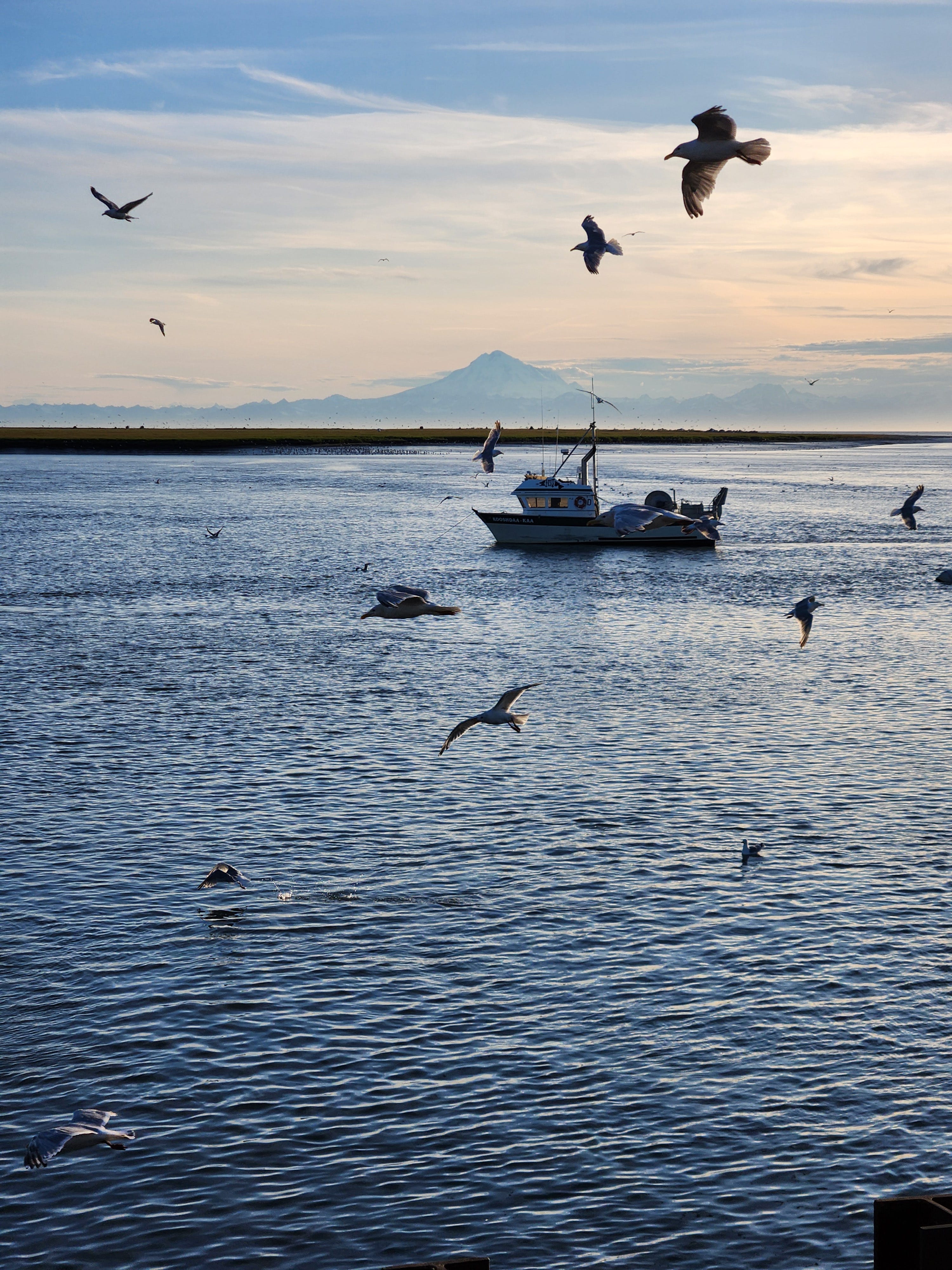
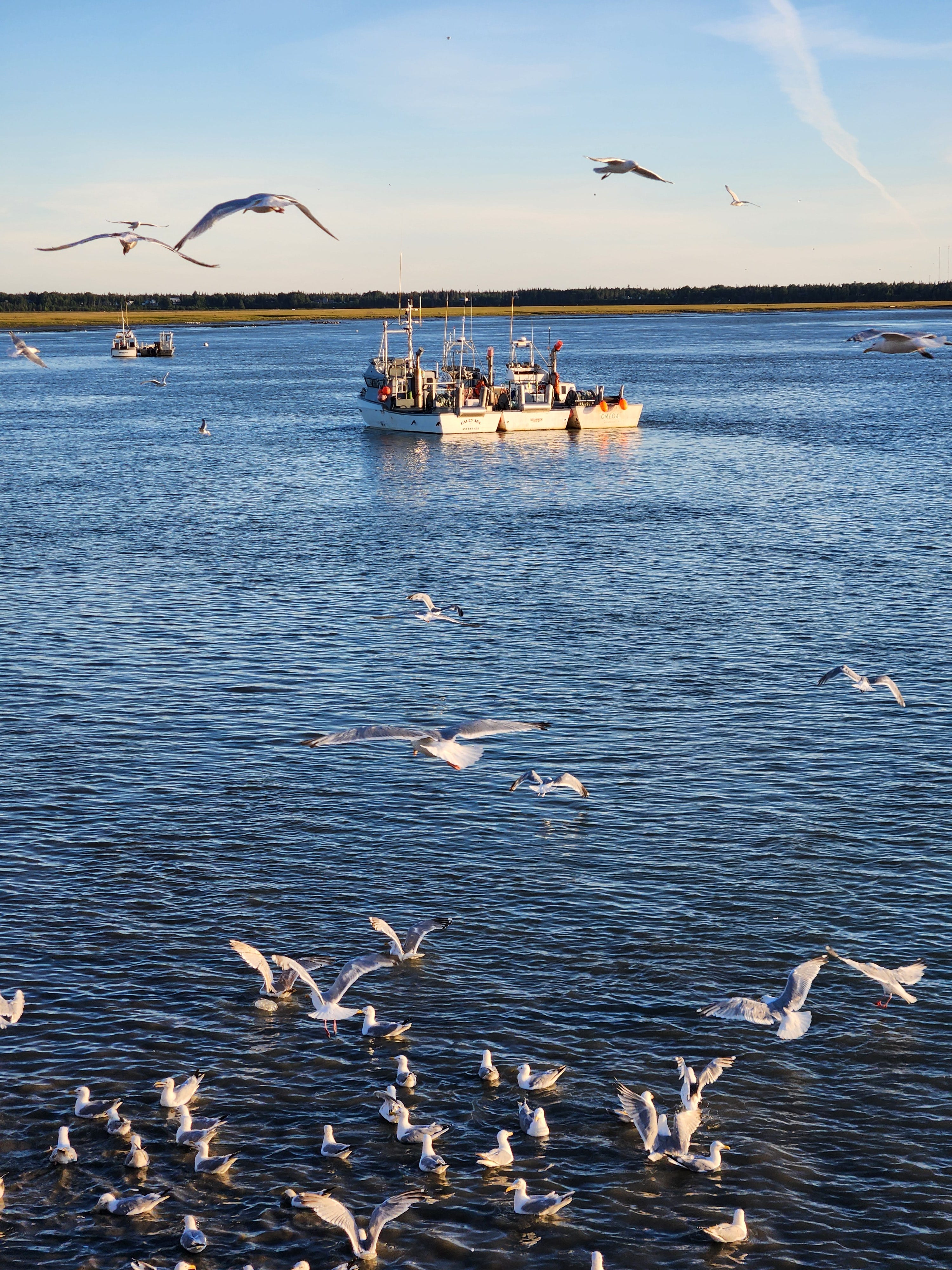
I am exhausted. I walk the dogs to a boardwalk nearby that has lots of educational signs about migratory birds and then stop to watch the commercial fishing boats tool around in the river, which glows in the warm sunshine of evening.
I make a sandwich with rotisserie chicken and mustard on gluten-free bread and then hose down one of those bagged salads made of shredded broccoli stalks. I make my bed, happily unrolling my thick synthetic sleeping bag- using a synthetic sleeping bag also makes me feel like a rich person, since it would be way too heavy to carry backpacking- and then tuck myself in. Niknik likes sleeping in her own bed next to me but Quito scooches down inside the sleeping bag and loafs himself against my legs. The sun is dropping (a bit of night has returned to Alaska, especially this far south) and outside are the sounds of seagulls. The air smells of putrid fish guts. I have my alarm set for the morning tide. I sleep.
By 8 a.m. the next morning, right at high tide, I’m back on the beach, stepping into my waders in the warm sun. Shortly the tide will begin to go out and that, they say, is when the fish will hit. I wasn’t cold last night, I slept, I’m feeling more positive- although I am once again overcaffeinated. Lots of people are arriving, dragging their coolers through the fishheads on the sand, trying to carry their long dipnets down the beach without whacking anyone with them. I scooch into the water next to two people I recognize from yesterday, who seemed to have good luck getting fish.
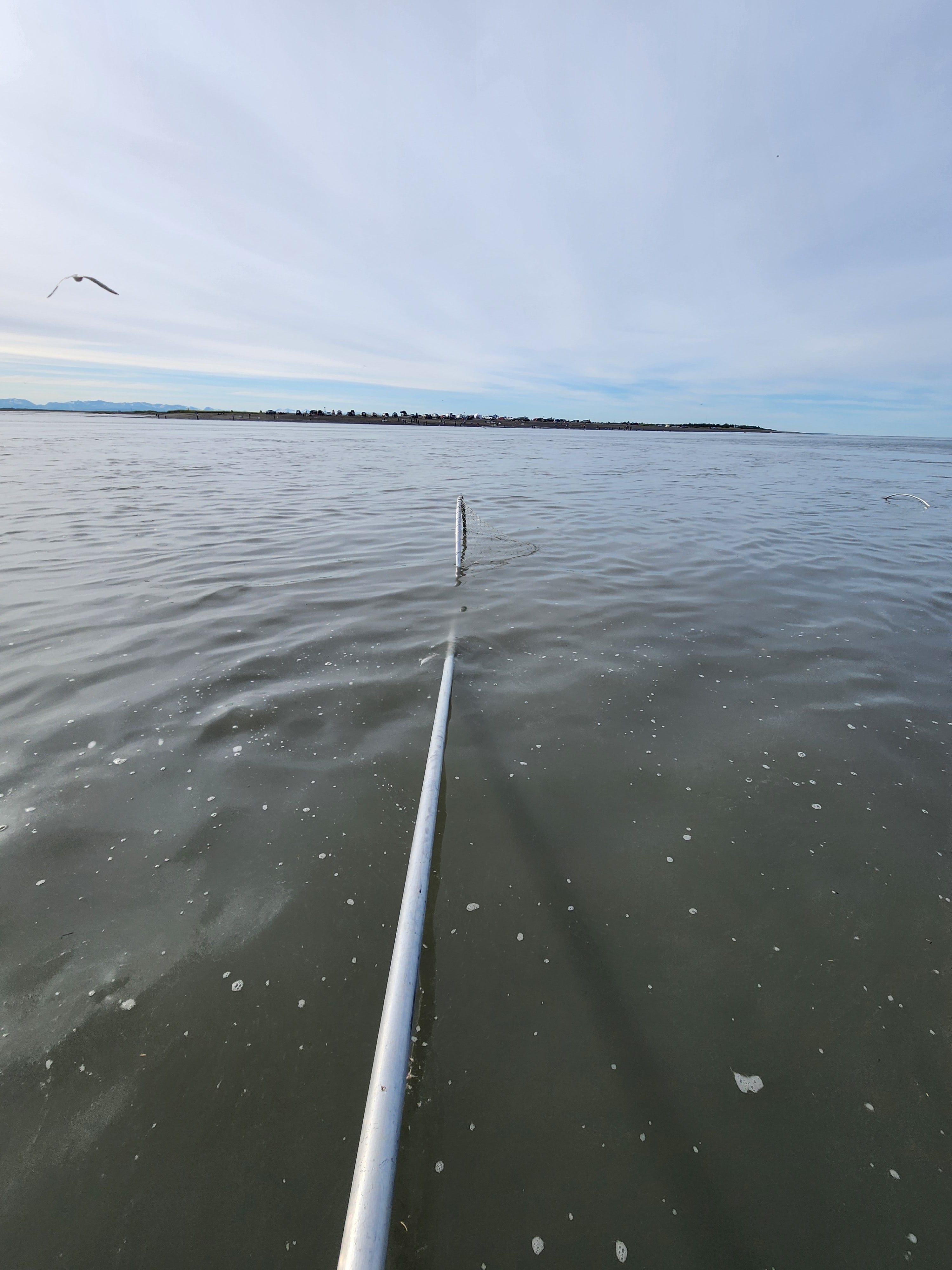
Right away my net shakes, but when I start to drag it from the water the fish jumps out. This happens again and again- six times in a row! While the people next to me get one fish after another, successfully wrangling them onto the bank. I want to cry with frustration. Finally I tell the guy next to me that I’m losing fish, and ask him how he gets them.
“Once the fish is in the net, I turn the net to the right- downstream,” he says with a thick African accent. “It seems like it would be the left, but you turn it to the right.”
The next time my net shakes I turn it to the right, and lo and behold when I get to the beach there’s a huge-ass sockeye in there. I pick the fish from the net- my favorite part, something I really enjoyed when I was test fishing- bonk it in the head with a rock, bleed it, and toss it in the cooler.
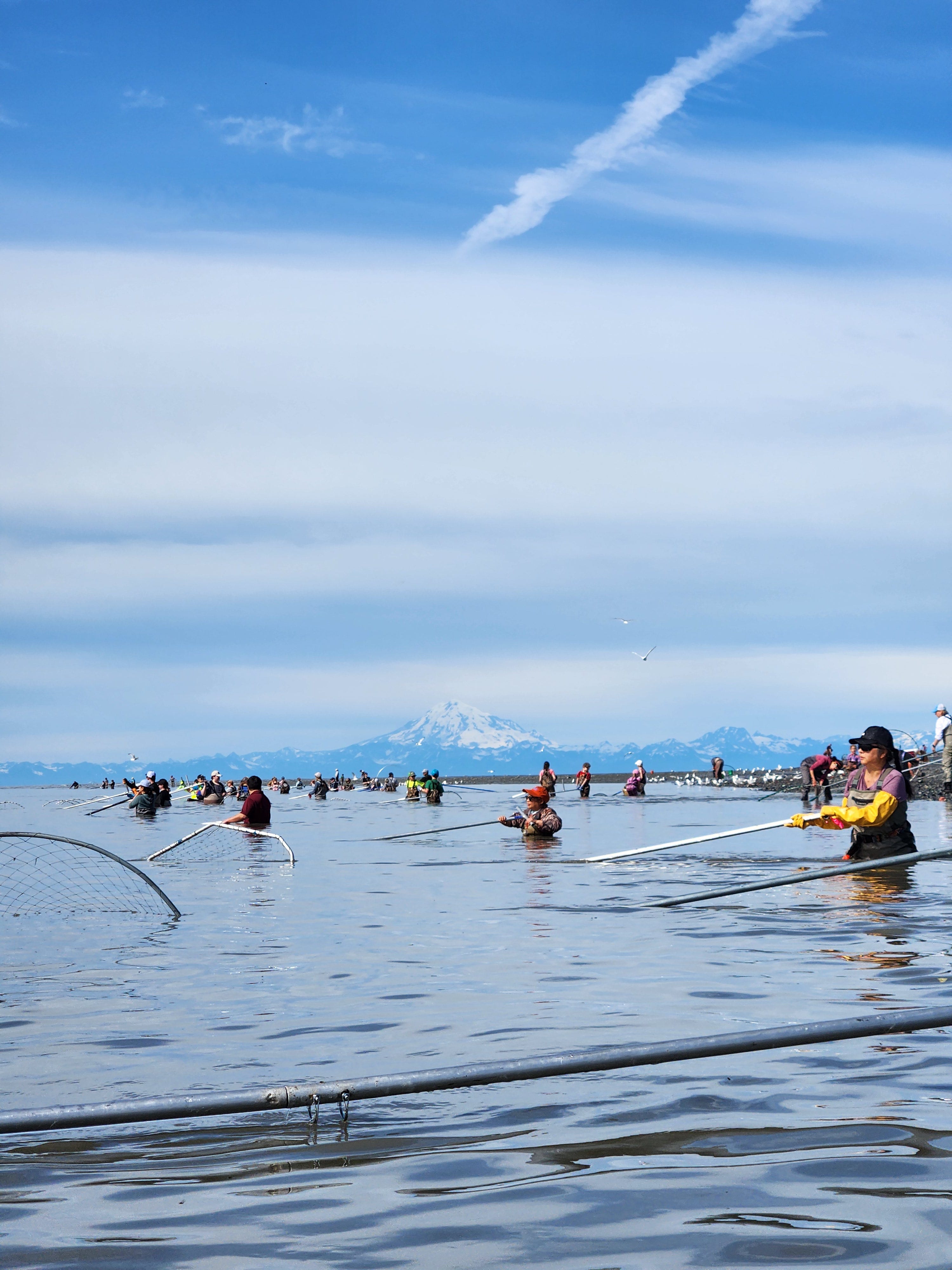
There’s much shouting in the water- eleventy-billion fish seemed to have arrived all of a sudden, they’re jumping all over, and people are catching them as fast as they can. I watch as someone gets four fish in one net, and then it happens to the person standing next to them too. As soon as I’m back in the water another fish hits, I turn my net to the right, and the fish doesn’t escape. My next two tries I get two fish at once. This frantic pace continues until I think to count the fish in my cooler and I realize that I can only get one more before reaching my limit, 25 sockeye.
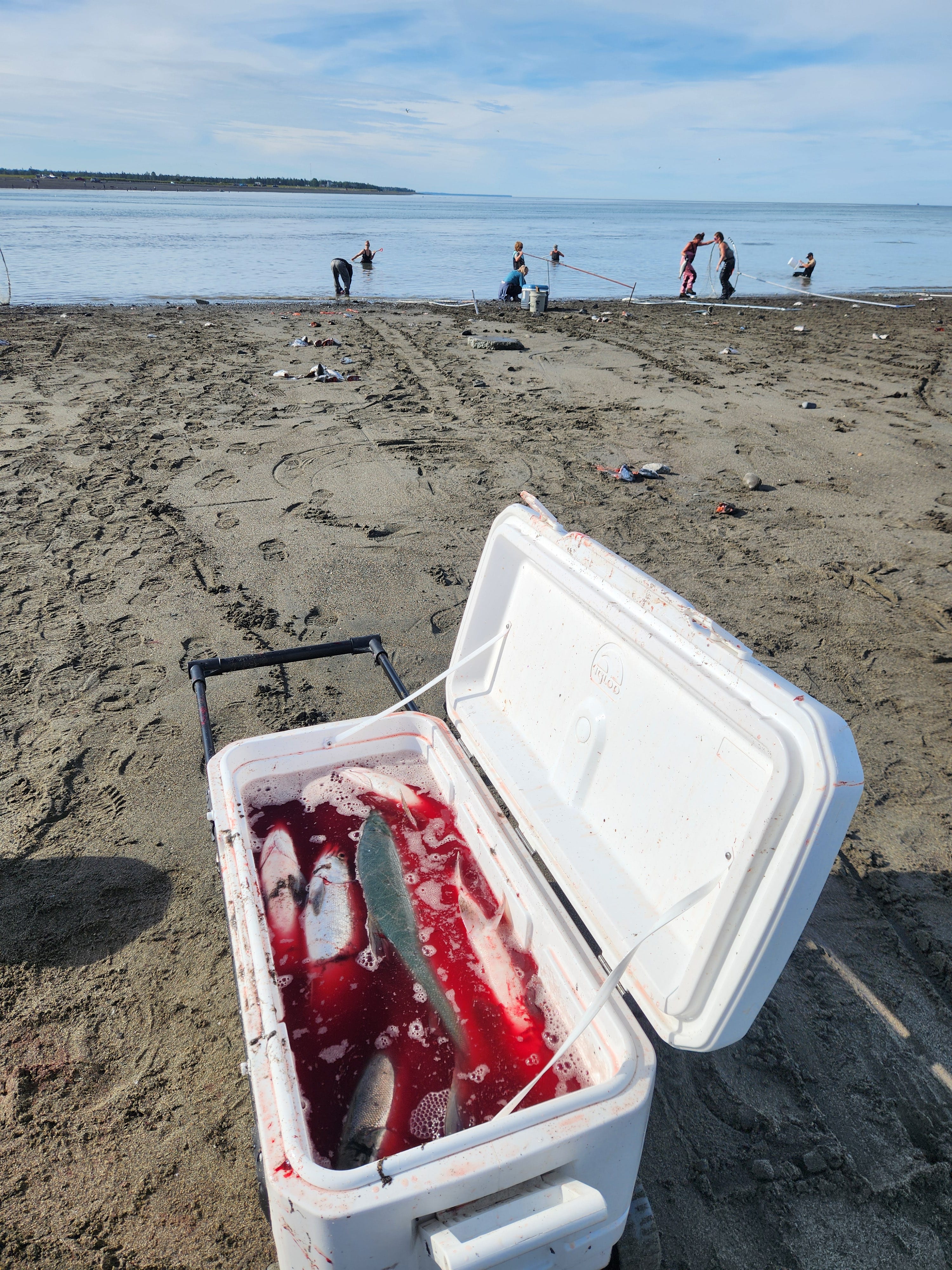
This makes me unexpectedly sad. Catching fish is fun! I’m not the only one, and the water soon empties of people as everyone limits out. There are piles of silvery fish on the beach, five gallon buckets stuffed full, coolers on little wheeled carts. I had the foresight to know that I wouldn’t physically be able to move my cooler if I limited out, so I brought a camp chair, cutting board and my fillet knife and I fill a bucket with silty river water and post up with my cooler as a table, filleting the fish one by one, rinsing the fillets in the bucket and then dropping them into a trash bag in the cooler.
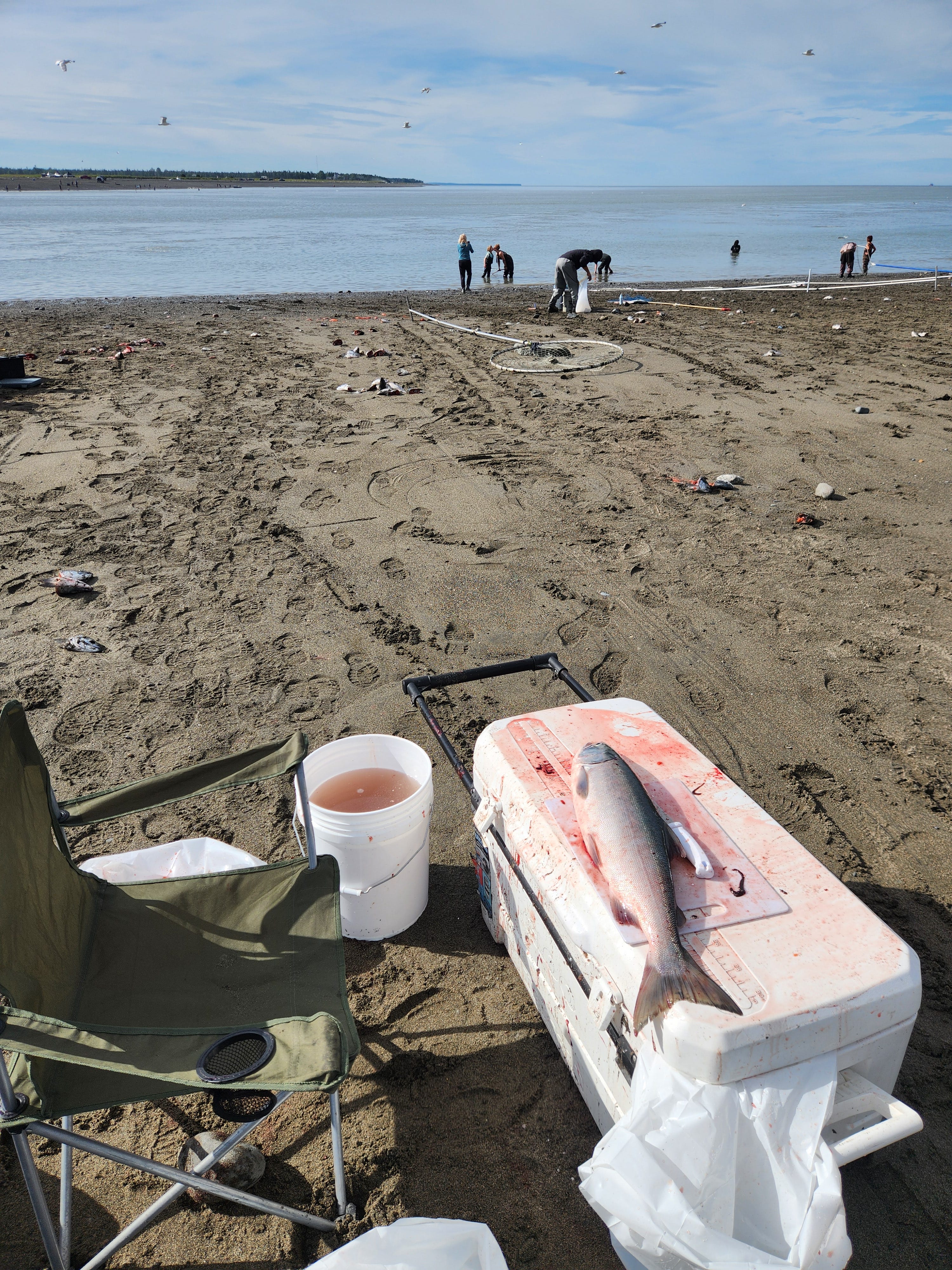
The sun is high in the sky by the time I’m done working, and my wrists and hands are aching. My waders are covered in blood and I walk into the river, dump my bucket of fish guts and scrub myself down. A kind stranger helps me drag my cooler across the sand to the pickup area, I walk to retrieve the car, and another stranger helps me lift the cooler inside. I did it. I’m done.
Sort of. I need to rinse the fillets better at the fish cleaning tables, and then vacuum seal them. I was supposed to check out of this campground at 10 am this morning but there’s no-one here, not even at the office, and I don’t think anyone really cares about me, the singular tent camper in the huge ass field, rinsing my little fish. I feel lonely while I run the vacuum sealer at the RV site, and my back and shoulders ache from wrangling my dipnet. I’m hungry and I really need to pee but I want to get these fillets packed in clean ice before they get warm. Next year I’ll come with a friend, I decide. Fifty fish is twice as much work, but at least I’ll have someone to make jokes with.
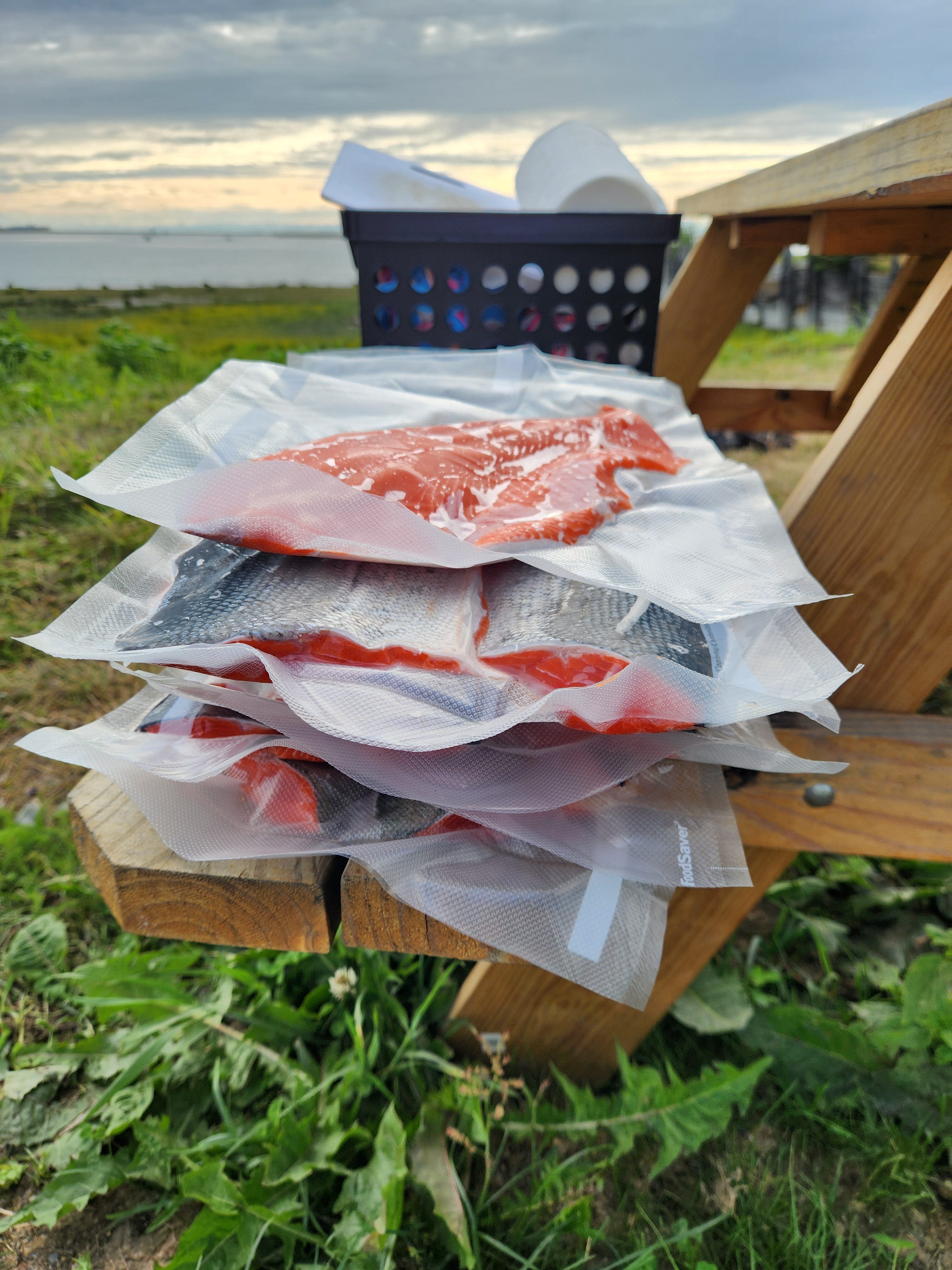
Finally, at three p.m., my mission is complete. The dogs haven’t been walked all day so I walk them along the river in Soldotna on our way out, and we stop to watch the fly fishers. I’ve never fished with a fishing pole, but I can see how it would be fun. I already have too many hobbies, but what’s another one? Maybe someday…
I’d like to get as far north as I can tonight, in my mission to get these fish closer to my chest freezer. The thought of them being too warm fills me with anxiety, even though they’re on ice, and I can’t seem to calm myself down. Sometimes I get like this- fixated on a task to the exception of all else, and I can’t even take a breath until it’s done. In the evening I reach a campground just north of Anchorage and I pull off the highway, but everyone’s in hardshell campers- not a single tent- and there’s a sign saying a bear got someone’s food a few days ago. I’m not usually worried about bears but there’s a few busy campgrounds in southcentral Alaska like this, where they’ve become habituated to food, and apparently I chose one by mistake. Dammit. My body hurts all over and I just want to lay down. Instead I continue north, leaning hard on The Vanishing Half to keep me company while I drive. Finally I find another campground, this one completely empty, picnic tables tucked peacefully amongst the birch trees, no reason for a bear to come here. I put up my tent and inflate my bed just as it begins to rain. I tuck in with my little dogs, feel the tension drain out of me. Tomorrow I’ll get home to my warm, sunny cabin, I’ll put these fish in the freezer (although I’ve decided I’m going to re-vacuum seal them first, I feel like I was rushing and didn’t do a great job), and then I’ll be able to rest. Or will I? The weather is still good, this wild hot Alaskan summer is filling me with anxiety, a need to keep doing stuff outside until it's gone. I lowkey feel incapable of rest. As I drive I imagine the cold rains of fall, the tundra turning red, cozy clothes and turning my heater back on. And then the snow, air as a dry as venus and a psychedelic pink sky. Sometimes I really miss winter…
That’s all for now,
Carrot
Comments
Nothing yet. Say the first thing.
Sign in to join the conversation.