
This is a reflection on the reality of landscape-scale recovery from the frontline. The hard parts as well as the hope. It’s written in the spirit of learning, persistence, and a commitment to making Landscape Recovery work.
It’s part of a wider series of essays drawn from my work on the government’s Landscape Recovery Scheme.
On Friday afternoon, just after lunch, we pressed send on 118 documents.
One hundred and eighteen separate pieces of work including strategies, maps, budgets, legal schedules, ecological models, and delivery plans, all submitted to government after two years of development, in pursuit of one deceptively simple idea: restoring 22 kilometres of chalk stream on the River Wylye.
There was no fanfare or champagne. Just a collective exhale. Followed by the slightly hollow feeling that comes when you finish something enormous and your nervous system doesn’t quite believe you’re allowed to stop.
This is the Landscape Recovery Scheme.
Landscape Recovery Scheme is the most ambitious strand of England’s new agri-environment offer. It exists to do the things smaller schemes can’t. It provides long-term, large-scale, joined-up recovery of land, water, climate and wildlife. Rather than short funding cycles, this funding will be over decades with a blend of public funding and private finance.
It was born out of years of the conservation sector asking the government for something braver than short-term grants and piecemeal fixes. We needed something that recognised ecosystems don’t recover neatly in five-year cycles, and that farmers and land managers need certainty, if they’re going to make meaningful change.
And astonishingly, the government said, yes.
Only 56 projects were selected nationally across two rounds. Ours focused on a chalk stream system, one of the rarest habitats on earth. As its so new, there is no well-worn path here. There is no previous template to quietly crib from, so much of this work has been done, quite literally, blind.
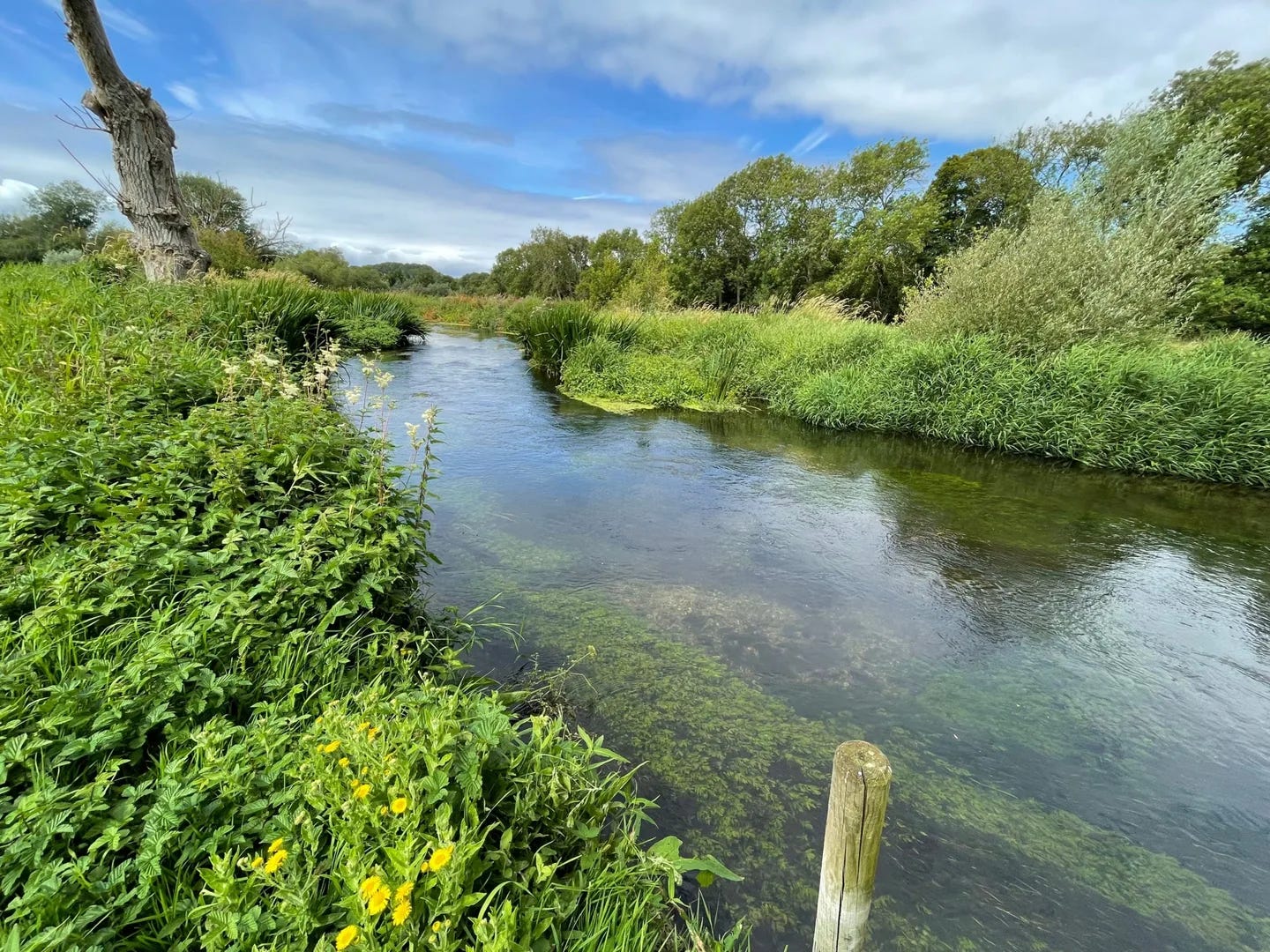
I joined Wiltshire Wildlife Trust about a year into the Wylye’s development phase, with less than twelve months left on the clock.
The project manager had moved on, the collaboration needed resetting, and trust needed rebuilding. Expectations, internal and external, were frayed. And over all of it loomed the sheer complexity of the ask: designing a brand-new, landscape-scale recovery scheme, satisfying evolving government requirements, keeping landowners on board, and somehow still leaving room for the river to be a river.
I stepped in because that’s the job. I recruited, I soothed, I negotiated and I translated between worlds that don’t always speak the same language: ecology, farming, finance, policy, and law.
At the same time, the administrative hurdles multiplied. The system we were working within was rigid where it needed to be flexible. The Implementation Agreement which is the legal contract with Department for Environment, Food & Rural Affairs (DEFRA) remains, in its current form, difficult to sign without further work.
None of this is particularly scandalous. It is what happens when you try to build something genuinely new inside old structures.
I won’t pretend the last year was noble and serene. It was pretty bruising.
There were late nights and early mornings. Sleep disturbed by dreams of waders, water levels, and Excel formulas that refused to balance. There was the peculiar loneliness of leadership, where you carry other people’s worry alongside your own, and keep going anyway.
So when I asked the team how they felt, whether they would ever want to do this again, I didn’t see coming when they answered with an unequivocal, yes.
Round three? They’re in.
They told me, with cheeky grins on their faces, that I’d had all the problems. That my role meant I was always the fixer, the absorber, the one smoothing the sharp edges so others could keep building. That I’d been so busy holding the weight that I’d missed the joy of what we were making together.
Their willingness to do it again is the clearest sign I have, that despite everything, we built something worth staying for.
On a call with other Directors of Nature Recovery, I admitted how tired I felt and how disenchanted I’d become with the system around Landscape Recovery.
Another Director, Martin, based in Yorkshire and miles away from me, gently stopped me.
We have been asking government to fund long-term landscape recovery for decades, he said. And now they are. This messy, imperfect, administratively maddening thing. This is it. We have to make it work.
He was right, of course.
And my team is right too.
Over the weekend, I celebrated with a David Bowie night at the Holburne Museum in Bath. Then I rested. I walked. I slept. And I let the river back into my thinking, not as a project, but as a living system doing what it has always done: flowing, spilling, and refusing to be neatly contained.
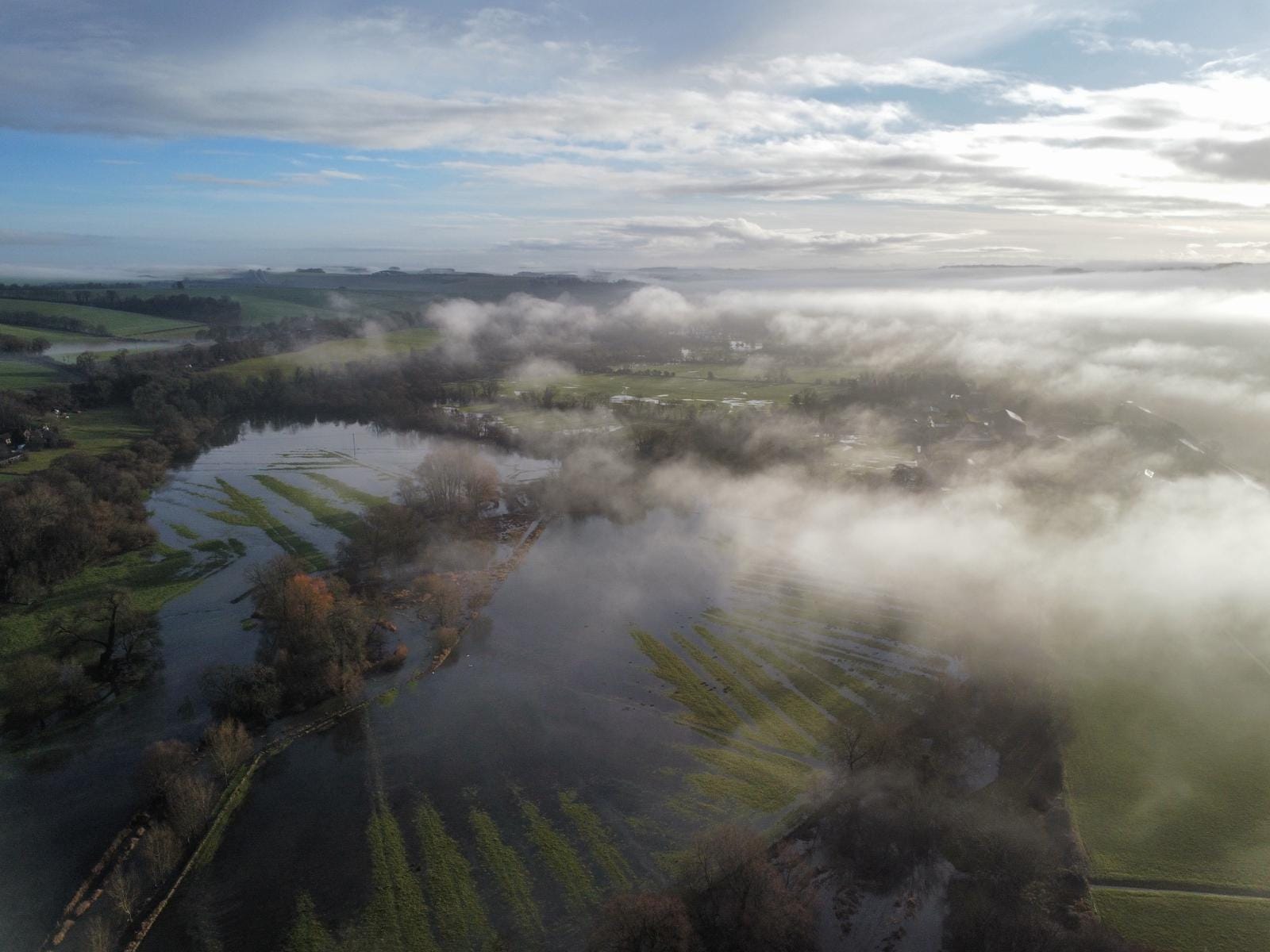
We now (hopefully) move into the assurance phase which is another gruelling stage of scrutiny, justification, and explanation. If we’re successful, this will be followed, by the negotiation phase. Together, it is expected to take around a year. Things will not get any easier.
But I am going into it differently.
With a mindset that draws strength from my team’s ambition and their readiness to do it all again. With a steadier sense of purpose, I am ready, once more, to be the fixer.
Because this is how landscapes change, through people willing to stay when things get hard.
We asked for this.
And the river is waiting.
A year ago, I started this job, and this Substack, within weeks of each other.
I wrote then about a dream role that carried real weight. About the gap between strategies and spreadsheets and the harder questions that follow you home. The ones that surface when you’re talking to farmers in the middle of policy change, or standing by a river knowing you don’t yet have the means to fix it all.
I wrote that I didn’t know what this Substack would become. Only that I wanted somewhere to hold the parts of the work that don’t fit neatly into funding bids or board papers. I wanted a space for the human experience of trying to bring the wild back.
A year on, with 118 documents submitted and 22 kilometres of chalk stream resting, briefly, in the balance, I understand that instinct better.
This is the work.
Not just the plans and the partnerships and the legal agreements. Although, those matter more than most people will ever see, but the staying with it. The fixing. The moments of doubt, followed by resolve. The collective decision, again and again, to keep going even when the path isn’t clear.
Some questions are still bigger than me. Some answers will only emerge after decades. The river, as it always does, will have the final say.
But for now, a year in, this feels like the right place to pause, look back, and then step forward a little steadier, a little wiser, and still willing to work blind when that’s what the landscape asks of us.
This is what nature recovery really looks like.
And this, I think, is The Nature of Things.
This piece marks a year since I started this job, and a year since I pressed publish on my first Substack post. If you’ve been here for some or all of that year, thank you for reading, replying, commenting, and for sitting with the hard and hopeful bits alongside me.
If you enjoy reading this Substack, and know someone who might too, please do share it.
Thank you so much for being here. Onwards, together. 🌿
Comments
Nothing yet. Say the first thing.
Sign in to join the conversation.