
I’ve been thinking a lot about bridges lately.
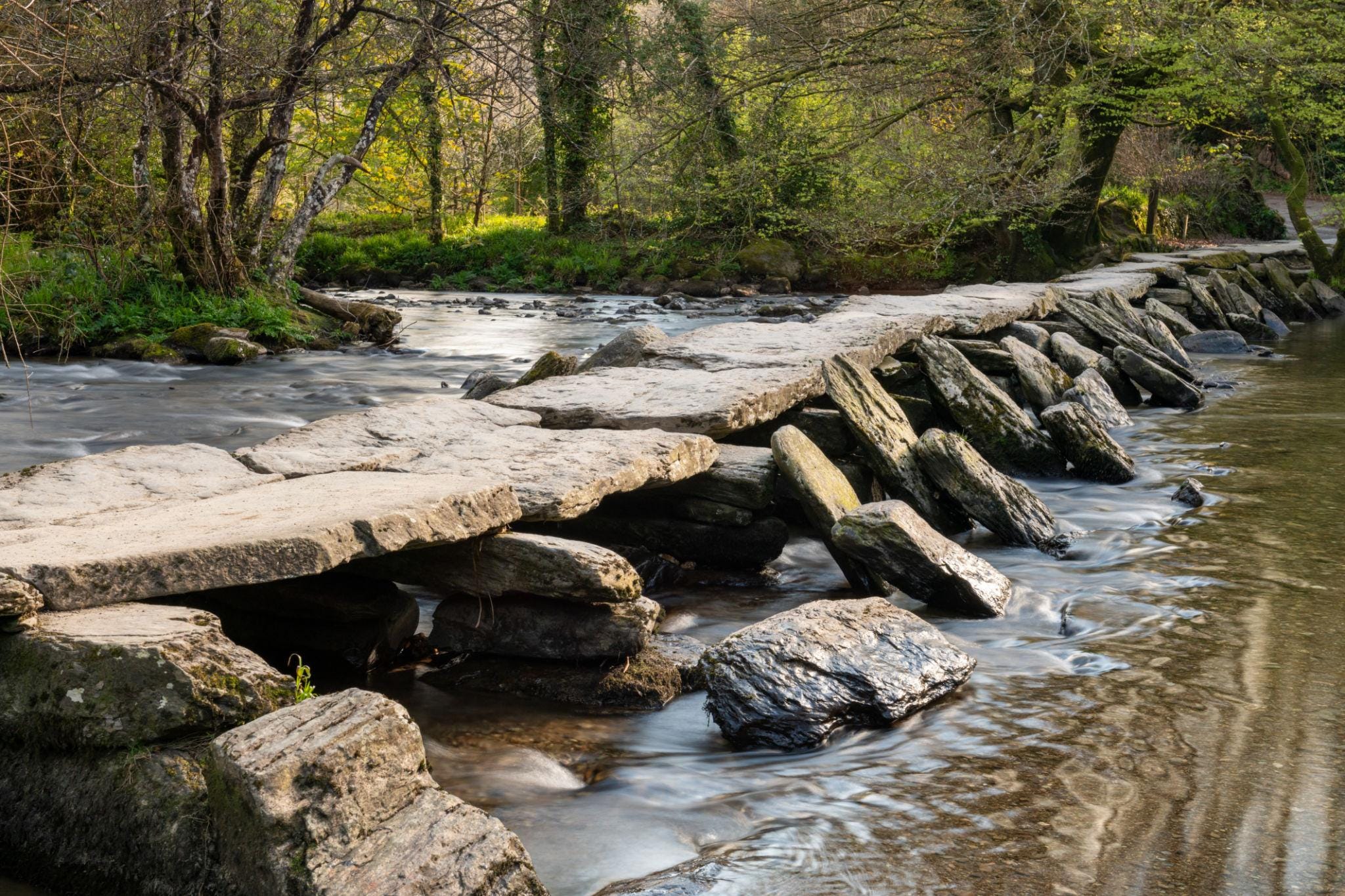
Those medieval packhorse bridges you find tucked into folds of the landscape. Their stones worn smooth by centuries of hooves and weather and water. Built without machines and computers. Yet, here they are, still standing. Still doing the radical work of getting things, and people, from one side to another.
Then the modern ones. Vast, improbable things of steel and concrete that span entire rivers and even seas. Feats of engineering that feel, almost like acts of faith, where we can reach across distance, across difficulty, and make connection where there was once only separation.
Bridges, in all their forms, are acts of hope.
I’ve been wondering about another kind of bridge, not built from steel or stone, but human ones.
Because if you look around right now, it’s hard not to notice how fractured everything feels. The camps feel more entrenched and the instinct to retreat to our own side — to people who think like us, speak like us, agree with us — is stronger than ever.
Yet, if we all stay where we are, shouting across the divide, nothing moves.
No ground is gained. No understanding grows. No change happens.
Which is why I keep coming back to this idea: that people can be bridges too.
Not soft, yielding things, or people who abandon their values or blur their edges into something palatable. But people with strong foundations that are rooted in justice, in care, in a clear sense of what is right and what is not, and who are willing to step forward and say, come with me.
People who can stand in the middle of the span, holding tension without collapsing under it.
Because being a bridge is not about agreeing with everything on either side.
There are things that are not up for negotiation. Racism. Misogyny. The stripping away of rights, dignity, and humanity. These are not differences of opinion to be politely bridged over. They are lines that must be named, held, and resisted.
But beyond those hard lines, there is a vast, messy middle. A place where fear, identity, history, and lived experience tangle together in ways that are rarely simple.
It is here, in this complicated space, that bridges matter most.
To be a bridge is to say: I see you, even if I don’t agree with you.
To say: there might be a way through this that doesn’t require one of us to disappear.
It is slow, often uncomfortable work that is frequently misunderstood.
I’ve been circling this work for a long time now, and it sits at the heart of my book, On Borrowed Land. It returns, again and again, to this idea of being a bridge, of standing between worlds: between farming and conservation, between tradition and change, between people who love the same land, but in very different ways.
It is, at its heart, a story about what it means to try to become a bridge, and to discover both the possibility and its cost.
Because this work does come at a price.
Bridges carry weight. They are walked over, relied upon, tested by weather and time and pressure. They must hold steady while forces pull in opposite directions. They are, by their very nature, places of tension.
And tension can turn into faultlines, where you are not quite sure where you belong. In the careful choosing of words, so as not to alienate one side or the other. In the small, cumulative emotional toll of holding space for perspectives that sit uneasily alongside your own.
In my work in conservation, I feel this often.
I sit at tables where I hold beliefs I cannot fully voice, because saying them too loudly would close doors that need to stay open. I work with people whose politics, whose worldviews, are far from my own and yet we are bound together by a shared piece of land and a shared need to find a way forward.
To be effective, I have to listen, to find common ground and to build something that works, even if it is not perfect.
If I’m honest, there are days when that feels like standing directly over a crack in the earth, feeling it shift beneath my feet. There is a particular kind of loneliness in that. A sense of existing between worlds and never fully claimed by either.
But every now and then, something shifts and someone steps, tentatively, onto the bridge from the other side.
In that moment, you remember why bridges exist. They’re not there to erase difference or make everything neat and easy. Bridges are there to make movement possible. To allow, however slowly, a crossing.
I don’t think bridges get the recognition they deserve.
Bridges are, after all, not destinations. No one arrives and stays on a bridge. They are, by definition, in-between places. Functional. Transitional. Easy to overlook.
But without them, so much remains unreachable.
So perhaps this is just a note to say: if you are someone doing this work in your job, your family, your community, or your friendships, if you are holding that middle ground, carrying that weight, feeling those faultlines…
It matters.
And to say: there are more of us than it feels sometimes.
Other bridges, in other places, spanning their own divides.
If we can find each other, then maybe what we begin to build is not just a single crossing, but something larger.
A network.
A movement.
A way forward that no one can stop.
Because bridges, in all their forms, are acts of hope.
Comments
Nothing yet. Say the first thing.
Sign in to join the conversation.