
In 1999 one of the biggest guitar bands in the world walked into a studio and put their guitars down. Their album OK Computer had earned Radiohead that reputation two years earlier, and the obvious next move was another record like it. Ed O’Brien, the rhythm guitarist, wanted more of the shorter, melodic, guitar-driven songs they were best at.
Here is the band at the peak of that reputation, the track that opens OK Computer:
Ed O’Brien was overruled by Thom Yorke, who had decided he was finished with guitar rock. “I’d completely had it with melody,” Yorke said. “I just wanted rhythm.”
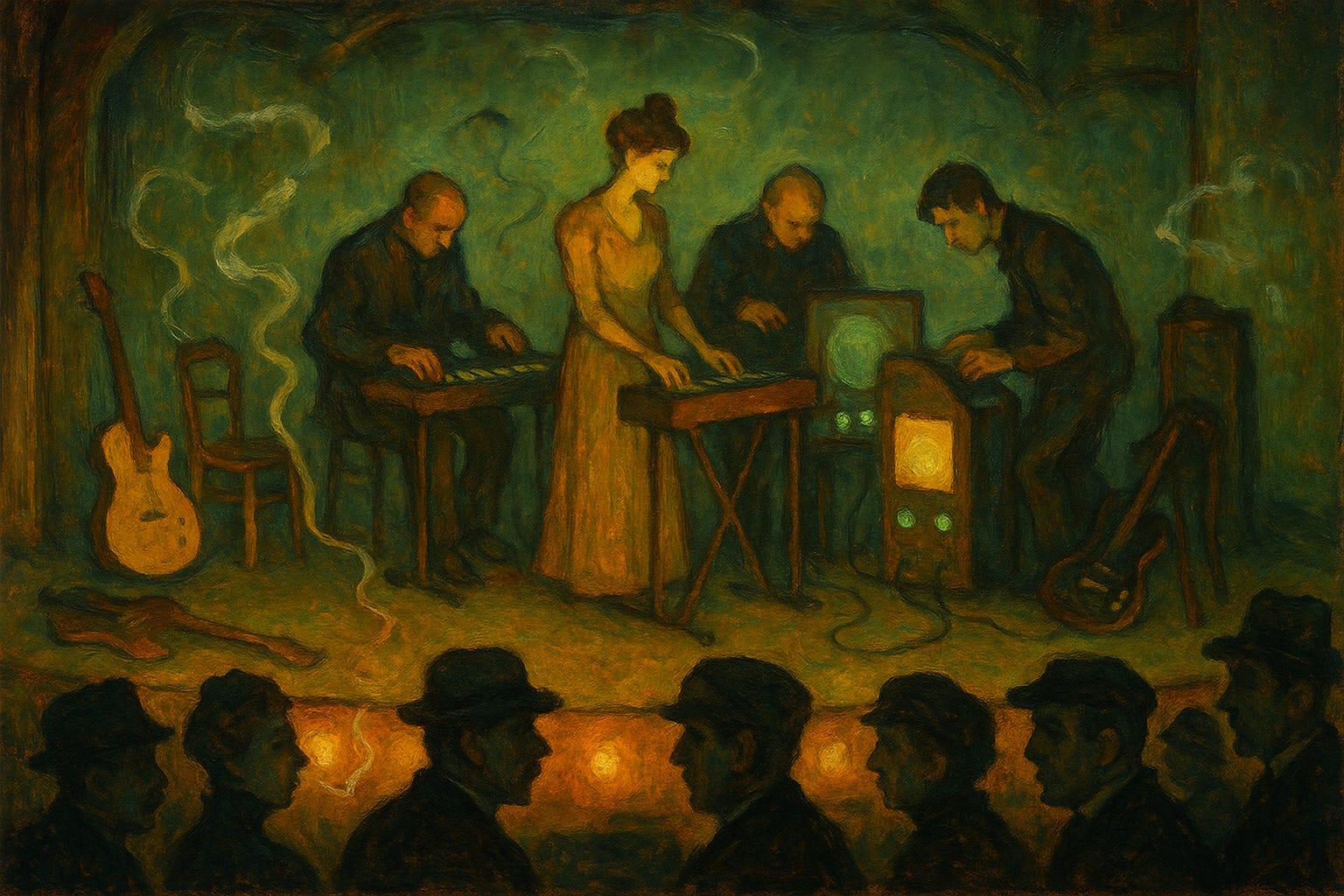
So the same musicians made a very different record. Jonny Greenwood traded lead guitar for synthesizers and the ondes Martenot, an electronic instrument from 1928 most listeners had never heard of. Ed O’Brien stopped playing rhythm and turned his guitar into a texture machine of loop pedals and effects. Even Nigel Godrich, the producer who had made OK Computer with them, worked differently this time, using the computer as an instrument in its own right, generating and reshaping sound rather than capturing a band playing live. The people who made the last hit made the next one on tools they had mostly never used in public. O’Brien put the fear plainly: “It’s scary. Everyone feels insecure. I’m a guitarist and suddenly it’s like, well, there are no guitars on this track.”
And so here is how the same band opened the next record, released three years later:
This is the same choice venture firms face under AI, and most of the industry is getting the shape of it wrong.
The right way to bring AI into a VC firm starts from a blank blueprint: ask what the firm would look like if you built it automated-first, and put humans back only where they genuinely earn their place. Start there, and the easy version of an AI firm collapses on contact.
The easy version is a paint job: keep playing guitar, add a synth in the back of the mix, and call the firm AI-enabled. That was O’Brien’s instinct, and it loses for the same reason his did. You end up with a slightly augmented version of the record you already know how to make. What Radiohead did instead was harder. Same musicians. New instruments.
The musician is durable; the instrument is interchangeable. The musicianship is the judgment, the ear for what’s worth backing. The instrument is whatever you do with your day to express it. Change instruments and you’re still a musician.
For me personally that started literally. I learned piano as a kid with years of scales, picked up the trumpet in grade school until painful braces ended it, and came to the guitar in high school with a foundation the first two instruments had already built.
In a parallel manner, I started an email marketing company in the Web 1.0 era, and I still think of myself as an entrepreneur first, an internet marketer second, an investor last, each role leaning on the one before. Changing instruments is not new to me, and the most recent professional change was the hardest. For the last four months I’ve spent real hours inside Claude Code, building orchestrations and workflows that do major parts of the job I used to do by hand; a year ago that was zero percent of how I worked. I put it off longer than I should have, because the instinct O’Brien had, to do more of what already works, was one I had too.
I’m still an investor. The judgment, the eye for a company worth backing, carries across intact. The daily instrument did not.
What makes that switch possible is approaching your own firm the way a founder approaches a new company: as something to build from a blank blueprint, not something to protect. Not the firm as it ran five or ten years ago, before any of this existed, and not that same firm with a model bolted onto its side. The starting question is what you would build if you were starting now, and only then add where the people must belong.
Not everyone makes the switch, and the honest version of this argument has to say so. O’Brien nearly didn’t. The VC partner who won’t put the guitar down spends their energy on a better-produced version of the record being disrupted and mistakes that for staying ahead.
But the harder resistance came from everyone around the musicians. Radiohead’s label was alarmed. Denied advance copies, EMI executives were put on a coach and driven out to Malibu to hear the thing in sequence; the band shipped it with no singles and no videos, and its own head of marketing called the release “a business challenge.” The people whose entire job was to sell the last record could not hear how the next one would sell. A firm that genuinely rebuilds itself runs into the same wall, and not from the partners doing the rebuilding. It comes from everyone with a stake in the way things already worked, the people and institutions that backed the old model and know the firm for what it used to be. You can change every instrument you play, and the ones invested in the old sound will still tell you it won’t sell.
Radiohead’s Kid A debuted at No. 1, the band’s first US chart-topper, and it sits on the canonical lists now. The label’s fears aged badly.
The venture firms that come through what’s in front of us won’t be the ones that hire AI specialists to play alongside the partners. They’ll be the ones where the partners themselves put the guitar down. Still a band. Still investors. Willing, finally, to make the record with no guitars on it.
Special thanks to my friend and huge Radiohead fan, Dan Laughlin, for reviewing drafts of this piece.
No posts
Comments
Nothing yet. Say the first thing.
Sign in to join the conversation.