
Hello again!
ReSketching started during a special moment, during the Bologna Book Fair. That’s why it began with a lot of energy. But don’t worry! The plan is not to send too many emails. I will share one newsletter every two weeks, so you have time to read it and enjoy it. No inbox overload. Promise!

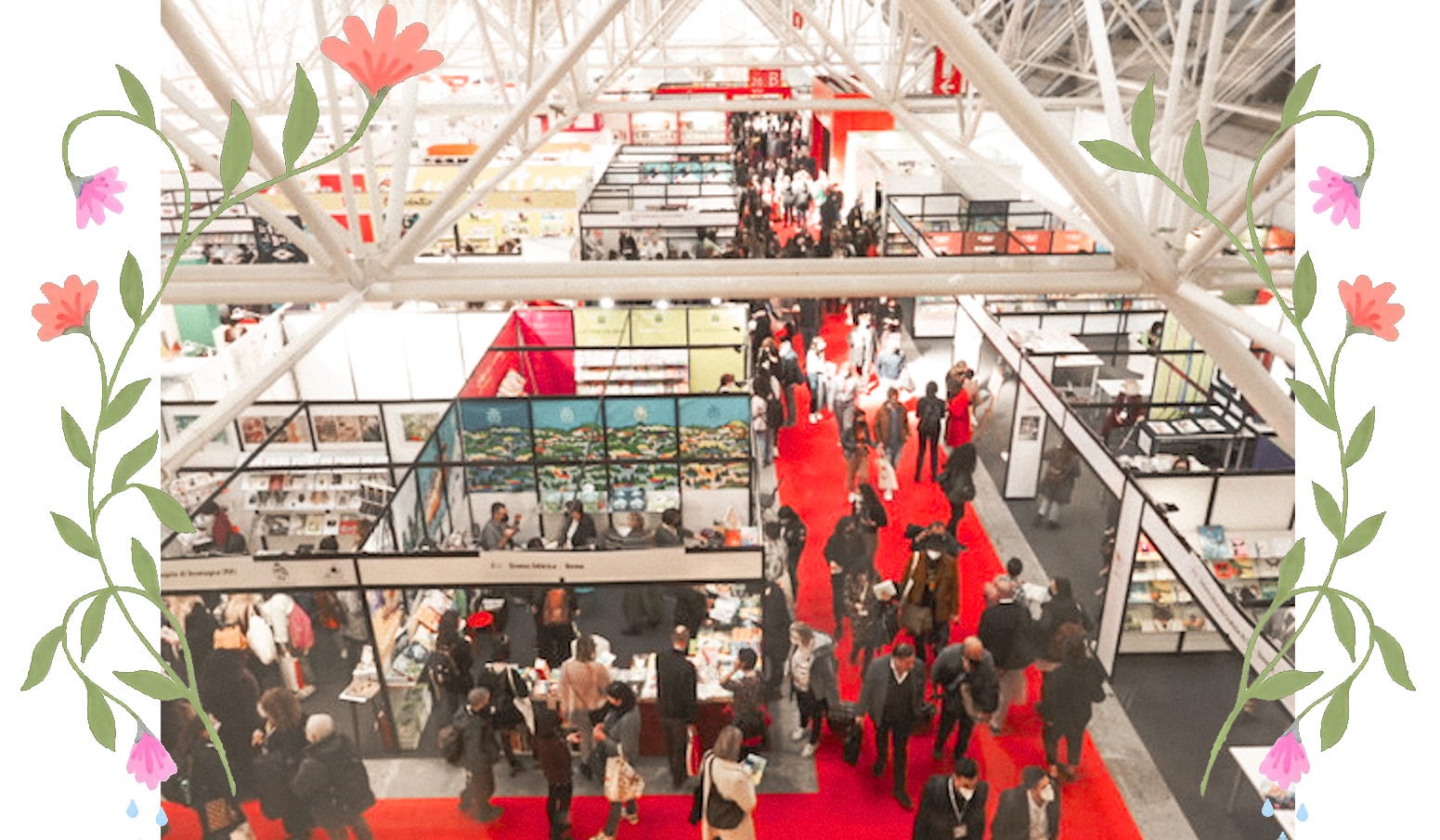
Before anything else, I want to tell you how the fair went. As I mentioned in my last newsletter, the fair is incredible. I believe it’s a life-changing experience.
It’s surprising (and at times overwhelming) to see not just the number of books that exist in the world, but how many truly beautiful ones there are.
One of my favorite parts is seeing books from so many countries and cultures in one place. You can really feel the spirit of each country in their books, and yet they’re all beautiful and moving in their own way.
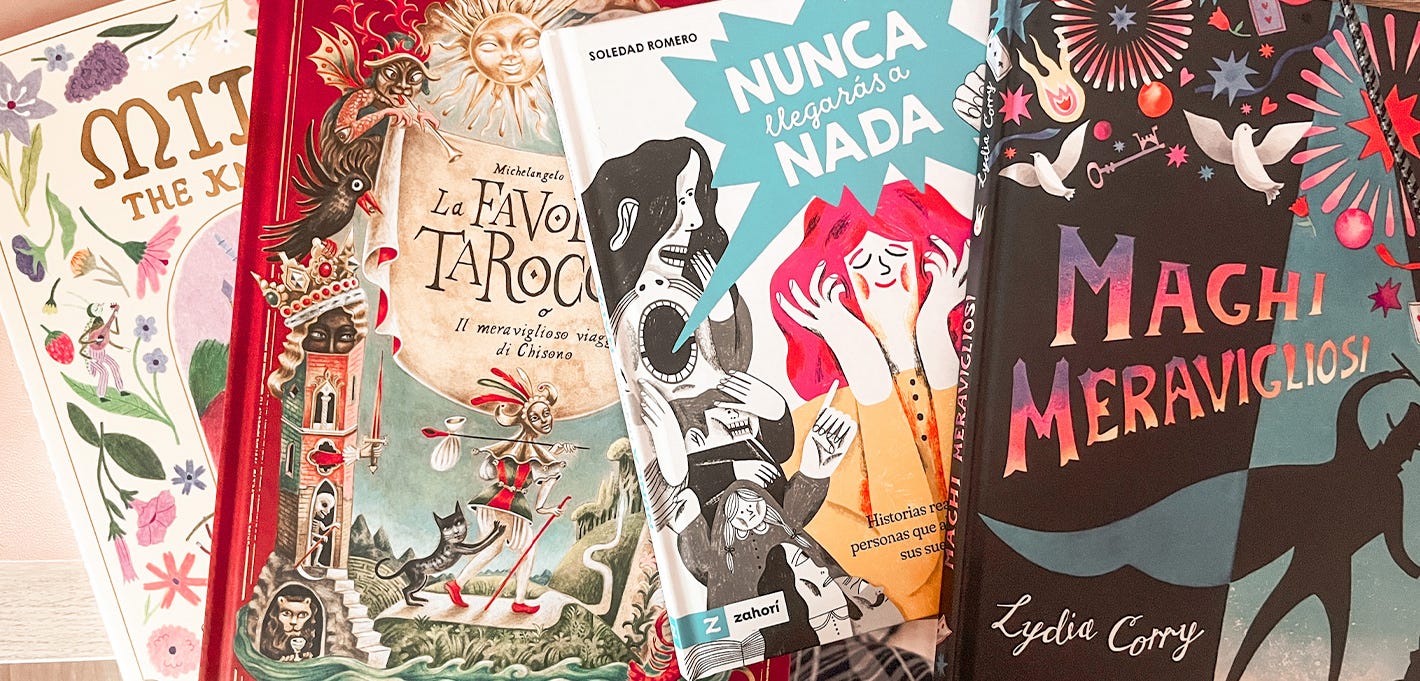
Just like last year, I left the fair feeling inspired, energized, and creatively recharged... and also carrying a few books.
Finding My Community
Another wonderful thing about the fair is the opportunity to connect. First of all, it’s a space full of people from the industry. Even though illustration is a large and growing world, it’s not the most common profession in the general context.
In my childhood circle, or in my neighborhood or school, I don’t have friends who are illustrators, and people are often curious about what I do for a living.
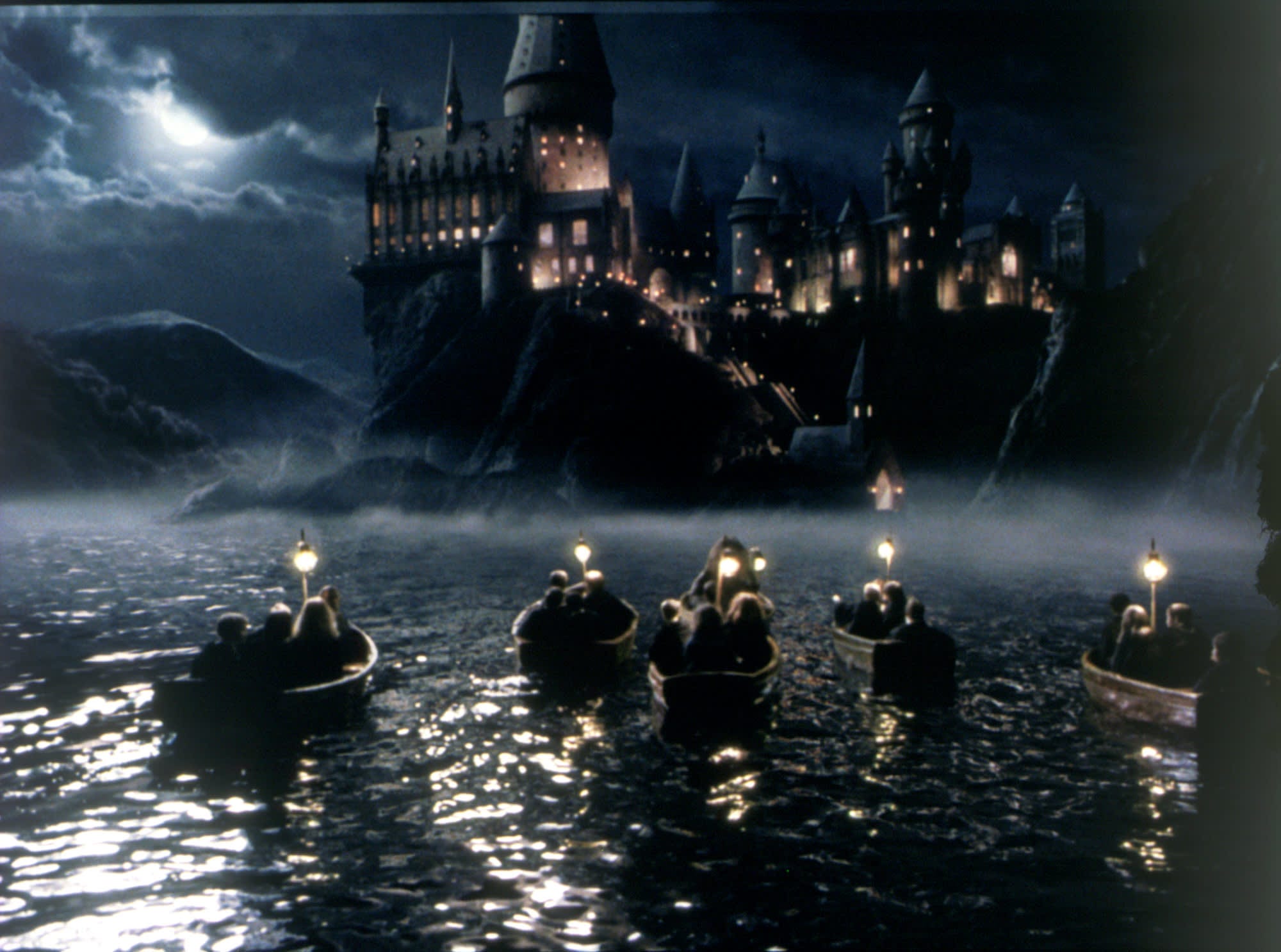
So the Bologna Fair felt like the Hogwarts of illustration, and I felt like Harry discovering that he’d lived among muggles and had finally found a place where everyone shared his passions.
Suddenly, being surrounded by people who speak your same language, who share the same interests and the same insecurities, just feels like home.
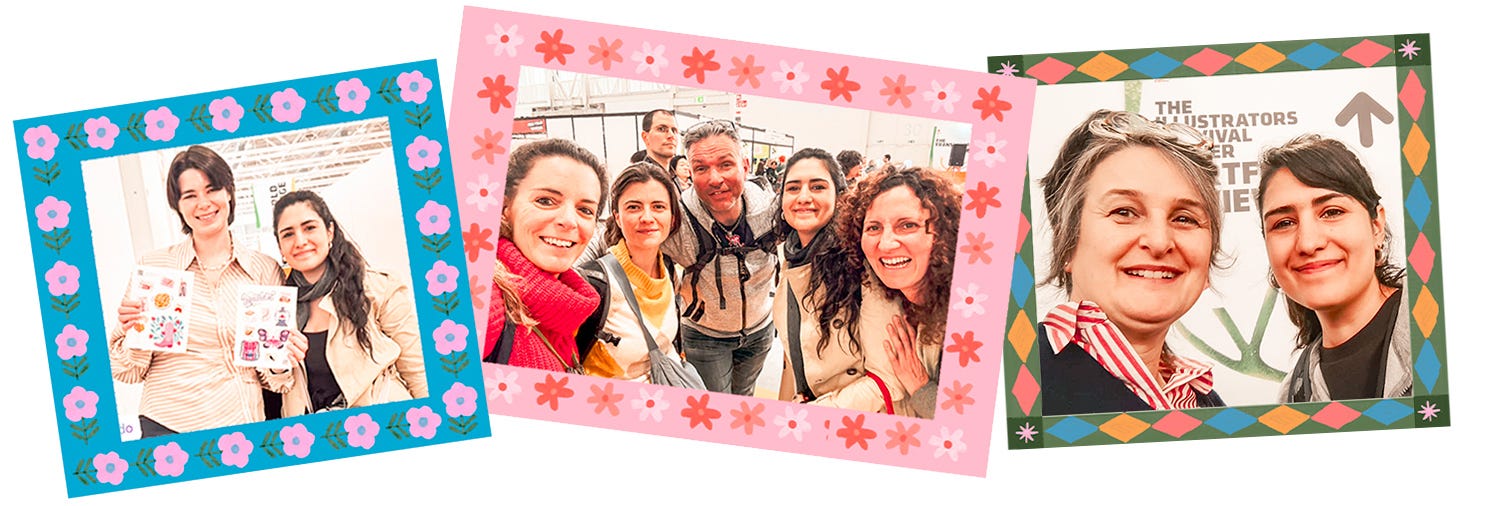
This year I had the chance to meet some classmates from an online course I’ve been taking (which I’ll be sharing with you soon). We were able to meet in person and chat. I also met some of my teachers, amazingly talented people, but above all, very generous and kind.
Meeting My Agents in Person
I also had the chance to meet one of my agents. I’ve been working with a rep agency for about five years now (another topic, I have so much I want to talk to you about!). They’re based in New York and London, so our communication has always been virtual.
Hearing in person how well they know my work and how excited they are about my projects was so meaningful.
And that small conversation planted a little seed, something I’ve been thinking about and want to share with you today.

While chatting with my agent, we talked about how different markets work across different countries. While I don’t think this is a rule, there are certain graphic and literary styles that tend to work better or worse depending on the region.
Thinking about all this on the bus ride home, I started remembering when my relationship with the agency first began. To give you some context, this was in 2020, yes, that 2020.
It’s not a coincidence. Right before the pandemic began, I had just moved with Fausto to a new house. We were fortunate to have a spacious room that became our studio, and a small backyard that brought us some fresh air during a difficult time. While the global situation was incredibly serious and heavy, I recognize that being in a calm, comfortable space made a difference. Like many, we suddenly found ourselves with more time at home, and in my case, that time quietly sparked a shift in my creative path.
I felt a renewed connection with my work. I wanted to return to traditional techniques and dive into something I had been putting off for years: illustration.
At that time I was doing book covers, planners, notebooks, and some editorial work for magazines. My background was in graphic design and lettering, so most of my work reflected that.
With more time, I started taking courses and creating personal projects focused on illustration. Luckily, with flexibility from clients, I began to include illustration in lettering commissions. Gradually, my focus started to shift.
Although it was something I had been working toward, within a few months I felt a creative explosion and started making work I was truly proud of.

Starting With an Agent
At the same time, I had been thinking about finding an agent, someone who could help me access areas I couldn’t reach on my own. I had tried before, but with no success.
This time, I:
Updated my portfolio with my new illustrations.
Reopened my list of agencies.
Researched, added a few new names, and sent out my work.
And this time, I got a reply. That’s how my relationship with my agents began.

Where It All Connects
And here’s where this whole newsletter ties together.
In my mind, my goal—my dream—was to work in publishing doing book covers and illustrated books. For some reason, I thought that was obvious. Or rather, I didn’t even question it.
Now I understand why: I had no idea about the industry I wanted to work in. In fact, I didn’t even know about the different sectors where illustration is used.
At the beginning of my relationship with the agency (and let’s add a bit of anxiety), I felt like they weren’t getting me many editorial projects. Most of the opportunities were in the licensing world: greeting cards and such.
A few months later, they asked us to update our portfolios. I uploaded some illustrations I had done in a course, a children’s story.
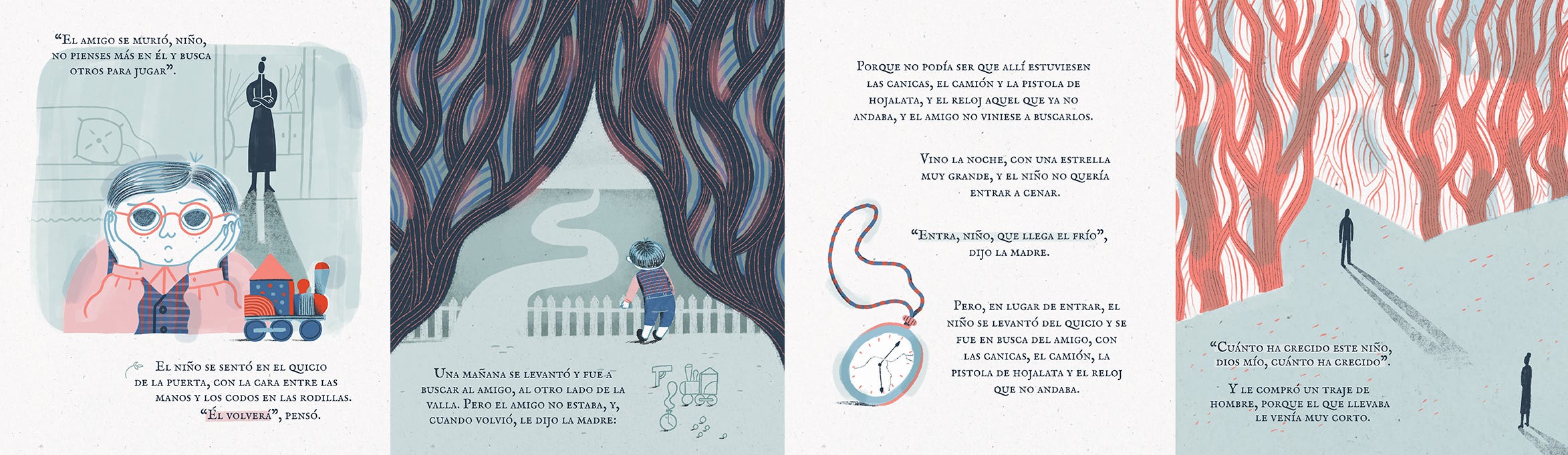
Immediately, my agent emailed me to ask if I was interested in the publishing sector. I mean, of course I was! Wasn’t that obvious? Wait… clearly, there was something I was missing. That was the first moment I realized I might not have fully figured out how things actually worked.
All of this led me to realize that understanding the illustration world in depth is just as important as improving your art. So I started digging…

Understanding the Industry
I don’t want this to become a full biography of my industry journey, but over the years, through work, conversations, and curiosity, I began to truly understand how vast the illustration world is. Illustration isn’t a single path, but a whole branching system of possibilities.
The next list it’s not a complete map, but it gives a sense of how wide the field is, from different markets to audiences, genres, formats, and even contract types.
Knowing where you are (or want to be) on this map can make a huge difference in how you present your work, and how you open the right doors.
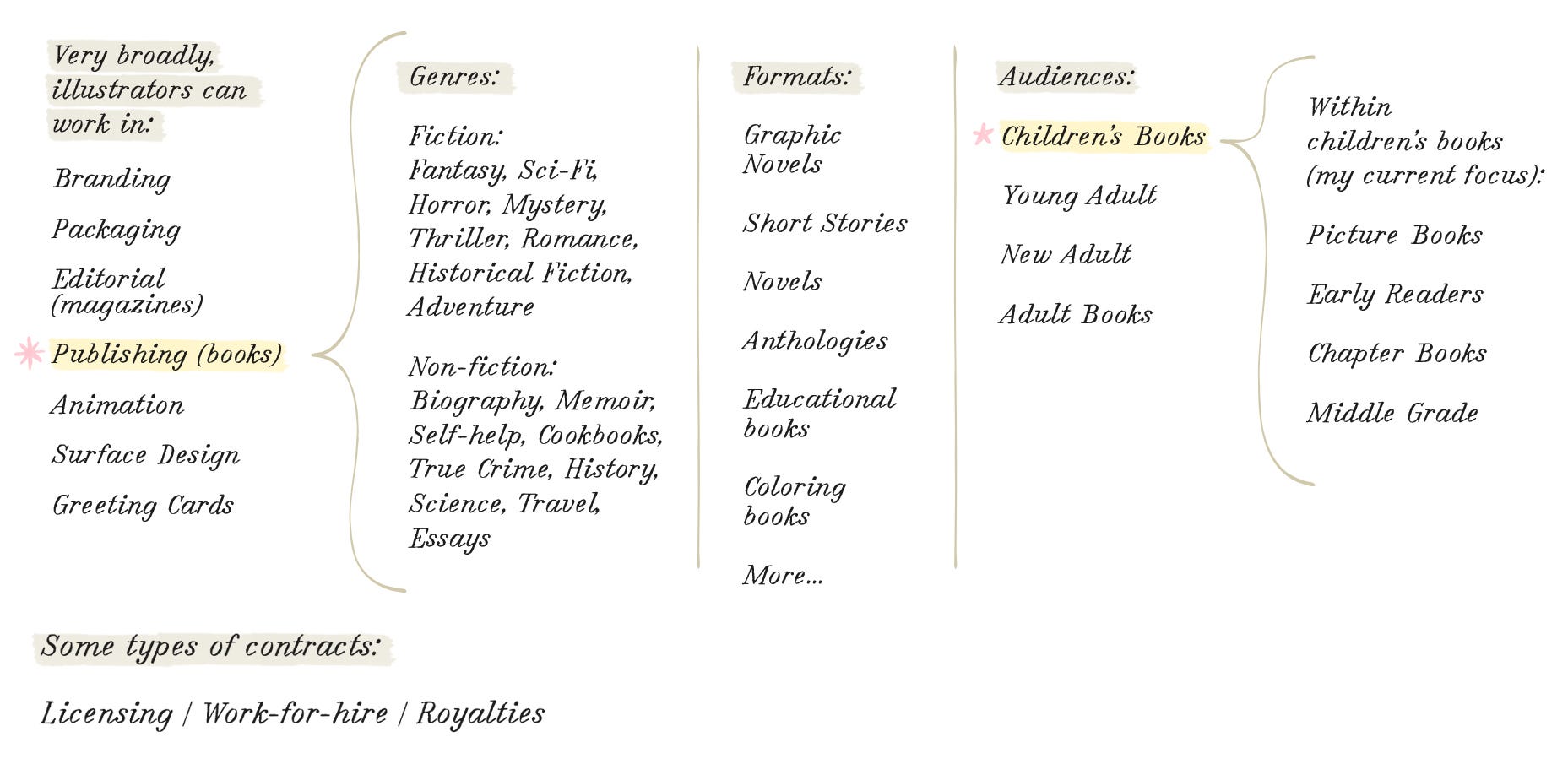
Each has its own logic, pros, and challenges. Understanding this is key to:
Knowing the illustrator career you want.
Managing your expectations realistically.

This is just a quick categorization. I’m not an expert and I’m still learning. But why does this matter?
Because knowledge is power.
Sending your portfolio to a publisher that only makes board books when your portfolio suits early readers might lead to rejection, not because your work isn’t good, but because you’re pitching to the wrong people.
Maybe your style doesn’t work in your country, but could be perfect elsewhere. Let’s make the most of globalization!
I realized I wanted to make picture books, but my portfolio didn’t show that I could develop a character, or that I could tell a story across pages. Creating a cover and developing a story over 32 pages are two very different things.
Understanding the skill sets required for each sector is crucial. You realize you can’t do everything. Everything takes practice or at least, a conscious understanding.
As I learned and updated my portfolio, the type of work I was offered began to shift.
So, maybe, unknowingly, we’re self-sabotaging, simply out of not knowing. And I’m not saying this to blame anyone. It’s not even unconscious. It’s innocent ignorance.

And this ignorance can lead us to difficult places. I even started to doubt whether my work was good enough, but what does "good enough" really mean? That’s another key point. Sometimes we believe our work isn’t at the level required for our goals, when in fact, with so many markets, audiences, and potential projects out there, there’s probably a place in the world where our work fits. Just as it is, at the level we’re at.
That doesn’t mean we shouldn’t try to improve, but as I heard recently, "creativity is not a waiting game, it’s a making game."
It’s funny, but there are so many things in life where the only way to improve is by doing. For example, I’ve been meaning to learn to drive for years. I know how to start the car, go forward, reverse… but I’m scared of driving around other cars.
And the ironic part? The only way to learn to drive in traffic is… to drive in traffic!
Illustration is the same. You can’t wait until your portfolio is perfect to start showing your work and looking for jobs. Because the only way to land a dream project is by doing lots of smaller ones first.
Back then, I felt frustrated and angry, and I was looking to put the blame on my agents or on the art directors who rejected my portfolio. But in reality, the responsibility for not communicating, for not getting informed, was mine.
And when I understood this, when I realized I had much more control than I thought, I felt a huge relief.
Not because my work had suddenly changed, but because I felt like I had taken the reins. And while I kept improving, I could also find a place for my current portfolio, get work and clients, and continue building experience.
I know many of you reading this might not be illustrators, and that’s exactly why I wanted to share this. Because what I’ve learned doesn’t just apply to publishing or drawing. It’s about understanding the space you want to be in, and making sure your message is landing where it needs to.
So maybe this is your reminder to pause and ask: Is what I’m showing aligned with where I want to go? And am I knocking on the right doors?
Let me know what you think in the comments. I’d love to hear how this resonates with you.
And remember, you can read all previous ReSketching newsletters on Substack, anytime.
See you in the next one.
No posts
Comments
Nothing yet. Say the first thing.
Sign in to join the conversation.