
Welcome to The Business of Luxury. Where we decode what makes luxury brands so desirable and valuable, and apply those principles to your expert-led business.
This week: If you’re an expert who wants to be the obvious choice, but hasn’t worked out how to shift into luxury-level status, this post is for you. And it’s easier than you think.
[This article first appeared on my website. Reworked and issued on Substack for those wanting to read in-app 🤍]

A while ago, there was a particular kind of call I found myself on over and over again.
Smart, capable founders, decades deep into their business career, sitting across from me on Zoom while we went over the same decision for 60 minutes without ever actually making it...
They’re not confused or short on information. Instead, they’re talking, talking, talking… because talking feels like progress.
And it was slowly driving me crazy.
The expert industry says more access equals more value: more calls, more Slack, more “support”.
If you’re not permanently available, you’re told you’re “not holding enough space” or “not being high-touch” enough.
My deeply unsexy no is this: I do not run my business like the rest of the industry.
Why? High-touch does not mean luxury. High-quality judgement is luxury.
My “no” is defining my brand for me.
I know myself and I know my sh!t.
I make fast judgement calls, for myself and for my clients. If what you want is endless discussion, reassurance, or someone to coach you through a decision with you for six months, I’m not the right fit.
You’re not hiring me for an hour of my time.
You’re hiring me for my judgement.
You can pay for a chat, or you can pay for my judgement, but they are not the same product.
Now, I’m not saying that you have to follow anything that I am doing in my business. I am merely telling you this as a demonstration of how my no matches how I work and I expect my clients to work the same.
Martine and Prosper Assouline were practically nobody in publishing. Their track record was La Colombe d’Or, a hotel in the south of France. No history in the book trade and no guarantee their grand vision would work.
When they pitched the new CEO of Bergdorf Goodman on what they called “the first luxury brand in culture,” he didn’t need convincing.
He could see their vision and he offered them the seventh floor. And a deadline: “September.”
Most people with that opportunity would say “hell yes”. A flagship placement at Bergdorf’s is the kind of hell yes careers get built on.
But Martine and Prosper said no. They weren’t ready.
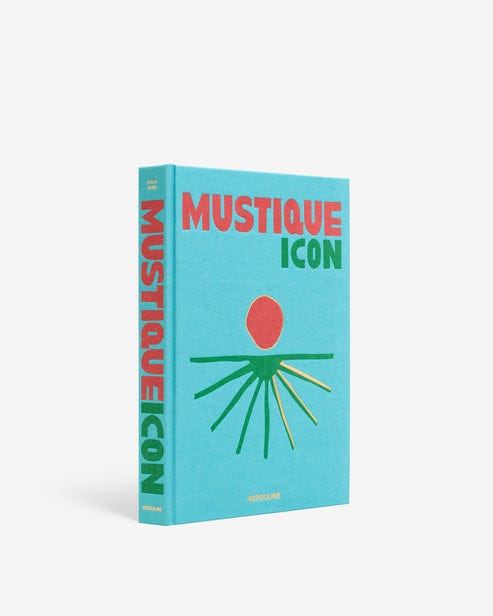
A risky yes would have meant rushing, a riskier no could have killed the project with Bergdorf Goodman and possibly their brand.
But their risky no paid off. The CEO didn’t walk away, instead, he moved the date. They cancelled their holidays and spent the extra month building the thing properly, on their own terms.
That no wasn’t about gatekeeping or trying to “be exclusive”; it was a new brand with zero leverage refusing to move on someone else’s timeline. Even when that someone else controlled one of the most powerful spaces in New York retail.
“We receive hundreds of projects and proposals, and we refuse so many every day. We cannot publish everything, just what is good for the brand… It is obvious for us, it comes naturally.”
– 1Prosper Assouline
Their no defined their brand right from the start.

Reputation: the repeated pattern of decisions you keep making, not one big launch or opportunity.
For Assouline, every “off” title, every misaligned collaboration, would be another vote for what their brand was becoming. Prosper defines their brand as “not the people you invite, but the ones you decide not to invite.”
You don’t become a luxury brand by saying yes to everything; you become a luxury brand by saying the same kind of yes, in the same direction, over and over again... and refusing what doesn’t belong.
That’s as true for a 30‑year‑old publishing house as it is for a solo advisor selling a high‑touch engagement.
The call you knew you didn’t need to take, the client whose objective is discussing rather than deciding, the “small exception” you grant to keep someone happy.
Well... it chips away at the exact thing your best clients are paying for: your standards, your judgement, your willingness to disappoint the wrong people so the right people can trust you.
→ You don’t need a 200‑page operations manual to do this.
What you need is a single, brutally honest decision rule, your version of “we know immediately if it’s an Assouline book or not”, and the courage to let that rule cost you some yeses.
Ultimately, it’s not a rebrand or a new website that shows your brand has shifted, it’s continuous decisions made, every day with a yes/no.
Before you can say no more than you say yes, you need to know what your yes actually protects.
Most people don’t have a conscious rule they refer to. They have a mood. A good day says yes. A tired day says yes to stop feeling guilty about saying no.
(how seen do you feel right now?!)
Over time, a wrong yes becomes a series of wrong yeses which build your reputation which builds your brand.
So, if you want to find yours, here’s how.
Psst. Usually, this would be a paid dispatch so treat it as if it is. Don’t skim over it or say you’ll do it later.
Not a values statement or a vision board wish. A hardcore decision rule so damn specific that someone else could apply it and make the same call you would.
That is the ultimate test of this exercise.
If you can’t say it in one sentence, that’s the real problem, not your branding, website, or even client avatar. It should come from your heart and have energy behind it without wobbling.
Not just your client roster. Although, that is a reflection of your decisions.
I’m talking about the small yeses: the extra call, the discount, the deadline you moved, the content you put out that wasn’t quiet right.
Anything that doesn’t survive contact with your own rule is the thing you’re changing your standards for.
You don’t have to fix it this week. You just have to see it. Naming the exception is the whole exercise. Everything that follows from today, well, you can’t unsee it.
Yes, this is a confronting way to look at your own brand. But it’s the difference between running the same business for the next few years and elevating it into a genuine top-tier, luxury brand.
So if this gave you a taste of where you want to spend the next few weeks building, then...
The waitlist is open for UNIGNORABLE: Atelier Edition – my call-free advisory to turn exceptional experts into The Obvious Choice for extraordinary clients.
The Atelier Edition exists for one specific person: the solo expert who runs their own business, which means when I hand you my brand-shifting judgement, you have the agency to act on it. I move fast and I expect you to move fast.
Six weeks of fast decision making, capped at five clients.
If this is how you work then you know this is for you.
Comments
Nothing yet. Say the first thing.
Sign in to join the conversation.