
What would you do if, as a new pastor, you had been casually informed just days before your first Sunday that a registered sex offender was a member of your new congregation?
That’s the story in the latest episode of The Silenced Truth audio documentary series and it’s a perspective that survivors don’t often hear—a pastor who clearly saw the risk and took the steps needed to protect his congregation. What was surprising, though, was how hard it was for this church’s elder board to perceive the risk, too. But because this pastor is married to a trained child welfare social worker, her expertise ensured he was better informed than most pastors. Their story concludes with a conversation I had with Victor Vieth, Chief Program Officer, Education and Research, at the Zero Abuse Project.
Since this episode dropped last week, I've heard from advocates who are using it in their own work in churches. One woman wrote: “I’m currently working on two different cases of women who have been shut down for raising concerns like this. This podcast episode could not have been more timely.”
One study of nearly 4,000 sex offenders revealed that 93 percent of sex offenders identify as religious. That means that it’s critical that church communities address this crisis. If not, we are giving safe harbor to perpetrators who create lifelong physical and spiritual damage in their victims.
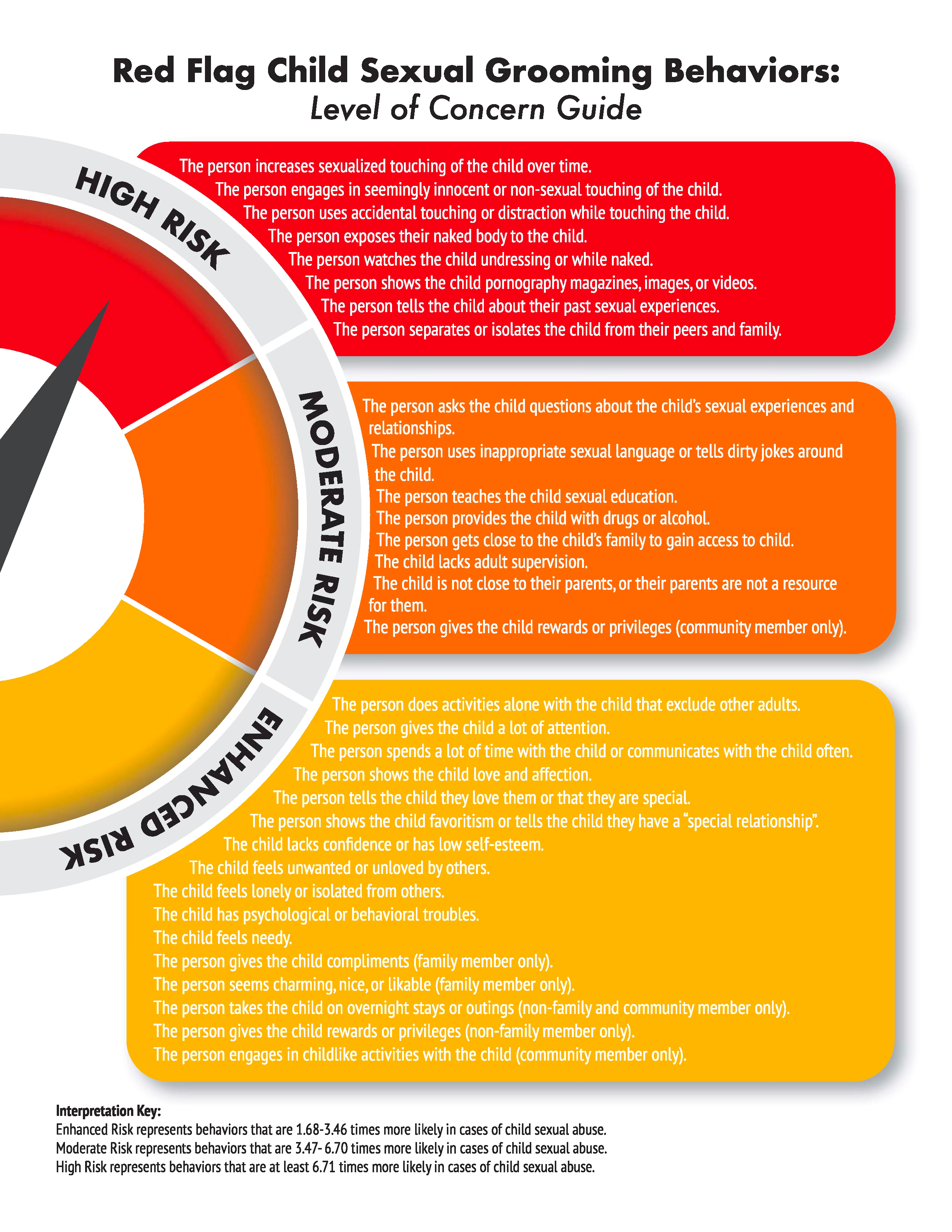
Before our interview, Victor sent me this infographic that clearly explains the risk levels of grooming behaviors by perpetrators. I knew as soon as I saw it that I would need to publish a Substack follow-up article just to share this image. But I would add one more grooming behavior to this list—one that should be painfully obvious, but has had much institutional cover in high-profile cases like Kanakuk Kamps or the Southern Baptist leader Paul Pressler—and that is naked wrestling and/or naked hot-tubbing. It boggles my mind that this behavior does not raise five alarm bells when it happens. (For context, you can read more about Pressler’s history in Robert Downen’s new article in Texas Monthly or watch the Instagram reel for the summary.)
During our interview, I read this profound quote from an article Victor wrote and then asked him to elaborate: “Members of the clergy, church elders, and lay Christians often struggle with the application of law and gospel to victims and perpetrators of child sexual abuse. Partly as a result of ignorance of the dynamics involved in these cases, Christians often apply a heavy dosage of law to victims and gospel to offenders.” I have witnessed this far too often. He responded: “Very few faith leaders are trauma-informed. Very few seminaries have any sort of education in child abuse. When they do, it’s not required education and is not close to the level I and other experts would recommend.”
So please listen to this episode, then read and share with your church leaders these additional articles from Victor that I couldn’t fit in the show notes due to character limitations:
A Voice is Heard in Ramah: The Critical Importance of Theological Engagement with the Topic of Child Maltreatment as a Means of Providing Spiritual Relief to Survivors (published in the APSAC Advisor, a peer-reviewed, quarterly news journal published by the Association of Professionals Solving the Abuse of Children (APSAC)
Ministering to Adult Sex Offenders: Ten Lessons from Henry Gerecke (Gerecke minister to Nazi war criminals responsible for murdering millions of men, women, and children; published in the Wisconsin Lutheran Quarterly, 2015).
Wounded Souls: The Need for Child Protection Professionals and Faith Leaders to Recognize and Respond to the Spiritual Impact of Child Abuse (published in the Mitchell Hamline Law Review).
No posts
Comments
Nothing yet. Say the first thing.
Sign in to join the conversation.