
Earlier this week, The Daily podcast ran an episode titled “What AI Is Actually Doing To The Economy” and it began by posing a question to people, asking them to describe in one word how they feel about AI. As soon as I heard that question, my instinctive response was “grateful.”
This response puts me at odds with many people in my life, especially the Gen Z cohort. And I’ve been thinking about that gut reaction and why I—typically not an early adopter—would think that way.
It’s not that I am unaware of the risks that AI poses. Last year, I produced a podcast series on AI and Human Flourishing. It was incredibly eye-opening to listen to Kevin Esvelt, an MIT biosecurity researcher, explain the world-ending risks of AI and “mirror life” —something I was previously and blissfully unaware of until I edited this episode, “Safeguarding the Future.”
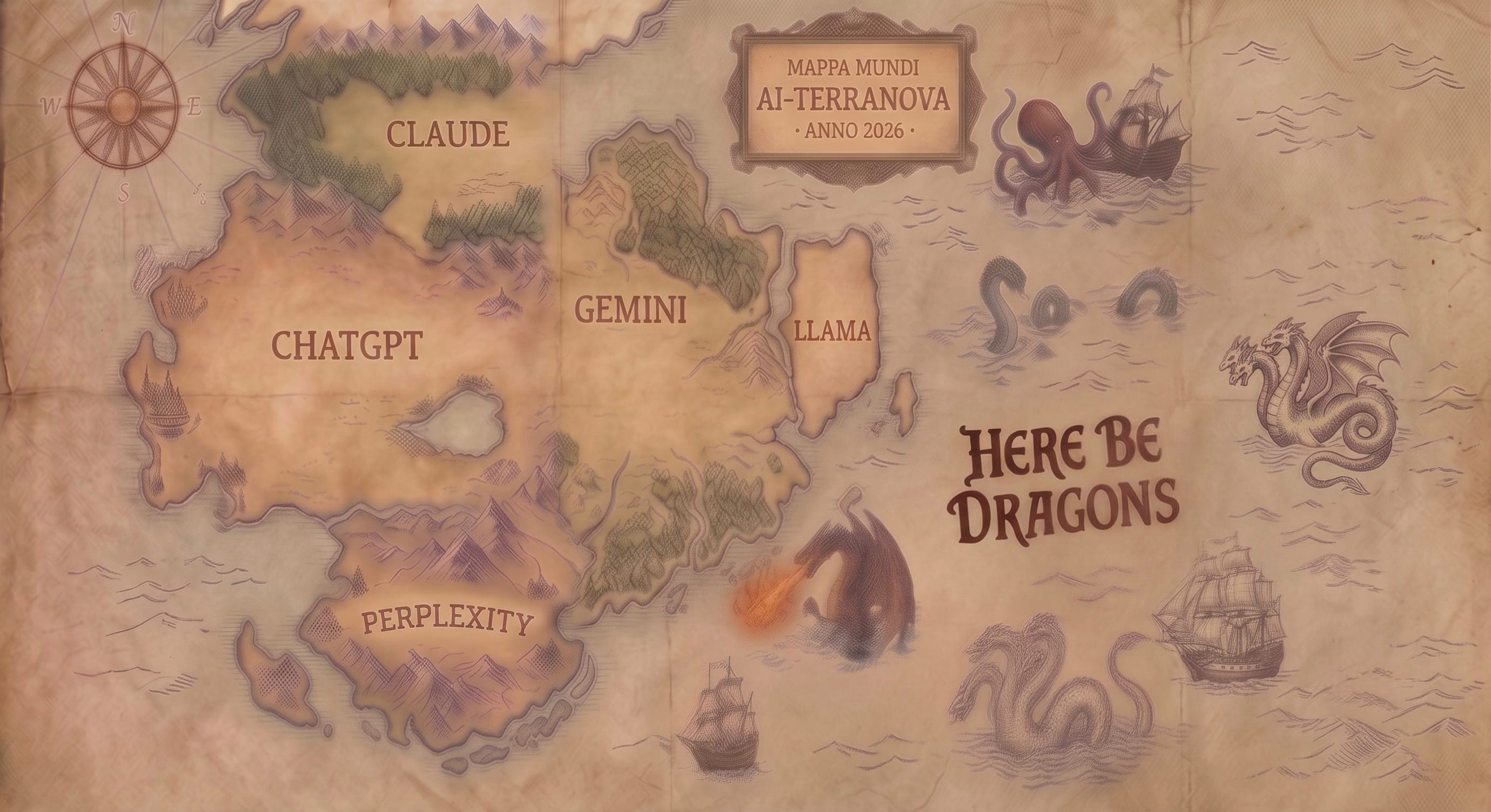
So why am I more sanguine about this technology than many younger adults? One reason could be the economic and tech disruptions I’ve already lived through. The things we foresee and panic about, like Y2K, are rarely the events that truly disrupt us. It’s what we don’t see coming, like COVID-19, that upends life as we know it.
Living Through Disruption
Likely, my gratitude for the profound shifts in accessing information over the course of my life is what shaped my response this week. As a living fossil from the pre-Internet era, I know firsthand how hard it was to build a decent knowledge base with limited resources. I grew up with a set of World Book encyclopedias that my parents bought when I was a toddler. Those encyclopedias had entries about space exploration that waxed rhapsodic about how one day man will walk on the moon. Unfortunately, those were still my reference books in grade school, years after that momentous moon walk. It was frustrating to live with outdated information.
In high school, my mother forced me to learn typing in a summer school class. I protested, stating that I was not going to be anyone’s secretary so I didn’t need to learn this skill. Little did I know that typing would dominate my life in the decades to come. Technology freed the mostly female “typing pool” and required the mostly male supervisors to do it themselves.
At my first job for a Fortune 50 company, I had to teach the Vice President of Public Relations how to receive a fax: “Go to the fourth floor. Walk toward the sound of the ringing telephone. Locate the machine that spit out a piece of paper. Retrieve said paper.” The next day, he bragged to his secretary that he had “learned to fax,” when all he had learned to do was pick up what was sent to him. He still didn’t know how to actually use the machine.
Today, no one except medical and insurance offices (maddeningly) uses fax technology. But we still have Fortune 50 companies and Vice Presidents of Public Relations. The technology shifted but the org chart didn’t.
A decade after that, I was working for a commercial film production company when the sound engineer showed me “the Internet.” It was just AOL, but I was mesmerized. I joined AOL when it measured its subscriber base in the thousands, not the millions. I clearly remember the scary graphic on the AOL software that allowed you to access “the World Wide Web,” like a blinking “here be dragons” warning. On AOL, I wasted time in chat rooms arguing with people and even dated a guy briefly that I met there. Today we have better graphics and higher speeds, but we still do the same things online.
In that same period, film technology was undergoing the digital revolution. We now had nonlinear editing software, which was nondestructive. Unlike editing actual tape or film, you could undo and redo your editing decisions until decision paralysis set in. My boss was unimpressed, even though he knew he had no choice but to upgrade the technology. “This just means the clients will chew up more time with endless revisions,” he predicted (correctly).
Technology didn’t wipe out the creator economy, but it did profoundly reshape it. Now AI makes each of us the clients who can chew up time with endless revisions—as long as we can afford the tokens.
The Democratization of Information
Since I can clearly remember the intense labor of research when you had to schlep to a library and deal with the Dewey Decimal system to find the research you needed, I may appreciate the access to instant knowledge more than someone who has always had access to it. When I can use Claude in real time to do battle with the Ford dealership service manager to surface documents that prove that certain services are indeed covered under their maintenance agreement, you can bet that I’m grateful. When I can use Gemini to create visual illustrations for articles, you know I’m thankful for how fast I can generate creative concepts with it. When I can use Descript to quickly edit video and audio interviews like a Word document, I join thousands of other creators who are happy to have a tedious task sped up.
Today AI provides me with the tools I need to be much more productive than I ever was in the past. I rely on AI now as bosses have always relied on their employees—the staff who drafted their speeches and correspondence, and even ghostwrote the books of top business leaders or celebrities. I know this personally because I was that employee who wrote the speeches for the Fortune 500 CEO, the book chapters for a busy speaker, and the initial drafts of a popular travel writer. I’ve also published countless articles, blog posts, and three books of my own. But now I have my digital staff to help me research and even draft some of these materials. These digital tools don’t have final editorial say, just like I didn’t as a junior employee. (Side note: no AI tools drafted this article. See my disclaimer at the end.)
But it’s not just the productivity increases I appreciate. For years, doctors have patronizingly said, “Don’t Google your symptoms.” I profoundly disagree. If you can only spend 10 minutes with me and seven of those are spent typing at your computer, your constraints as a doctor nearly guarantee you can’t be as good a diagnostician as anything that has unlimited time to ask me follow-up questions. Yes, I’m aware of the Florida pastor who relied on ChatGPT’s bad medical advice and is now suing the chatbot’s company. It’s reported that he ignored pleas from friends and family to seek medical care for what turned out to be a dangerous pulmonary embolism. I’m truly sorry that this man suffered a medical emergency and I agree that chatbots should have better guardrails, but according to the lawsuit, this man told the chatbot that “the people in my church think I’m crazy for not going to the hospital.” That human behavior is the real red flag in this story, especially for a pastor who should know the Scriptural admonition that “in the multitude of counselors, there is safety” (Proverbs 11:14 and 24:6).
In my case, Claude diagnosed something that two of my doctors should have immediately known was a top risk factor with my health history. It was able to do so because I kept feeding it my own observations over the course of a few days. When Claude finalized its diagnosis, I submitted that information and its recommendations to my real doctors. They agreed with the diagnosis and Claude’s recommended regimen for recovery. The real problem was that both of these doctors knew about the leading symptom, but it didn’t lead them to this obvious first-tier diagnosis. I had to be the one to surface that through a careful conversation with a chatbot. Claude was only one partner in this process, though. I used other tools to further the research and then only proceeded when my actual doctors agreed.
Life experience teaches you that the experts you pay to know their jobs won’t necessarily do them right. You may sign a return that your CPA filled out incorrectly, but it won’t be the CPA who will be penalized. It will be you, the taxpayer who signed the return, even though you aren’t the tax professional who should have known the rules. It’s mind-numbingly tedious to have to follow up on people, but at least the chatbots make it easier to access the baseline knowledge that these professionals should have. Maybe that’s why the people I know who are most enthusiastic about AI are the ones who are old enough to have encountered many human failures. Now that there’s a tool that levels the playing field, it saves a lot of precious time.
Be Like the “Factory Girls”
I’m not unsympathetic to the Gen Z reaction to AI, but technology disruptions are a very real risk and life experience. This is nothing new. But you can’t sit out these inventions. You must engage with them and demand more human terms.
When the Industrial Revolution first came to America, the first industry it disrupted was one historically the domain of women: textiles. The owners of the mechanized textile mills of New England in the early 1800s advertised jobs to young women from rural areas, promising a type of civilized society where they could improve their minds along with their finances. But in reality, these owners required grueling work conditions, even for girls as young as eleven—12-to-14-hour workdays in deafening, poorly ventilated brick buildings. The response from these “Factory Girls” is instructive to us today: they publicly protested these conditions. At the time, it was shocking for women to speak in public. But they did—and they created the first permanent union of women workers in America. They joined the flood of social change that women drove in the 19th century, including reforms in child labor and marriage laws, the abolition of slavery, and ultimately the right for women to vote.
Technology has always introduced new opportunities for owners to exploit for their own gain, usually at the expense of their workers. That hasn’t changed since the dawn of time because human greed hasn’t changed since the dawn of time. But we have enough examples from history to demonstrate that as a society, we should not accept the terms that the disruption initially offers.
I live in an area that’s saturated with data centers. You might expect from what I’ve written so far that I would not mind this. But I’m very active in pushing my local, state, and federal representatives to change the tax and power incentives for data centers, and curb further construction. Just like the Factory Girls, I can both benefit from the new technology and demand a more equitable system. I can push those who represent me to require better zoning, improved power sources, less pollution, and fairer taxes. This is especially true with AI, which represents the accumulation of human knowledge. No one sector of the economy should unequally benefit from what all of us contributed to create.
The irony is that AI actually makes it easier to glean the knowledge needed to argue for these reforms. But right now, it cannot replace the human effort to engage with the disruption, to apply market and public policy pressures to shape how the technology will be valued and used.
That’s the human job and it’s still massively needed.
[This reflection is 100% human crafted. No animals were harmed in the making and no AI tools were involved in the writing, apart from some fact-checking and creating the article illustration. All em dashes are entirely my own because I have always loved them—honestly and genuinely.]
No posts
Comments
Nothing yet. Say the first thing.
Sign in to join the conversation.