
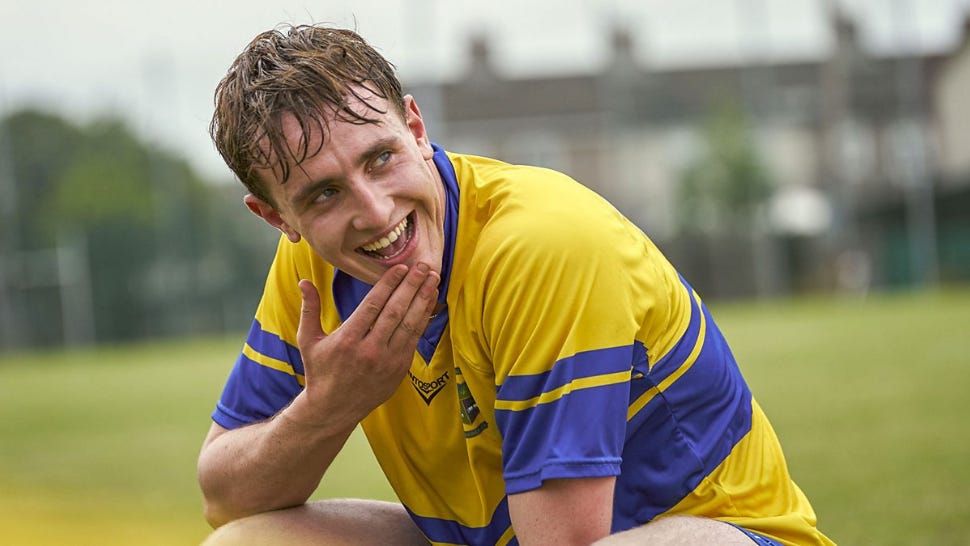
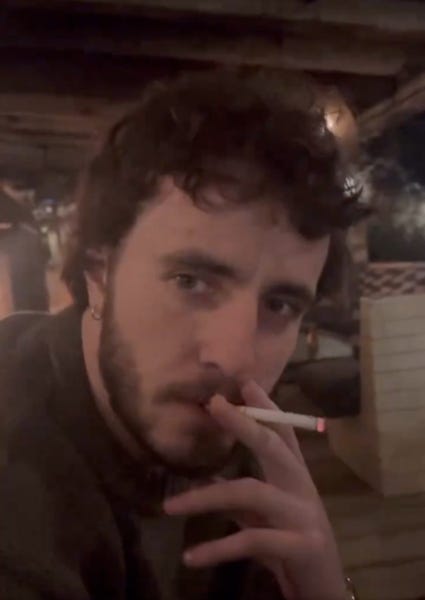
There he was, smoking a cigarette in a back alley in Soho. I thought: “He’s shorter than I expected.” I didn’t think: “Holy f*ck. That’s Paul Mescal.”
That’s because he wasn’t Paul Mescal yet. Or at least, he wasn’t Paul Mescal as you know him now. He was just an actor in a new TV series I was the marketing exec for, called Normal People.
A few months earlier, I’d heard an assistant commissioner mention in passing that Normal People “was gonna be big”, so I asked my boss if I could work on it. The series was based on a book by Sally Rooney and followed two young people throughout their university years in Dublin. The novel spanned 2011-2014, when I happened to have been at college there. Surrounded by English colleagues, I argued I was the obvious choice as campaign lead. (Unlike Marianne and Connell, I didn’t go to Trinity, but UCD was close enough for my manager.)
I sat in the London office watching early rushes of episodes, covertly shielding my laptop any time someone walked by in case Paul Mescal’s penis popped up on-screen. Curious what part of Ireland he was from, I looked him up on Instagram. He had hardly any followers. Maybe around 2k. As I watched him play Connell leaving a teary voicemail for Marianne, I privately disagreed with the assistant commissioner that this slow drama was going to be a hit. TV commissioners say their shows are going to be “huge” all the time, so you have to take it with a pinch of salt. I’ve worked on some real flops before which were also “guaranteed to cut through” with 16 to 24s. (A reality show mash-up of Love Island and Strictly didn’t get a second series.)
I thought Normal People was decent, but I figured it wasn’t for everyone. I wrote the marketing brief with an indie-cinema-loving, Chalamet-worshipping type of audience in mind. I had conversation after conversation about how to make the trailer feel filmic and intimate, with lots of long longing looks between characters. Looking back, I’m kind of impressed we managed to cram so much yearning into 30-second TV spots and paid ads.
So that’s how, in March 2020, I wound up at a social shoot with Paul Mescal and Daisy Edgar-Jones. Outside the studio is where I saw him first, cigarette in hand. I should have said hello, but I never knew how to act around “talent”. I was always acutely aware of my status as a low-level marketing pleb, so I let my manager do the talking. In front of the camera, Daisy and Paul sat with their heads close together and joked with the social media team. The pair had such obvious chemistry that I felt awkward. Like I was inside an episode, intruding on their space.
At one point, we took a break and I followed them up the road to a bakery. I was much more struck in-person by Daisy than Paul. “Wow,” I thought, as they stood in front of me in the queue, “her eyes are huge.” Anyway, she bought a pastry. She took a bite and, grinning, offered it to Paul. He refused with an, “ew, no”. He quipped that he didn’t want to catch coronavirus.
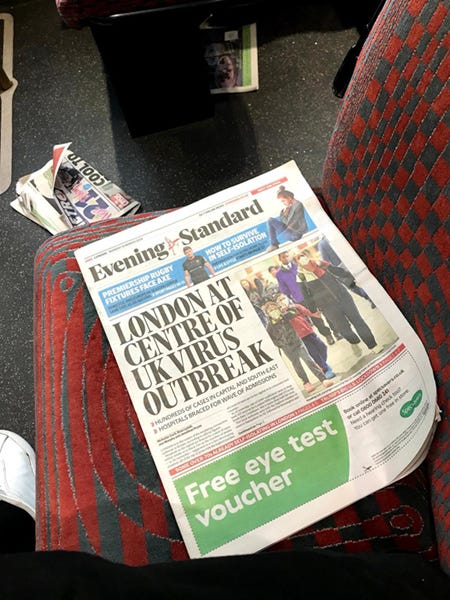
That was actually the first Covid joke I ever heard. It felt pretty witty at the time, though gags about catching it would soon become hack. When I got back to my office later that day, the screens were full of Boris Johnson telling everyone to go home and stay there. Like Paul and Daisy, I didn’t take coronavirus that seriously. I thought I’d hole up in my new boyfriend Alfie’s flat for a few weeks till it all blew over. Working from home even sounded kind of fun. Then, the following day, my doctor friend called me from the hospital where she’d just had an official NHS briefing. She kept saying, “it’s bad, you’ve no idea how bad it’s gonna get”. I started panic-crying and booked my flights home to Belfast immediately.
Normal People launched during the first weeks of lockdown. My mum binged the series in our living room because she knew I’d worked on it. I appreciated her support, but didn’t join her. I didn’t want to be in the same room as my mum and Paul’s penis. Despite no-one being allowed outside to see our billboards, the show was a massive success. It’s funny. We’d spent all that time discussing strategies to get 16 to 24s to watch TV. Turns out, all you need to do is trap them at home for weeks during a global pandemic.
As my world came to a standstill, Paul’s changed forever. I watched his Instagram follower count explode overnight. I remember he posted a photo of himself on the cover of a magazine, which he captioned “Mum, what’s happening?” as if he couldn’t quite believe it himself. Not long after, he deleted his social media accounts. I guess being a sudden celebrity slash sex symbol was overwhelming. #neverforgetconnellschain
But he’s not the only person who got famous during the pandemic. Lots of others did too, including some of my friends. Like Paul, I’m also a performer, and when we met I’d been doing stand-up for just over a year. Privately, I was beginning to imagine what a career in comedy might look like. But unlike other comics I knew, I didn’t spot the pandemic for what it was: an opportunity to make TikToks.
While I sat at home, tapping away at a novel draft I’ve never shared with anyone, my friends were posting POV sketches and crowdwork clips. I’d assumed TikTok was a sh*tty sequel to Vine, which would end with lockdown. I was wrong. In 2020, the world transformed. Paul blew up, a wave of content creators broke out, and I learned to knit.
As much as I still think Normal People is a good show, I wonder if Paul would be Paul Mescal today if Covid hadn’t happened. Because obviously nowhere NEAR as many people would have watched him play Connell. (Our trailer was good, but it wasn’t THAT good.) I’m not saying he wouldn’t have gotten to Hollywood eventually. But surely it would have taken him longer.
Paul is a rare example of a celebrity that arose during the pandemic via traditional media. He’s probably also one of the last actors of our generation who will get famous for actually being on TV. Now broadcasters are begging content creators to work with them. Maybe things were always going that way. But things are the way they are today, right now, because of an airborne virus. Isn’t that insane???
No-one really ever knows what’s going to happen. When I met Paul, I didn’t realise I should have asked for his autograph. In my marketing job, I’d try to tip the odds in a show’s favour with attempts to manufacture “word of mouth”. But when it comes to achieving fame and success, there’s no magic formula. Sometimes it’s simply up to the chaos of the universe.
Six years on, Paul has starred in movies, frequented red carpet events, dated beautiful women, and if the rumours are true, sprinted away from hundreds of them in north London. I’m proud of how far he’s come. And despite his talent and cosmic luck, I obviously take most of the credit.
I never finished my novel. I’ve now left that marketing job. But I did keep doing comedy. And I even started posting online. So, you never know. Maybe there will be another global pandemic, right when I’m about to release my first YouTube special, and me and Paul will become colleagues once again somewhere in Hollywood.
xoxo Caroline
Tickets for my next Edinburgh Fringe show. In fact, you’d be ragin’ to miss it.
Or you can read more of my writing / listen to me performing below.
I slept with my best friend’s cousin
·
Apr 3

N.B. I took part in a live storytelling event on Saturday 28th March 2026, where we were asked to speak on the theme of “Friendship”. I planned to talk about something else entirely, then in the spirit of making life as difficult for myself as possible, changed my mind two days before the event, and wrote this in a caffeine-fuelled sprint instead. Here’…
No posts
Comments
Nothing yet. Say the first thing.
Sign in to join the conversation.