
Greetings fellow writers!
So I didn’t quite hit my writing target last week but I got close enough (the opening three chapters of book 3, so about 8,500 words rather 10,000 words).
The sensible thing to do now would be to accept that I’m going to get less done over the summer holidays. Instead, I’ve set myself a 500 word a day challenge for the months of July and August — I mean, it’s totally do-able, right?
If, like me, you like to overload your nervous system with self-imposed deadlines, why not join me in this challenge? If you start today, you could have around 30,000 words written by the end of August (I think? Numbers are not my strong suit — hence why I quit my job as a tax consultant to become a journalist!).
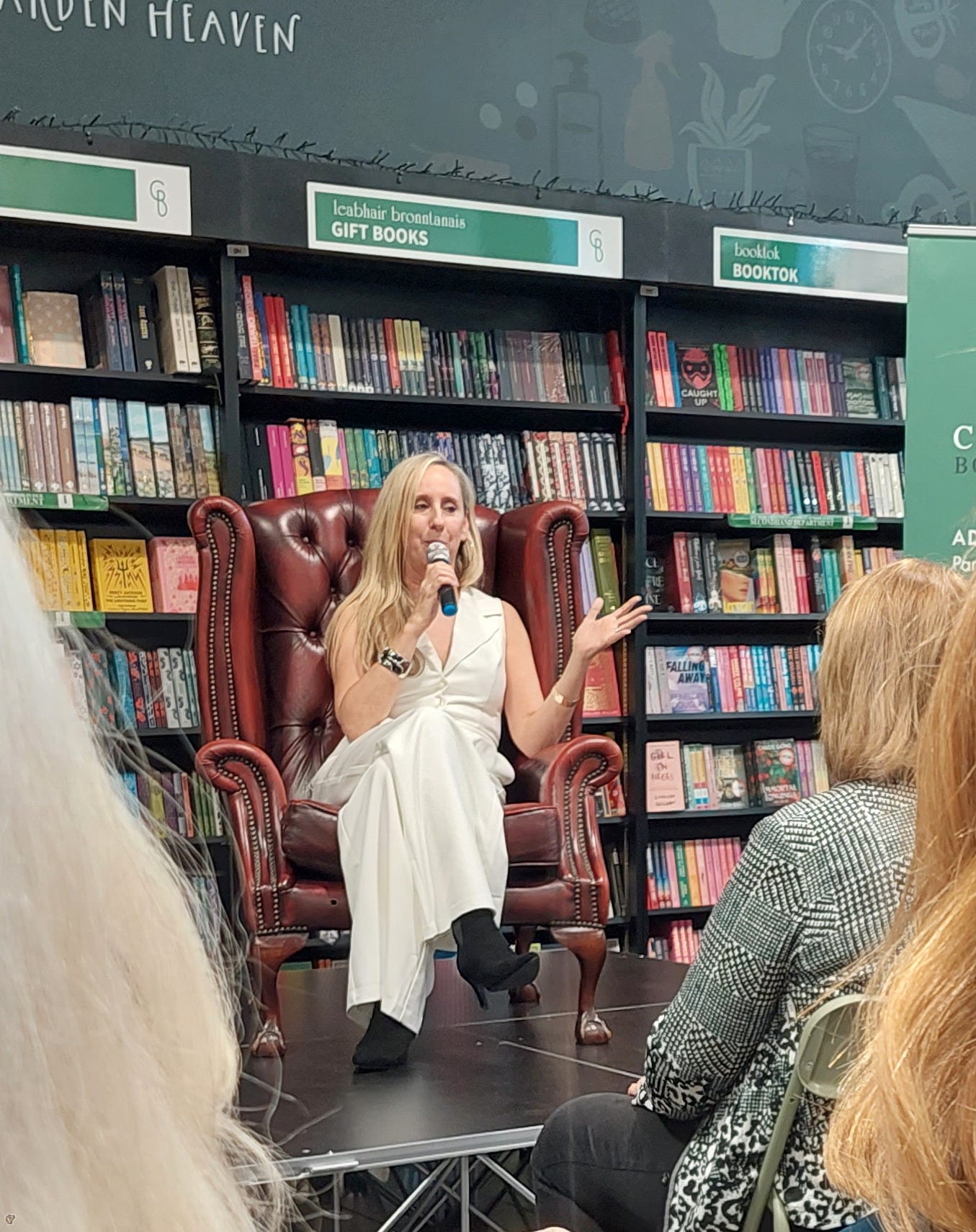
Aside from shuttling small people to and from camps and playdates, and squeezing in some writing, I was delighted to get a chance to chat with fellow Substacker Stéphanie de Geus yesterday for an episode of her podcast (I’ll send out a link once the episode airs) and then I headed in to Chapters Bookstore in Dublin city centre where the actress-turned-novelist Caroline Grace Cassidy was launching her 12th (!!!) novel.
Her Q&A session was really interesting: she talked about how she’s increasingly focusing on her script writing and film production work.
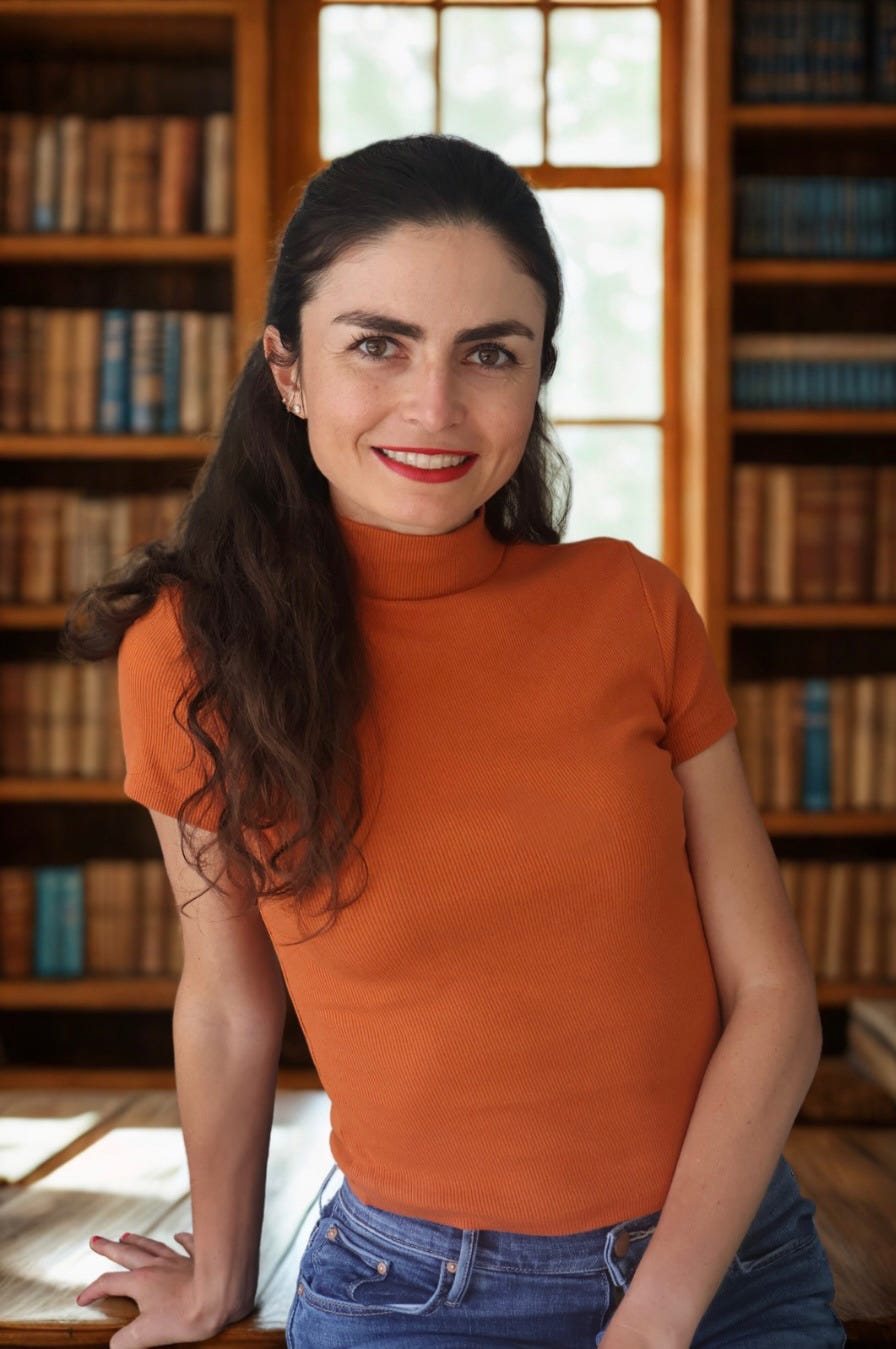
I’m absolutely thrilled that Lauren Khan has taken the time to do a Q&A with me this week! I love her work ethic and determination, which is evident from her Substack posts and the Prose Pros podcast that she co-hosts with fellow agent Tali Shammas.
Lauren is not only a literary agent, but is also an agented writer, so she brings both perspectives to the table.
I always love finding out about up-and-coming agents because it reminds me of signing with my third agent, Kesia Lupo, who was still pretty new to agenting when we had The Call but I loved her energy — and she sold my debut novel at auction so I was right to trust my instincts!
The moral of that story is: don’t rule out new/up-and-coming agents. And also don’t rule out agent-writers. I had a not-so-great experience with a previous agent who got a MASSIVE book deal (for his own book) after my never-published novel died on sub and it felt like his attention was sucked away.
But my former agent Kesia has had three novels published and I never, ever felt like her own writing distracted her in the slightest from her agenting work. In fact, it was an advantage as she understood exactly what it’s like to go out on submission.
Okay, let’s do this!
Thanks so much for joining us, Lauren. Last year, you took the brave step of parting ways with your agent for a number of reasons, including ghosting. Having experienced ghosting myself with my second agent, I know just how devastating it is, but also how risky it feels to walk away given how hard it is to get an agent.
It has worked out brilliantly for you (huge congrats on signing with Jessica Mileo of Inkwell management!). Fortunately it worked out for me too — my current agents are wonderfully responsive — and so I became a firm believer that a bad agent* is worse than no agent.
But then I encountered (very successful) writers who had parted ways with uncommunicative agents and never managed to get another agent. So now I’m not so sure. I’d love to know your thoughts on this: do you believe that a bad agent is worse than no agent?
(*By ‘bad agent’, I mean one that ghosts/doesn’t follow through on promises etc. Also, I don’t mean to be negative about agents — I’ve loved four out of my five agents!)
Absolutely. No agent means the publishing world is your oyster, you can go in any direction, the possibilities are endless. A bad agent could damage your career before you’ve even started!
In my opinion, an uncommunicative agent is unacceptable. The agent works for you. As an attorney, if I didn’t respond to my clients, I would’ve been fired. Leaving a bad agent can often mean regaining control of your career as an author, even if it feels like you’ve lost the plot for a while (pun intended).
When you began querying agents again, you got a mind-blowing 47 full requests! Your query letter is an absolute MASTERCLASS in how to pitch agents. I noticed that you led with comp titles, and it seems to me that you put a lot of thought and effort into getting those exactly spot-on.
In the past, I made the mistake of treating comps as an afterthought. How important do you feel comp titles are in a query letter (and of course now you’re seeing it from an agenting perspective too!)?
Thank you, that is so kind! I advise starting your query letter before the manuscript is finished, so you have a clear sense of its hook and where you’re going with it.
Comps are EXTREMELY important. Believe it or not, the authors who think no comps exist for their novel, will probably never sell said novel (sorry, I said it!). When I pitch your book to editors, I must include comps. In fact, it may be the most important part of my pitch!
The publisher will use those comps to run P&L reports that will be used in determining if they want to buy your book. They also set the tone of what the agent/editor is about to read!
What writing advice would you go back and give your younger self i.e. what is the most important lesson you’ve learned in terms of writing a novel that will attract agent attention?
Hook matters. Pitch matters. Yes, write the book of your heart that you want to read, but also work to distill the story into a clear concept that can be pitched. If your goal is to be published, you have to remember publishing is a business. It is a sales game, in the end, and the pitch is what sells. If it’s a high-concept, hooky pitch? Even better.
In an interview, you mentioned that several interested agents said they loved the ‘voice’ of your main character Violet — it would be incredibly instructive for aspiring writers to read even the first line of your novel, to get a sense of what ‘voice’ actually means/looks like on the page. Would you be willing to share the opening sentence with us?
The novel starts with the prologue, but here’s the current first sentence of Violet’s POV:
“Arriving at the nuptials of a couple I barely tolerate with bloated fingers and swollen feet was not on this year’s vision board.”
(Note from Caroline: love this opening line, cannot wait to get my hands on this book!)
Are there any craft books that you found useful and would recommend to aspiring authors? Also, did you pay for any manuscript assessment and, if so, do you feel that they helped you in your journey towards getting an agent?
The combo of Save the Cat! Writes a Novel by Jessica Brody and Story Genius by Lisa Cron is vital in my opinion. As I revise, I’ve also fallen in love with the Writing the Breakout Novel Workbook by Donald Maass, thanks to you!
I’ve never paid for a manuscript assessment but I’ve taken a couple fiction/novel writing classes at Gotham Writers Workshop and through CeCe Lyra.
Moving on to more agent-focused questions...
What do you feel your strengths are as an agent? (From listening to your podcast, I'd say: super-determined, approachable, communicative, an unstoppable force!)
I would agree ;) thank you for saying that! I’d also add that between law school and working in Manhattan, I was on the corporate attorney path for a decade. So you can add my negotiation skills and ability to read a contract (surprisingly uncommon) to that list!
Authors these days (both aspiring and published) are increasingly stressed out by the messaging that we need to build a platform. Trying to create an online presence can feel like shouting into the void rather than connecting with potential readers.
What advice would you give to a client if they asked you about building a social media presence?
I would say to focus on your writing first and foremost. If you’re too stressed about social media to write, then what are we here for? But if you’re able to do both, I’d say hone in on the platform that you’re most comfortable with and focus your efforts there. Allow the platform to be synonymous with your author brand. My friend Jessica Sorentino is an author brand strategist and shared a ton of tips about this when she came on our podcast!
Do you pay much attention to a prospective client’s social media platform when you’re considering signing them? Does this differ depending on whether they’re writing fiction or non-fiction?
For non-fiction, yes, it’s important to have a platform these days. For fiction, I may look just to make sure you aren’t tweeting a ton of anti-publishing rhetoric that is going to make it difficult to work together...but otherwise major debuts sell without a platform all the time!
You're now open to queries, woohoo! Is there anything in particular you'd love to see landing in your inbox?
Please query me more psychological suspense and thrillers! I would love something comped to BEST OFFER WINS on my list.
Here is my QT link: https://querytracker.net/query/3906)
How market-conscious are you when selecting which books you want to represent? By which I mean, do you go on taste and gut instinct, like that wonderful immersive 'pull' when you get sucked into a propulsive story that feels alive?
Or are you also very conscious of what type of deals are being announced at the moment, and what you're hearing from editors in terms of what they'd love to see? Maybe a mixture of both?
I always go with my gut. I know my taste incredibly well when it comes to both unpublished and published works, and if it’s a manuscript I can’t put down, I’m going to offer regardless of what the market is saying about it.
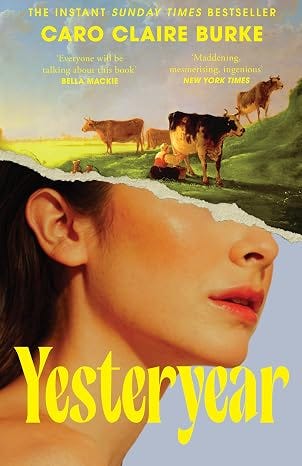
Do you feel it's important for a book to not only have a strong concept/hook but to feel relevant at this particular point in time e.g. the fresh take on a thriller that we didn't know we needed or a zeitgeisty concept like Yesteryear?
I don’t think it’s the end of the journey if it’s not, but it certainly helps!
Which buzzy book(s) of the last 12 months would you have most liked to represent (apart from your own clients' books!)?
YESTERYEAR...naturally.
What one thing do you wish more aspiring authors knew about the publishing industry?
It’s not always THE book, but A book over the course of several manuscripts that makes your career. Focus on writing the next thing—focus on your body of work.
Thank you, Lauren, for taking the time to answer my nosy questions - this has been fascinating!!
Before I run off to chill some bubbly for what has become a weekly Prosecco evening, I also wanted to mention a service provided by one of my favourite Substackers Phillipa Donovan (The Secret Agent), who works as a book scout for TV/film producers.
I normally only include links to services that I have personally used, or that a writer friend has recommended, but Philippa has been extremely helpful in giving me expert advice relating to some TV/film *stuff * currently in the ether, (and a big shout-out to @poppadom too for your expertise!) so I wanted to mention her service here.
Note: this isn’t an ad -- I don’t have any sponsors/affiliate links in my newsletters (but I do shamelessly self-promote my novel 💅)
In addition to being a TV/film scout, Philippa also runs Smart Quill Editorial, where she edits manuscripts and… introduces writers to literary agents if their work is considered to be of a very high standard — intriguing! Smart Quill has been going for 16 years, and she has worked with about 650 authors.
Okay, over and out — luckily I got this newsletter finished before I popped the cork this week 🥂
Keep writing!
Caroline x
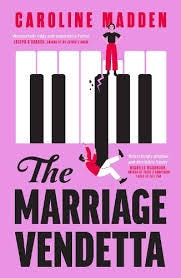
If you enjoy this newsletter, then you might also enjoy my debut novel THE MARRIAGE VENDETTA which one Goodreads reader described as a “full-blown, feministic fever dream of identity, rage, and rebirth”.
If that sounds like your kinda thing, and you’d like to support my continuing feministic fever dreams, then you can order your copy HERE!
No posts
Comments
Nothing yet. Say the first thing.
Sign in to join the conversation.