
I tried to start this article another way. I wanted to write about volunteer project design, the tension between actual nonprofit needs, volunteer commitment, and the realities of life in 2026.
I read the State of Corporate Volunteering 2026 Report by Benevity (I even wrote about it in The Magnifier Vol. 4). I didn’t love what I read.
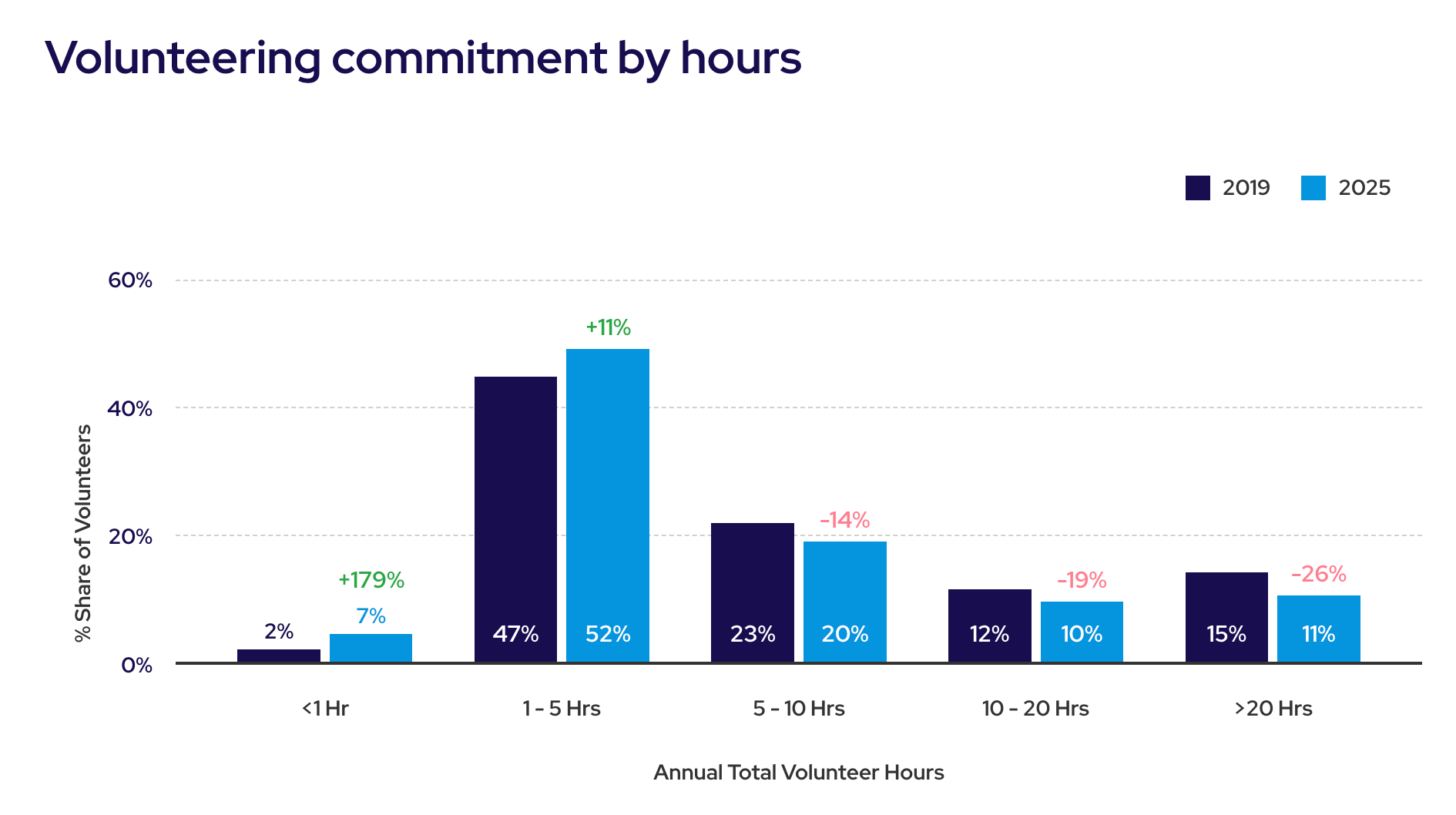
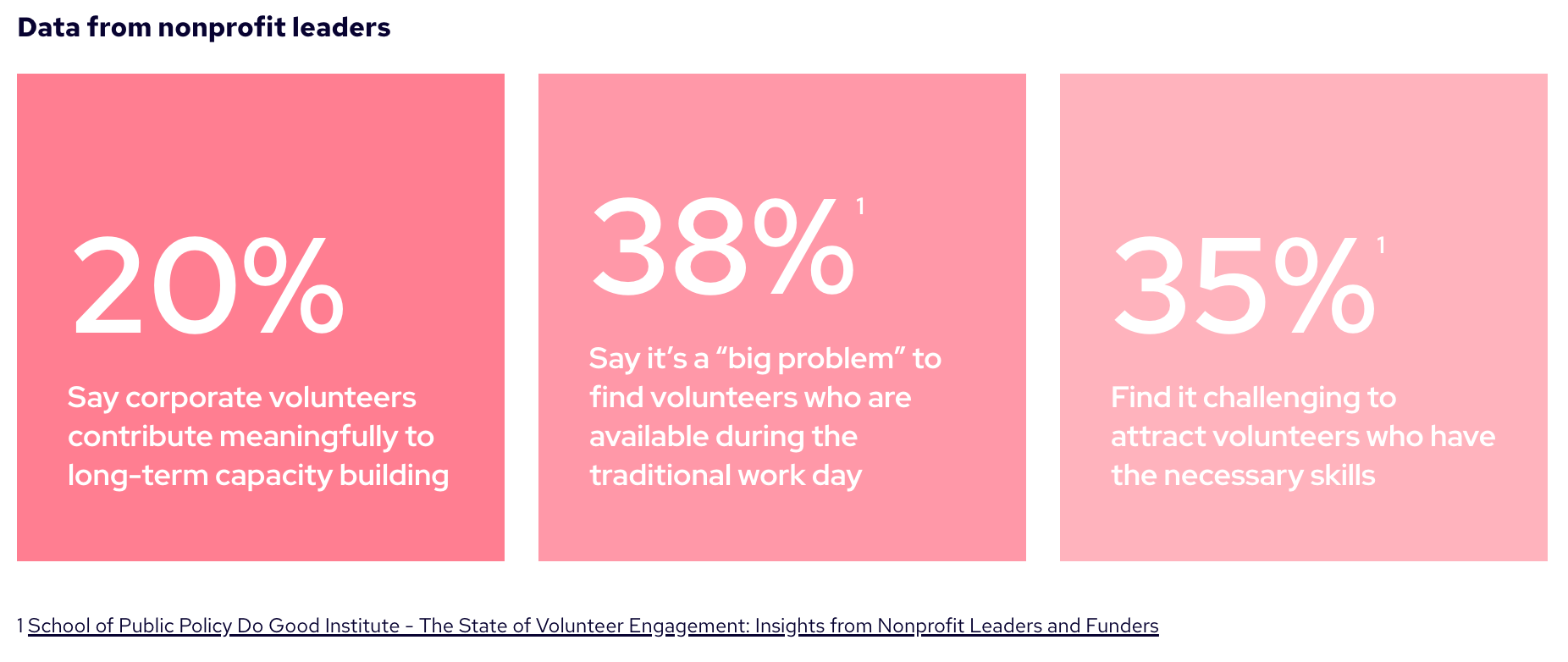
Despite the fact that total corporate volunteer hours are on the rise, the majority of these volunteers are logging fewer than 5 hours a year. Volunteer attrition is on the rise. And, most alarmingly, only 20% of nonprofits surveyed responded that corporate volunteers meaningfully contribute to long-term capacity building.
That last one really bummed me out.
Microvolunteerism is a term to describe small, short-term volunteer engagements that typically are small pieces of larger projects or efforts. The example used in wikipedia is tagging images from a database, something that a person could do on their smartphone or online for a few minutes at a time.
Also known as “one-off” or short-term volunteering commitments. Volunteering at an event, like a beach cleanup or holiday toy drive, is the classic example.
Donating one’s professional expertise or special skills to a nonprofit. Pro-bono work is a subset of skills-based volunteering.
Volunteering that is done in a corporate context; employees joining together to volunteer at a company-sponsored event or project that typically benefits a local nonprofit or charity.
The Benevity Report uses the term “microvolunteer” to describe folks who volunteer in bite-size pieces (less than 5 hours a year). The report states that “microvolunteers only submitted about 1.4 hours of volunteer time in 2025” Compare this to Benevity’s regular volunteers who log an average of 16.5 hours a year. These microvolunteers now account for 25% of volunteers on Benevity’s platforms.
This is where I have to pause and remind myself (and you) that Benevity sells a platform used by corporations to manage their CSR programs (including volunteer programs). The report is just a snapshot of the state of corporate volunteerism, and not volunteerism in general.
With that in mind, let me tell you what my immediate gut-check question was about microvolunteerism, as reported.
Is microvolunteerism a new way for corporations to claim employee engagement and increased participation while not truly partnering with nonprofits to build the volunteer experiences they need to contribute substantively to the mission?
It’s a cynical take, but as someone who spent 15 years in an industry regularly accused of greenwashing, it’s not a wild jump for me to make. Benevity’s own report states that while participation is up, impact is down. There seems to be a desire to volunteer among employees, so what exactly is keeping them from deepening their engagement beyond microvolunteering?
My master’s research was about how organizations fail employees by framing structural failures as individual ones. I see the same pattern in the rise of corporate-microvolunteering.
People are busy. That’s real. But if corporations want to claim employee engagement through volunteer program participation, they need to be willing to ask why their employees can only spare 1.4 hours a year. Are they working too much? Are they too depleted after work to commit to anything outside of it? Are their managers not truly supportive of their participation in the volunteer program? Is the volunteer time off policy real, or is it technically available and culturally discouraged?
Participation numbers are easy to celebrate. The structural questions are harder.
I love calling out structural failures that masquerade as individual challenges (it’s kind of my thing), but the thing that really got me in this report was that nonprofits seemed to carry the weight of corporate volunteerism while receiving a measly 20% of meaningful impact in return.
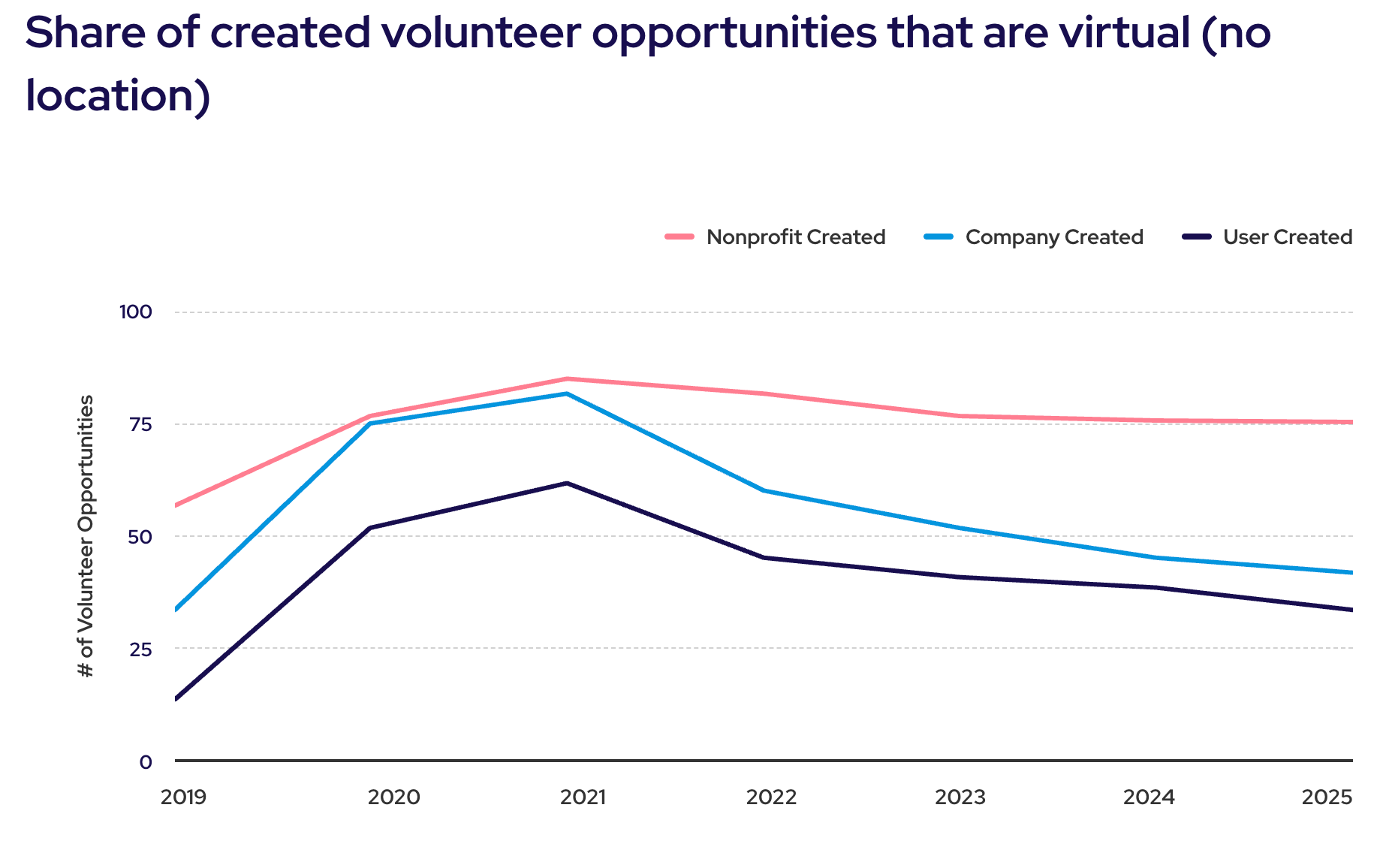
As I wrote about in The Thank You Gap Pt. 1, nonprofit staff are overworked and under-thanked. The graph shows that the work of supporting corporate volunteer goals is regularly shifted to the nonprofit side, another structural problem.
The problem isn’t that microvolunteerism opportunities are on the rise, it’s that designing good ones requires intentionality, and that intentionality takes time. Someone has to identify which pieces of work are genuinely self-contained, scope them, write the brief, onboard a stranger, check the output, and fold it back into the larger project. Shifting responsibility of employee engagement from the employer to the nonprofit is the structural problem, the weight of which falls disproportionately on nonprofits.
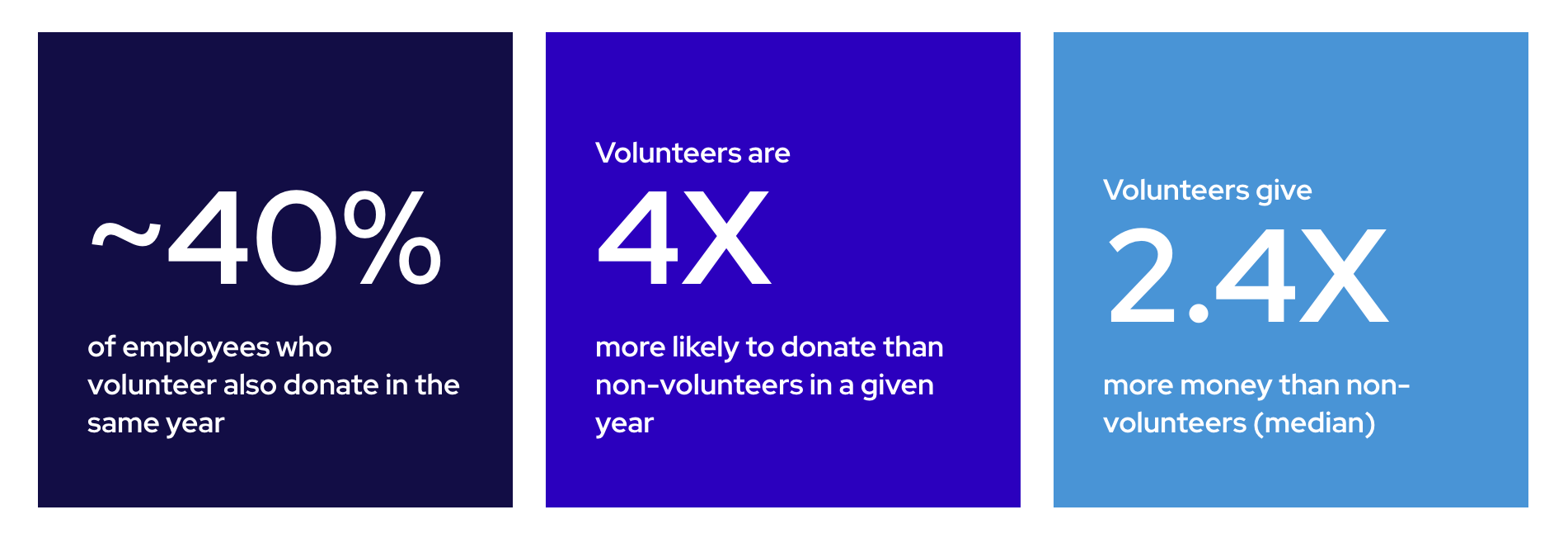
I can’t argue with these numbers. Volunteerism is a gateway to giving, no matter how micro the project is. Connection to a cause has to start somewhere, and corporate volunteer programs are a very real way that people are exposed to community organizations and nonprofits.
And there is nothing wrong with one-off and short-term volunteering. Beaches need cleaning, seasonal food drives need extra hands, and fundraisers need folks to set-up and break-down.
And yet Benevity’s report indicates only 20% of nonprofits believe corporate volunteers contribute to long-term capacity building. When programs are designed to maximize positive statistics (participation rates, total number of volunteer hours logged, employee satisfaction) rather than meaningful outcomes for their nonprofit partners, that’s exactly what you get.
The organization I am most involved with is a member-based organization without a corporate volunteer in sight (by design), but that doesn’t insulate us from volunteer fatigue. We also struggle to find volunteers with the time in their busy lives to commit to more long-term projects and needs.
Our latest experiment is tiered volunteering, an on-ramp approach to reaching people who have maybe a couple hours a month to dedicate to a project and want to be involved, but are not ready to commit to committee work. The hope is that building one-off volunteer opportunities (and the scaffolding to support them) will create positive experiences that in turn open these members up to deepening their engagement. Time will tell if it works.
Focusing on community need first, volunteer convenience second is what I keep coming back to. Centering outcomes over experience isn’t revolutionary, but it does seem to be rare in practice.
And now I want to hear from the experts. If you work in this space, what does good design actually look like from where you’re standing? Or (perhaps more interestingly), what are some of the worst ways you have seen corporate volunteerism optimizing for engagement stats in action?
Comments
Nothing yet. Say the first thing.
Sign in to join the conversation.