Caroline Beavon · Caroline Beavon: digital storytelling
I’ve always liked the idea of hack events. A time constant, a single mission, but room to be creative with like minded people.
I’ve attended a few in my life, most were centred around public data sets and journalism (although I did attend a pretty legendary hack event in 2010, when a group of civid minded people completely rebuilt the Birmingham City Council website in protest at its huge price tag and general crapness). But I digress.
I’ve always loved the idea of mashing up creative and digital, an add in some narrative for good measure. So the Digital Storytelling Night at The Skiff was born.
Now, it’s time to review what I learned, how to make it work, how to make it better and plans for the future.
The idea was solid - pick a well known story, find a few examples of how people have been inspired by it in the past, and give some ideas of what attendees could do, depending on their skill level.
The story I chose was Little Red Riding Hood - the original Brothers Grimm version, because it’s weird and less cutesy than other versions.
The story was printed out and made available on our Slack channel.
It worked as it’s very visual, there are locations, pathways, not too many characters and the action happens quickly.
Next time I’ll maybe pick a section of a longer well known book. I already have a few ideas.
The event was open to members of The Skiff co-working community in Brighton, UK. It’s a mixed group, some super techies, some super creative and a healthy dose of crossover, but also people willing to collaborate and learn.
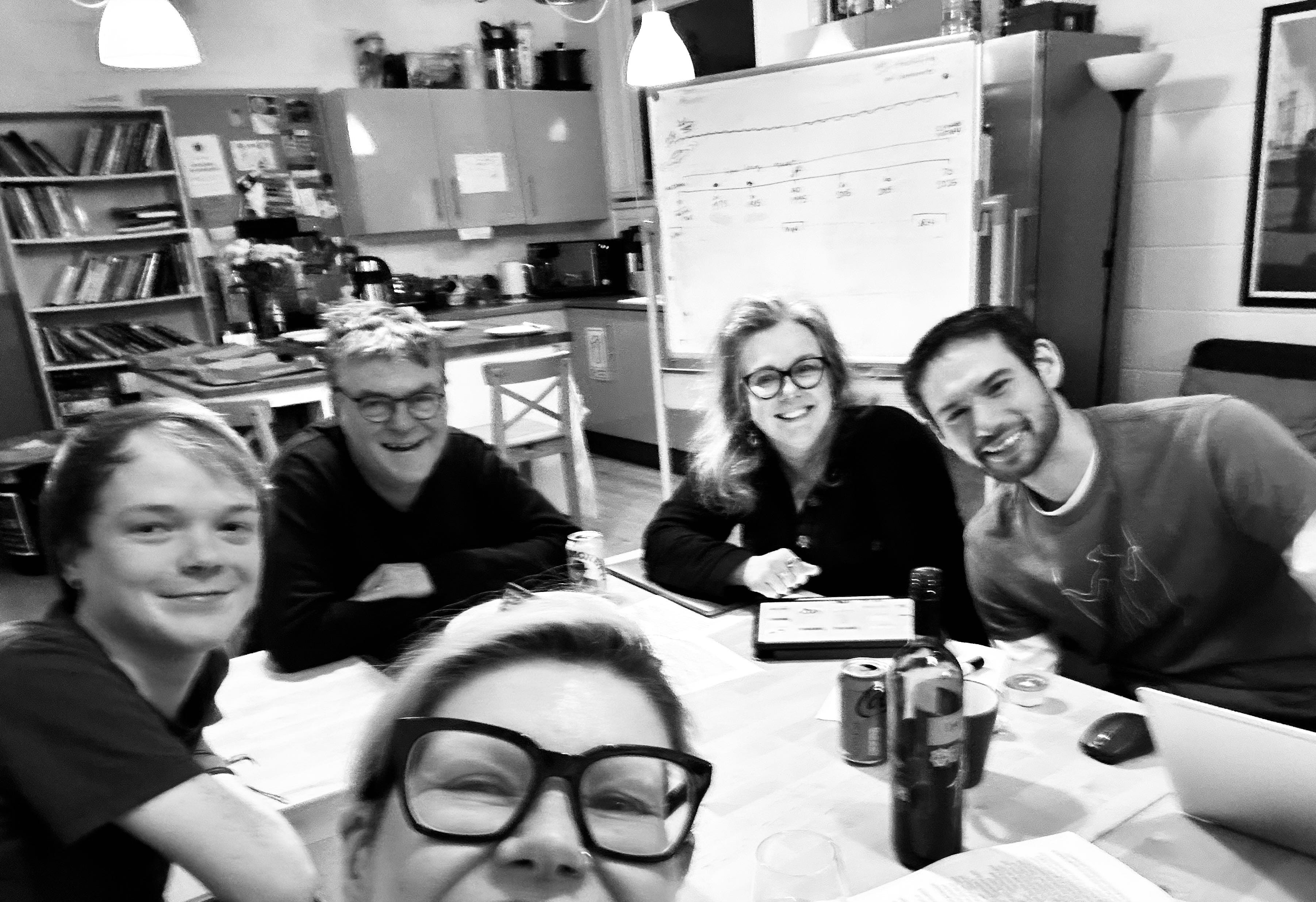
5 attended in total: 2 collaborated and the other 3 worked alone.
This was fairly organic, but for a larger group I would formalise the collaboration or finding-a-partner process beforehand (a quick round robin of everyone there, or a show of hands of people wanting to collaborate).
We held it in The Mess, the social space at The Skiff. There’s a long dining table which worked well for the initial chat, but after that the 3 solo hackers disappeared off to their desks to work (me included) leaving the collaborators to doodle on a white board.
Next time: encourage people to move their monitors into The Mess, even if we’re all on headphones at least we’re in the same room :-)
I advertised the event on Slack + via a printed poster, with reminders. The turnout was good for a first event, and there were people who wanted to come but simply couldn't make that date.
Hoping for a few more next time, and I suspect seeing the work created at the first one may encourage a few more along.
The Skiff shouted us some pizza, and I chose not to buy beers - there’s always a focus on booze and I wanted people to bring their own if they wanted to drink. It certainly wasn’t a boozy event although a bottle of red wine did grease the wheels!
The pizza arrived around 7pm.
Next time: I’ll have it arrive at 6pm when the event starts. Food helps you think, and it means I can also get on with my project instead of worrying about Domino’s getting lost.
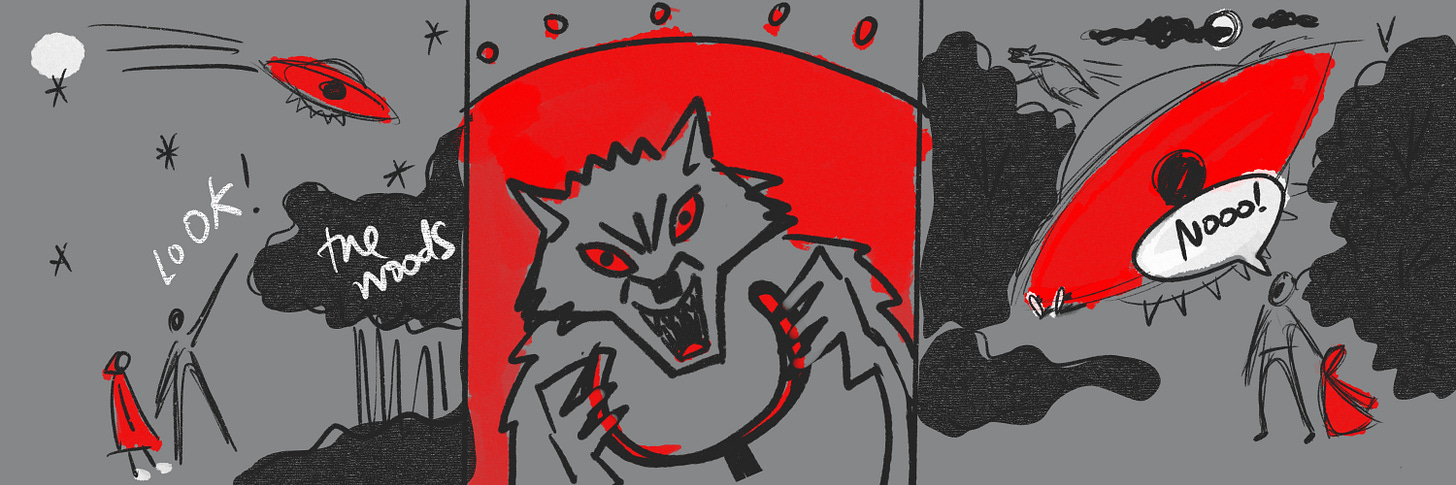
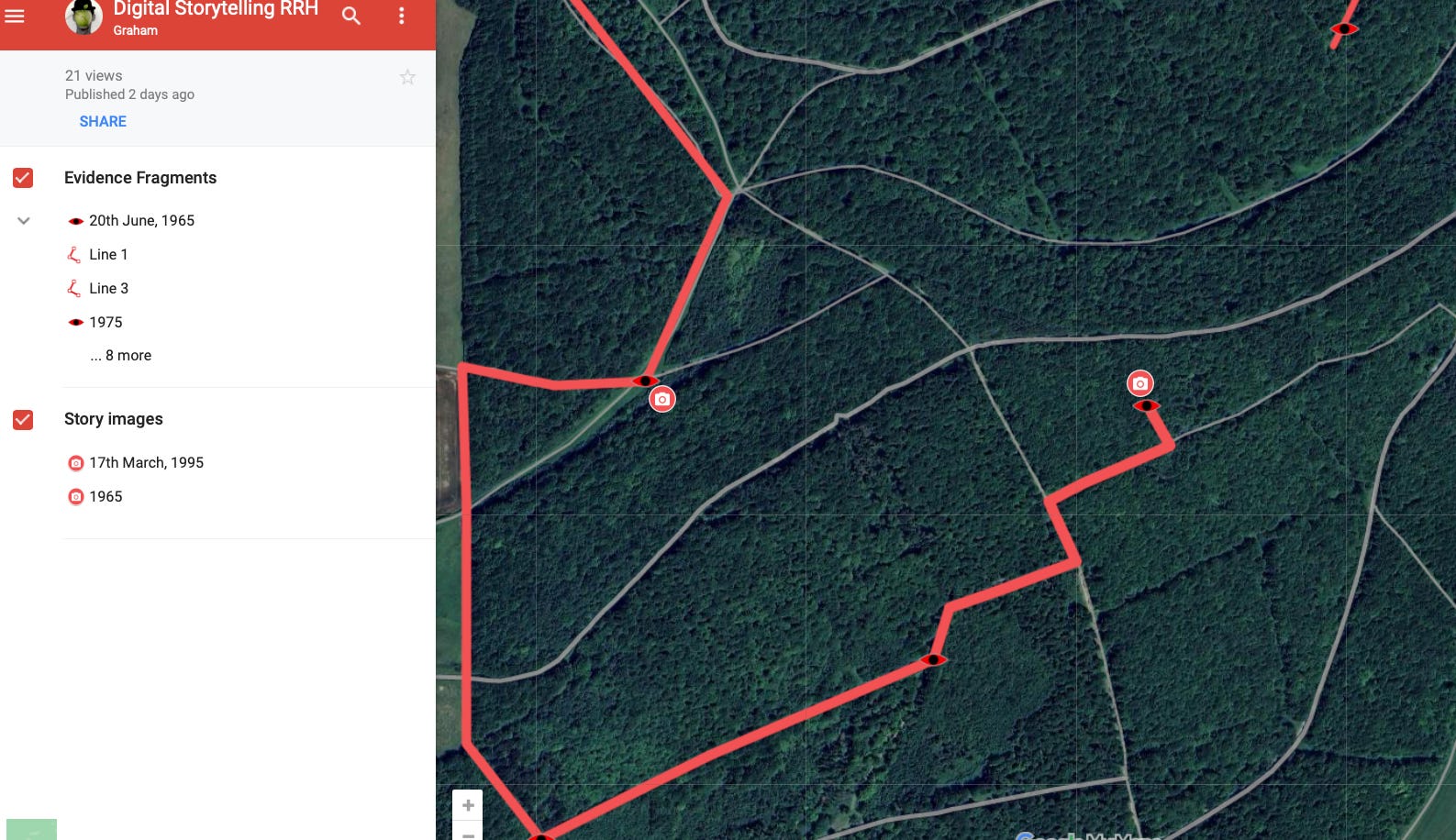
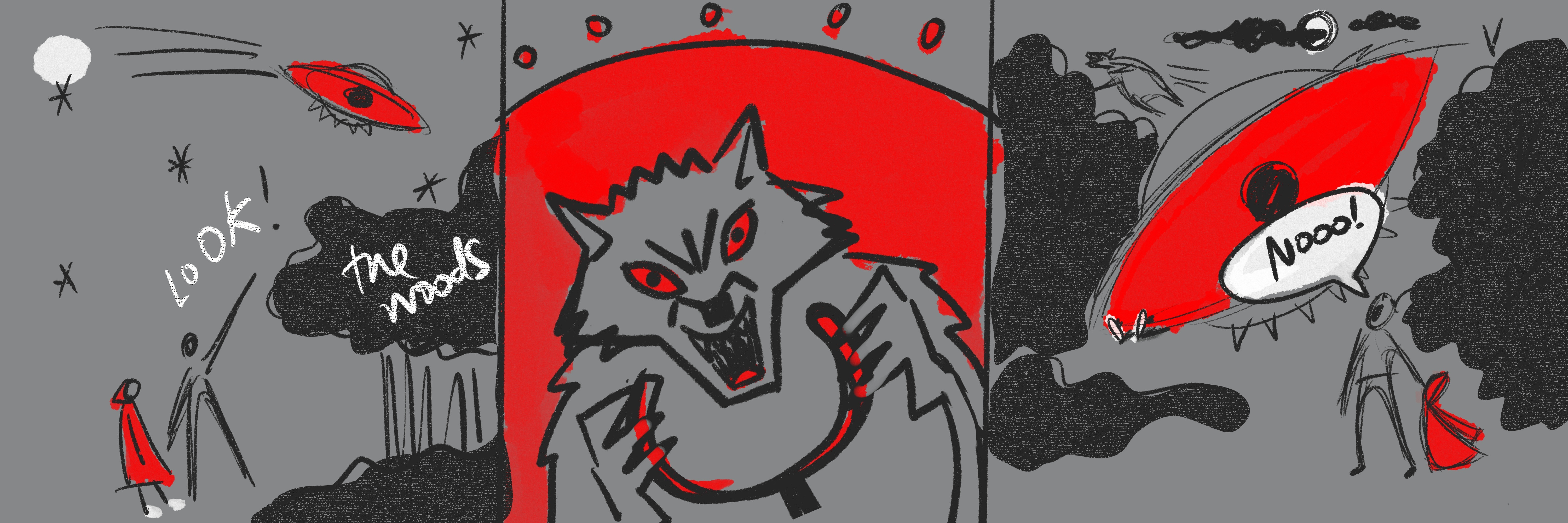
“I'm not sure how well it'll come across without explanation, but here's the Google Maps-based timeline we started on, plotting out 60 years of the Red Riding Hood backstory - a few of the red "eye" icons have fragments of related evidence, and you can see some of Jo's awesome 3-panel art using the camera icons nearby.”
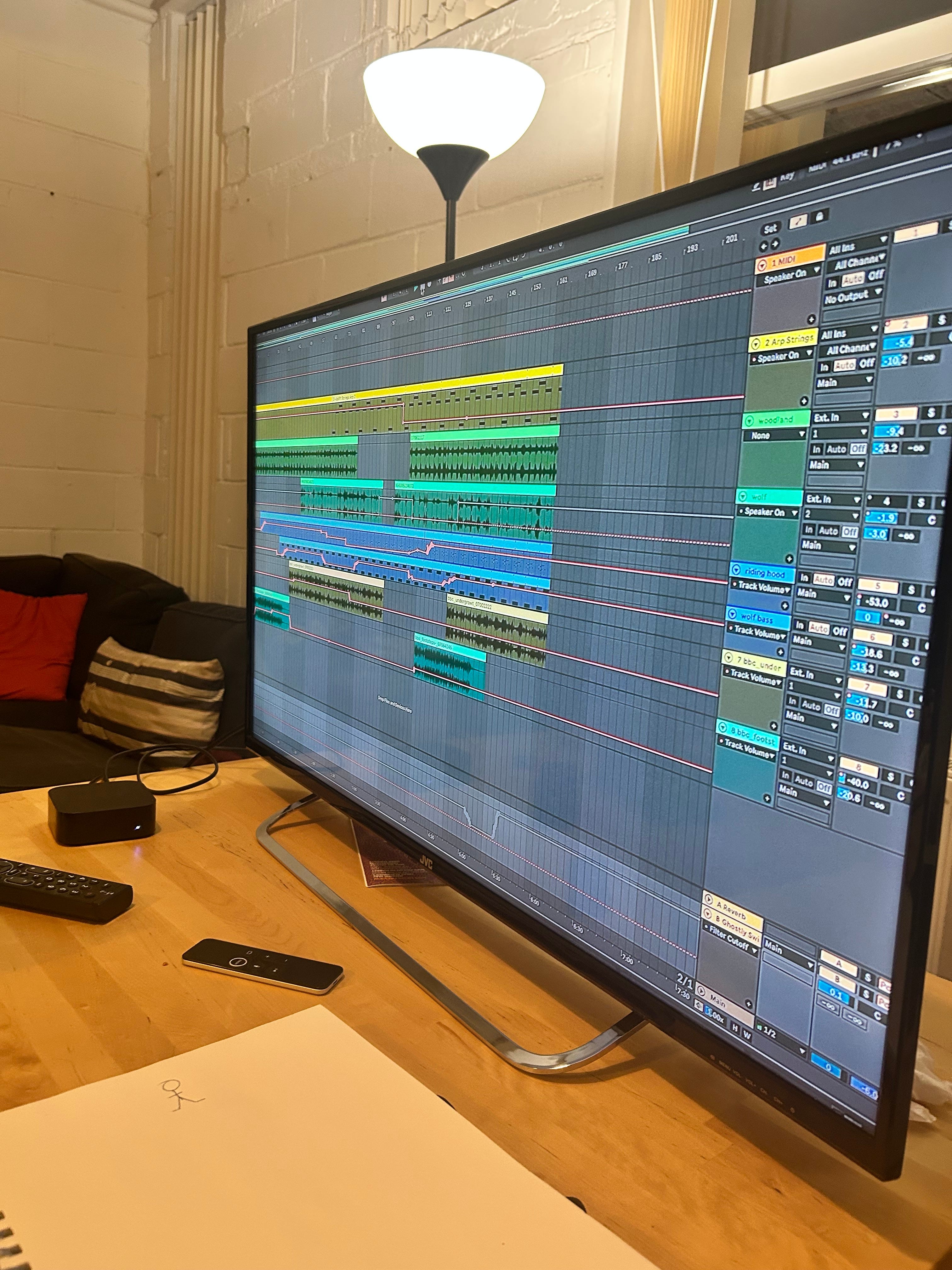
“I had a really great time. It was super challenging working on something with such a tight time box and was really impressed with what everyone came up with. I will share my piece after I've done a bit of tidying up and made a mix, but promise not to sit on it for months!”
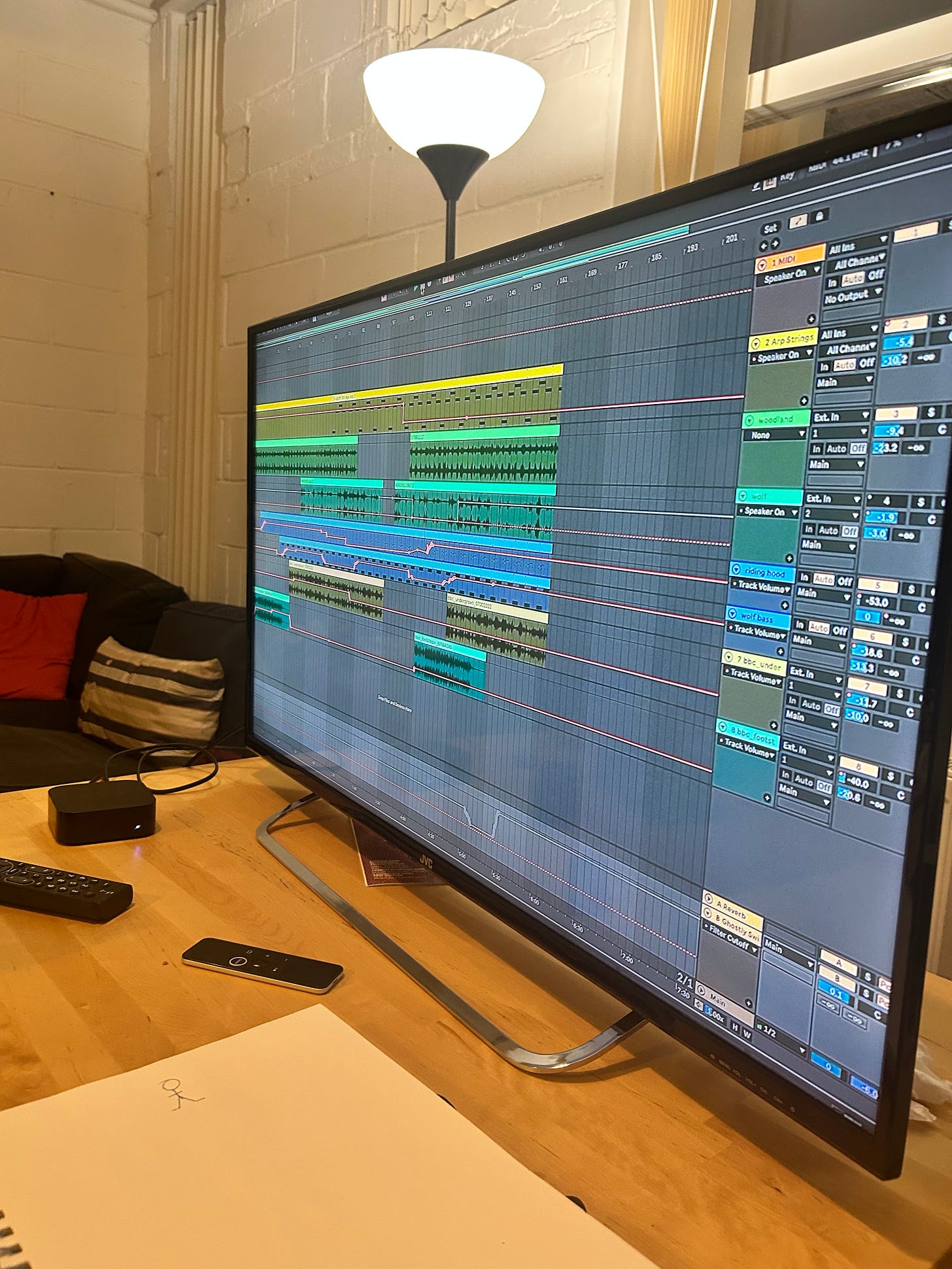
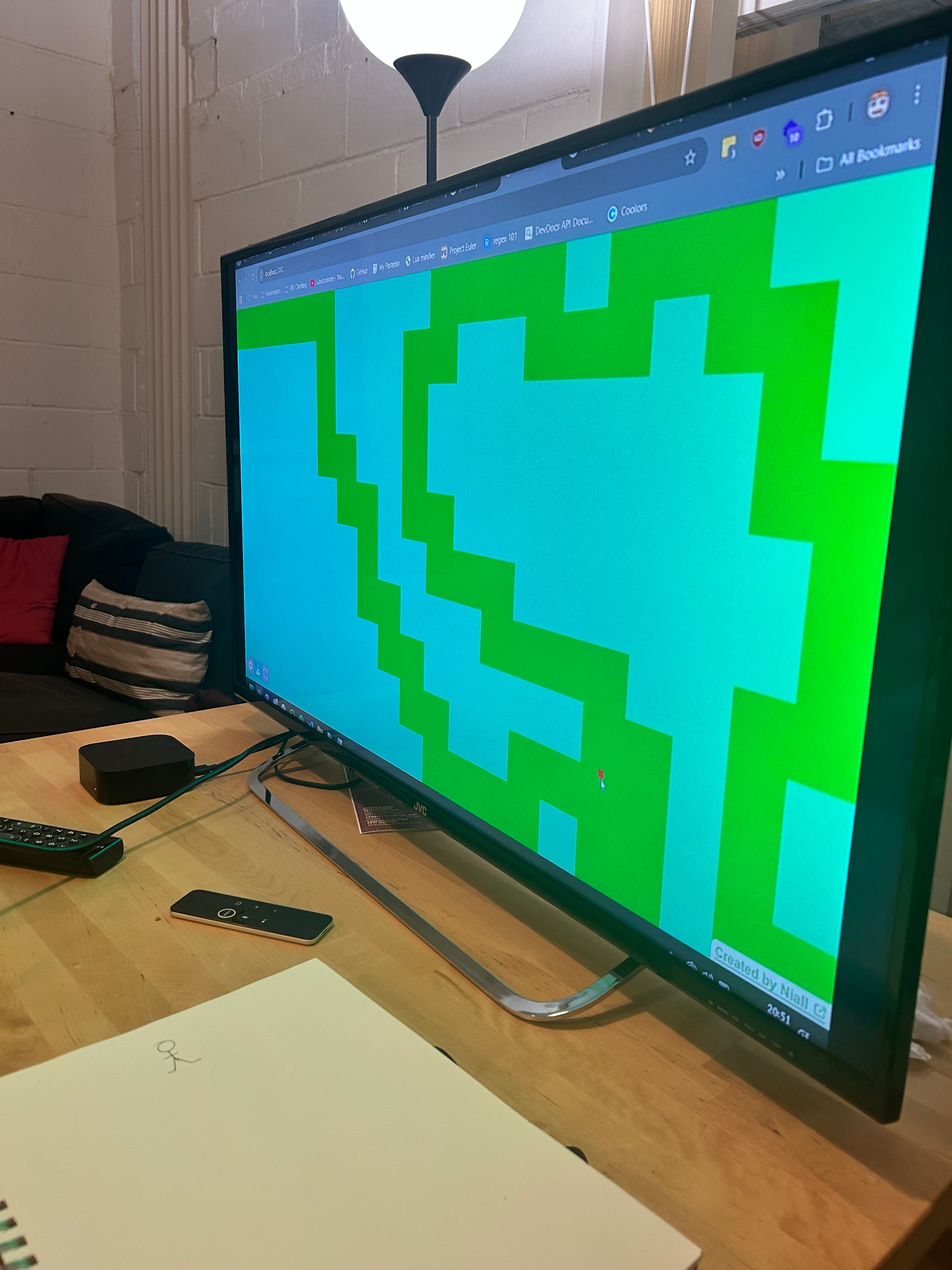
Niall joined us too … he’s always tinkering with generative graphics and has some brilliant examples on his website.
Niall Coleman-Clarke worked on a generative maze game, inspired by the forest and Red’s journey. Future plans sound exciting .. watch this space.
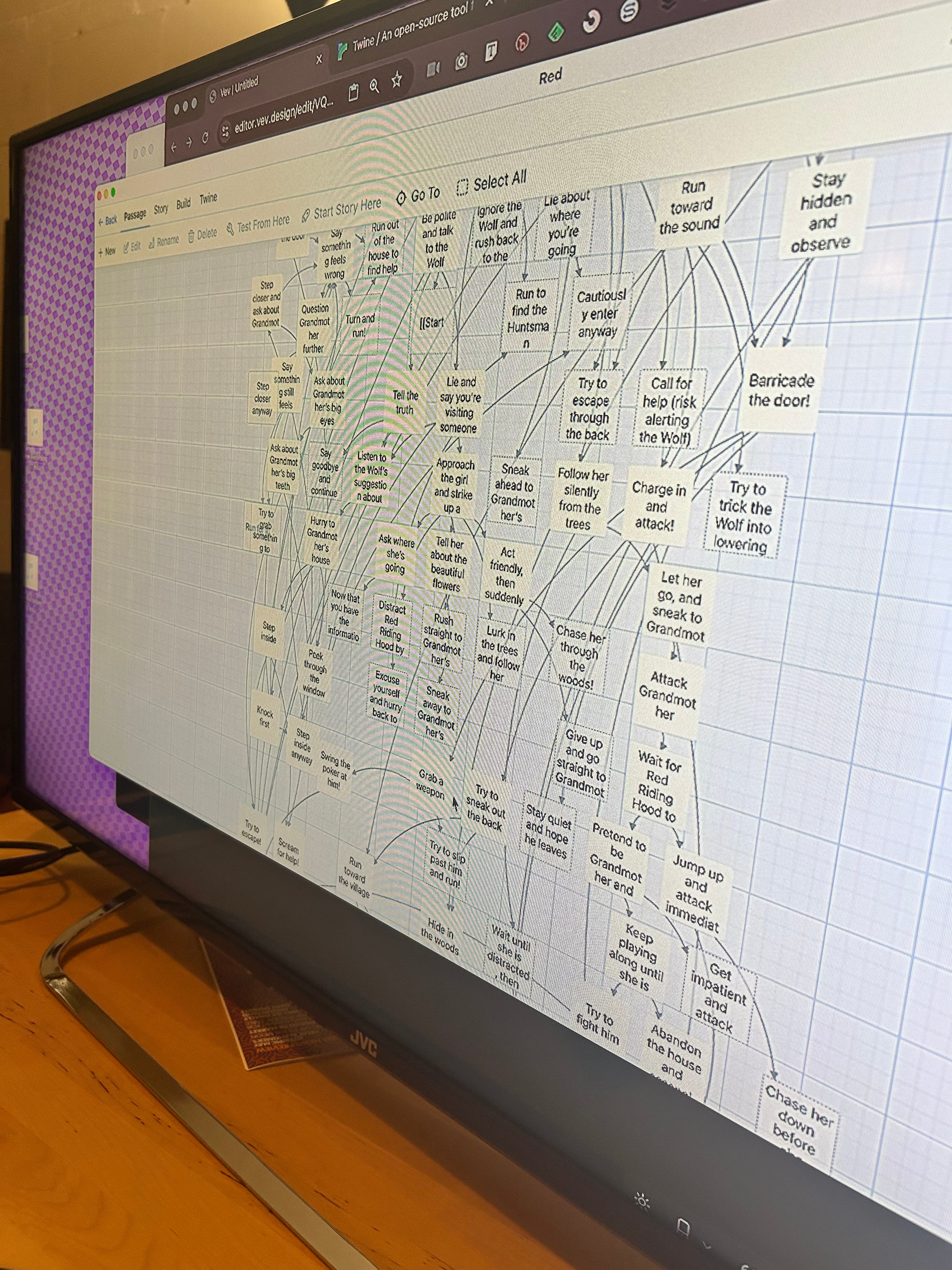
I knew I wanted to work on a choose-your-own-adventure game. I”m currently trying to introduce game narrative into my day job as a scrollytelling designer so it was good to practice with a low-risk story.
I started in Vev, but wanted to speed up the process I moved into Twine. ChatGPT did the heavy lifting of structure as I pushed it further and further.
Future plans:
the ability to body swap with any of the other characters you met on the way (so RRH could become the Wolf when they meet)
Maybe a glitchy /dreamscape vibe (this is actually to test a theory for another project I'm working on right now)
a randomness where you may be thrown into another characters timeline ???
At the end of the event I encouraged people to share their work -and everyone did.
There was also the opportunity to post it in Slack, to celebrate the night. Some did, some didn’t (yet) and that’s cool.
Everyone will have the chance to share anything they’ve done on the project at the start of next months .. before we get into a new story.
If you’re inspired to run your own event, do let me know - it would be great to share ideas.




Comments
Nothing yet. Say the first thing.
Sign in to join the conversation.