
Spoilers ahead for the end of Holland Road, my debut novel available now
*Google tells me that It’s a Wonderful Life didn’t come out till 1947, but I’m keeping the reference, because this is fiction and I care about that more than I do about the matter of a few months. :)
All photos by me. Merry Christmas, my friends!
Boston, December 6th, 1946
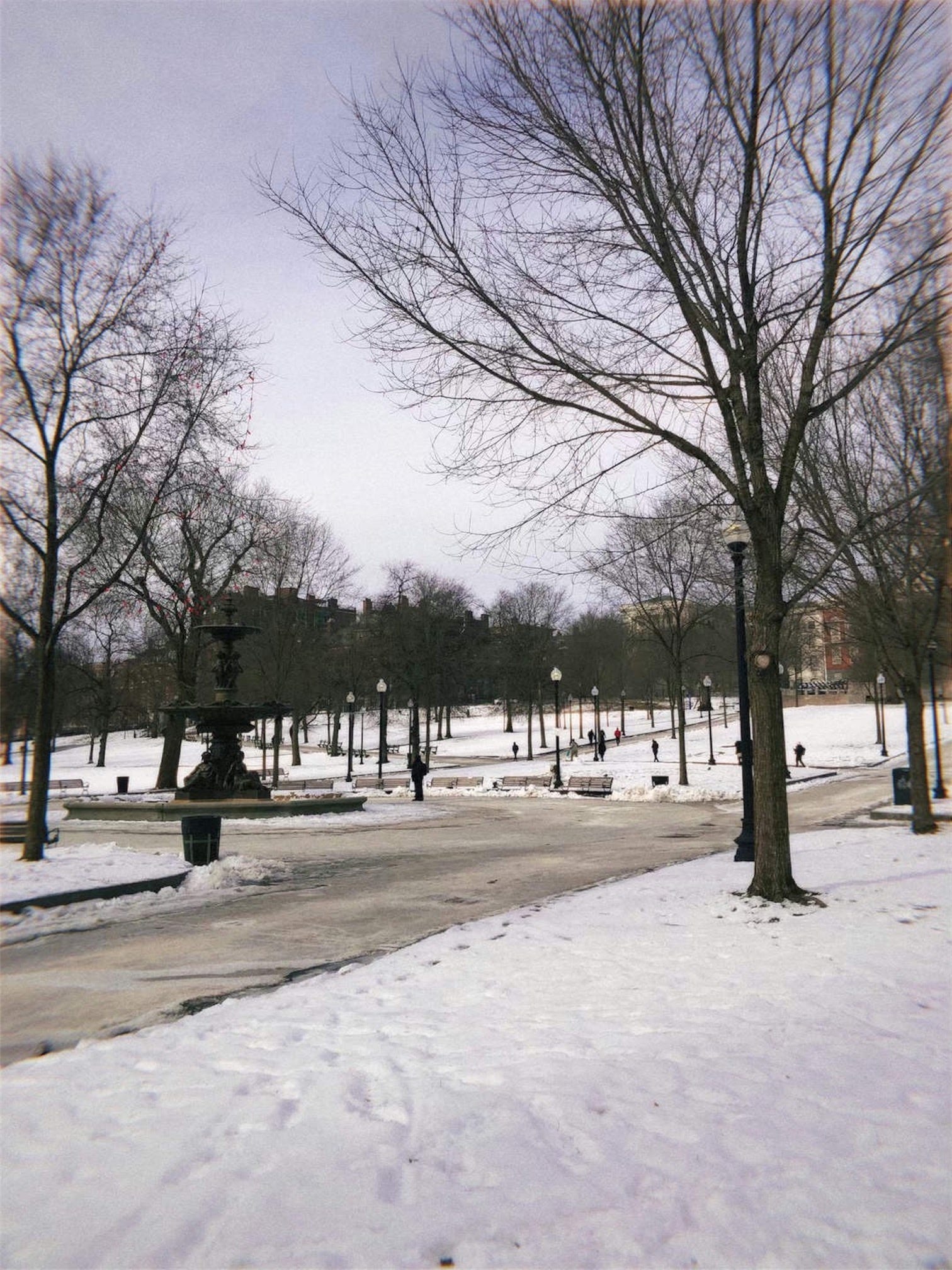
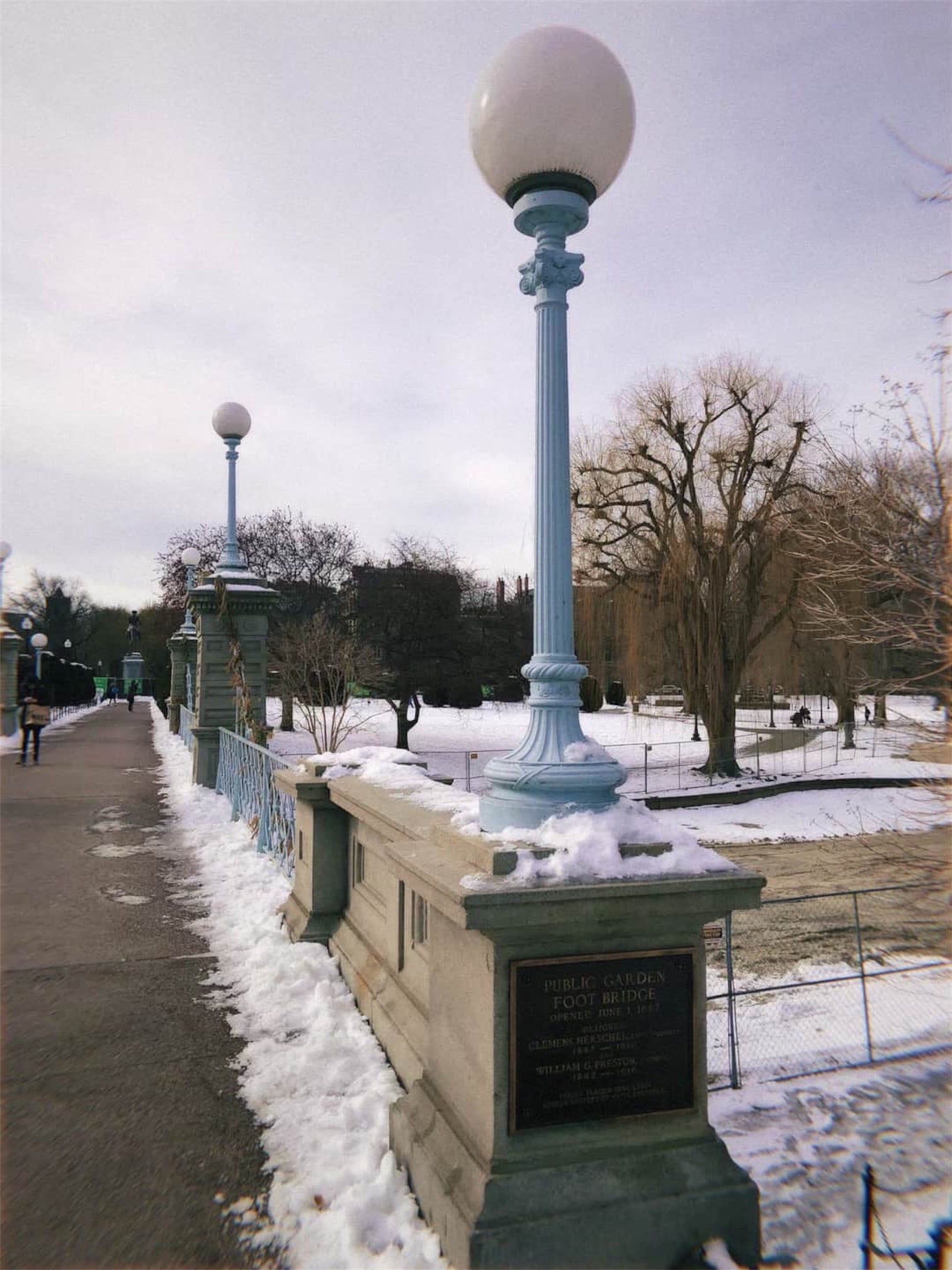
A trail of slushy footprints marks the ghosts of Christmas-shoppers past, those wiser ones who made for home before the temperature dipped ten degrees. I hoist my bag from Filene’s into a more secure position in the crook of my elbow and try to watch where I step. A soft rose glow seems to fall on my shoulders from the dusk-heavy sky, fading out over Downtown Crossing. For that reason I keep walking instead of ducking down into the T—a pink winter sunset is a rare treasure in the city, and the rest of the week is rumored to be overcast. I cut through the Common and then the public garden, crunching across the thin crust of snow that hardened overnight, and accidentally set off a flock of puff-chested winter chickadees from the rim of the drained fountain, who take off into the bare trees as if a cat snuck up on them.
“Can’t you sense I’m a friend?” I say, eyeing one of the birds, who looks like a fat little meatball as he watches me disdainfully from a safe height. I continue on, somewhat regretting my choice to forgo the train, and walk past the black iron fence guarding the garden onto Arlington St. Twenty degrees or not, I’m sweating under my wool coat holding all the things that seem less necessary than they did when I was in Filene’s twenty minutes ago. Most people have their faces bent, tucked into scarves, trying to make it home with ten toes still attached. Car tires grind up the dirty snow on the curbs. I pass a father and daughter hand-in-hand, the little girl’s red scarf trailing along the sidewalk till her father fetches the end and loops it twice round her neck. After they’re past I glance back at them. She hops over each stripe of the crosswalk as if the black asphalt is an icy chasm, to be avoided at all costs.
But I have cranberries to string and the orange slices won’t dry themselves in the oven. I pull my scarf up—well, Richard’s scarf, but mine now because it smells like him and is softer than mine, and no chance I’m giving it back. The lights twining every tree on Comm Ave blink on as I near our building. Just in time because if I don’t straighten my elbow soon I’m afraid it’ll lock in this position. I carry everything up the tight, narrow staircase of the townhouse, listening to the lives of other tenants through the thin walls. Radios on, playing Little Orphan Annie and Gunsmoke, and mothers in kitchens trying to coax their children to eat, and a bath running close by as I turn on the landing.
“Are you sure you’ll be able to fit all that in your place?” a voice from above says.
I crane my neck back to see in the dreadfully dim stairwell. Our landlady casts a skeptical and unhelpful eye on my burdens.
“Hello, Mrs. Moreland, how are you?”
“Just off to the butchers,” she answers, which is her response to any inquiry regarding her wellbeing—her next destination. “Are you and your husband staying here for the holidays?”
“Well—”
“Only because if you aren’t, I want to remind you to make sure all the lights in your apartment are off.”
“Doesn’t the butchers on Boylston close in”—I re-balance my packages to slide up my sleeve and look at my watch. “—10 minutes?”
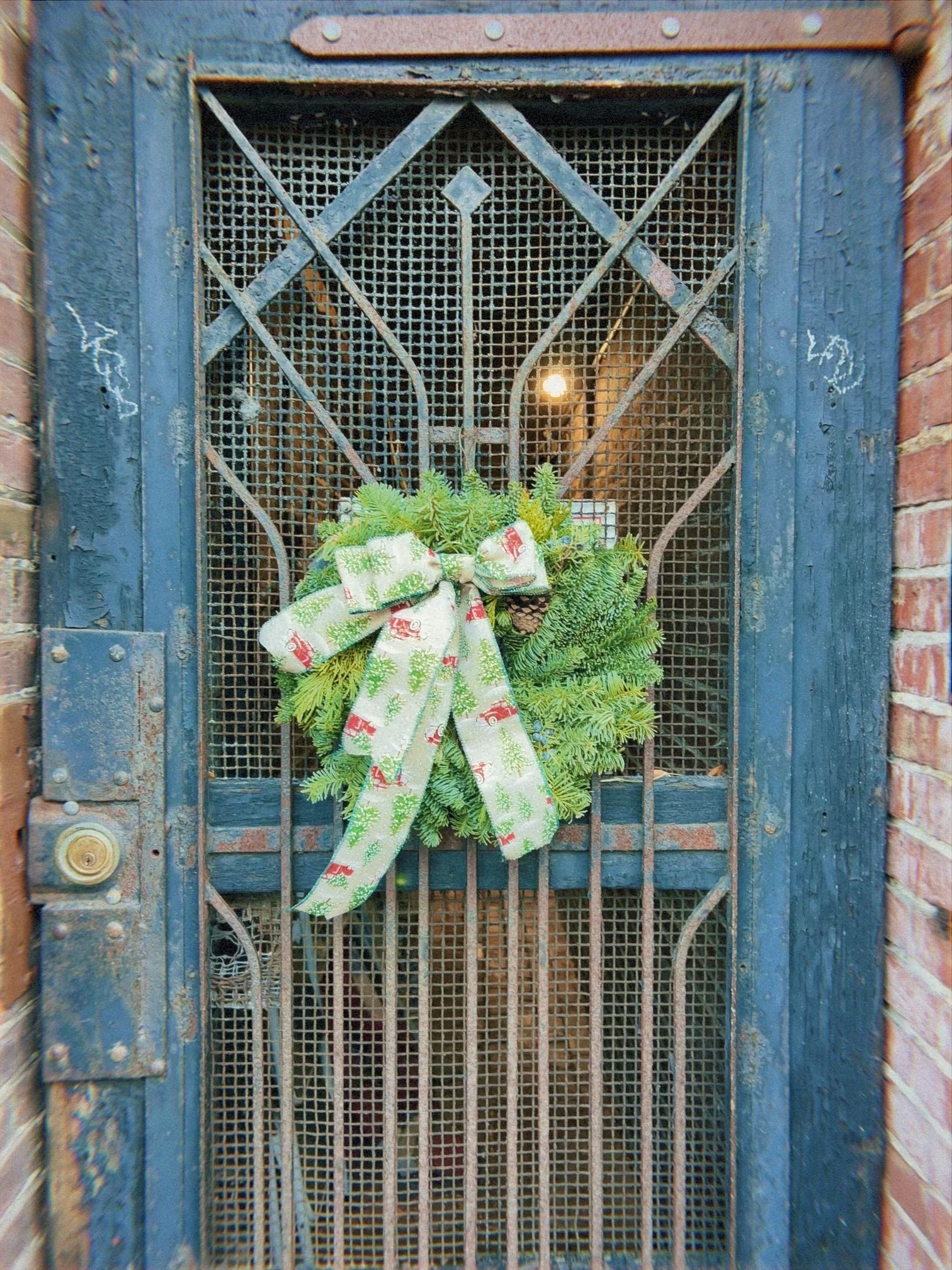
She jumps as if a hot poker were stuck in her stocking. I flatten myself to the wall, mid-staircase, as she trots past me. I make it to the top without running into anyone else, fiddle my key in the old lock for a minute before it clicks, and open the door to a very cold and dark apartment. Our little teal Philco radio holds its post on the mantel, and after I flick it on to the middle of Bing’s “Silver Bells,” I move it so I can string the garland there instead. I take the garland out of the wrapping—fresh, from a vendor in Quincy Market—and hold it up to the fireplace, trying to stretch my arms to estimate the length, when I remember Christmas decorating one year ago. If at any moment either of us had made different choices—
But we didn’t, and we’re here now. I line up the Christmas cards we’ve received on the sidetable by the door, underneath a framed print of a Brueghel painting I got at the MFA, the hunters in the snow tramping home to their winter village. I set water for tea on the stove and light the cloves-scented candle on the mantel, sweep this room and the bedroom, and then collapse on the sofa and stare at the empty spot by the fireplace where we’re somehow going to squeeze a tree if we can get one up the stairs.
The key turns in the lock and I sit up, barely aware that I was beginning to drift off. Richard comes in with red cheeks and stomps his snow-caked boots on the mat.
“Is it snowing or did you walk under a tree?” I say, eyeing the bits of melting snow clinging to his hair.
“Oh, it’s coming down all right.”
He walked under a tree, then. I go over to him and unwind his scarf, shaking out the snow onto the floor I just swept. “This scarf doesn’t seem very warm.”
“It’s not,” he agrees. “I do have a very warm scarf that I can’t find anymore. I think it was red…plaid, maybe?”
“That’s a mystery, darling.”
He snatches me up before I can get away and I squeal as he pulls me against him and his snow-soaked coat.
“It’s cold!”
“Then warm me up.”
I brush some of the snow from his damp hair. His cheeks are freezing, and so is his mouth when he kisses me, but it’s a fair trade for the red scarf.
He pulls back and says, “Good day?”
“Latin suffixes are spilling out of my head. Are you tired? Maybe we should wait till tomorrow to look for the tree.”
“No way,” Richard says, reaching for my coat from the peg and draping it over my shoulders. “Tomorrow morning all the families will snatch them up. I’d rather not fight a ten-year-old for the last spruce on the lot.”
He gathers my hair from beneath the coat collar, kisses my forehead, and adds, “We’re getting that tree tonight and then we’re going to sit here in the dark admiring it.”
“Among other things?” I smile as I tug on my gloves, still damp from their recent excursion.
“Grace Margaret Whitley! The audacity.”
“Grace Margaret Whitley Dare,” I correct him, then go out as he holds the door for me. At the landing I hold my hand out behind me and his hand finds it.

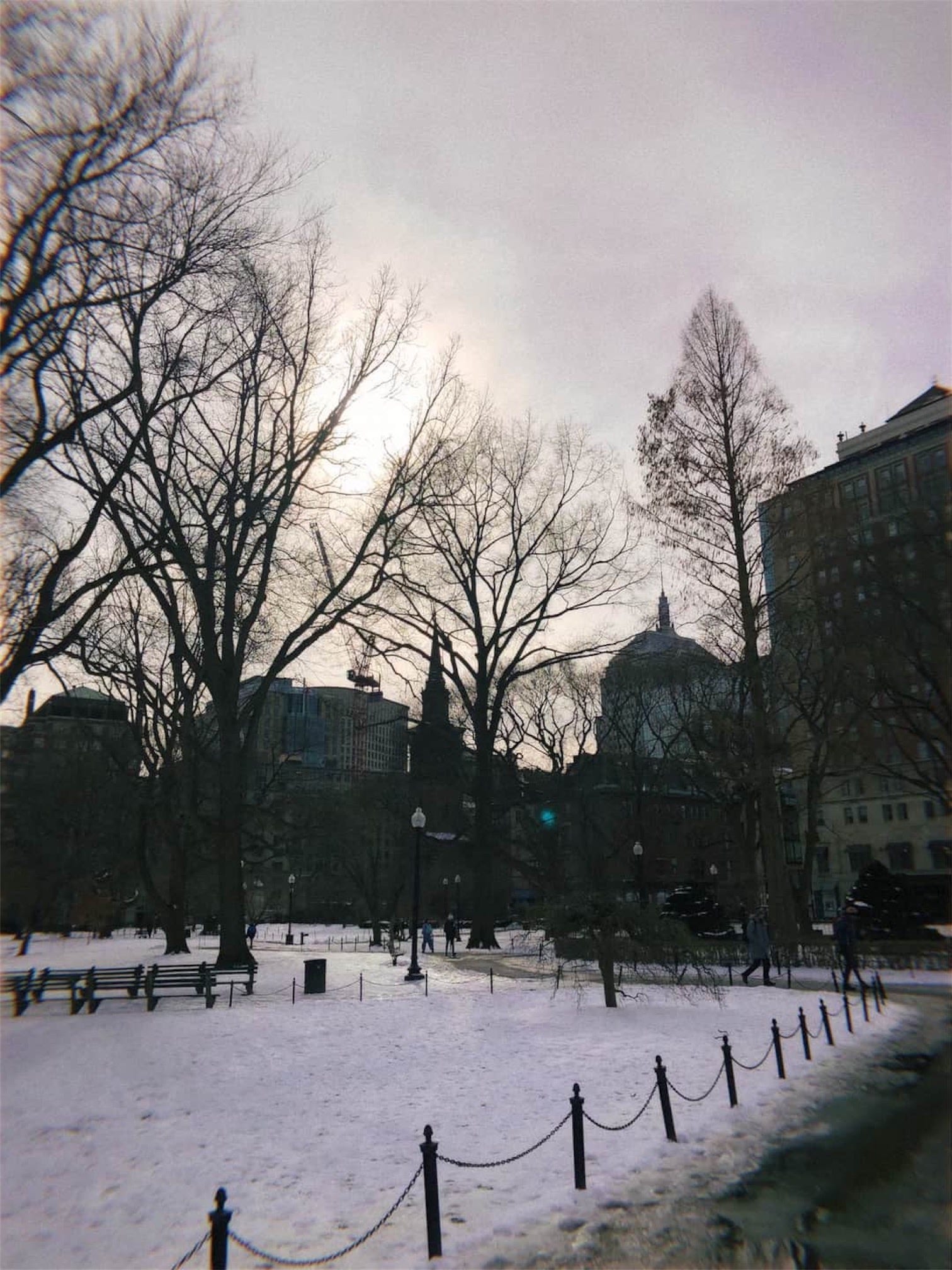
Dusk lingers above the lit treetops on the avenue. There must be thousands of lights in the English elms and magnolias, and ten thousand more in the Christmas trees glowing from many of the apartment windows, glittering and stacked one atop the other like the little ceramic villages dressed in cotton-ball snow in the department stores. We walk and tell each other about our days and laugh and watch the steam of our breath go ahead of us as the evening deepens into night, though not too dark, given all the man-made illuminations. Our first stop is Copley Square, where the farmer’s market collection of winter squash and pomegranates and honey has transformed into a pine labyrinth. But at our first tree half the needles float onto the crust of snow with one brush of Richard’s glove, and the prices are exorbitant and the salesman a little too fresh, so we move on. At the head of Charles Street we each drop a few quarters into the Salvation Army bucket as Santa rings his bell. There’s another tree vendor just through the gates of the Common, but the good trees have all been picked over. On the other side of the Common, after we push our way through the mass of humanity all surging down into the Park Street T, the selection is better but another couple there are so intent on airing out their grievances with each other publicly and loudly that it ruins the mood. Richard and I look at each other and both shake our heads, and off we go again.
I don’t know how, but by 7 o’clock we end up defeated, treeless, and bone-cold at the Paramount in Beacon Hill, eyes glazed over cups of coffee and waiting for omelettes. I’m still shivering when Richard gets up and drapes his wool coat on top of my own.
“No, you’re sitting with your back to the door,” I say, and we are tucked right into the corner by the front, where funnels of freezing air hit us every time someone comes in or goes out.
“You being cold makes me more cold. I’m fine, it’s just my face.” He flexes his stiff fingers, wincing.
I haven’t taken off my gloves while holding the coffee, so I hold both hands to his cheeks, making us both laugh. “Well,” I say, letting him go so he can drink his coffee, “we’ll be in Caspar for it, anyway.”
“We still ought to have a tree, it’s our first holiday married. I want our window to be one of those that’s all lit up and makes people smile.”
“This feels eerily reminiscent to last year.”
He smiles. “Only then we had a whole forest of genuine Christmas trees at our disposal. What would your grandfather say if he could hear you?”
“I imagine he’d tell me that giving up so easily isn’t the Whitley way, but he never had to hunt for one in Boston and I’m sure his standards were even higher than mine.”
“Wish there’d been some way to get a tree home from Caspar at Thanksgiving.”
“Think the conductor would count that as a carry-on?” I wonder, and he laughs. Tucking my cold chin into the neck of my sweater, I add, “It would’ve been nice to have a bit of Maine here.”
“It would’ve been.” Richard sighs. “Guess I’ll head back out in the morning and fight that ten-year-old, then.”
When our waiter—who has an Irish accent a few inches thick—returns with the food, Richard asks him what Christmases are like back home. His home turns out to be Belfast, where Richard spent a small part of the war, and our waiter’s siblings and his mother are all still there.
“I was just thinking,” I say, once he’s disappeared, “about New Year’s Eve. Maybe we should come back here, spend it with Mattie and Adrienne.”
“Maybe so,” Richard agrees as I hand him the salt. “I think Laurie and Faye will be with her family, but we could ask Sidney and Lena down. Make a party of it. A small one—I don’t know that Mattie’s up for any real parties yet.”
“I already feel bad they’ll be alone here on Christmas.”
“I know. I do too.”
He’s been so diligent taking the train every week to West Roxbury, sometimes twice, even though I know how uncomfortable the veterans’ hospital makes him.
As if reading my thoughts, he says, “Mattie’s now spent longer in the VA than I did. And consecutively.”
“Then all the better he has you.”
“I guess.” After a minute, he adds, “I know what he’d really want is all of them together again, but I don’t know what to do about that. You know how they hate us interfering.”
Mattie’s sister Adrienne is living just a couple T stops from us at a boarding house in the South End, where she can easily get to Roxbury. We ask her to dinner every week which she accepts maybe once a month at the most. I’ve considered stuffing a few dollars in her coat pocket when she’s not looking if I didn’t think it would cease those dinner visits entirely.
I pick up my coffee and say, “We can’t solve all our friends’ problems in one night, tempting as it is. All we can do is to keep on being there for them.”
Richard nods and picks up his own coffee and we clink the mugs together. “As for our own much less serious problem…that’s something we’ll figure out in the morning. When we’ve thawed out.”
At home, without that one dark corner filled and illuminated, our only company is the clanging radiators. I reheat the tea water I forgot to drink earlier and we go to bed early with our books. Halfway through the night we both wake up because it feels as though a window has been left open, and Richard gets up and battles with the radiator valves. I feel the covers shift when he comes back, but then a little while later—I’m not sure how long—I realize he’s gone again, though the radiators are silent and our bedroom is warm. Wrapped in the warm covers, I turn to my other side and see the bathroom door is open, the light off. Morning sunlight glows behind the green toile curtains.
I must’ve forgotten to put my slippers by the bed, and I curse at my last night self as I go over to the window barefoot, pulling my bathrobe around myself. The street is as quiet as our apartment, only a moss-green Packard idling at the curb—our friend Freddy who lives across the avenue. Wonder what he’s doing out so early.
“Richard?” I call, but clearly he’s not in here. Then someone whistles from outside, and when I glance back at the window, it’s not Freddy climbing out of the Packard but my husband himself. He sees me as I push up the window sash and then lean out into the bright, blue morning.
“Not sure you fully grasp what a Christmas tree is,” I shout down to him.
He brushes a bit of snow off the car’s roof and answers, “This beautiful thing’s going to take us to the trees. Freddy says it’s all ours for the day. So what do you say, Grace Margaret Whitley Dare, want to drive to Maine with me?”
“I’m not decent!”
“I’ll wait. Or better yet, wear that.”
I laugh, crossing my arms on the sill and grinning down at him. “How about some breakfast first?”
“That’s a yes?”
“Yes, and please come in before you freeze to death! I’m having deja vu to when you proposed.”
Coming around the car to the sidewalk, he points to the sky and says in his purposefully terrible Jimmy Stewart accent that always makes me snort with laughter, “‘Is it the moon ya want, Mary?’”
With another grin up at me, he disappears inside. I push the window closed and remark to the empty bedroom, “‘George Bailey, I’ll love you till the day I die.’”
There’s something undeniably romantic—and Romantic—about a spontaneous drive to Maine for something as frivolous as this. I light the stove and crack a couple of eggs, and remember that there’s some chicken salad left in the icebox for sandwiches to take with us. When I hear Richard come in, I call, “We can take lunch too! How far do we plan on going, not all the way to Caspar?”
“We certainly could if you want, but I figure as long as we cross into Maine, then that’s good enough. There’re probably a million places on the side of the road to stop.”
I poke my head out of the kitchen. “That was swell of Freddy. And very sweet of you.”
“You’ll get your bit of home, I promise.”
Although the eggs are beginning to sizzle, I go over and take off his coat and hang it on the peg. “You are my home,” I answer and drop a kiss in his hair as he’s stooped to unlace his boots. “That’s all I need.”
Straightening up, he smiles, eyes and nose still red from the cold. “That’s awfully sentimental of you.” He hesitates, then adds, “Is this selfish of us? You know, when not all of our friends…”
“They would tell you that’s no reason to withhold joy from ourselves,” I answer, as I take his cold hand and pull him toward our tiny kitchen. “Now let’s eat.”
It isn’t the moon I want, I think as we get out the dishes. But when and where we have the chance to illuminate our little part of the world, then it’s only right to do so. Every day I walk past the other townhouses on Comm Ave and look at their trees draped in lights and tinsel and berries and wonder at all the lives within. Richard is right: Maybe this time, someone will wonder at ours.
No posts
Comments
Nothing yet. Say the first thing.
Sign in to join the conversation.