
Most people came to know (and love) Liz Gilbert from Eat, Pray, Love, but Big Magic is the book that changed my life.
I read it in the fall of 2015 and felt absolutely sure that THIS TIME I was gonna do the thing. Start the business I really wanted to start. At the time I was running a popsicle company while also working full time, and had just finalized a second divorce.
I highlighted the passages, made notes, and dreamed of a life where my work and my heart were aligned and making a difference in other people’s lives.
Big Magic has an urgent message. Liz reminds us that ideas don’t wait forever. They knock gently, then a little louder, if you don’t listen, the ideas will then leave you and find another set of able hands through which to come to life.
Re-reading this book is medicine I didn’t realize I needed. So much so that I wanted to share this with you, too, in case you, too, may be in need of magic.
If it’s been a while, re-read it. If you’d never read it, now’s the time.

It was after reading Big Magic that I knew I needed to release the popsicle business and set my life up to follow my heart. The book tells you how. 👇
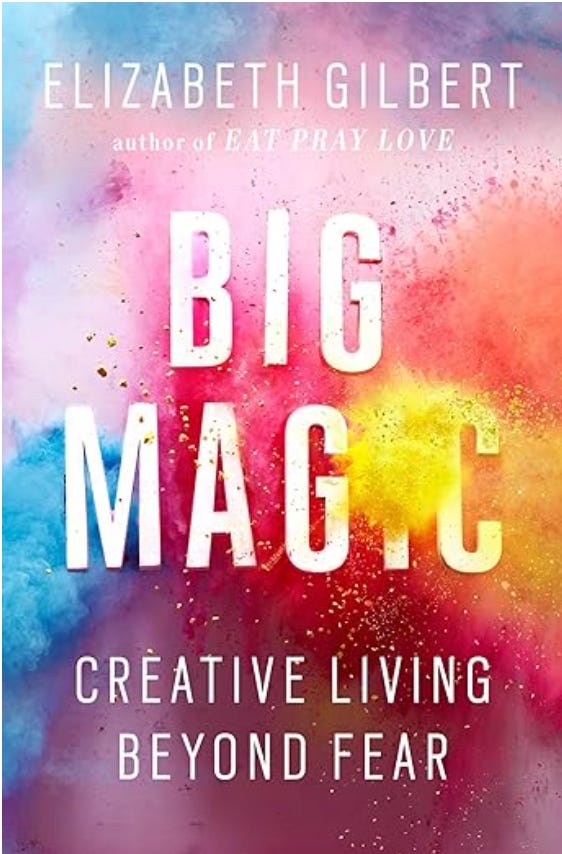
Book: Big Magic: Creative Living Beyond Fear by Elizabeth Gilbert
What it's about: It's a practical manual for living creatively while staying sane, financially stable, and emotionally resilient. Gilbert breaks down the real relationship between creativity, fear, and making a living.
Why I picked it up: Because I love Liz Gilbert, but really because I was looking for magic. Needed magic. This book delivered.
Can we all agree that creativity isn't just for artists anymore? In our rapidly changing world economy, the ability to generate new ideas, adapt quickly, and think outside conventional frameworks is what separates thriving professionals from those getting left behind.
This book is relevant because it treats creativity as a life skill. Whether you're launching a business, solving problems at work, or just trying to build something meaningful, you need creative courage. And Liz shows us exactly how to develop it without losing your mind or your mortgage.
You have creative ideas but struggle to act on them
You're afraid of being judged for trying something new
You want to build a creative practice alongside a stable income
You're tired of creative advice that ignores practical realities
Genre/Category: Creativity, entrepreneurship, personal development
Not for you if: You prefer purely tactical business advice or are looking for accelerated growth strategies (a.k.a. get-rich-quick schemes). This requires embracing uncertainty and playing the long game.
Gilbert's radical concept: ideas have consciousness and will abandon you for someone who acts faster. The "24-hour rule" can change everything.
Your Action Plan: Create an "idea capture system" (voice memo, notebook, phone app). When an idea gives you chills, capture it immediately and take ONE micro-action within 24 hours—even if it's just creating a folder or writing three bullet points. This signals to the universe you're serious.
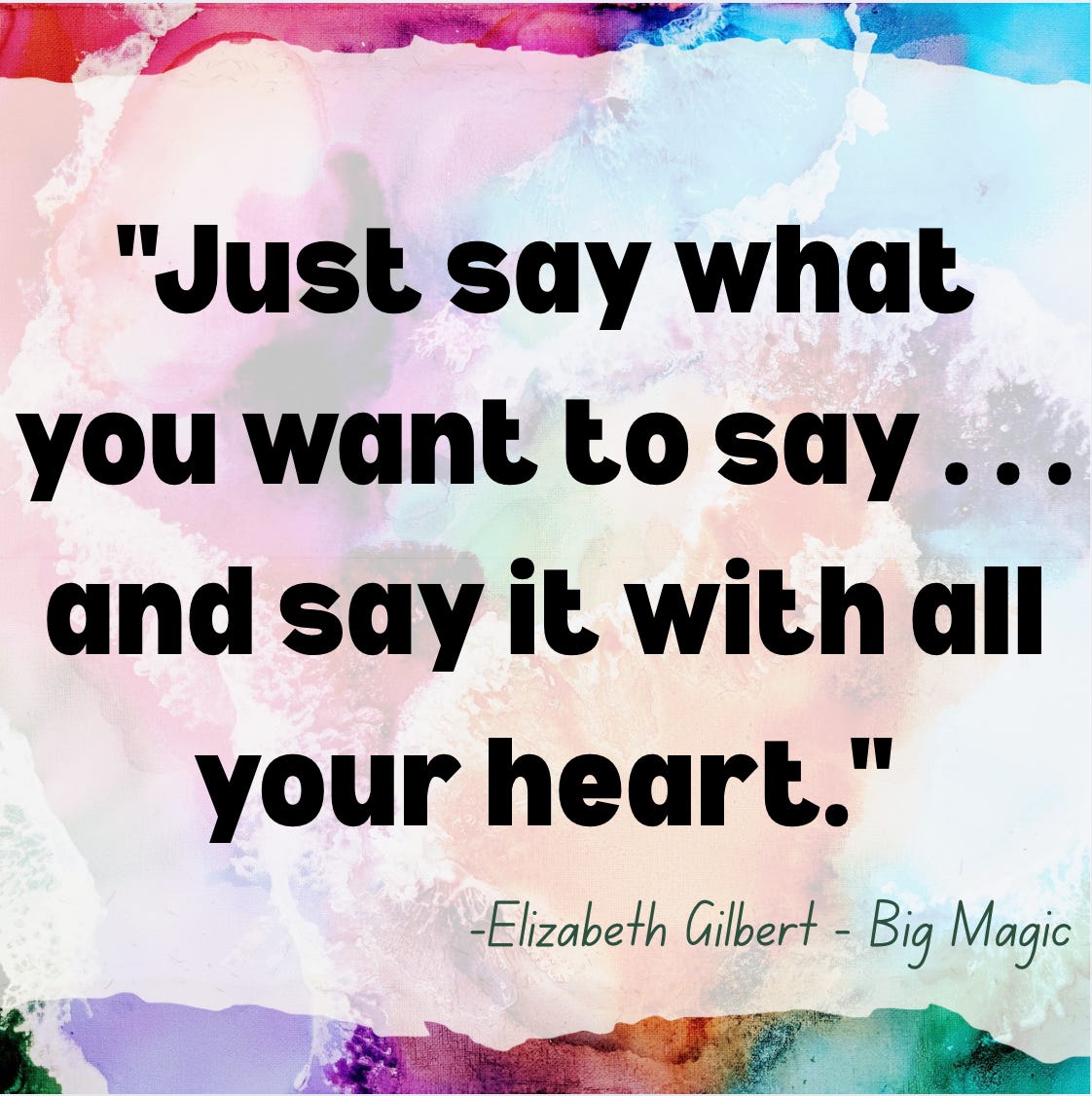
Do the work regardless of results. Your ego craves rewards, but your soul craves wonder. Detachment from outcomes paradoxically creates better outcomes.
Your Action Plan: Before starting any creative project, ask "Does this bring me wonder? or does this excite me?" instead of "Will this succeed?" Track which projects you create from curiosity vs. strategy—you'll likely find your "wonder-driven" work performs better and feels more fulfilling.
Gilbert's controversial truth: don't make your art pay all your bills. Financial desperation kills inspiration. Strategic income diversification preserves creative freedom. She waited tables, did odds and ends while writing was the thing she couldn’t not do and would do for free.
Your Action Plan: Build 2-3 income streams so no single creative project has to "save" you. This might mean keeping a day job while building your creative practice, or developing one reliable service while experimenting with passion projects. Freedom to fail = freedom to succeed.
"Perfect" plans never happen. "Good enough" plans that ship create real-world feedback and income. Violent execution beats endless planning.
Your Action Plan: Set a "minimum viable" standard for launching anything—a rough outline, basic format, or simple prototype. Give yourself permission to improve based on actual user feedback rather than imagined perfection. Version 1.0 shipped beats Version 10.0 stuck in your head or laptop.
You don't need credentials, approval, or someone to "discover" you. Your existence grants you creative rights. Curiosity and helpfulness trump formal qualifications.
Your Action Plan: Identify one area where you're waiting for "permission" to create or teach. Start sharing what you're learning or exploring, not what you've mastered. Lead with curiosity: "I'm exploring X and here's what I'm discovering..." People connect with learning journeys, not just expertise. That’s what I’m doing here, and what I love about the other Substacks I subscribe to.
Start with these three game-changers:
Build Your Idea Capture System - Ideas have expiration dates. Create a system (voice memo, notebook, app) and commit to the 24-hour action rule.
Calculate Your Creative Freedom Number - Know exactly what you need to survive financially, then build that security. This removes desperation from your creative work.
Embrace "Version 1.0" Thinking - Your next creative project doesn't need to be perfect to be profitable. Ship it, learn from real feedback, iterate.
My favorite practical quote: "What are you passionate enough about that you can endure the most disagreeable aspects of the work?" (Liz says you’re going to have to eat a lot of shit sandwiches - the passion 🌈 has to outshine the 💩)
Liz says the universe rewards action, not perfection.
So here's my challenge for you:
Tell me in the comments: What idea have you been sitting on because you're worried about looking foolish?
I'm genuinely curious:
Which of these five big ideas feels most uncomfortable (that's usually the one you need most)?
What’s a creative project that surprised you with its outcome?
What would you start tomorrow if you knew you could fail,
What would you start if you knew you could not fail,
What is the thing you cannot help yourself but do,
The most successful creators out there aren't always the most talented—they're the ones who consistently choose courage over comfort.
Big Magic only works if you actually use it. Gilbert's ideas aren't meant to stay highlighted and notated, pretty on a bookshelf. They're meant to get messy in real life. I am thankful that reminded me to read this one again!
Want to dive deeper into books like this? I am starting a community where we can dive deeper into the topics we discuss here, and to experiment and implement. Message me if you are interested it’s in beta mode and only open to a select few users.
What's the one creative project you've been avoiding because it might not be "ready"? Comment or send a private message, maybe we can help you figure out your Version 1.0 launch strategy.
Comments
Nothing yet. Say the first thing.
Sign in to join the conversation.