
My last post - which unfortunately for me was published over 2 months ago, despite me telling myself every week that I would, perhaps tomorrow, be able to finally commit to a regular weekly posting schedule, which I like to pretend in my head is more about the commitment to consistently create and how that would sharpen my creative senses, help me become a better writer, perhaps even a better thinker, but is instead part of my hopeless reaching out for and craving connection in any form I can get it, which more simply means growing my subscriber count on here from 0 to, who knows, an overwhelming 5 - talks about making peace with ordinary Mondays.
I go on this whole brain dump about the realizations I’ve had since turning 30 as it relates to the concept of potential. Of the unreachable, of the importance of accepting your own slow, ordinary, boring path in a world full of half-built shiny bridges.
My opinion on that hasn’t quite changed - good, I’m not that mentally unstable - but I feel like I didn’t make an important distinction I should have made. And in my terror that someone might read that someday and have an understanding of me that is not a direct result of the expression of my own deepest thoughts and carefully-curated opinions, I am here to say: I do not accept mediocrity.
(The room goes quiet, everyone gesturing broadly towards their screens. Believe me, I know.)
The thing is, I’ve learned to accept the idea of one single life, with its limited crossed bridges, and can even find some magic in looking out towards the horizon at all the other figs in the distance, appreciating them for what they are, because they enable me to be where I am - but I have not accepted the idea of this one single life being mediocre.
I went to Olinda in February (that’s how long these Substack drafts sit in my notes before I ever pick them back up by the way… hi, it’s May) for Carnaval, or technically pre-Carnaval. Olinda is this small, cute, hilly colonial city in the northeast of Brazil, and during carnival, it becomes a beast. Apparently they keep the party going year-round, but the climax is always in February, when every chaos-loving person in Brazil flies into the town - yours truly included, though my chaos is usually more internally-based.
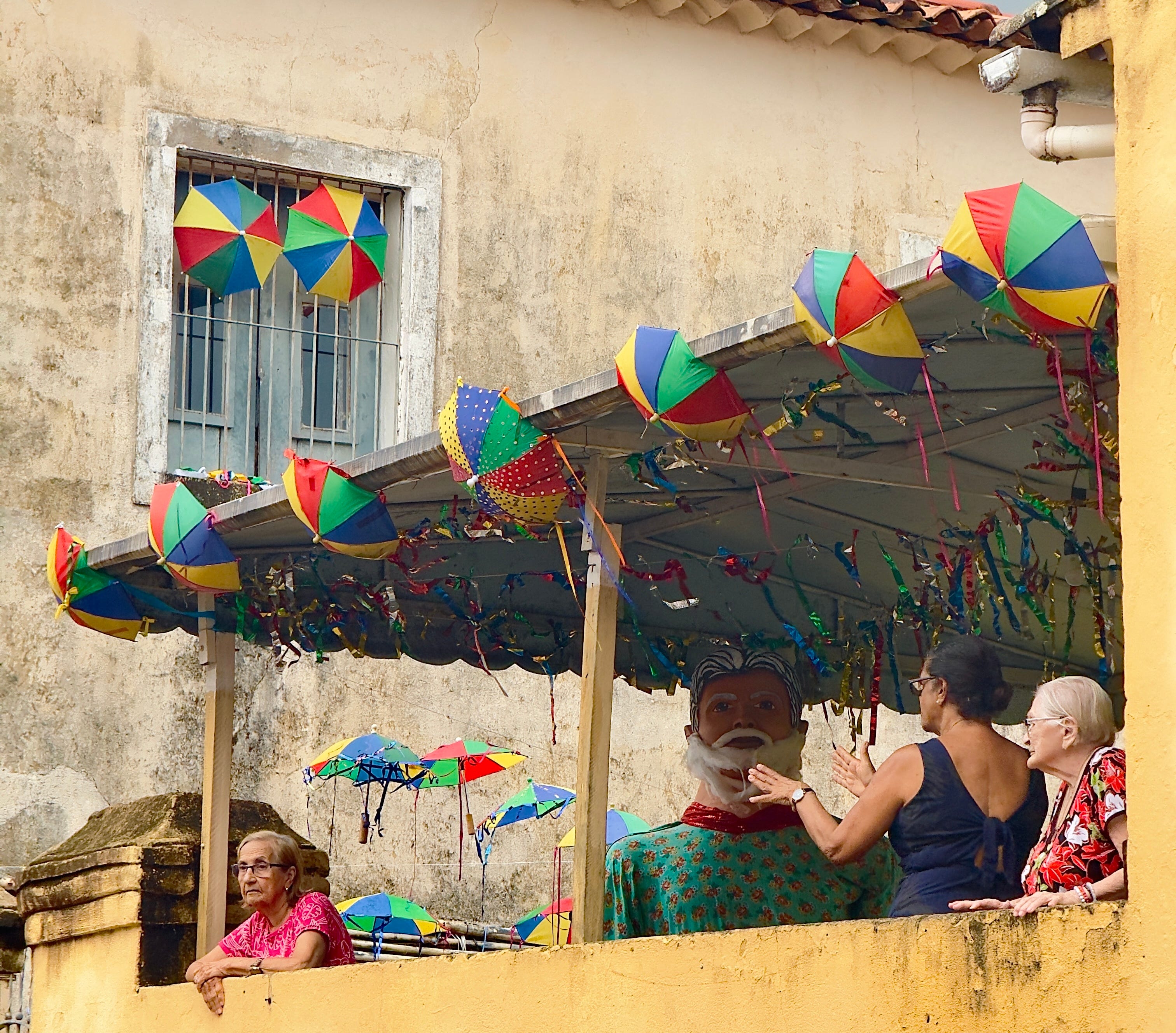
Olinda was filled with colors, maracatu, frevo, their bonecos gigantes - which are basically giant surreal-looking puppets that are carried through narrow cobblestone streets by loud, dancing people. Everything I saw - from the 85-year old residents watching the party from their window, to the street vendors selling their cheap local food, to the traditions around each costume, each song, each performance and non-performance - carried an overwhelming sense of authenticity in it.
The folklore isn’t performed for tourists. It isn't optimized or aestheticized for Instagram, though it does tend to draw that crowd now, naturally. It’s just there, real as it’s always been, alive.
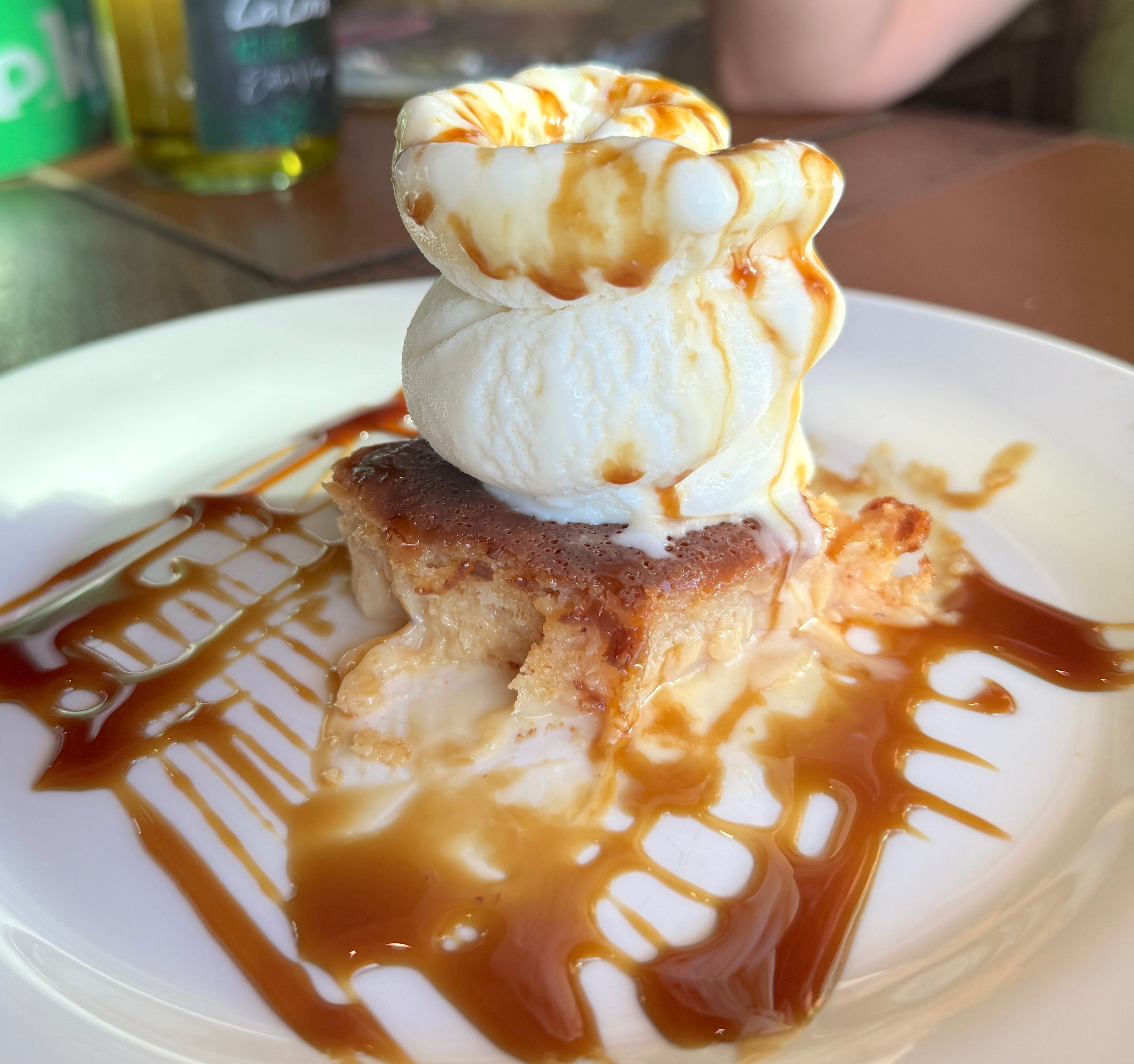
Quick break just to say I think I ate the best dessert of my life in Olinda. Oh my god? It was the Cocada Sublime at Olinda Art & Grill, and sublime it was! I haven’t stopped thinking about it since, and will likely attempt to recreate it at some point, probably badly. Should you ever find yourself there, and I strongly suggest you do find yourself there, hunt it down.
Also, while we’re here. I didn’t know before booking the trip that Olinda is more or less where The Secret Agent takes place, the Brazilian film that got several Oscar nominations this year (and mostly lost, but we don’t talk about that). So that was a fun little surprise.
Now back to our regularly scheduled programming.
If you know anything about me, you know - because I talk about nothing else - that I am obsessed with experiencing as much as I can, however shallowly. Maybe not so much “I am” as “I have been”, perhaps, otherwise I’ll stay here forever. But the point is I crave novelty: new cities, more goals, avoiding the museum down the street for 4 years because I can only ever go there for the first time once. I need to keep things new. I need to keep them untouched.
But what I felt in Olinda was different. It wasn’t novelty for novelty’s sake, it wasn’t an attempt at pedestalizing a feeling while life crumbles up around you. It was density, real density, and passion. Roots so deep they became culture, tradition so specific it became identity. Regardless of who’s watching.
I realized, somewhere between the incessant drumming and the cocada, that my striving has always been horizontal, whereas the Real often moves vertically. Into the earth, not across it.
Let me let you into a little secret that I tend to avoid talking or writing about because I feel bad about it regardless of how real the annoyance is, and how aware I am that it is likely a manufacturing defect of my own.
I cannot understand the people who stay. People who grow up, raise kids, and die in the same place, keeping the same friends for decades, repeating the same traditions for generations. I see a sort of beauty in that, sure, but a much greater relief that that isn’t me.
Contentment or ignorance? Ignorance is easy, and unworthy of our time. Fucking good for them! Now contentment, in my opinion, as it is usually practiced, is fear with better branding. It’s the avoidance of risks dressed up as acceptance.
There are, of course, the enlightened individuals, who go through the dark with big questions and come out the other side free of all interest in the answers. But those are such an anomaly that even bringing them into this conversation seems like it’s doing us all a disservice. They've got it figured out.
In general, though, the contented person, the everyday kind, has made a calculation, consciously or not, that the discomfort of striving outweighs whatever transformation might be waiting on the other side of it. Fair enough, right? Somebody needs to keep the structures running and build the bridge for others to cross. But they’re usually not building their own, they’re just… sustaining. A life oriented entirely around the preservation of its own comfort produces, at the end, very little that didn’t already exist when it started.
The people who have shaped how we see, think, and feel are overwhelmingly, almost absurdly, strivers. People who could not make peace with what was available to them.
To make this all about myself, because I can: I moved to Los Angeles at 18, having partially convinced (partially accepted) my mom to sell her only home, the one she worked her entire life to buy, to fund a filmmaking program. I arrived with no safety net and the kind of confidence that is really just the absence of real life experience and a level of ignorance that I wish every day I could get back.
I lived in a 26-person artist house that I simultaneously would not wish on anyone and loved to almost-death, went several days without eating for weeks at a time, burned my nervous system to the ground, and… stayed. There was a version of me that could have gone home and been fine, and I knew it, and I chose not to. That choice had a layer to it that I recognize now as the thing I’m trying and failing to describe. Not the hunger or the chaos of it, not the ambition even, but the absolute refusal to let life shrink down to what was comfortable.
This is what striving actually is, I think. Not restlessness for its own sake, but the relentless insistence on making something that didn’t exist before you. The willingness to be uncomfortable in service of creation. The refusal to let your life be the same at the end as it was at the beginning. The… ego? Maybe that too. It suffers, guys.
Stoics and Buddhists will tell you that I am voluntarily choosing this suffering, that inner peace is achieved when you’re free from desires, etc. I get the appeal. But these traditions, for all their elegance, essentially prioritize escape from suffering over the embrace of possibility, and in doing so they ask you to make yourself smaller, quieter, more manageable.
I’m more so with Nietzsche’s opinion on the Last Man here, as I strive for my own little version of the Übermensch.
Creating values rather than inheriting them, overflowing rather than accumulating, trying my damn best to create something new rather than rearranging what already exists. And doing so with joy, with amor fati. Not striving out of disgust for what is, but out of love for what could be. What else is there to me, really?
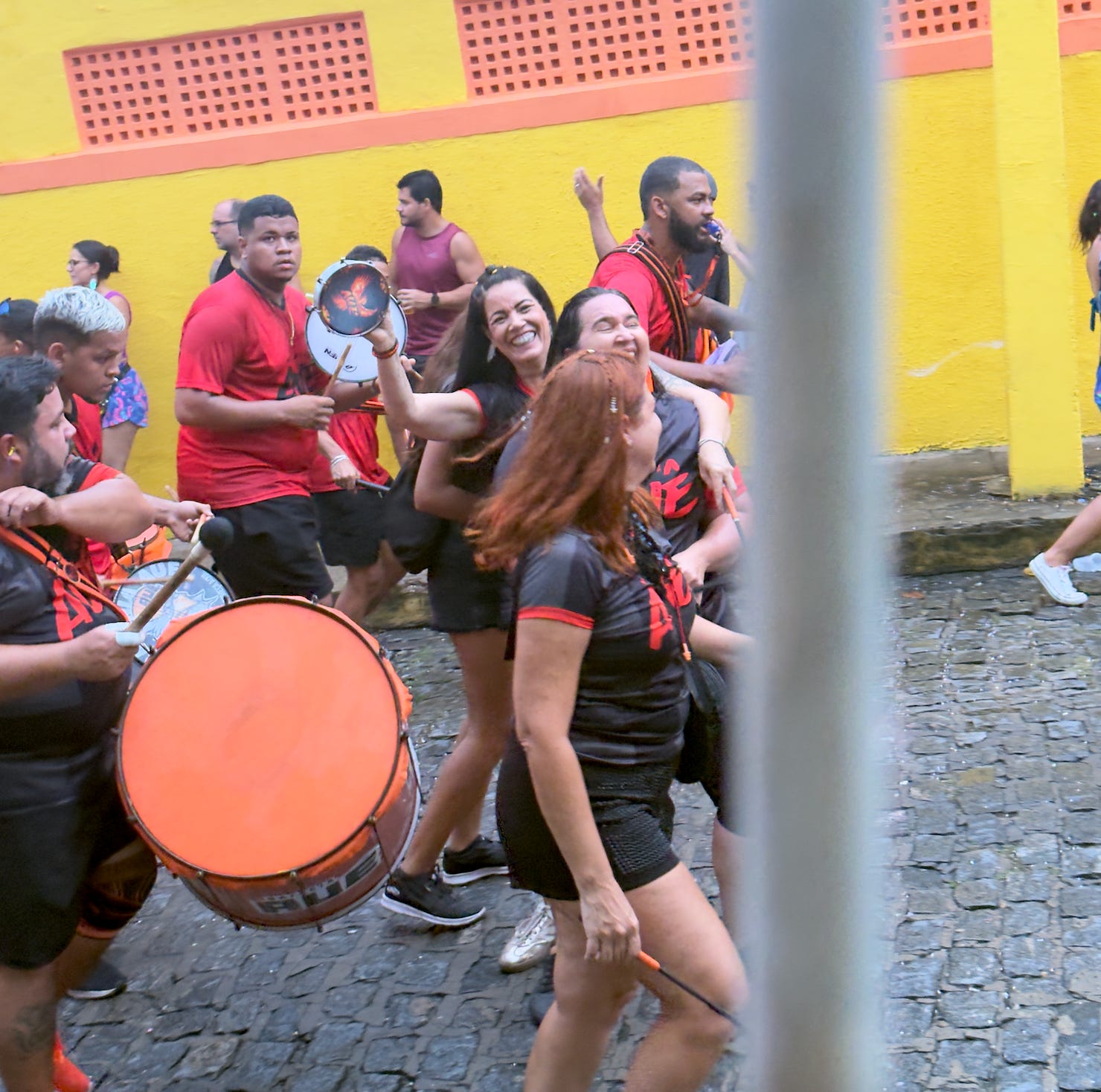
What I saw in the streets of Olinda was, surprisingly, a brand new version, to me, of the second kind. Generations of people who took what they inherited and made it more themselves, pressing their specific humanity into it. The bonecos gigantes are carried forward, year after year, by people who choose to carry them.
What I’m arguing for here, I think, after that trip, is not the life that covers the most ground. I’ve tried that and have only felt emptier, having been everywhere and feeling at home nowhere. Striving should go way beyond mindless wandering and actually leave a mark on the world that is recognizably yours - in your work, in the people you’ve shaped, in the culture you’ve contributed to or created or carried down a cobblestone street.
So here’s to striving, in all our own ways.
Comments
Nothing yet. Say the first thing.
Sign in to join the conversation.