
When the college admissions scandal broke in 2019, I watched the collective outrage with fascination. Everyone was shocked by the cheating—parents bribing coaches, photoshopping their kids onto rowing teams, paying someone else to take the SATs. The audacity! The fraud! The unfairness!
But I had a completely different question: Why on earth were these families taking such desperate risks in the first place?
Think about what elite colleges are supposed to offer: wealth, power and influence, and access to exclusive networks. Those are the three promises that make parents willing to spend six figures on tuition.
But here's what baffled me about these families: they already had all three.
We're talking about people with enormous wealth. The kind of money that lets you casually drop hundreds of thousands in bribes. Many already wielded serious institutional power: Gordon Caplan, co-chairman of a major law firm; Bill McGlashan, a private equity executive; Manuel Henriquez, CEO of a publicly traded bank. These weren't just rich people. They were power brokers who could pick up the phone and make things happen.
And even the families who weren't running Fortune 500 companies had their own forms of power and influence. Take the Loughlins: Lori was a household name from Full House, her husband Mossimo had built a fashion empire worth hundreds of millions, and even their daughter Olivia Jade had influence—as in, she was an actual influencer, commanding hundreds of thousands of followers across social media platforms.
And access? These kids were already attending elite private schools, rubbing shoulders with the exact same children of senators and CEOs they'd meet at Stanford or USC. The networking was already happening at their prep schools and summer camps.
Here's what makes this whole scandal so bewildering: college is supposed to open doors. For a working-class kid, getting into Yale genuinely could transform not just their life, but their family's trajectory for generations. That acceptance letter opens doors that were previously welded shut—access to internships, networks, and opportunities that can create generational wealth. For middle-class families, college used to provide meaningful mobility, though even that's become questionable as degrees lose value while costs skyrocket.
But when you're already at the top of the pyramid? When your family name alone opens the doors that other people need degrees to access? The marginal benefit becomes almost zero. Olivia Jade could have attended community college and still had more opportunities than most USC graduates, simply because of who her parents were and the network she'd grown up surrounded by. Her path was already paved with influence and capital that no classroom could provide.
So what exactly were these parents buying with their bribes and federal charges? What was so valuable about that acceptance letter when they already possessed everything the letter was supposed to provide?
I raised this question on social media, genuinely puzzled. The response from one acquaintance on Facebook—a sociology professor who writes about Asian Americans in hip-hop culture and who DJs on weekends, exactly the kind of academic you'd expect to have a critical eye for how power and systems actually work—stopped me cold.
"Are you seriously questioning the value of an Ivy League degree?"
His tone wasn't just dismissive. It was scandalized. As if I'd suggested we question the laws of physics.
And that's when it hit me: I'd encountered this exact same blindness before, in what was supposed to be the most intellectually rigorous environment in America.
Picture this: an honors seminar for political science students at Columbia University. The supposed cream of the crop, handpicked for advanced study. Future diplomats and policy makers, debating the pressing issues of the day.
Each class began with current events discussions, and there was an insufferable air of smugness that filled the room. My classmates weren't just discussing ideas—they were performing their membership in an exclusive intellectual club. There were inside jokes, casual name-drops of political theorists, and this gross sense of "aren't we all so brilliant together?"
That semester, we spent weeks discussing the Kosovo war. My classmates would reference diplomatic theory with a knowing smirk, make clever observations about international relations, throw around terms like they were secret handshakes. "Well, it's not like Kissinger would have..." followed by appreciative chuckles from around the room.
I sat there in silence, increasingly disgusted. Not by their knowledge, but by their certainty. Their absolute conviction that they were the smartest people in any room they'd ever enter.
Halfway through the semester, the professor turned to me. "Carmen, you've been quiet. What do you think?"
I looked around the room at all these future ambassadors and think tank leaders and said: "We've spent all semester dissecting the minutiae of this war, but not once have we asked the most basic question: Why is the United States involved in Kosovo in the first place? What are we even doing over there?"
Dead silence.
The professor's face lit up. I could tell he was relieved that someone had finally cut through the academic peacocking with a real question. "That's exactly what we should be discussing! What do you all think?"
More silence. Finally, one student—someone probably destined for the State Department—offered tentatively: "Because of... freedom?"
I wanted to laugh and cry at the same time. These were the supposedly brilliant future leaders of America. They could quote Fukuyama and debate the finer points of NATO policy, but they couldn't think past the propaganda to ask a simple question that any curious child might ask.

This experience shattered something fundamental for me. I'd been the perfect student my entire life: straight A's, bought completely into the idea that academic achievement meant everything, that working hard in school was the path to success. I believed in the institution. I believed in the system.
But watching my classmates perform intelligence while demonstrating none was devastating. Here I was, at what was supposed to be the pinnacle of American education, surrounded by people who'd mastered the art of sounding smart without ever learning to think.
And here's what really gets me: everyone talks about how college trains you to be a critical thinker. The United States has one of the highest rates of undergraduate degrees in the world. By that logic, this should be a nation full of critical thinkers.
Instead, we're living through an era of conspiracy theories and anti-science movements. People are refusing vaccines for diseases we eliminated decades ago. Dysentery is making a comeback, for fuck's sake—as if we're still wasting away in covered wagons on the Oregon Trail instead of living in the 21st century.
The link between having a degree and being able to think critically is completely broken. Because true critical thinking isn’t just about questioning authority—it’s about knowing how to question, and whether your conclusions are backed by evidence, not just suspicion.
Sure, there are brilliant college graduates who think rigorously and follow evidence wherever it leads. But the system as a whole often rewards polish over curiosity, performance over substance.
Some of the smartest, most intellectually curious people I've met in my life never went to college at all. They're self-taught, voracious readers who barely finished high school but can run intellectual circles around Ivy League graduates. Meanwhile, I've met PhD holders who've never had an original thought, and elite university graduates who can't think their way out of basic problems.
But here’s the thing: most of my Columbia classmates would never know this—because they don’t socialize with anyone outside their class bubble. When your entire circle is made up of other upper-middle-class Ivy League grads, you have no reason to question the value of your education. You just assume it makes you smarter than everyone else—because you’ve never actually had a real conversation with someone who didn’t go to college and might be smarter than you. The system doesn’t just fail to produce critical thinkers—it insulates them from any evidence that might challenge their belief in their own superiority.
When those wealthy families bribed their way into elite schools, they weren't buying education. You can get world-class education from libraries, online courses, books written by history's greatest minds.
They weren't buying critical thinking skills. As we've established, those aren't reliably on offer.
They weren't even buying access—their kids already moved in circles with future Fortune 500 CEOs. The very people they'd supposedly meet at Yale were already in their group chats.
They were buying a story. A badge. Permission to tell people their child went to Georgetown. The simulation of intelligence without the substance.
But here's the thing about stories: they only work if people believe them. And these families were so desperate to buy into the story that they couldn't step back and ask whether it was even true.
The most revealing part of that Facebook conversation wasn't that my academic acquaintance dismissed my question. It was that he was offended by it.
Here's someone who's built his entire career studying hip-hop—an art form that emerged from the margins, challenging power from the outside. You’d think someone who analyzes a culture defined by its critique of systems could extend that same scrutiny to the institution that now employs him.
But when it came to his own system? Complete intellectual paralysis. He can deconstruct how record labels exploit artists and write papers about cultural gatekeepers, but suggest that maybe the university isn't the meritocracy it claims to be? Suddenly he's clutching his pearls.
When your sense of worth is tied to your academic position, questioning its value becomes existentially threatening—even when you've dedicated your career to studying people who did exactly that.
But that's exactly the problem. We've created a system where smart people can't afford to ask smart questions because their ego investment is too high.
I don't write this because I'm bitter. I write this because I know what it's like to live inside the myth—and then to wake up. I got the degree. I played the game. And still, I had to unlearn the idea that my degree made me special—that it was a mark of superiority rather than just expensive credentialing.
This is the prestige trap: we become so invested in the story of what success looks like that we stop asking whether it actually delivers. The families in the admissions scandal weren't outliers—they were just the extreme version of what happens when prestige becomes more important than purpose.
This is the choice every family faces now: do you chase the prestige, or do you chase what actually works? Do you pay for the story, or do you build something real?
Now, as my daughter starts thinking about college, I don't want her to inherit that same inability to question. What she needs isn't a path that looks respectable. It's a path that's real. And I'd rather help her build that—brick by brick—than send her down a road that leads nowhere.
There’s no paywall on any of my writing. Paid subscribers aren’t paying for access—they’re investing in work that resonates.
As a thank-you, you’ll receive a special gift:
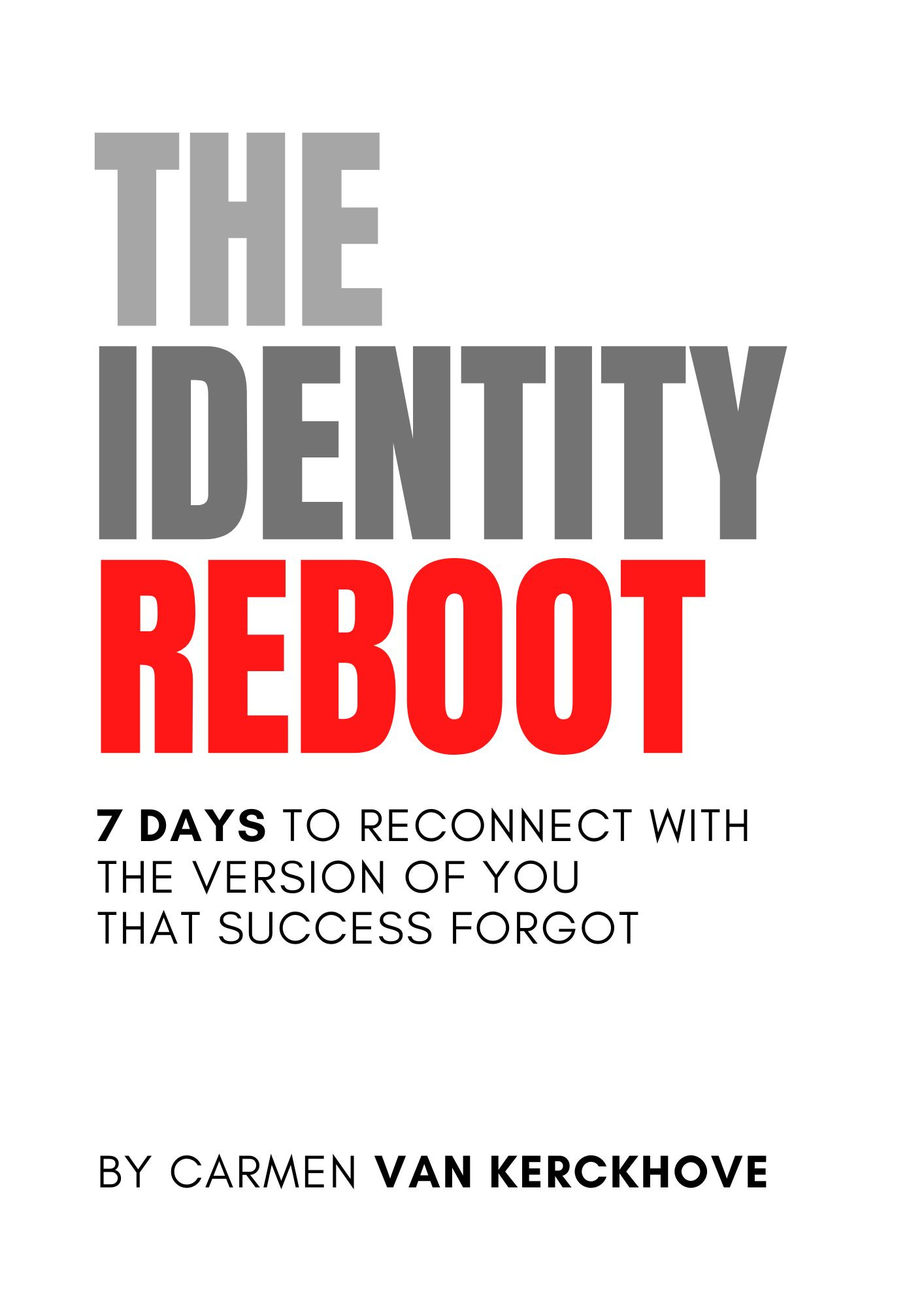
If your sense of self has gotten tangled up in roles, titles, accomplishments—or the pressure to stay impressive—this guide is for you.
This is your reset.
It’s a 7-day PDF experience designed to strip away everything you’ve outgrown, so you can reconnect with what’s real, true, and still yours.
Inside, you’ll:
Uncover who you are beyond the resume, the job title, or the public performance
Identify which parts of your identity feel authentic—and which feel like armor
Rebuild a vision of yourself that isn’t based on productivity, approval, or prestige
This isn’t about starting from scratch. It’s about remembering who you were before the world told you who to be.
If you’ve ever seen yourself in my writing, this is your next step:
And if now’s not the right time?
I’m still glad you’re here.
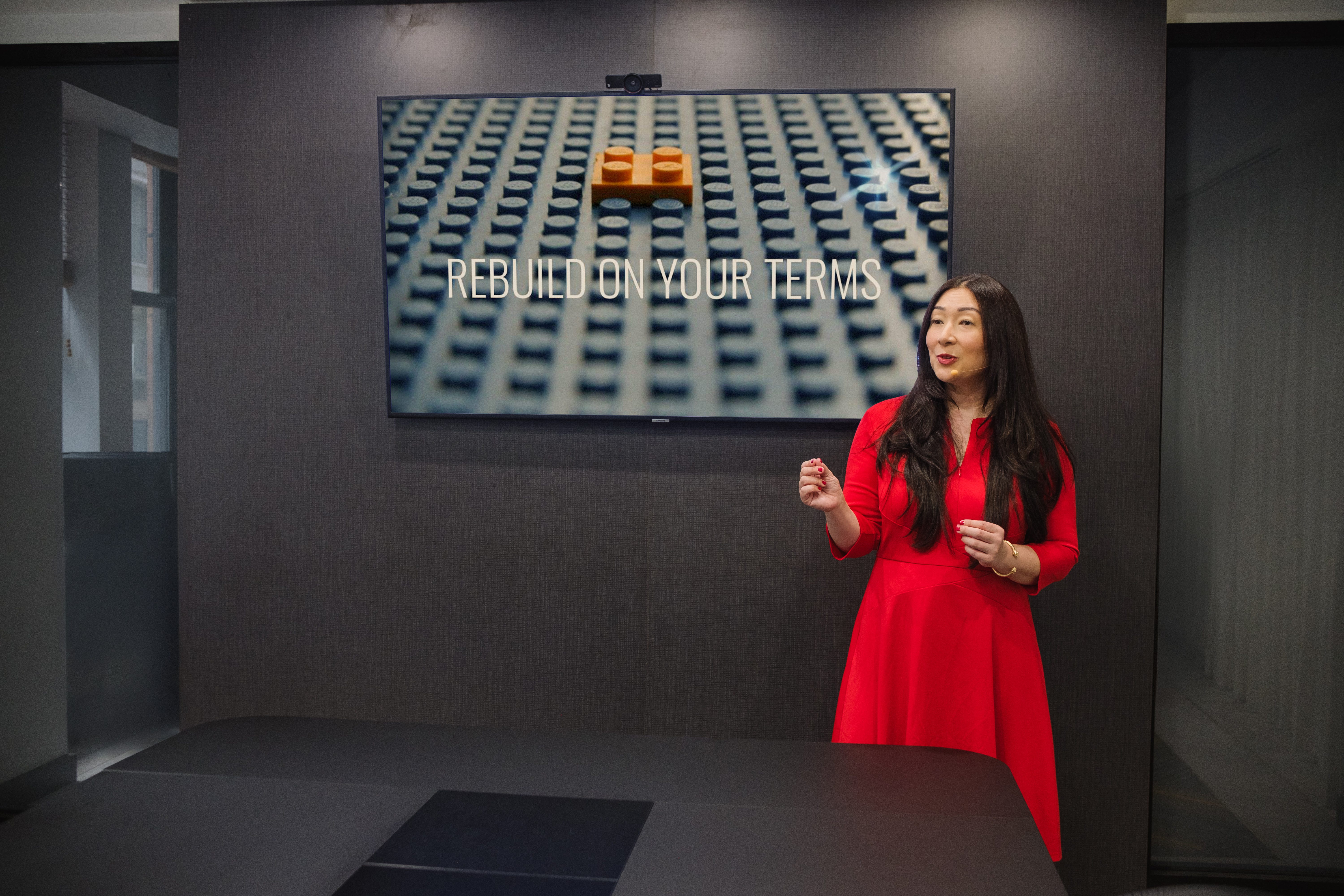
Carmen Van Kerckhove is an author and keynote speaker whose work explores how technology, social class, and cultural change are reshaping ambition, identity, and the future of work. Her upcoming book, The Slingshot Effect (Crown Currency), shows why pulling back isn’t a setback—it’s how every breakthrough begins.
Based in New York City, Carmen speaks at keynotes, conferences, leadership summits, and company retreats. Explore her signature talks here.
→ For speaking inquiries, contact info@topflightfamilymedia.com.
No posts
Comments
Nothing yet. Say the first thing.
Sign in to join the conversation.