
I was lying in bed, half-reading emails on my phone, when one stopped me: a luxury Maldives resort had just debuted a new collection of family-sized overwater villas. Four bedrooms, suspended above turquoise water. The kind of place I’d bookmarked over and over again, always telling myself: someday.
I’d been a luxury travel content creator for four years already—two of those full-time. But landing a partnership with a resort this luxe still felt out of reach. One of those “maybe in five years” goals. But something felt different that day. Instead of shrinking and filing it away in the usual someday folder, I thought: what if I just asked?
Maybe it was because it was 2020 and my travel-loving family had been grounded for months. Maybe I was stir-crazy. Or maybe I was just tired of playing small.
I fired off an email to their PR agency, fully expecting it to disappear into the void.
My jaw dropped when they replied almost instantly: How soon can you come?
They were eager to work with us. They couldn’t pay, but accommodations would be covered, meals included, activities arranged.
Oh, and one more thing: we’d need to pay our own airfare.
I could already hear the usual chorus of influencer advice:
“They’re not paying you? Absolutely not.”
“If they won’t comp every expense, walk away.”
But I couldn’t stop thinking about those villas. This was a bucket list trip I’d gladly pay for myself—eventually. It would’ve taken years to save up for something like this. Why not go now, with almost everything covered?
So we went.
That single decision—the one where I technically “worked for free”—changed everything.
The first TikTok we posted got 17 million views. We gained half a million followers on the app almost overnight. And the content from that trip became the launchpad for 21 Resorts in 2021—the series that took our business from solid to stratospheric.
I get why so many influencers pass on unpaid work. After all, no one wants to feel taken advantage of. But that trip to the Maldives unlocked more for me than any one-off check ever could.
It proved I could create viral content—on a new platform most travel brands were still afraid of. It showed I could deliver for ultra-luxury properties, which opened the door to higher-end partners. It led to a Travel + Leisure feature. Then Good Morning America. And from there, a whole new tier of paid brand deals.
And none of it would’ve happened if I’d walked away over airfare.
That trip wasn’t charity. It was leverage. A calculated bet on what I knew could come next.
So the real question isn’t “Should you ever work for free?”
It’s “What could this lead to—and are you willing to find out?”
I came up during the golden age of media industry exploitation—trust me, I’ve lived it. All through college, I juggled paid campus jobs with a string of unpaid publishing internships—most of which would be flat-out illegal today.
I remember how thrilled I was to land one at Paper magazine. I imagined Kim Hastreiter or Mickey Boardman pulling me aside to whisper career wisdom between fashion shoots.
Instead, the staff turned me into an unpaid messenger, hand-delivering advertising invoices around the East Village to stores like Kim’s Video and Metropolis Vintage.
By day three, my feet were so blistered I could barely walk. But what made me quit wasn’t just the pain—it was talking to other interns who’d been there six months and were still doing the same thing. No mentorship. No skill-building. No path forward.
It was never going to become anything more than free labor. So I left.
Years after Paper, I did unpaid work again. But this time, I did it on my own terms.
While working full-time—as an office manager, then an executive assistant—I launched a blog called Racialicious, exploring race and pop culture. Nights and weekends, completely unpaid.
But this wasn’t like Paper. I owned every word. I was building expertise in something I cared about. And I could clearly see how it connected to the career I was trying to build—even if I didn’t know the destination yet.
That work led to national media appearances, speaking gigs, and consulting work with Fortune 500 companies.
The difference wasn’t the paycheck. It was who the work was really for.
A few weeks ago, I interviewed Amy Herman for my upcoming book The Slingshot Effect—a guide to how pulling back in your career can be the most powerful way to launch forward. Amy’s story is a masterclass in why doing unpaid work can be the most strategic investment in your future.
On paper, she had everything: a law degree from a top school, a prestigious corporate litigation job that most people would consider a pinnacle of success. The problem? She hated every single minute of it.
While trapped in that corporate law role, she started volunteering as a docent at Princeton University, leading tours of its art collection. This wasn’t a side hustle or a resume enhancement. Art had always been her true passion—a current running beneath her seemingly linear career path.
Throughout college, Amy had been voracious in studying art history, filling her schedule with every art class available. Her passion predated her law degree, a quiet undercurrent she had never fully explored.
She gave tours. Studied collections. Invested herself completely in work that generated zero immediate financial return—the kind of move that would make most career advisors shake their heads.
When a legal position opened at the Brooklyn Museum, something clicked. Amy’s art history background—the passion she’d buried beneath years of corporate law—suddenly became her most valuable asset. Her credentials weren’t just a line on a resume. They were a perfect convergence of her hidden talents and the museum’s precise needs. Just like that, her legal expertise and art passion became the bridge between two seemingly disparate worlds.
But her next move would test everyone’s understanding of a “smart” career path. She took an assistant role at the Frick Collection—a position that looked like a professional step down. Her father couldn’t understand. “How do you go from being a lawyer to… someone’s secretary?” he asked, genuinely puzzled.
“I just had a good gut feeling,” Amy would say.
It wasn’t a master plan. It was a moment of trusting herself when the path forward wasn’t clear. The Slingshot Effect isn’t about knowing exactly where you’ll land. It’s about being willing to pull back, to create space for something unexpected to emerge.
Her mentor Charles Ryskamp saw something others missed. He sent her back to graduate school and introduced her to the right people in the art world—connections with curators, patrons, and collectors who would shape her future.
Eventually, he made her head of education at the Frick Collection—a move that would reshape her entire career in ways no one could have predicted.
Today, Amy runs a global training business that defies traditional career categories. She teaches perception and critical observation through art to an unexpected clientele: Navy SEALs, trauma nurses, homicide detectives. She’s also the author of three books—including a New York Times bestseller—bringing her insights to an even wider audience.
But here’s the thing: None of this would have happened if she hadn’t been willing to work for free. Those unpaid art tours were investments. Not in money, but in possibility. She was building connections, gaining expertise, creating a path that didn’t exist before she walked it.
The most expensive mistake you can make in your career isn’t working for free. It’s never taking the risk to work for free when the right opportunity presents itself. Amy has built something extraordinary. And it all started with a step that made no sense to anyone but her.
So how do you know when working for free is strategic versus when you’re just being exploited?
After reflecting on my own experiences and those of other professionals, I developed a checklist. These aren’t rigid rules—think of them as gut checks to help you tell the difference.
If you walk away tomorrow, what do you take with you?
✅ What this looks like:
I owned all the Maldives content completely. Could use it anywhere, anytime.
At Racialicious, every word, every connection, every piece of credibility was mine.
The knowledge, network, and expertise Amy developed volunteering as a docent at Princeton belonged to her, not the university.
❌ What exploitation looks like:
Delivering invoices for Paper while creating and owning nothing.
Producing content that a brand owns exclusively without giving you any usage rights.
Building someone else’s platform with no equity or lasting value to you.
The test: If the answer is “nothing,” that’s not working for free—that’s just free labor.
What are you learning that you’ll use again? Who are you meeting who could open doors later?
✅ What this looks like:
My Maldives trip taught me how to create viral resort content—which I then applied to dozens of other properties.
Racialicious taught me how to translate complex ideas for general audiences—a skill I’ve used in every media appearance since.
Amy’s docent work proved she could bridge art and non-art worlds—the foundation for her entire business.
❌ What exploitation looks like:
Learning to deliver invoices all over Manhattan taught me nothing transferable.
Work that only matters in that specific context, for that specific company.
The test: If it’s just “I did this specific task for this specific organization,” you’re not building anything that follows you.
Can you complete this sentence: “This unpaid work helps me get closer to _________”?
✅ What this looks like:
Me with Maldives: “This fits my vision of showing families they can travel in comfort and style, even after they have kids.”
Me with Racialicious: “This connects my interest in culture and social issues with my communication skills.”
Amy with Princeton: “This lets me stay connected to art while working in law.”
❌ What exploitation looks like:
“It’ll be good experience” (what kind?)
“It’ll look good on my resume” (for what job? Why?)
Vague promises with no clear connection to your trajectory.
The test: If you can’t draw a clear line from this work to where you’re trying to go, reconsider.
Remove the “career benefits” entirely. Would you still choose this?
✅ What this looks like:
The Maldives was a bucket list trip. I would have paid full price to do it eventually. Getting most of it covered was a bonus.
I was already obsessed with the intersection of race and pop culture. Racialicious just gave structure to what I already loved discussing.
Amy loved art and would have spent time in museums regardless. Volunteering just formalized it.
❌ What exploitation looks like:
I had zero interest in being a messenger. I was doing it at Paper purely for the name on my resume.
Forcing yourself to do something you hate in hopes of a payoff.
The test: If you’re only doing it because you think you “should” for your career, be very careful.
This is the hardest one, because privilege and access matter here.
The reality: Not everyone can afford to “work for free,” even strategically. The ability to take unpaid opportunities often requires resources—time, money, stability—that not everyone has. That’s a structural problem, and it’s real.
✅ What this looks like:
I could afford the Maldives airfare without financial hardship because I’d been setting aside money from the last two years of full-time influencer work.
I could work on Racialicious at night because I’d stepped off the corporate track and into a stable, undemanding day job—on purpose. That gave me the headspace to build something else.
Amy could volunteer because she had income from her legal work.
❌ What exploitation looks like:
Unpaid work that puts you in financial jeopardy.
Opportunities that prevent you from meeting basic needs.
Situations where the “cost” isn’t sustainable.
The test: Will this unpaid work compromise your ability to pay rent, buy food, or handle an emergency? If yes, you can’t afford it right now. And that’s okay. That’s not a failure of vision—it just means the timing isn’t right yet. You can still come back to it when your foundation is stronger.
Do you know what you’re signing up for?
✅ What this looks like:
Amy’s Princeton volunteer work had defined tour times and responsibilities.
My Maldives trip had a defined set of content deliverables. I wasn’t committing to ongoing unpaid content.
Racialicious was my choice—I could scale up or down based on my capacity.
❌ What exploitation looks like:
“Just this one thing” that keeps becoming “just one more thing.”
Open-ended commitments with no clear boundaries.
Situations where saying no becomes harder over time.
The test: If the scope keeps expanding or there’s no defined end, you’re being exploited.
Here’s what I’ve seen: The people who only move when there’s money on the table often stay stuck. Not because they’re lazy, but because they’re still operating by an old playbook—one that assumes clear ladders, predictable timelines, and steady paychecks at every rung.
But that playbook is being shredded in real time.
AI is swallowing entry-level jobs that used to be your training ground. Apprenticeships, assistantships, starter roles were the places where you used to learn by doing. Now, those on-ramps are vanishing. And as the traditional roadways into careers erode, more and more of us will have to learn how to build our own paths—how to make the job instead of applying for it.
That used to be an outlier’s move—something only artists and creatives did. Now, it’s becoming the norm across industries.
I’ve seen junior developers launching open-source projects that become their calling card, UX designers building unsolicited redesigns for dream apps, and career switchers using unpaid side projects to demonstrate skills in entirely new fields. From tech to healthcare, from marketing to engineering, the ability to create before being asked is becoming a universal career strategy. The traditional entry points are vanishing, replaced by a new model where your most powerful credential is what you’ve already built.
And here’s the uncomfortable truth: when you’re carving out something new—breaking into a different industry, shifting functions, or launching work that didn’t exist before—there usually isn’t a cushy paycheck at the start. It’s trial and error. It’s marketing yourself before anyone asks. It’s showing what you can do before anyone’s willing to pay you to do it.
That’s not exploitation. It’s choosing to create your own momentum.
And the faster you learn the difference, the more power you have.
Eight months ago, aspiring filmmakers Malik and Jabari Williams heard about the upcoming A$AP Rocky x Puma collection. While many creatives would just shrug and scroll past the announcement, they turned an idea into action. They picked up a camera and created something from nothing—a spec commercial made with a miniscule budget and pure conviction.
When Rocky saw the film online, everything changed. He didn’t just see a commercial. He saw potential. Not only did he repost the video, causing it to go viral, but he personally selected the twins to model in the official Puma campaign. But Rocky offered more than a modeling gig—he gave them a chance to direct their own film for the collection.
Suddenly, they were bringing their own director of photography to set. Casting their nephews, best friends, even their mom. Working with a professional budget, all because of a passion project they created on a whim.
Their original spec film now screens at Dover Street Market in Paris—a fashion insider’s holy ground. The official collection’s content has been viewed millions of times. What started as an unpaid, speculative piece of work became the launchpad for their entire career.
This is what happens when you refuse to wait for permission. When you create before you’re asked. When you transform what looks like a risk into your greatest opportunity.
Success doesn’t find you. You create it.
There’s no paywall on any of my writing. Paid subscribers aren’t paying for access—they’re investing in work that resonates.
As a thank-you, you’ll receive a special gift:
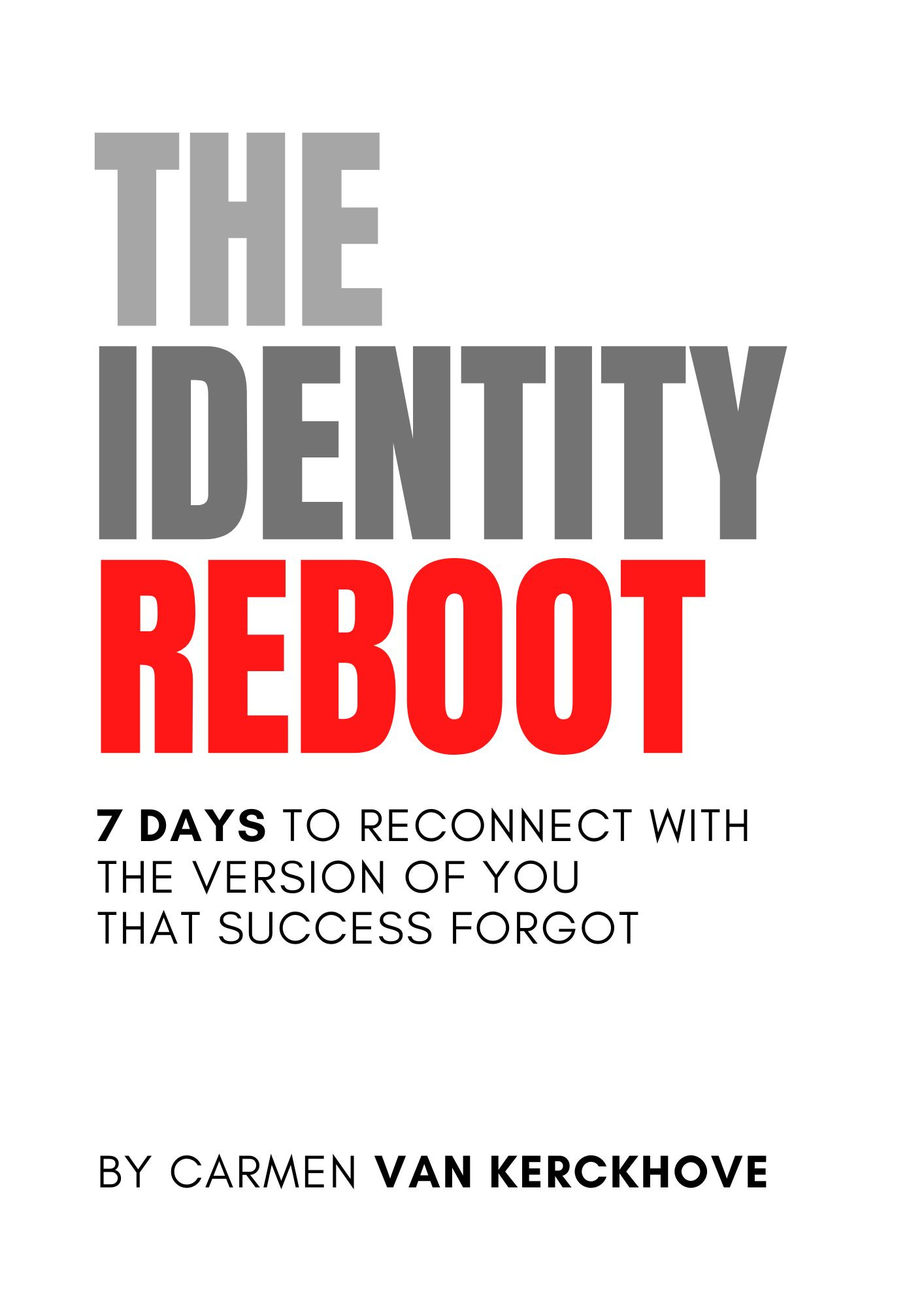
If your sense of self has gotten tangled up in roles, titles, accomplishments—or the pressure to stay impressive—this guide is for you.
This is your reset.
It’s a 7-day PDF experience designed to strip away everything you’ve outgrown, so you can reconnect with what’s real, true, and still yours.
Inside, you’ll:
Uncover who you are beyond the resume, the job title, or the public performance
Identify which parts of your identity feel authentic—and which feel like armor
Rebuild a vision of yourself that isn’t based on productivity, approval, or prestige
This isn’t about starting from scratch. It’s about remembering who you were before the world told you who to be.
If you’ve ever seen yourself in my writing, this is your next step:
And if now’s not the right time?
I’m still glad you’re here.
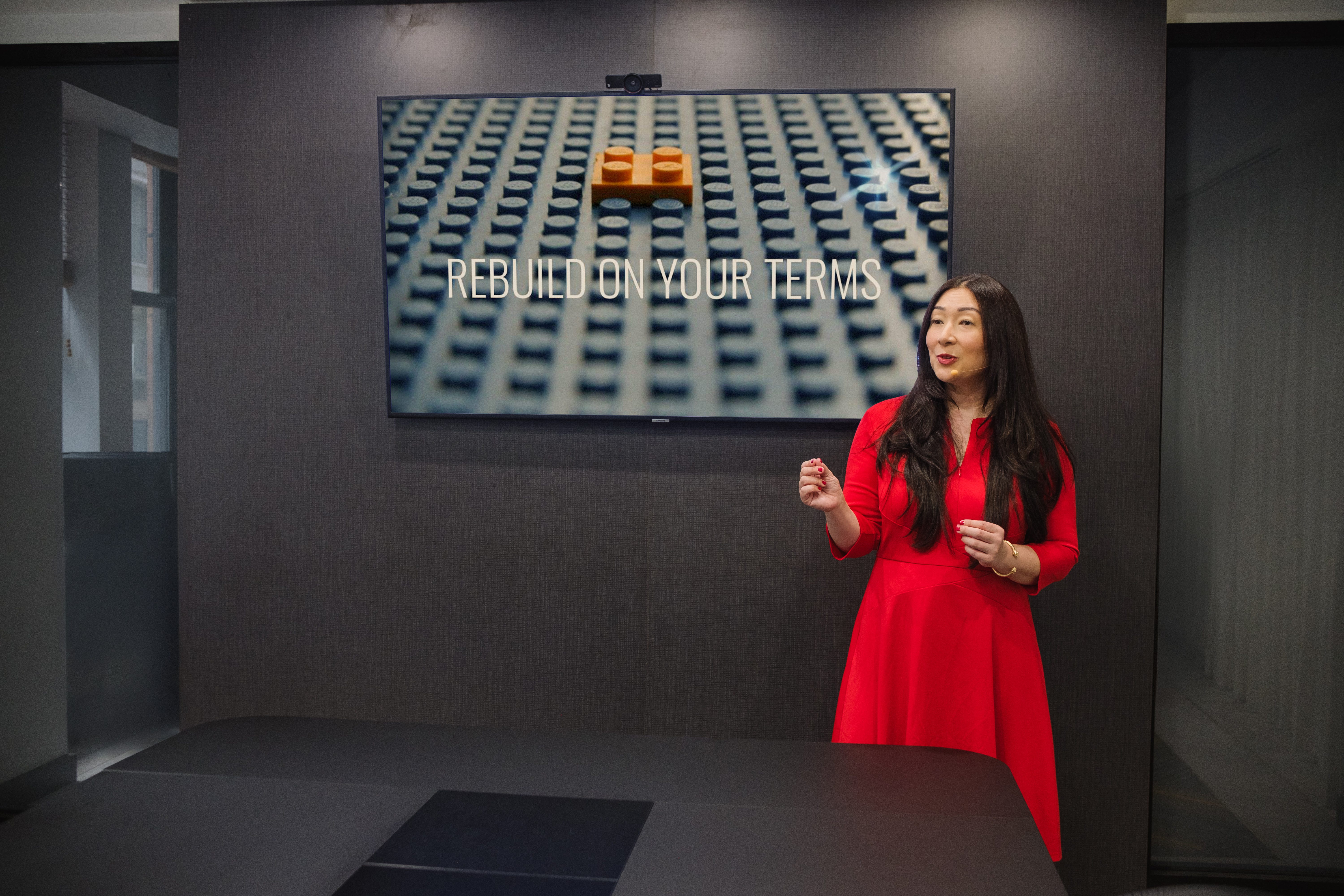
Carmen Van Kerckhove is an author and keynote speaker whose work explores how technology, social class, and cultural change are reshaping ambition, identity, and the future of work. Her upcoming book, The Slingshot Effect (Crown Currency), shows why pulling back isn’t a setback—it’s how every breakthrough begins.
Based in New York City, Carmen speaks at keynotes, conferences, leadership summits, and company retreats. Explore her signature talks here.
→ For speaking inquiries, contact info@topflightfamilymedia.com.
No posts
Comments
Nothing yet. Say the first thing.
Sign in to join the conversation.