
You go to the nursery or hardware store and there is a wall of fertilizer bags in every color, covered in labels, promising better plant growth. Yellowing leaves? Stunted growth? Compacted soil? Poor fruit set? Pest-ridden? My answer is always going to be compost. Full disclosure: I use two store-bought fertilizers in my garden, an organic citrus and an organic blueberry formula, both for crops I grow in pots. That’s it. Everything else, gets compost and nothing else.
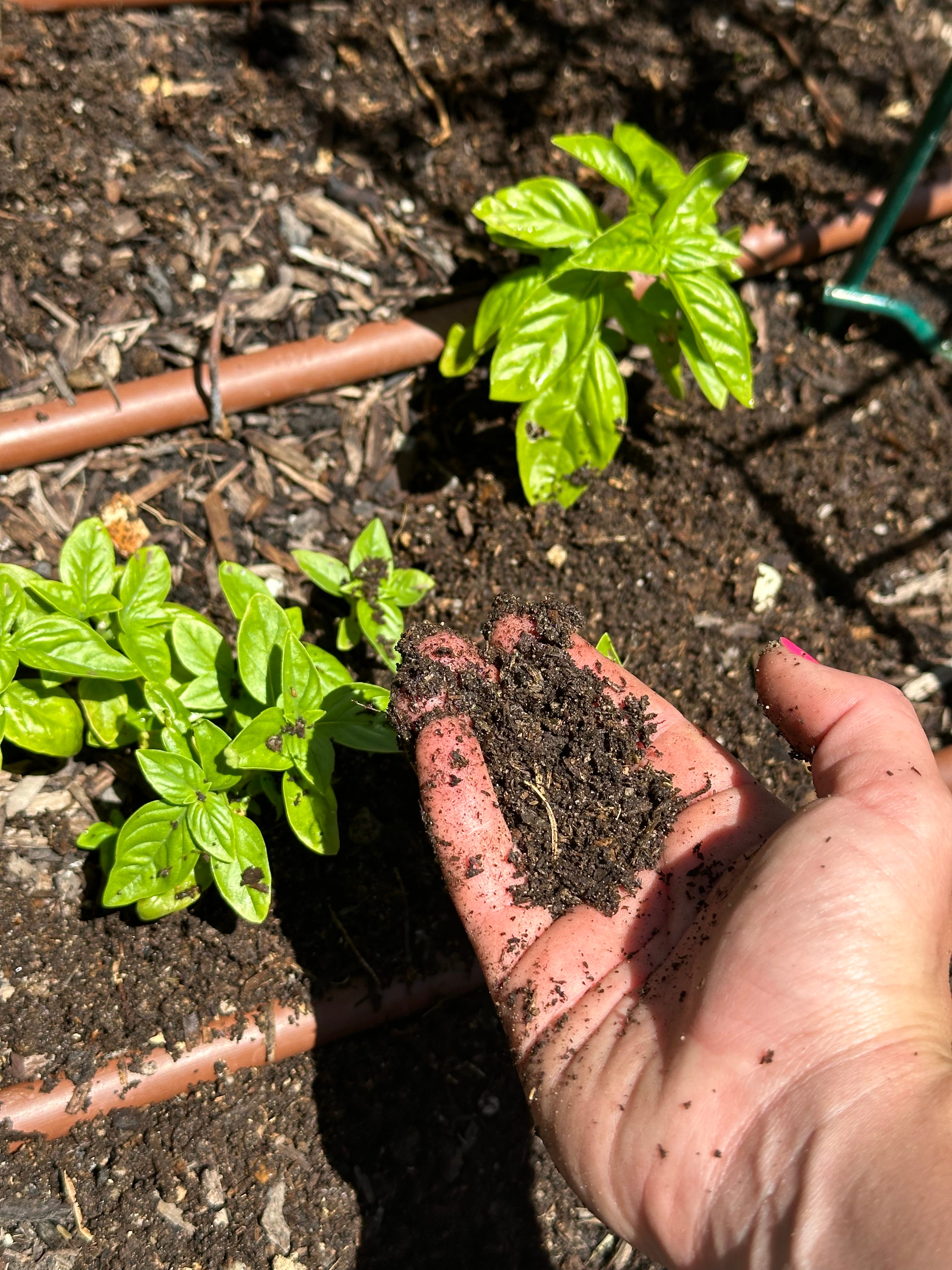
Compost is just organic matter that has broken down. Food scraps, leaves, chicken bedding, spent plants, all of it collapses into dark, crumbly, earthy compost. When you reach your hand in a bed that’s been amended with compost, it feels different. Good, healthy soil is airy, dark, smells earthy. It can clump a little together when you squeeze it between your hands.
Here is the distinction that I want to make today: fertilizer feeds the plant BUT compost feeds the soil that feeds the plant. You can keep buying fertilizer in a bag every eight weeks forever, or you can build soil that makes its own. If you start today, you could have finished compost right as your fall garden is hitting its stride:
What do I mean exactly when I say compost makes the soil better? Compost helps with:
Water retention. I find myself watering my soil less after it is amended with compost.
Soil drainage. Compost helps soil that dries out too fast and soil that is water logged.
Nutrients. Compost releases nutrients slowly versus the binge of a synthetic fertilizer. With compost, plants look healthy from start to finish unlike with fertilizer where they undulate between sickly and verdant.
Disease and pests. Compost supports the overall composition of your soil and makes your plants more resilient. It is not a pesticide, rather an immunity boost for your garden.
Another big reason I love composting is that it keeps my garden, and environmental footprint, a closed loop system. I harvest vegetables, fruits, and herbs from my garden. I save the scraps. I have chickens and I save their spent bedding. I compost it all and it goes back into my raised beds that grow more vegetables, fruits, and herbs. It gives me satisfaction that it all stays within my own little sphere. You can’t put a price on that!
The rest of today’s post is for paid subscribers. I distill over ten years of hands-on gardening experience into a weekly newsletter chock-full of no-nonsense advice. I want you to be equipped to garden better. No gimmicks, no tricks. I wasted a lot of time at the beginning of my journey and I don’t want you to do that. Today’s post covers the basics of composting, troubleshooting common problems, and picking a system that fits your space and your patience (I provide 11 different ways you can compost). Paid subscribers have access to the full archive of posts.
Comments
Nothing yet. Say the first thing.
Sign in to join the conversation.