
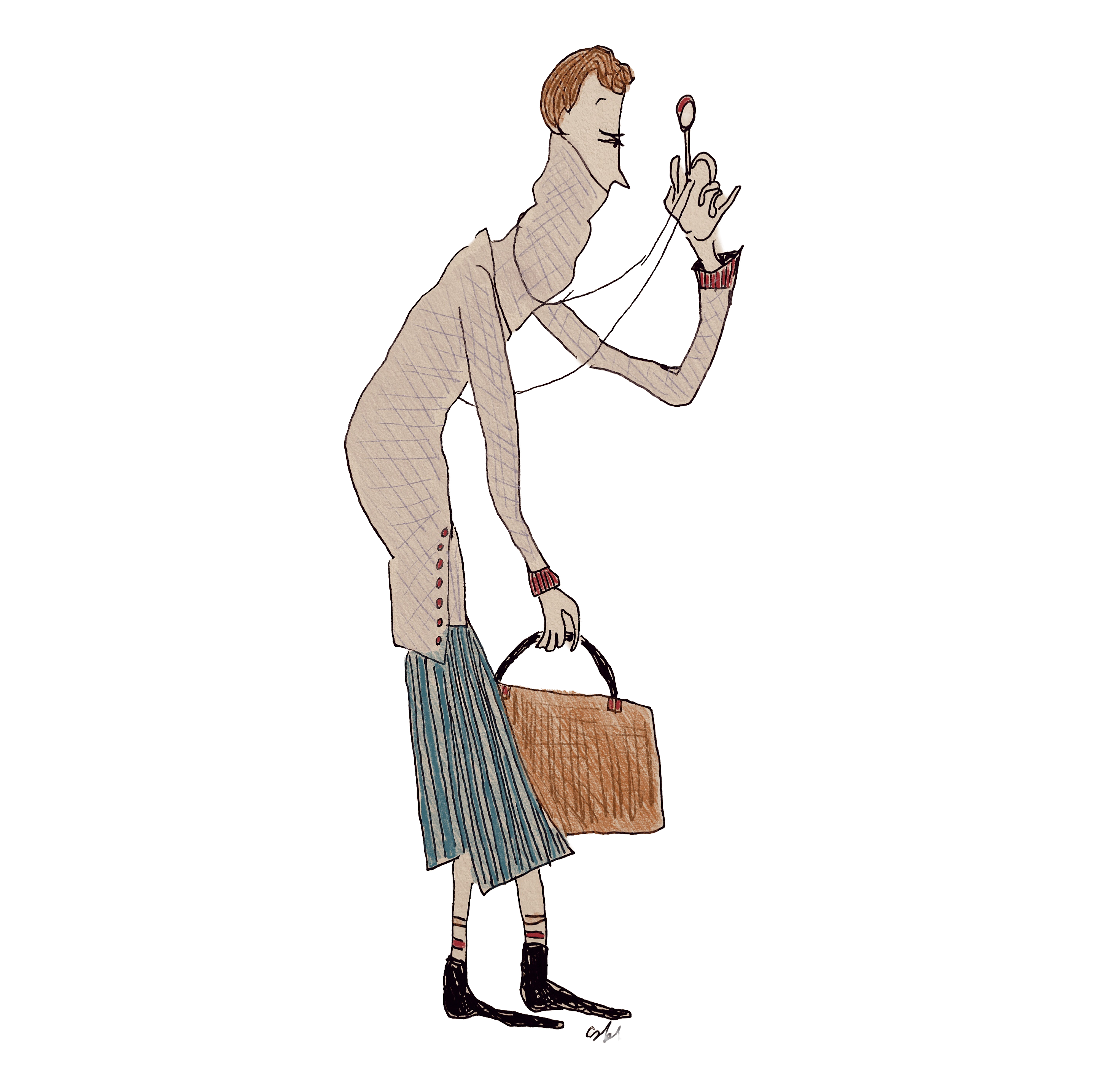
I went into my Notes app the other day looking for a specific word.
I knew I’d saved it. Something I’d heard or read and liked enough to stop and type in. I scrolled. And scrolled. Past a four item grocery list. Past a name - “Rupert??” - typed at what I can only assume was 2am, no context, no memory of who Rupert is or was. Past a note that just said “Burgundy,” no explanation - could be a color, a wine, a duke, a dog I met once. I genuinely cannot tell you. Past a dozen half-sentences that were clearly the start of something - a story idea, an observation. Past old and new electric, water, and gas passwords. More scrolling. And then just... stopped.
I never found the word. I found 260 other notes instead.
The Notes app is a perfect capture device and a terrible library - built for the moment you have the thought, not the moment you go looking for one. Turns out that’s a real problem. I’d fallen down a rabbit hole of artist studio tours right before all this, the kind where someone walks you through their space and shows you how their brain is organized in physical form. In one, there was a shelf of notebooks - not one journal, several, each dedicated to something specific. The person pulled one out and flipped through it looking for an idea the way you’d flip through a cookbook deciding what to make for dinner. That’s the part that stuck. You don’t land on things by accident on a phone. You search - and searching is fundamentally different from browsing. The same reason flipping through an art book does something a Pinterest scroll doesn’t, even when the images are technically the same.
Now, I have a lot of notebooks. It’s one of the perks of being a professional illustrator: people gift you sketchbooks, beautiful blank journals, the occasional museum-gift-shop-“I saw this and thought of you”-notebook. And of course, because yes, I do really love them - I usually buy at least one when I travel. But I’ve become extremely particular about which ones I’ll actually use…the paper has to feel a certain way, the size has to be right for the pocket or the bag or the nightstand - and a not-insignificant number of beautiful notebooks have sat untouched for years because they didn’t pass that test.
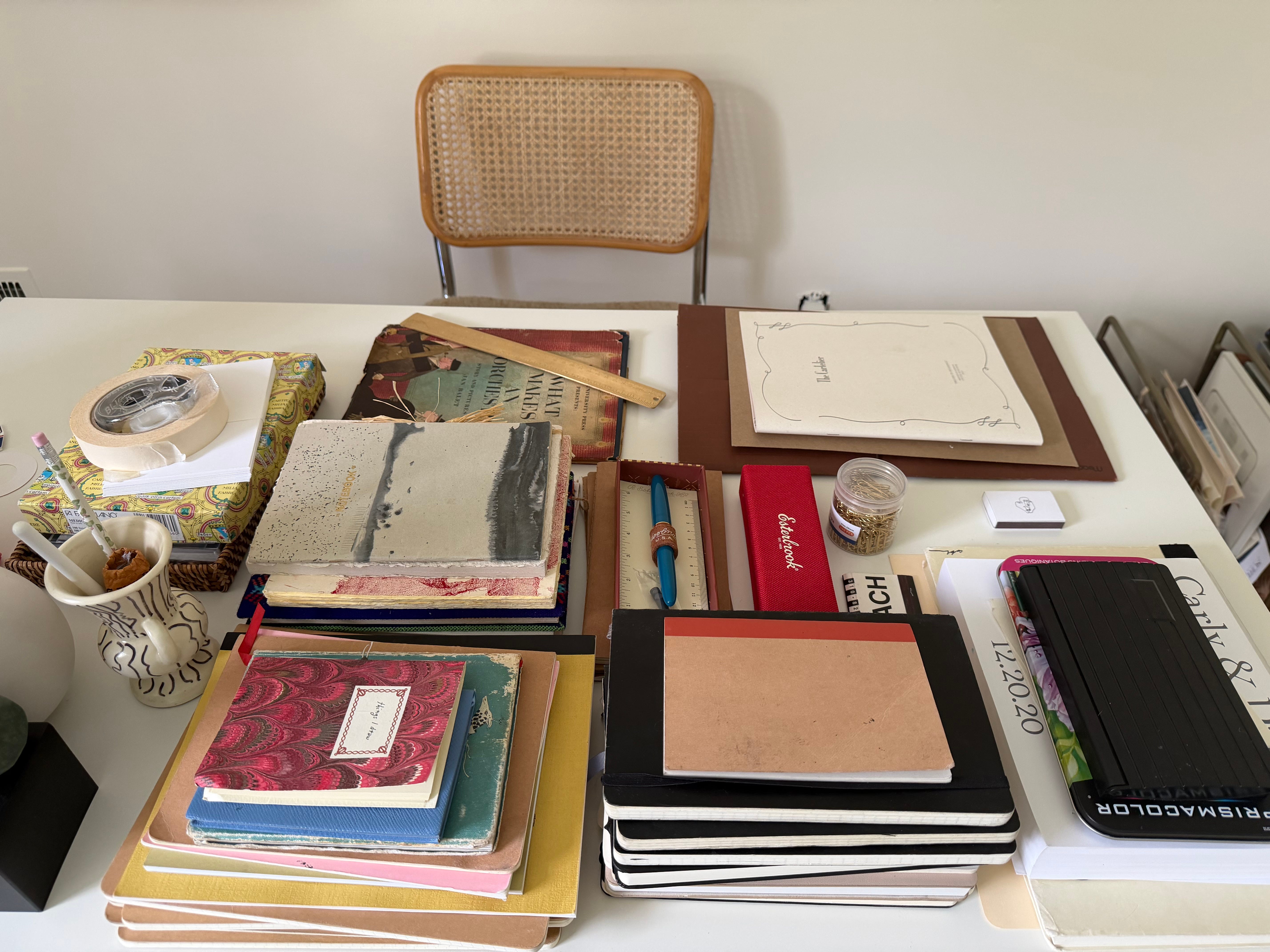
So the actual problem was never supply. It was that I had no system for deciding what went where, so everything defaulted to my phone.
Naturally, I did what I always do when I like an idea: I overbuilt it. Six notebooks, each with its own name and its own very specific job. A place for words. A place for story ideas. A place for the things my kids say. A place for cultural homework. A place for observations. A catchall for everything that didn’t have a home yet. It was a beautiful idea on paper, but pretty quickly, I realized it wasn’t going to stick.
I’ve noticed this has become a pattern for me, but rather than treat it as a failure, I’ve started treating it as part of the practice: I set out to build one very specific thing with very specific rules, and it morphs into something I couldn’t quite anticipate. What I actually figured out is that it was never about the six categories. It’s about pen to paper. Something happens when I write or draw that doesn’t happen when I type on a phone or computer. Now, I’m not saying I’m trying to go full analog… I need the phone to capture any 2am “epiphany.” Then, later, I put it down on paper and see what else comes of it…if anything.
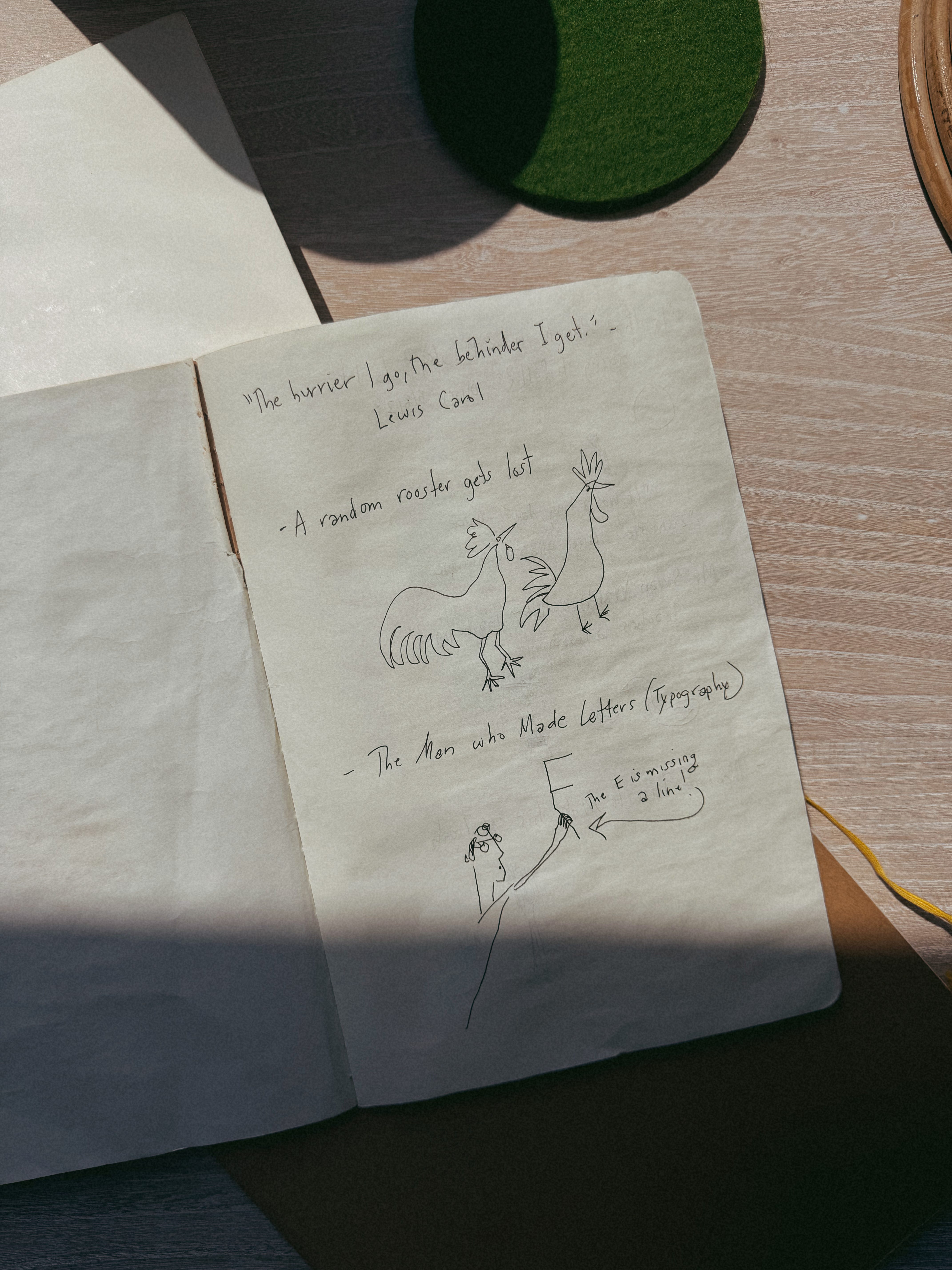
As it turns out, I’d already lived this exact lesson once before, I just hadn’t connected the two. Close to when I first launched this Substack, I started a little exercise called A Word and a Thing - I laid out some rules, or guidelines, really, for how it was supposed to work. But the more I actually did it, week after week, the more it stopped feeling like a traditional artist/writing prompt and started feeling like something else entirely: a creative practice. The rules were never really the point.
Once I stopped trying to manage the notebooks so precisely, what I was doing was closer to cleaning out a junk drawer. Every few months you pull everything out, look at what’s inside, and decide what’s worth keeping. So, I sat down with the Notes app and a notebook and just started going through it - writing out, by hand, the things worth writing out. Not filing them into six labeled homes. Just getting them off the screen and onto a page. Some of them turned into more than what they started as. Not because of a system- just because I was finally looking long enough.
A word, and a thing. I’d been running this exercise for months before I noticed I’d been doing the same thing with my own notes the whole time: pulling something out of the fog, putting a pen to it, seeing what it turns into. Not a bit I do once a week. Just how I process anything.
Which brings me to what’s next. My book is done- soon to be out in the world. I’m settled (enough) into Michigan. And I’ve been circling what comes after both of those things - not a five-year plan, more like: what do I actually want to be doing on a regular basis. The one thing I landed on with real clarity is that I want to keep showing you how my creative brain works. Some of that will be process. Some of it will just be drawings. Sundays, are most likely where you’ll find A Word and a Thing, once or twice a month, alongside From the Desk Of… my illustrated interview series exploring the desks and minds of other creatives I admire.
Which is exactly what sent me down this notebook rabbit hole in the first place: wanting to see how someone else's mind was organized, then immediately reorganizing my own. As for the notebooks, the six-notebook system didn't last. I gave it a few weeks, noticed three sat untouched, and consolidated. What's left, for now, is a sketchbook, a words-and-phrases notebook, and an unlined journal - sketching and writing on the same page, whichever comes first. Basically what this column has been the whole time.
So keep an eye out for the official return of A Word and a Thing on Sunday mornings, starting soon. And, as always, thank you for being here.
Curiously Yours,
Carly
No posts
Comments
Nothing yet. Say the first thing.
Sign in to join the conversation.