
The label we choose
We often get asked how we home educate - what a day looks like, if we follow a curriculum, how much is costs and more. It reminds me how little information is out there and how few examples there are to follow unless we find ourselves already within a community making these choices.
The path we choose is something often referred to as ‘unschooling’ and sometimes ‘self-directed education’. The label I choose to share depends on my audience.
(I can still remember the judgement I felt when a friend told me she was unschooling her boys many years ago before I’d had a child myself. ‘How will they learn? They will fall behind! They will be missing out!’ So I’m selective about who and what I say about our educational choices.)
If I’m talking to fellow home educators I share that we’re unschooling as this allows me to find my people, those who share an ethos - unschooling is often associated with a more nature based, natural and technology lite approach to childhood. Whereas if I’m talking to a well meaning stranger or someone I don’t know well I’ll say we’re choosing a ‘community based self-directed approach to education’.
Choosing less stimulation and more conscious socialisation
I’ve found saying that we home educate seems to lead people to believe that we’re home bound and raises concern and an image of isolation and low stimulation. Which firstly is bizarre because for millenia this is how children were raised but I get it. Modern homes and communities are not what they used to be and are more akin to domesticated animal captivity. Individual boxes with little outside space and not enough access to the stimulation of our natural human habit - community, wild food, space to roam, nature, regulated adults not having to juggle 20,000 other things - leading to disordered behaviours (zoochosis). If we’re home educating in such environments we have to work that much harder but the home is still (most of the time) a nurturing safe place for children to grow.
And don’t get me wrong sometimes home education does often mean less time spent with children than if our children went to school and the stimulation levels can be lower but in many cases home educating families choose this path for exactly these reasons.
In our case for example - yes we spend a good amount of time at home with low levels of stimulation. But I truly believe this is an antidote to our overstimulating world.
Low stimulation doesn’t mean she is under stimulated, as in neglect, it simply means a more natural form of stimulation. No constant noise of peers, no screens, no continuous commands or invitations to do activities, simply hours in the home and garden with the breeze, the trees, the birds, the neighbours and spacious time that allows her to move at her own pace, follow her interests, spend hours in states of creativity and imagination and safely explore who she is and develop her sense of self as she dips in and out of contact with me, her dad and/or her grandparents.
And in terms of socialising my mother-in-law often jokes about one of my husband’s school reports which stated ‘Josh seems to think school is a social event’ - as any child would! How confusing to arrive to a room full of children but then be told you mustn’t interact with them and must sit still, quietly and listen except in short carefully controlled and managed play breaks.
Home educated children get to spend quality time with peers. They may not be with them all day every day but many meet with the same children each week for open ended time together. They get to forge relationships often as a pack and are usually highly protective of one another.
My Substack is reader supported and it means the world. As a working home ed mama I really appreciate your support to keep this thing going. x
The cohesive pack
I recall attending a particular home ed meet up for the first time. The parents were sat chatting and/or crafting and the kids were roaming as a pack across the expansive parkland. The age range was from about four to fifteen and everyone was included. The kids who would usually be deemed nerdy or different were leading the way. They were playing with a remote controlled helicopter and it got lost across the road in a farmer’s field. The kids worked together cohesively to come up with a plan to retrieve it. They knew not to run into the road, they decided they’d have to ask the farmer’s permission, this meant finding the farmer’s house but first asking permission from their parents. The parents let them follow this project and they were off. Older children safely helping smaller children across the road, knocking doors, asking around and eventually retrieving the helicopter and returning triumphant. And how much was learned in that experience. I was highly impressed by the cohesive and inclusive nature of the group and the high level social skills demonstrated by all, even those who obviously found it more challenging - they still had their role in the unit.
This isn’t a one off. I also now run a home ed session with a long active free play aspect and it is amazing how these kids come together, bond and work together. Even those who struggle with social dynamics often find their way in and sometimes even end up leading the pack.
Home education, for us anyway, simply means that social time is social time with a whole heap of observational, incidental and experiential learning happening along the way.
Following natural rhythms
Many of my home ed mum friends share with me that their children are incredibly focused in the early mornings and late evenings and whilst quite inconvenient for many of us due to being knackered at those times, it makes home education days take shape quite naturally. The morning and evening are times for the children to deep dive into their interests and the mid section of the day can then be for spending time outside, seeing friends, attending clubs or simply getting things done around the house together.
This is our natural rhythm if we have space to follow it. In the mornings after a hot drink and a book together she is off into her own world - exploring, creating, imagining, roaming and coming up with ideas. If we stay home this can go on for hours. And even if we go out I ideally have to allow a good hour for this part of the day otherwise she’s totally dysregulated. And then when we return home the evening is often a time that she wants to sit down with her ‘activity books’ or some painting, drawing or writing. She’s naturally very focused in the evenings.
And how this makes sense! How wise children are. Of course all children are different but I’m fascinated that this is a pattern that repeats itself across many children when left to their own devices.
We get so little daylight and sun in this country (though it doesn’t feel that way at mid summer!) so to be able to maximise our time outside together feels very sensible. To spend the best bit of the day when children’s energy is often at its highest sitting down is a bit mad really when I think about it. I feel incredibly grateful that we can follow our natural rhythms and exert energy when it’s high.
In fact I think this is one of the things I love about home education the most. The ability to surrender to the rhythms of the day. We don’t have all day every day to do as we please, I’m a working mum but we have structured our time so that it suits our rhythms. For example in the summer she goes to bed late and wakes late (anything from 8-9:30am) and in the winter she’s early to bed and early to rise (anything from 5-7am). So in the summer I can’t get to the farm until 10/10:30am but I’ll work late and in the winter we’re often there before anyone else and we can chip off before dark. I’m incredibly grateful to work with people who get it and value honouring energy and rhythms, even if it’s hard to implement in reality.
Keep it simple, make it affordable
One of the main conversation points around home ed is often how expensive it is and how to manage on one income. Most families I know aren’t managing on one income. Yes there are those who do but many of us are hustling. The primary parent is usually having to work with children in tow or in the evenings and weekends and the primary earner is often having to work a lot harder. Sacrifices are made - no subscriptions, less stuff, no holidays, no take out, no restaurants, no clothes shopping. And often a lot of money stress.
Home education can also be expensive but it needn’t be. I think this comes back to expectations and pressure. Our society’s norm is for children to be in some form of organised activity from dusk to dawn but for the majority of human history children were either active participants in the home or roaming wild and free with friends. The benefits of open ended time outdoors with friends have been forgotten and we’ve been brainwashed into believing that our children should be being ‘productive’ and ‘learning’ all of the time.
How many hours?!
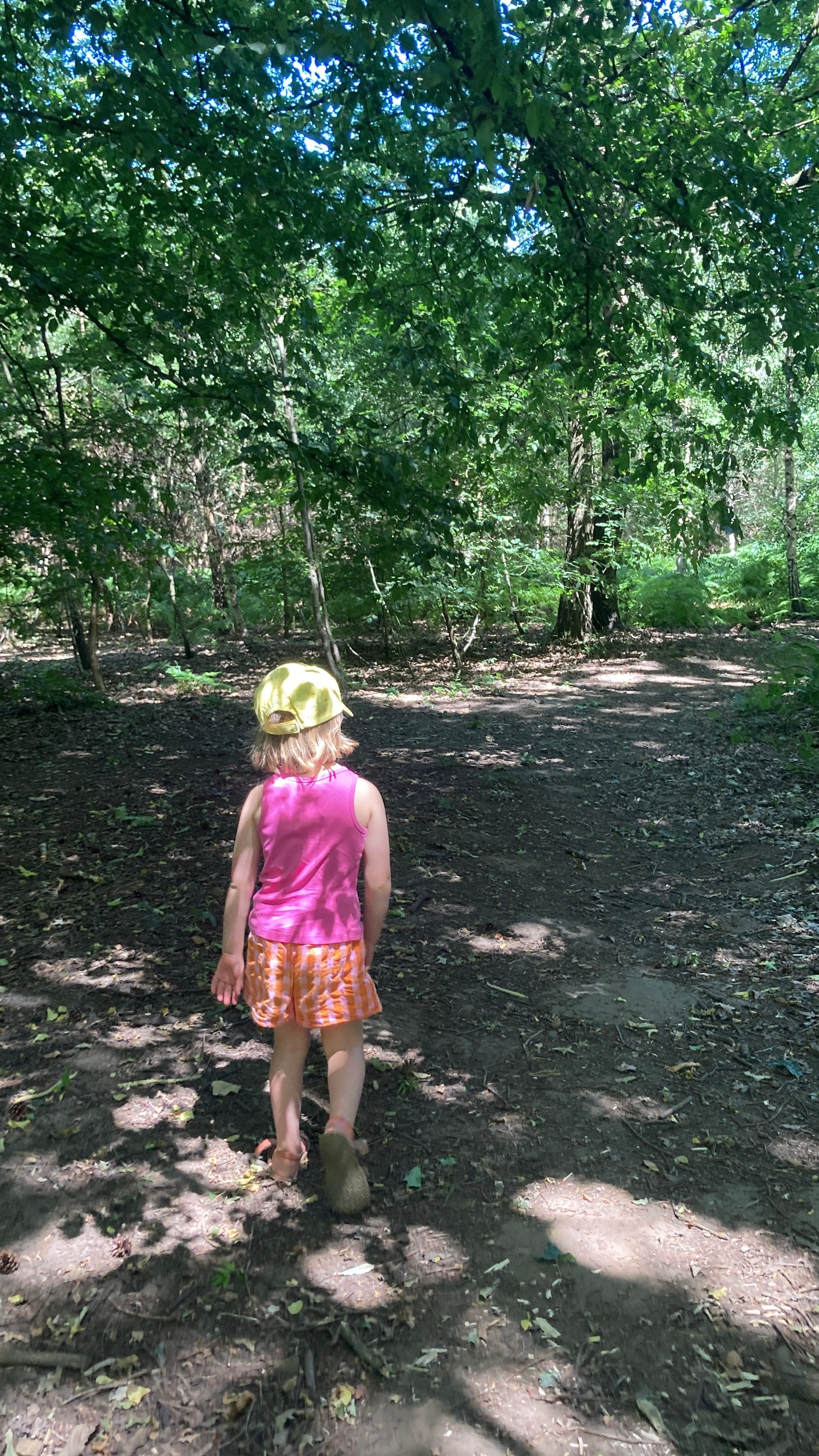
Two beautiful books which help me to stay strong when I feel these pressures are Hunt Gather Parent by Michaeleen Doucleff and Balanced and Barefoot by Angela J. Hanscom both contain a multitude of examples and scientific research around how important it is for children to be active participants in the household and roaming wild and free outdoors for hours and hours and hours and hours. Honestly hours. (Angela Hanscom states that children of all ages need a minimum of three hours free play a day outside for proper development - four to eight for the youngest. This is time spent without adult direction of any kind).
It sounds like a lot until you consider our wilder ancestry. We evolved in nature to exist in nature in community all day long. Not after school or for ten minutes in the morning but all day (and night!) long.
Modern life makes this bloody hard.
We’ve been so very lucky in this regard. Our daughter spent her first four years living on a 300-acre farm, two of those also ‘working’ on a 28-acre farm. (And yes working. She loves to tell people she works on an alpaca farm and I won’t argue with her, she’s mighty handy and helpful these days). And even though we sadly had to give that way of life up we have managed to replace it with a huge garden and easy access to community and fields (coupled with hugely increased financial pressure).
The reason many parents find the minimum of three hours impossible to meet is that there aren’t even three hours in the day in which to spend outdoors to start with and then society is structured in such a way that we are expected/must be with our children physically for this time.
But we can aim and try and aim and try I do.
How far from sensible we’ve come
And in doing so we reduce the cost of home education. Remembering that in days gone by when children weren’t at school or helping in the home they were outside with their friends, mostly unsupervised, roaming free, exploring, getting into mischief and growing up healthy and strong.
A child-free friend of mine recently made me laugh heartily when she said that she’d happily have kids if she could have them like in the old days - send them out to play all day until dinner - but these days they’d call social services on you and she was completely unwilling to parent in the modern way.
This isn’t a joke. It’s the reality of how far we’ve come from sensible.
Mothering is now utterly exhausting and depleting for the majority.
My mum was a stay-at-home mum but I didn’t expect her to be by my side constantly entertaining me and meeting my needs. She was there doing her own thing and I was there doing mine, which was mostly roaming about in an imaginary world in the garden, playing with siblings, playing vets with my teddies or looking after my animals. It would have been strange for my mum to be sitting there watching me but these days this is what seems to have become the norm.
I speak for myself when I say that this makes motherhood boring and tiring. I know this is a bit of a controversial thing to say but it’s true for me and many others I speak with too. I am totally and utterly enthralled by everything my daughter does, I gaze at her in awe for much of my day, I adore watching her do her thing… whilst I’m doing mine. Yes we come together for a book or a snack or a cuddle or the occasional bit of play but I don’t spend my days playing with her or entertaining her. I’m going old school. I’m doing housework, making food, baking, creating something, doing a bit of work, farming or planning our social lives.
So this is how we home ed.
Huge amounts of time outside, no adherence to a curriculum (which doesn’t mean not learning, in fact it means quite the opposite*), meaningful work together on the farm and in the home, quality social time with fellow home ed families and regular friends and lots of space and time to do our own thing whether that’s working, homemaking or playing.
Carly x
*I have many other posts on this particular point.
Comments
Nothing yet. Say the first thing.
Sign in to join the conversation.