
Here is another short story. This one was entered into the fiction contest at one of the Hampton Roads Writers Conferences, back when there was one. It won no prizes. I have used the name The Crimean Inn in my fiction since well before the actual Crimea entered the national consciousness, so it was a natural choice for me to make when naming this magical bar.
David Porter was drunk the first time he saw one of the bloody men. He’d been sitting alone in his booth at The Crimean Inn for a few hours, drinking one Seven and Seven after another, when he realized he was not really alone. His eyes could barely focus on the man who appeared there, wearing a blue uniform coat, with bloody rags tied around his head and over one eye. “Where’d you come from?” David asked. His voice was a barely audible slur even to himself. The man didn’t answer, probably not comprehending Porter’s misshapen words, or perhaps the glassy gaze of shock in his uncovered eye was the result of trauma that had left him speechless. Porter turned away to flag down a waitress and ask who had seated the man at his booth, but finding them all too busy, he turned back to tell the man to go away. But he was already gone.
After that, Porter did something on his own that he’d rarely done in the last few years: he decided he’d had enough to drink for one night. Usually, he would stay until closing time, but then he didn’t usually experience visual hallucinations. He found a pair of twenties in his wallet, set them on the table to cover the rest of his bill, and stumbled toward the door.
Two nights later, Porter was back in a booth at the Crimean. It was a seedy little bar on the outskirts of Richmond, Virginia. Porter sat in one of the half-dozen booths lining the left side of the narrow space. Similar booths lined the opposite wall, separated from his side by the bar itself, a long rectangle of polished maple wood and tarnished brass where more than two dozen could sit and drink. No one was seated there tonight, but it was still early.
Porter didn’t really remember how he had started this habit of spending time in bars as part of his commute home from work. The work, as a human resources manager at a major tobacco company, provided enough stress to drive anyone to drink. And the house, an empty nest where his restless wife spent her hours and his money filling the void with shopping, offered its own stresses. As time went on, his wife complained less and less about his absence, allowing him to spend more and more time drinking.
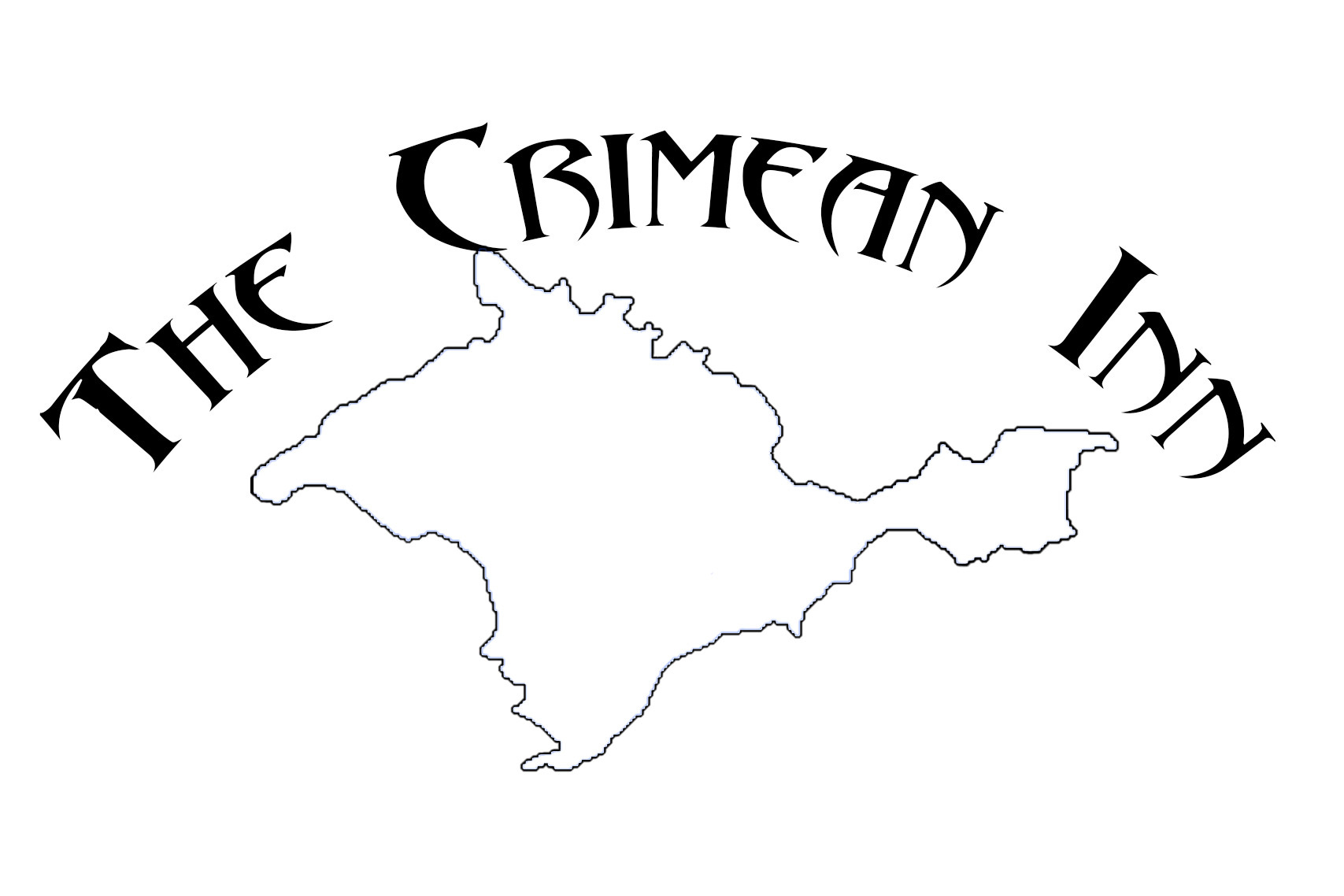
A waitress came over as he settled into his booth. She was young by his standards, mid-twenties, quite attractive. She wore too-tight faded jeans and a white T-shirt with a screen-printed line drawing of a map of the Crimean Peninsula on the front, under the words The Crimean Inn. The T-shirt was also too tight. But that was probably the point. Her nametag read ‘Gin.’ Like the drink, he guessed. A nom de guerre or whatever you might call the fake name used by a pretty waitress trying to avoid entanglements with overenthusiastic patrons. Her hair was the clincher, long auburn curls cascading around her shoulders, a touch of fire to offset the cool radiance of her emerald eyes.
“Seven and Seven?” she asked.
“Yeah,” he replied. “How did you…”
“Your usual poison, right?”
“Yes.” She made a quick note on her order pad, took it over to the bar, and brought back his drink. “Anything to eat?”
“No,” he nodded his head. “Thanks.” He wasn’t hungry enough to eat bar food.
“I’ll be around if you need anything else,” Gin said, gliding off to a group of people who had settled into the next booth over.
Porter sipped his drink and pulled his phone out. There were no texts or emails, which would have been strange enough until he realized that there was no Wi-Fi and no cell service. He almost asked about it, but then decided not to bother. The lack of access would be a good excuse for not responding to anyone who tried to contact him. He focused instead on his drink and the one that followed. After it was gone, he flagged down Gin.
“Can I get another?” He asked as she took the empty glass from the table.
“I’m sorry, we’re closing.” She smiled. It was a weak smile, like she didn’t quite believe what she was saying.
“Why?” He glanced at his watch. It read 1:30. “What the…” He’d only had two drinks and was sure he’d been there less than an hour. But his watch read 1:30. Now he was losing track of time. He shook his head. “Sorry.” He opened his wallet, dropped a twenty on the table, and rushed toward the door. There was no one else at the bar or in the booths; he was the last man out as he ran into the night.
It was too bright.
The sun was setting.
He glanced down at his watch. It read 7:30. He looked back at the bar.
It was gone.
Porter figured his confusion was the result of the alcohol, wherever he may have consumed it. An internet search would reveal that the nearest place with a similar name was called The Crimea Inn, located southwest of London. Of course, not every business would be on the internet, not even in the 21st century, but it had to be rare for Google’s powerful search engines to find no trace at all. The Crimean Inn seemed to be a figment of his imagination. But he knew he’d been somewhere. He’d seen the bloody man one night and been asked to leave by a waitress named Gin on another. So, he drove back to the bar the following evening, or at least to the empty lot where he had last seen it, now only a vacant lot overgrown with knee-high grass and weeds. He waited a few minutes, expecting perhaps that it was some kind of spectral bar that would make a nightly appearance. But he didn’t wait too long before doing what he really wanted to do, which was to go find someplace where he could have a drink.
He bounced from bar to bar for the first few nights after he lost track of the Crimean. None of the places were as comfortable, and many refused to serve him as many drinks as he wanted, citing previous experience with his behavior, incidents he hardly remembered. His wife, Belinda, had grown less tolerant of his late hours, too, as if there had been some magic in the Crimean that had protected him from his temporal responsibilities. He was no longer able to stay until closing time before heading home.
Soon enough, he adopted a new routine, figuring out which bar would serve him a few drinks here and which would serve him a few drinks there. It was not a complicated pattern to be sure, but it worked well enough for him to get sufficiently smashed regularly. That is, until he saw the man without a leg. This one, barely perched atop a barstool, also seemed to be wearing a uniform of sorts, a tattered grey coat half-soaked in blood. Porter opened his mouth, but couldn’t think of anything to say. Some strand of sobriety deep in his mind wanted to suggest that this guy was just the second of two Civil War reenactors that he’d seen in the last month, but even that seemed unlikely.
“Mr. Porter.” He turned from the one-legged man when he heard his name and saw Gin standing beside his booth. “How did you get back in here?” She asked. He did a quick look around and realized that he was indeed back in the Crimean, but he didn’t have a clue how he got there. “C’mon,” Gin said, pulling on his arm to guide him out of the booth. “It’s closing time.”
“No, it’s…” He looked down at his watch. It said 1:30. Gin was stronger than she looked and guided him up and toward the door. “Let me pay…” He fumbled for his wallet.
“It’s on the house tonight, Mr. Porter,” she explained. “If you promise me one thing.”
“What’s that?” He asked as they reached the door.
“Don’t come back.” She smiled and gently pushed him outside. He stared at the bar for a few moments, the words The Crimean Inn painted in white on the large window beside the door and in blue on the wooden sign above it. It was here. It was real. He looked down at his phone to call a cab, stumbling a few steps from the entrance as he tried to decide which one to call. He had all the local companies in his contacts, as well as the Uber and Lyft apps. He chose one at random and lifted the phone to his ear, turning for one last look at the bar.
It was gone.
The next day, David Porter engaged in the oddest behavior of his adult life; he stopped drinking. This by no means solved all his problems, especially not the one with his wife, since he was still spending a great deal of time away from home. Now, instead of sitting in a bar or a series of bars drinking for several hours in the evening, he was sitting in his car and driving around the greater Richmond area, searching for The Crimean Inn. He knew it was real. He knew he had seen it. And if he drove around long enough in a large enough area, he was sure he would find it again.
It took three weeks.
He waited outside for a while, sitting in his car and watching the building, half expecting it to disappear at any moment. After thirty minutes, he felt he had waited long enough. The focus on finding the place had distracted him from the difficulties of detox, but now that he had found the bar, all he wanted to do was get a drink.
The neon OPEN sign in the front window remained unlit, but the door was unlocked, and he entered the bar without a problem. The place was brighter than he remembered and deserted, with no patrons or staff in sight. He strolled past the bar and down to his favorite booth. “Hello,” he called. There was no answer. As he reached the booth, he saw a full glass and a napkin on the table. His favorite drink, waiting for him. He slid into the booth and looked at the glass, debating whether to drink it. He could smell the lemon/lime. Hell, he could smell the Seagram’s.
“Would you prefer something else?” Gin was at the booth, order pad in hand.
“Water,” Porter replied.
“Good choice. It’s water.” She motioned toward the glass. He looked down and lifted it. The aroma had changed. As he took a sip, he realized she was right. It was water.
“What is this place?” he asked. She tucked the pad into her apron pocket, then slid into the seat across from him.
“Somewhere you should not be, Mr. Porter. Someplace that was supposed to be a little harder to find, yet somehow you kept finding your way back.”
“I don’t understand.”
“Neither did we at first. Most people wander in and out, and we don’t pay much attention to them. Nobody becomes a regular here. But it seems you did, mostly because we didn’t notice. Eventually, all the parlor tricks that help us hide things began to wear off; you became as immune to the magic as to the alcohol. Little pieces of unseen reality began to shine through.”
“The bloody men?”
“Passengers. Individuals in imminent danger of death, harvested from historic battles or accidents to populate a future society. We travel the currents of time and space to find them and give them a second chance at life. Our latest project took us to the sites of what you call the Seven Days Battles.”
“You’re time travelers?”
“Not inaccurate. Although it tends to be a bit more complicated than that.”
“And you’re here because you’re moving people from a battle that occurred over 150 years ago into the future? You took a scenic detour through 21st-century Richmond?”
“Not exactly. Time isn’t a straight highway you can travel up and down. It’s like a river, complex, dynamic, and constantly shifting, requiring adjustments and stopovers that might seem counterintuitive to an outside observer. The power requirements for temporal displacement are massive, and there are also limits to how many people we can move and how far the human body can travel this way. Altogether, your Richmond was just a convenient stopover point.”
“And why are you explaining this to me?”
“Because you came back again, Mr. Porter. Because you’ve become tenacious in your pursuit of us. Those in charge want a resolution.”
“Those in charge?” he asked. “Who are they? Who are you?”
“They are the masters of time, space, and things beyond your capacity to comprehend. Me? I’m just a recruit. Someone harvested from a past crisis who proved useful. Successfully harvesting humans requires something of a human touch.”
“Harvesting?”
“An inelegant term. They aren’t harvested for consumption but for seed stock. The genetic foundation of Homo Sapiens 2.0. I assure you that the destination is far more pleasant for most of these people than the point of origin.”
“What about me, though? What does ‘resolution’ mean for me?”
“It means we told you a story, Mr. Porter. A true story. If you go out into the world and tell it, you won’t be believed. So, it’s probably not in your best interest to try. But now that you know the truth, you can get back to your life of alcoholism and meaningless work and just pretend you never set foot in The Crimean Inn.”
“Why would I go back to that?” He looked down, staring at the glass.
“Because it’s your life. It’s what you chose.”
“It’s what I lived, not what I wanted. Not the way it turned out.”
“Make new choices then. It’s still your life.”
“What about here? Is that a choice?”
“Here? Among us?” she smiled. “Do you want a job application, Mr. Porter?”
“A job application?”
“Paperwork is both ubiquitous and universal,” she replied. She slid out of the booth and headed toward the bar. “Just keep in mind that we can’t have staff drinking all our stock. The alcohol is for the passengers’ transition, not the staff’s.” She set a blank sheet of paper on the table, and the elements of the application form slowly appeared, covering the page.
“I don’t really think that’s going to be a problem anymore, Gin,” he said as he picked up the application.
“Good.” She smiled again. “And you can call me Virginia. Virginia Dare.”
Comments
Nothing yet. Say the first thing.
Sign in to join the conversation.