
Dispatch: Plant Consciousness, Suppressed Science, Bioelectric Intelligence, Nature, Consciousness, Ecology
In 1966, Cleve Backster, America’s foremost polygraph examiner, the man who had spent his career teaching the CIA and FBI how to detect lies through electrical signals, did something that would change his life and trouble mainstream science for decades. He attached the electrodes of his galvanometer to the leaf of a Dracaena plant sitting in his New York office. He watered the plant, nothing unusual happened. Then, on impulse, he thought about burning the leaf with a lit match, and before he had moved a muscle, before he had even reached for the match, the plant’s electrical signal spiked dramatically on the graph. The plant had responded to his intention, his thought. Backster spent the next several years investigating this phenomenon with the rigour of a trained scientist. He found that plants responded to the deaths of nearby organisms, brine shrimp, even bacteria killed by hot water poured down a drain, and the bacteria in yogurt being preserved. He found that plants appeared to recognise individual humans and respond differently to different people. He found that even when he and colleagues discussed an experiment in a waiting room three rooms away, the plants could be affected by the imagery their conversation generated.
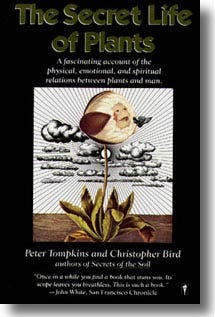
His work became the centrepiece of The Secret Life of Plants, the 1973 bestseller book by Peter Tompkins and Christopher Bird, a book that that impacted me when I read it thirty years ago, which sold widely in the emerging ecology and counterculture movements, it was also adapted into a 1979 documentary with a soundtrack by Stevie Wonder, and was met with vehement dismissal by the scientific establishment as pseudoscience. The dismissal was swift and thorough. Peer reviewers noted that Backster’s results were difficult to replicate under controlled conditions. Mainstream botanists called it unscientific, romantic projection, anecdotal wishful thinking. The word pseudoscience was applied to it so consistently and so loudly that for decades any researcher who showed serious interest in plant sentience risked professional marginalisation.
Fifty years later, a new generation of scientists and researchers, armed with instruments of a precision Backster never had access to, are publishing peer-reviewed findings that make his early work look not like fantasy but like a first, rough map of plant neurobiology territory that is not only being validated time and again but also turning out to be far more extraordinary than even he imagined.
Comments
Nothing yet. Say the first thing.
Sign in to join the conversation.