
Those forever wars you condemned on the campaign trail? Doesn't ring a bell? The post 9/11 quagmires that cost the American taxpayer $8 trillion and claimed 900, 000 lives? The 2001 occupation of Afghanistan, when we were going to replace the Taliban, only to leave after 20 years, having replaced them with…the Taliban? The invasion of Iraq, which intensified sectarian divisions, destabilized the region, and sowed the seeds for ISIS?
Nothing?
Ok, how about the wretched outcomes of our record of regime change? Questionable bedfellows, followed by blowback? The squandering of global goodwill? The tarnishing of American democracy, when people see the thuggish regimes we’ve installed, both overseas and, more recently, at home?
Nothing there? Ok, here’s your Big Mac, and your TV remote.
What happens when an Administration with no memory bombs a regime with a very long one? What can we expect when a president who once forgot the word for “Alzheimer’s” and has confused Greenland and Iceland, attacks a country whose rulers have made memory a fetish? Both the American and Iranian regimes face poor economies, crumbling infrastructures, and accusations of corruption and incompetence. Both face fear and loathing from many voters. But to survive, the Trump Administration assumes Americans have forgotten our recent history, while the Iranian leaders have long pushed memories of a distant past.
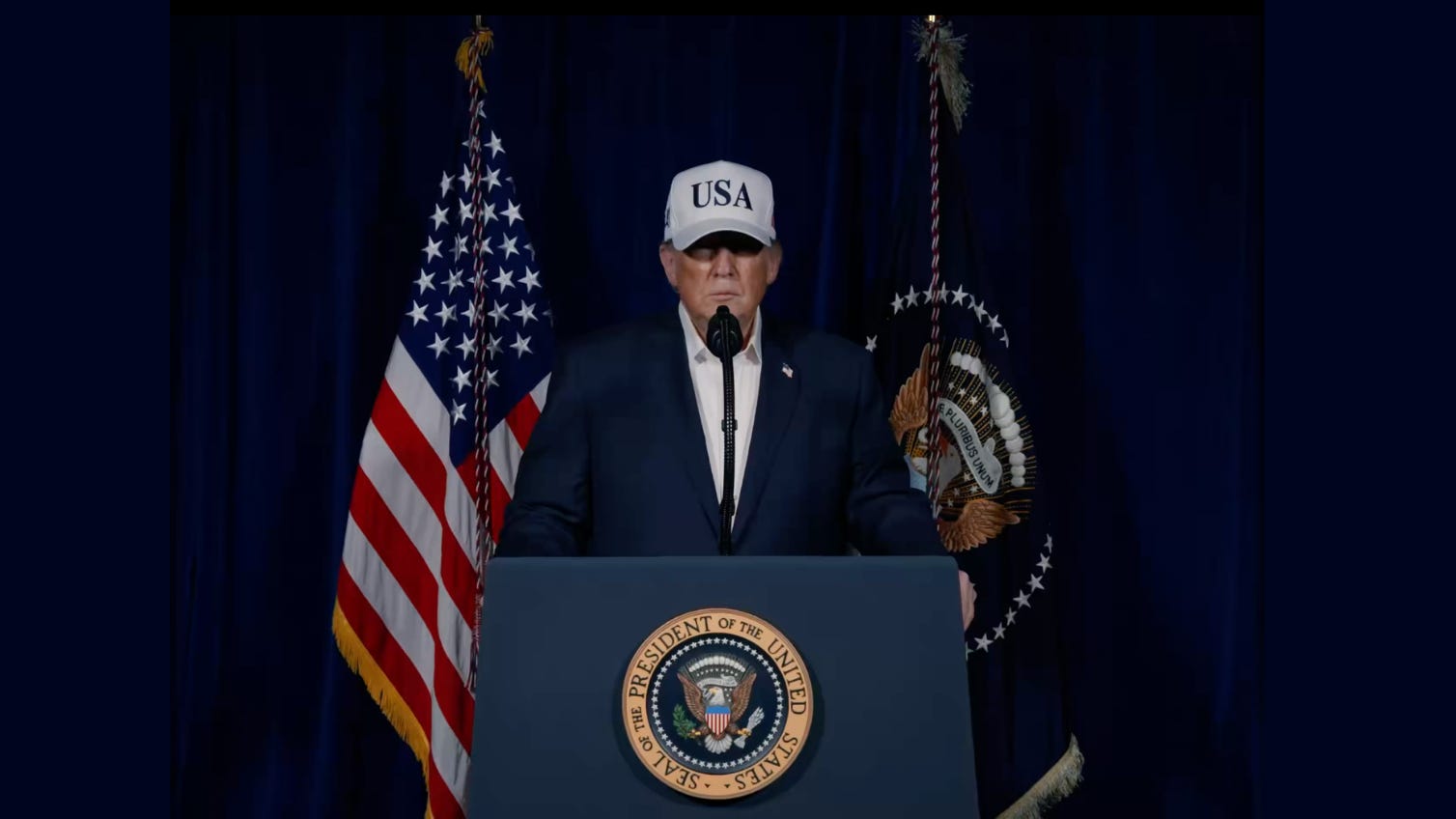
At home and abroad, the Trump Administration revels in civilizational erasure. Whether it’s razing the White House’s East Wing, riding roughshod over the Constitution, or enabling Israel’s goals to remake the Middle East. Trump displays a callous disregard for history. American support for the Israeli war against Gaza amounts to ‘memoricide,’ the eradication of a people’s memories, with damage or destruction of more than 90 percent of schools and universities, and the damage or destruction of 150 UNESCO sites. It’s not a coincidence that the same Department of War raining bombs down on Iran also canceled celebrations of Black History Month, took down posters of Frida Kahlo, and removed To Kill a Mockingbird from school libraries.
American civilizational erasure is aided and abetted by our own short attention spans. Trump’s non-stop distractions help muffle so many stories of our past, both recent and distant. It’s a struggle to remember the details of January’s invasion of Venezuela, let alone American history, when the noise is so loud, and the shocks come so fast, so furiously.
If the American administration’s modus operandi is to forget history and to hope we do too, the Iranian Republic’s strategy is to weaponize it. Or rather, to drum carefully curated moments from it into the public psyche. Over its 47-year history, the Islamic Republic has built what Younes Saramifar, a sociologist at Vrije Universiteit Amsterdam, calls a “state-sponsored memory machine.” The regime’s foundational memory is the 680 AD battle at Karbala, during which the Prophet Muhammad’s grandson Husayn and his followers, refusing to surrender to the Umayyad caliph Yazid, were killed. During the holy month of Muharram, this martyrdom is remembered and reenacted by Shia Muslims. While still just a dissident cleric rather than the leader of a revolution that felled the CIA-installed Pahlavi dynasty, Ayatollah Khomeini deftly took the religious story of Karbala and rendered it revolutionary. “Our preachers kept the event of Karbala alive,” he told a gathering of ulema in 1969, “They kept alive the issue of the resistance of a small group with immense faith against the powerful but arrogant regime.”
The Karbala model was deployed as propaganda during the Iran-Iraq war, the eight-year conflict which began a year after the 1979 Islamic revolution. The past was harnessed to the present, and the Battle of Karbala used as a recruiting tactic. Husayn’s model reminded young men that martyrdom was far more than fighting in a regional war; it was a spiritual duty. City streets were named for martyrs; their pictures were plastered on billboards. The Central Martyrs Museum, which stands across from the former American embassy, holds relics of the fallen in the Iraq-Iran war. Visitors can view bloodied bits of war kit—and a helmet, boot, and clothing covered in gold paint.
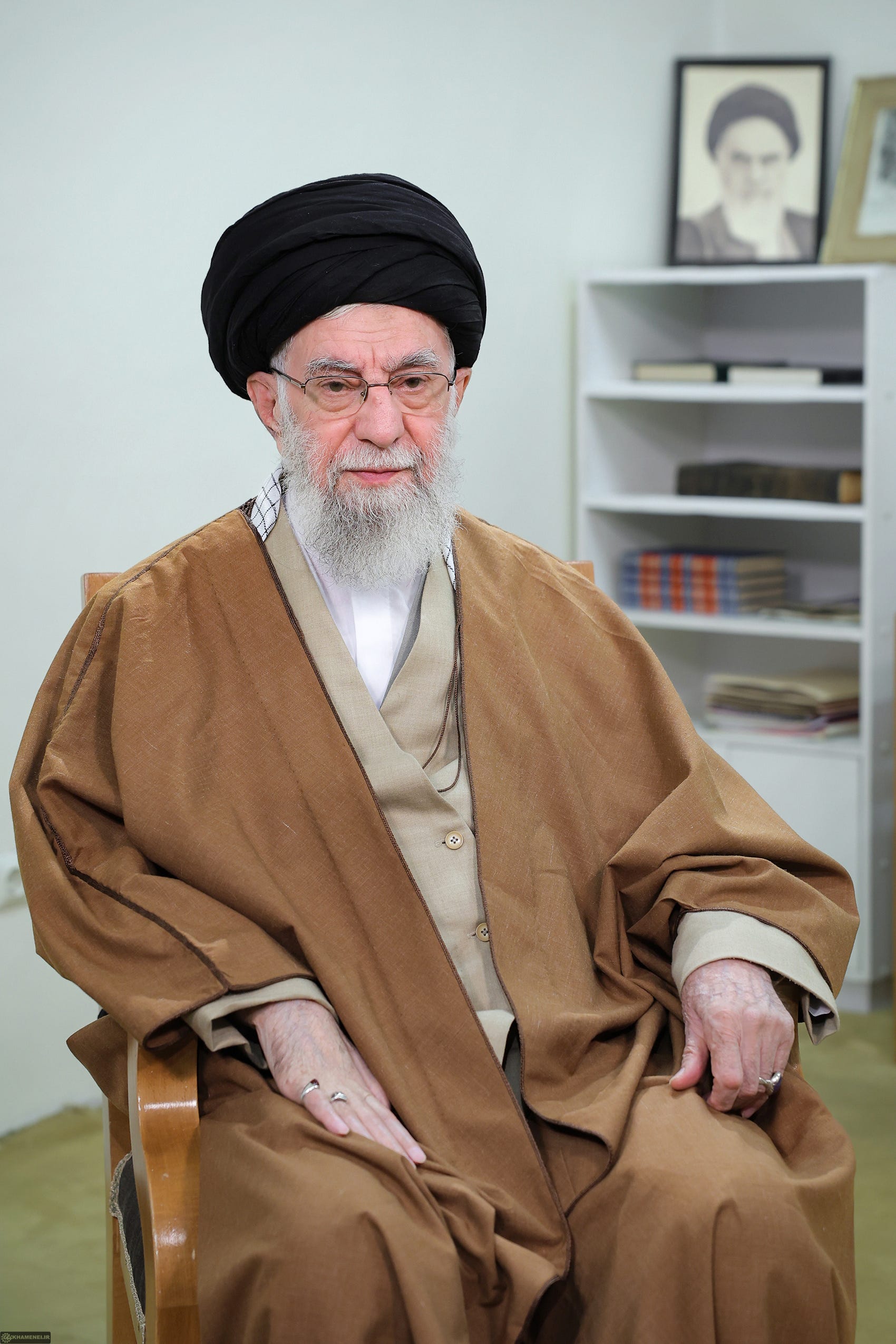
The late Ayatollah Ali Khamenei took pride in his strong memory, reportedly claiming he could recall texts and poetry read as a teenager. Deploying his vice-like grip on certain moments in history, he tried to keep his people steeped in the Islamic Revolutionary spirit. In a 2017 speech to students, he spoke of the importance of November 4 in contemporary Iran. That date, he said, saw “the deportation of the Imam [Khomeini] in 1964, the killing of teenage students in 1978 [four months before the Islamic Revolution], and finally the capture of the spy nest [the American Embassy] in 1979. In all three incidents, one side is the Iranian nation [...] and the other is the arrogant US government."
Impressive recall, for a man in his late seventies. But fetishizing history, just like forgetting it, can’t sustain a corrupt and oppressive government. Neither Trumpian amnesia nor the state-sponsored memories of the mullahs seem to work. Many Americans have longer memories than their leaders, whether it’s the millions of citizens working in various ways to defend the Constitution, or the American veterans and military service organizations, who wrote an open letter warning of the risk of more ‘forever wars.’ In their turn, Iran’s young, vibrant population of 60 million has long refused the ossified histories offered by their rulers. According to a recent GAMAAN poll, between 70 and 80 percent of Iranians do not support the Islamic Republic.
But the most consistent thing about memory is that it’s selective. “All this world is like a tale we hear,” the great Persian poet Ferdowsi famously wrote. “Men’s evil, and their glory, disappear.” What if the Americans help Iranians bring back Reza Pahlavi, son of the Shah so feared and reviled by so many Iranians in the 1970s? If Iranians accept this new king, one wonders if it will be due to enthusiasm, desperation, or simply amnesia.
No posts
Comments
Nothing yet. Say the first thing.
Sign in to join the conversation.