
In the last part of this series, we talked about celebrating birthdays abroad. We had a fantastic time during our birthday month here in Cuenca, Ecuador. As I mentioned earlier, Kurt hasn’t been feeling well lately, so we haven’t done much more exploring around here. It seems that, by divine grace, everything has come to us — including new friends and neighbors. Today, I want to discuss expectations and how lowering them doesn’t have to mean defeat. There are workarounds, and it’s crucial to always respect your own energy and that of your loved ones.
Below are a few ways in which Kurt and I have managed to do this.
1. Plan activities that feel doable for both of you.
Our goal is to visit the botanical gardens (Jardín Botánico de Cuenca). It’s one of the places accessible to Kurt’s wheelchair, and if you know me, you know I’m plant-crazy and love learning about plants, insects, and the biodiversity of a location. Ecuador is one of the most biodiverse places on Earth, so visiting the botanical gardens here will be a wonderful experience for both of us. (https://becomingcuenca.com/cuencas-crown-jewel/
2. Be flexible enough to change plans if either of you isn’t feeling up to the planned trip.
Kurt and I are both disabled, and we have good days and better days. Sometimes it’s just too energy-draining for us to leave home, or one of us is dealing with health issues. We agree that if either of us doesn’t feel like going out, we’ll reschedule for another day. “It’s ok to stay” is my motto on those days, and it helps reduce a lot of stress and emotional/physical pressure.
3. Be creative when lowering your expectations for a day, week, or more.
Kurt honestly didn’t feel up to leaving our apartment for a couple of weeks because of an infection, so I waited for him to tell me when he wanted to go out. In the meantime, I encouraged him to sit by an open window, feel the sun on his face, and watch the birds, mountains, and river below our apartment. I believe it helped him feel better sooner.
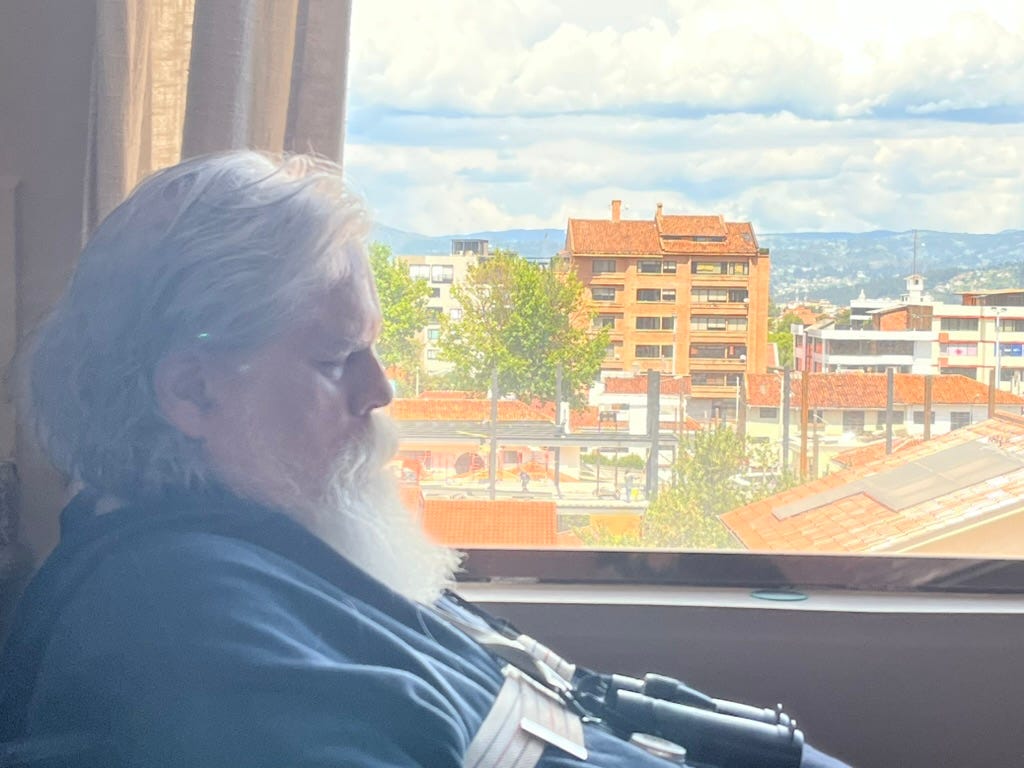
Kurt, napping by the window after birdwatching.
4. Be prepared to go out when the conditions are right.
This week, Kurt has woken up twice and said, “Let’s go for a walk.” Since he uses a wheelchair, going for a walk can be a bit tiring for both of us without our helper, Jonatan. Still, I didn’t want to disappoint him. So, we went downstairs to the beautiful sunroom, and Kurt waited there while I walked across the street to the best panadería (bakery) in the world. I brought back a chocolate pastry for him and some queso bread for myself. We sat outside in front of our building, across from the river trail, and watched people and animals walking by. We could hear the river when the traffic slowed down, and the wind was softly blowing. Beautiful hibiscus flowers added to the scenery. We repeated this yesterday, and this time, we had ice cream as a treat. Both outings were easier and didn’t require a taxi or strenuous effort for either of us.

The hibiscus flowers along the Tomebamba River across from our apartment.
5. Taking care of yourself is also taking care of your loved one.
It’s helpful to realize that an outing doesn’t have to be a planned trip with a specific destination. If you and your loved ones are staying at home, you can still enjoy nature through a window or even a video. I used to get really upset when plans didn’t go as I’d hoped, but I am learning to be more flexible and to remember to care for myself and my loved one, because caregiving is often a marathon, not a sprint. Doing too much when I push myself might mean I’m not at my best to care for Kurt later, so I need to be mindful of how pushing too hard can hurt both of us. After all, being healthy and happy is true wealth, and it’s an inside job, not something that can be filled from outside ourselves.
Have you discovered ways to adjust your expectations for yourself and your loved ones? How do you feel when you need to change your plans? What are some ways you’ve learned to take care of yourself? I’d love to hear from you. Remember…take care of yourself, you deserve it!!
Thanks to everyone who has subscribed and engaged by sharing, liking, and commenting on Substack. If you can, please consider a paid subscription. For the price of a cup of coffee from your favorite cafe, you can support the Caregivers Count community. (If you can’t afford a paid subscription but want to participate more fully in the community, please let me know. My mission is to create an online community where we all support each other, and the lack of funds should not be a barrier to that).
No posts
Comments
Nothing yet. Say the first thing.
Sign in to join the conversation.