
¡Buenas tardes desde Cuenca, Ecuador! (Good afternoon from Cuenca—I hope I got that right). Last week, we discussed our trip to the doctor. This week, I want to talk about being disabled at higher altitudes. The air is thinner here, and it takes more effort to do physical activities as we adjust. Luckily, there are things that we can do to make it easier on ourselves. Some we have tried, and others we are still waiting to try, but one thing is for sure: hydration is key. Let’s (sky)dive into this topic. ;-)
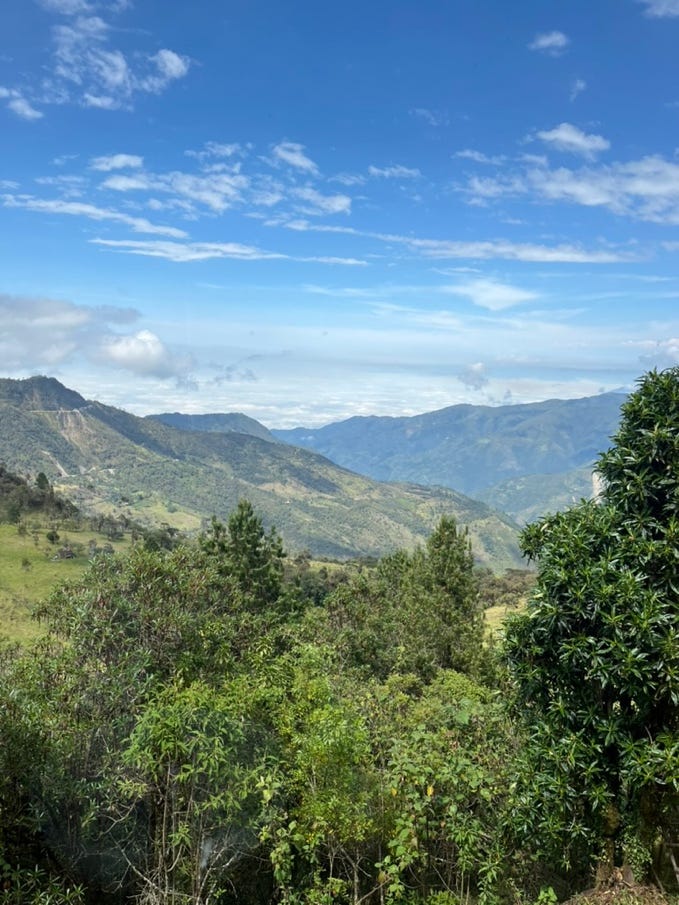
When we were preparing to travel to Ecuador, I did quite a bit of research on how to adjust to altitude and whether it would be safe for my husband, Kurt, given his medical history of having had strokes. There are mixed opinions on this, but we took precautions by getting Kurt a prescription for a common medication that can help prevent altitude sickness before leaving Iowa, which sits at around 774 feet (236 meters) above sea level. Cuenca, Ecuador, is at 8,400 feet (2,560 meters), so you can see there’s a significant difference!
When we arrived, I came armed with a pulse oximeter and blood pressure cuff for both of us. We landed in Guayaquil, on the coast, at 11 meters above sea level, so there was no challenge there except for being exhausted after 10 hours of flying and a 6-hour layover in Bogotá, Colombia (8,660 feet/2,640 meters above sea level). To say that we had some “ups and downs” would be an understatement. The good news is that we seemed to be doing fine when we landed in Guayaquil, aside from a bit of tiredness, which is to be expected.
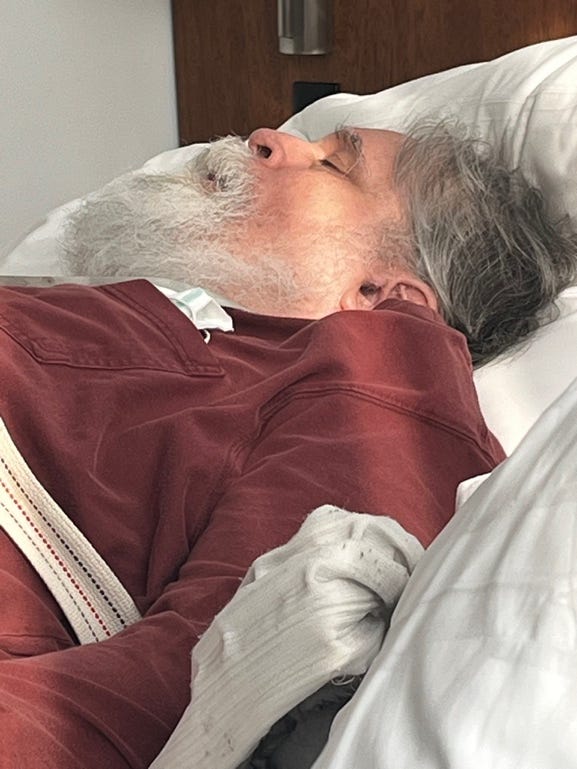
Kurt naps soon after arriving at the Holiday Inn, Guayaquil, Ecuador
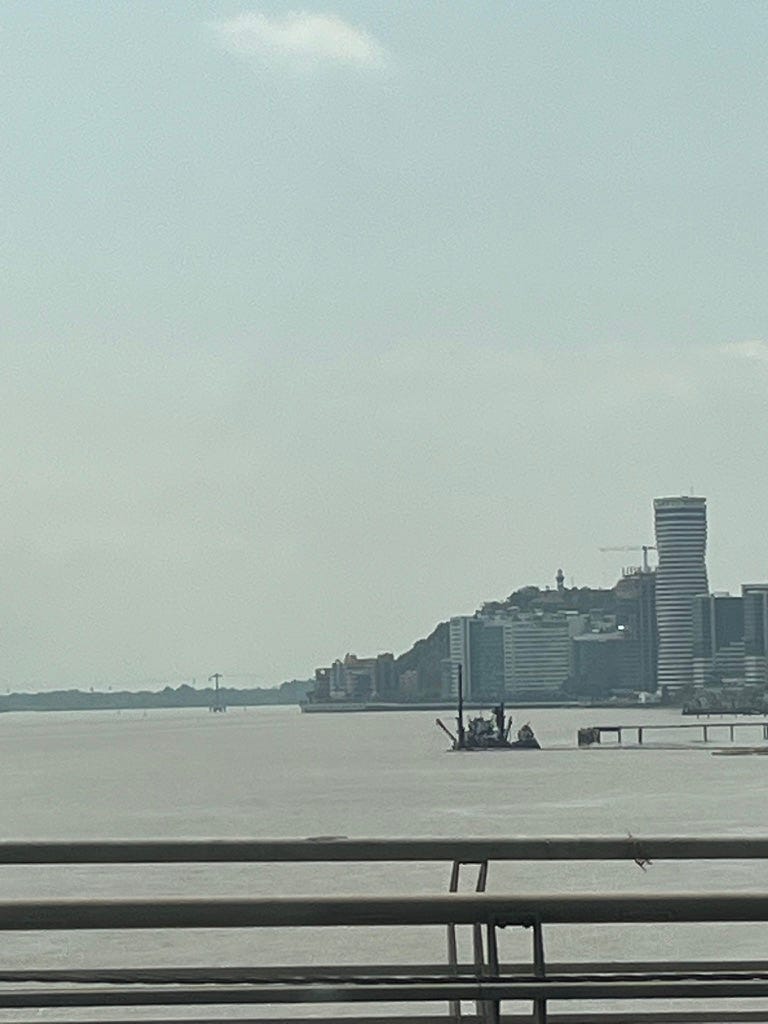
Leaving Guayaquil to travel to Cuenca
The next day was a bit more of a rollercoaster as we traveled to Cuenca by van (thanks, Nestor Reinoso). To reach Cuenca overland, you’ll pass through Cajas National Park, which eventually takes you to about 10,000 feet (3,100 meters). We didn’t crest the higher mountains, which can reach up to 14,650 feet (4,550 meters). I share these numbers so you can understand the adjustments your body must make when traveling to a mountainous region. These are important considerations to protect your health and your loved ones during your trip.
On the first night, our oxygen saturation was lower, as expected. Kurt adjusted with the medication and his CPAP machine at night. We both knew we should take it easy during the initial days, so we rested as much as needed while acclimating and staying hydrated (thanks for the tip, Kathy!). After about a week in Cuenca, we felt pretty normal and hadn’t experienced many altitude-related issues. We love being in a basin (Cuenca means “basin”) surrounded by mountains in every direction. The beauty is breathtaking, and it makes my heart swell with gratitude to the Divine for the majesty and grandeur of creation. I must admit that I often burst into song over the beauty here as a way of honoring all that I behold.
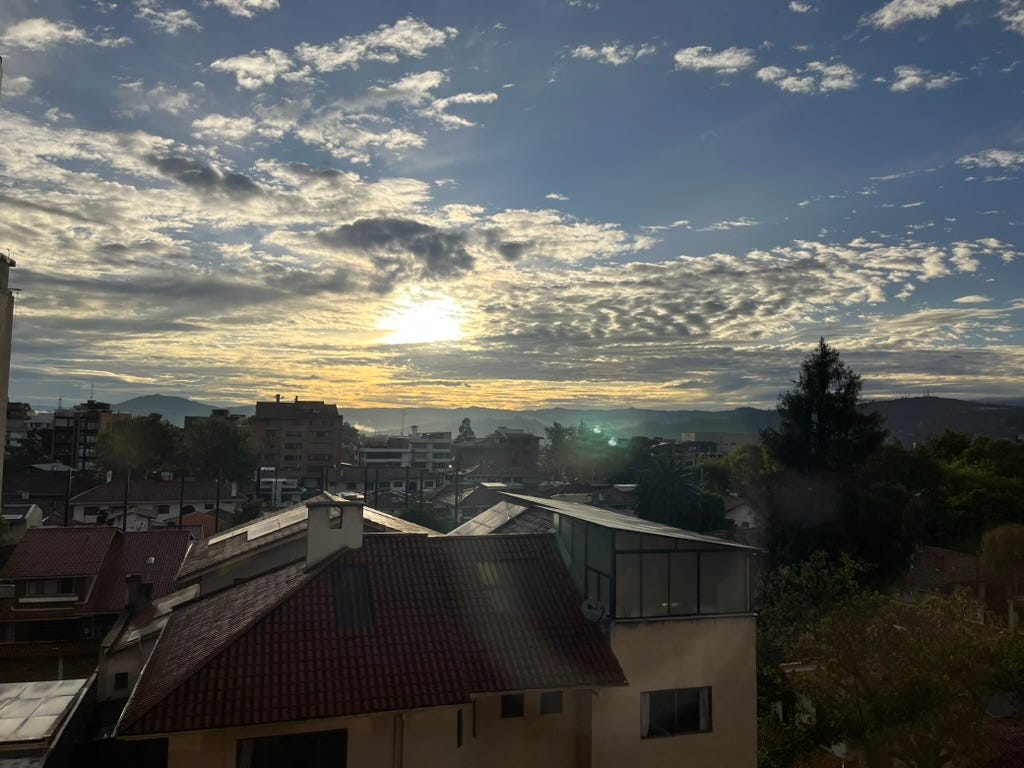
Fast-forward to last week: we’ve been here in Cuenca for almost two months. I don’t usually notice the altitude much now unless I’m walking the trail for exercise. Sometimes I notice a bit of shortness of breath when lying down. However, I’ve had some difficulty getting Kurt to keep his CPAP on at night. This led to low oxygen saturation, which was a bit alarming, so we plan to buy a wedge after Carnaval (a huge holiday here) to keep his head and neck slightly elevated while he sleeps. Right now, we are improvising with almost all our pillows to prop him up.
My point is that even after spending time at higher altitudes, you should still take precautions and monitor your oxygen saturation levels, blood pressure, and overall well-being. I was born in the foothills of the Appalachians, but that doesn’t compare to the altitudes here in the stunning Andes mountains of Cuenca. We’re adjusting and will both check in with our new doctor to ensure we’re taking all necessary steps to protect our health.
Disabled folks and caregivers, have you noticed any differences when traveling to higher altitudes? What caught your attention the most? How did you cope? I’d love to hear from you! Community is what makes life more interesting and gives us all a sense of safety and belonging. That’s what I hope to create here with all of you. <3
Thanks to everyone who has subscribed and engaged by sharing, liking, and commenting on Substack. If you can, please consider a paid subscription. For the price of a cup of coffee from your favorite cafe, you can support the Caregivers Count community. (If you can’t afford a paid subscription but want to participate more fully in the community, please let me know. My mission is to create an online community where we all support each other, and lack of funds should not interfere with that.)
No posts
Comments
Nothing yet. Say the first thing.
Sign in to join the conversation.