
Last October, Elissa Strauss (author of When You Care: The Unexpected Magic of Caring for Others, and my guest in Episode 16 of the Careful Thinking podcast) published a post on her Made With Care Substack entitled ‘How to care for parents who don’t want your care’, in which she wrote:
Even with over 18 years of writing and reporting on care under my belt, including a whole book on the subject, I have found myself totally caught off-guard by one particular aspect of caring for adult parents: they don’t always want the care you think they need.
As I commented when I re-stacked Elissa’s post: ‘This is exactly where we are with my parents right now’. We’re fortunate that my Mum and Dad, who are both in their early 90s, are still with us. But they are increasingly frail, and at every stage they’ve been reluctant, at least initially, to accept the measures we’ve suggested to ensure their safety and wellbeing, whether that’s help with housework or with personal care.
Recently we reached a critical stage. Following a series of falls, which led to night-time call-outs to one or other of my brothers, who live closer to our parents than I do, my Dad had a particularly bad fall which resulted in a nasty head wound and a stay in hospital over Christmas. Luckily, there was no internal damage, but it led us to conclude that he really needs twenty-four-hour care, to ensure that he doesn’t suffer any worse injuries in future. To begin with, Dad was adamant that he didn’t want this, claiming that he would never be able to relax with a stranger living in the house. But now that he’s back home, and the carer is in place, he’s come round to acknowledging that he couldn’t really manage without her.
Then, just last week, it was my mother’s turn to take a tumble, landing her in hospital and needing an operation for a fractured hip. So far, things seem to be going well, though her recovery is likely to be slow. We’re just thankful that we’d already organised the live-in carer, despite Mum’s and Dad’s protests, so at least there’s someone at home to take care of Dad.
Text within this block will maintain its original spacing when published
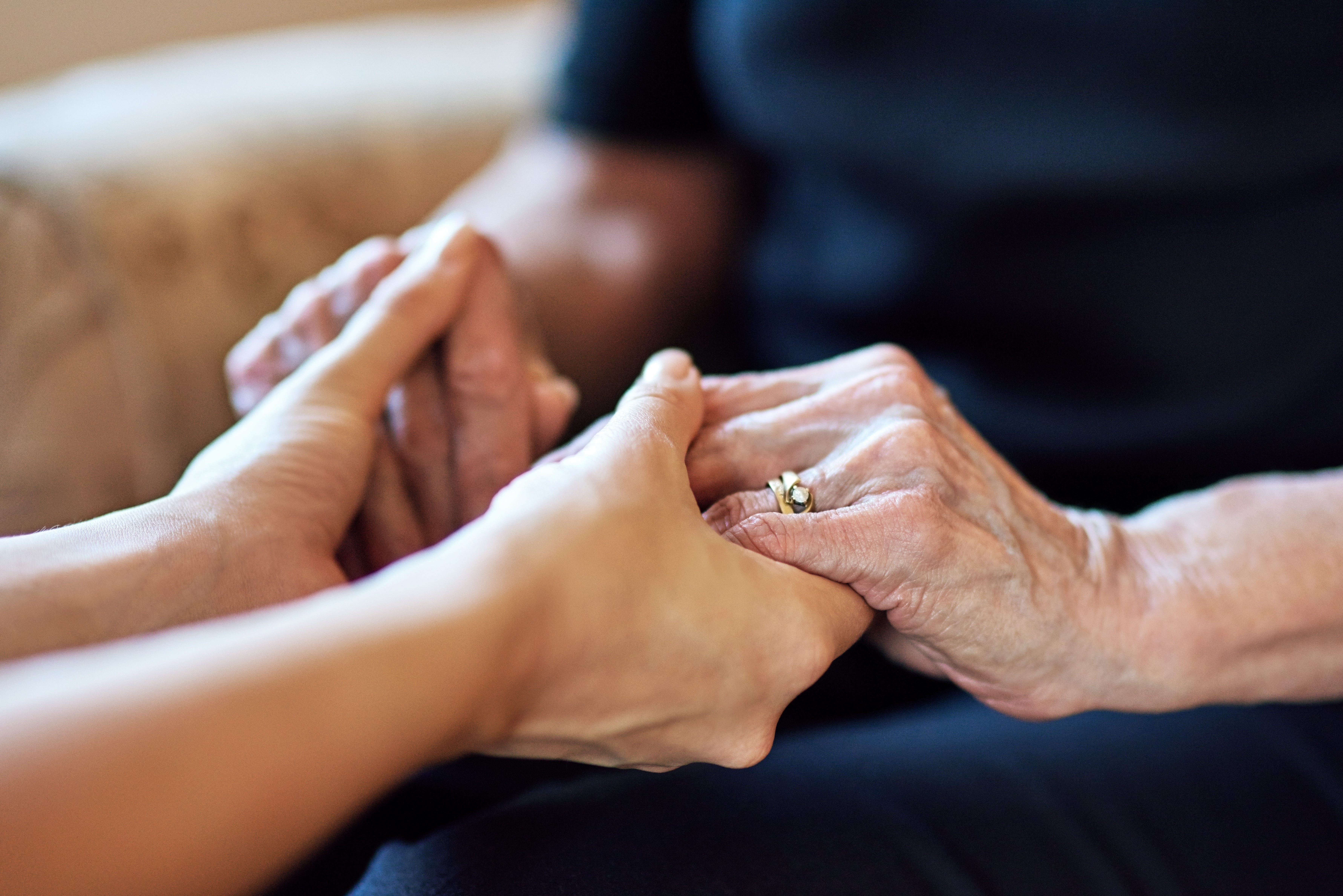
Image via Shutterstock
In trying to understand my parents’ resistance to being looked after, I’ve been reflecting on how hard it must be to allow yourself to become dependent on others. I imagine it’s particularly difficult to accept an offer of care from the children who were once completely dependent on you. As parents, our identity is closely bound up with providing care, and it’s not something that’s easily let go of, even when your children are grown up. And for my Mum and Dad, who’ve had a lifelong, active involvement in their church, which has involved looking after the needs of members less able than themselves, being a caregiver has probably been especially important to their sense of who they are.
Letting go of this lifelong, meaning-giving identity of caregiver, and at the same time taking on the new and often unwanted identity of care receiver, must be a painful process, involving a re-orientation of your own sense of your place in the family and the community. It brings to mind, from a very different context, what some of the participants in our recent research study with bereaved fathers told us, about the additional loss they experienced when their child died - the loss of their identity as fathers, an identity in which they had become deeply invested, but which was now denied them.
The process of admitting to a need for care, certainly for older people, also involves the acceptance that you are no longer as capable as you once were, or that you still like to think you are. Linked to this is a very natural desire not to impose your needs on others, and especially not your own children. I’ve lost track of the number of times my Dad has told us that he doesn’t want to be a ‘burden’. None of us do, especially not to our loved ones. But as Jeremy McLellan writes, in an article about welcoming people with intellectual disabilities into public spaces, ‘we are all burdens...we were once burdens, and we will be burdens again.’ Or as the philosopher and care ethicist Eva Feder Kittay expressed it in her classic text Love’s Labor: Essays on Women, Equality and Dependency, ‘dependency is inescapable in the life history of each individual’. Kittay continues:
The immaturity of infancy and early childhood, illness and disability that renders one non-functional even in the most accommodating surroundings, and the fragility of advanced old age, each serve as examples of such inescapable dependency...These are unassailable facts about human existence.
In her recent book The Dignity of Dependence: A Feminist Manifesto (see these posts), Leah Libresco Sargeant suggests that ‘our need is what makes us human’, though she contends that we live in a world where ‘what makes us most human, the dependence in which we all begin our lives, is viewed as strange and passing - a problem to get over.’ Sargeant continues:
For grownups, it can feel like revealing the need for assistance is revealing oneself as childish, something less than a full, free adult human being. We take autonomy as the pattern for human life, with childhood a brief, slightly embarrassing apprenticeship. Little by little, children graduate from their neediness, and, because we expect them to transcend their littleness, we are willing to overlook it and round them up to count as fully human.
At the same time, in order to ensure that there is, in fact, ‘dignity’ in ‘dependence’, it’s important that those on the receiving end of care are able to hold on to a degree of personal autonomy. In her post, Elissa Strauss interviewed clinical psychologist Barry Jacobs, who suggests some practical ways in which adult children can help their ageing parents to retain a sense of control, even as they accept their need for care, so that ‘the adult child is asking the parent for something, even if it is only permission, and that puts that parent in a giving, rather than receiving, role - much more familiar and comfortable for them.’

Text within this block will maintain its original spacing when published
From L to R: Elissa Strauss, Barry J. Jacobs, Eva Feder Kittay, Leah Libresco Sargeant
In addition, at the heart of care ethics is the notion of care as a reciprocal process, which means acknowledging that those on the receiving end of care can also be, in some sense, givers of care. As Eva Kittay writes:
To define dependency work as I have done appears to preclude reciprocal care. In the paradigm case, those who are cared for are unable to care for themselves, and so, one assumes, are incapable of caring for another in this state. But interdependencies of caring relations are not only possible, they are common. Care may be reciprocated simultaneously...A reciprocal arrangement, wherein there is an alternation of roles between the one who does the caring and the one who is cared for, is just a modification of the paradigm case.
Reciprocity in care can take a variety of forms. There’s the situation described by Kittay here, where participants, especially in a long-term relationship, move back and forth between the roles of caregiver and care receiver, or even occupy both roles at the same time. Then there is the common experience of many caregivers that one often gains as much as one gives in a caring relationship. In some cases, the experience of providing care can even be a source of personal healing for the caregiver. I think, again, of the fathers in our recent research study, who had joined football teams set up by and for bereaved men, and who found help with processing their own grief precisely through supporting others going through the same experience. That study brought home to me the inadequacy of the conventional binary understanding of care with which we usually work. Rather than seeing care as a process of one person transmitting something to another, care should perhaps be conceived as an ongoing, reciprocal flow, in which it may sometimes be difficult to determine who is the carer and who the cared for.
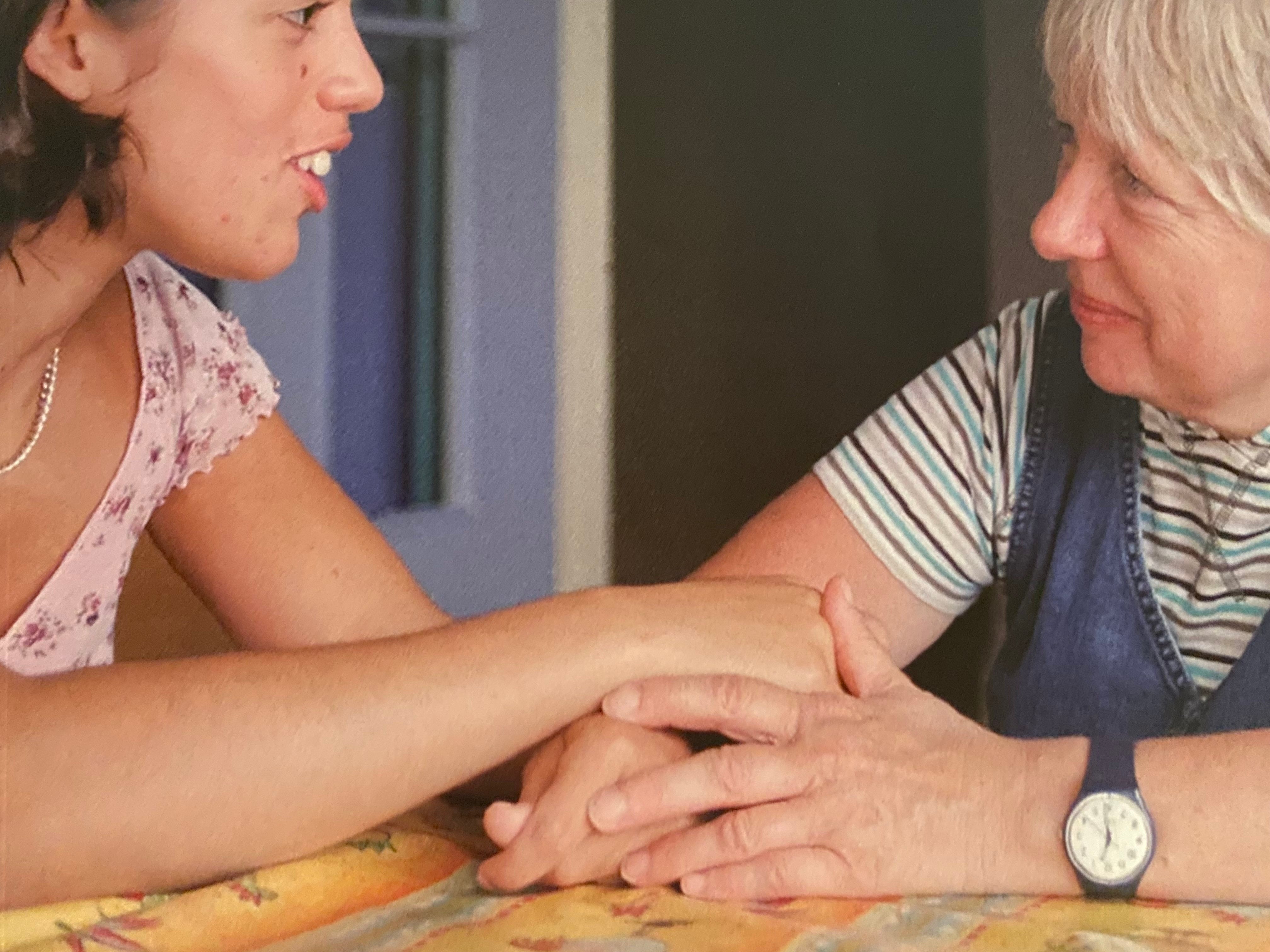
This is the heart of what is meant by relational care. In the very first episode of the Careful Thinking podcast, my former Open University colleague Mary Larkin explained that the relational care with older people that she and her colleagues had been researching ‘represents a move from a one-way flow of care towards mutuality in caring relationships, whereby people aren’t solely givers and receivers’. In the same episode, Mary’s co-researcher Manik Deepak Gopinath explained that relational care settings are designed to ‘maintain people’s need for privacy, for interaction...and in ways that recognise interdependence.’
This sense of what feminist care theorists define as ‘relational autonomy’ can be extremely hard to hold on to as a caregiver or provider of care. Getting the balance right between insisting on care and recognising independence is incredibly difficult, and perhaps, as adult children with ageing parents, we need to stop feeling guilty and acknowledge that we are doing our best in less than ideal circumstances. As Elissa wrote in her post: ‘I know I am not alone. Many of us want to care for our parents, accept the inevitability of dependency and enter the experience with a reserve of patience and goodwill.’
I’ll end with some words that Sarah Rice, a caregiver for her ageing parents, posted the other day on her Care and Wander Instagram page (emphasis added):
No one really prepares you for this part. The watching. The waiting. The quiet ache of realising your parents are living longer than they ever imagined, and now facing decisions they never wanted to make. They didn’t plan to outlive their strength. They never pictured choosing between safety and the home where so many memories live. And you didn’t expect to carry the weight of helping them decide. For adult children, the mental toll is real and heavy. You grieve while they’re still here. You advocate while trying to honour their independence. You hold their fear, their resistance, and their sadness often while hiding your own. They don’t want to leave their home. But they know something has to change. And you’re standing in the middle of love and loss, trying to make the least painful right choice. If this season feels exhausting, confusing, or lonely please know this: you’re not failing. You’re loving them through one of the hardest chapters.
…
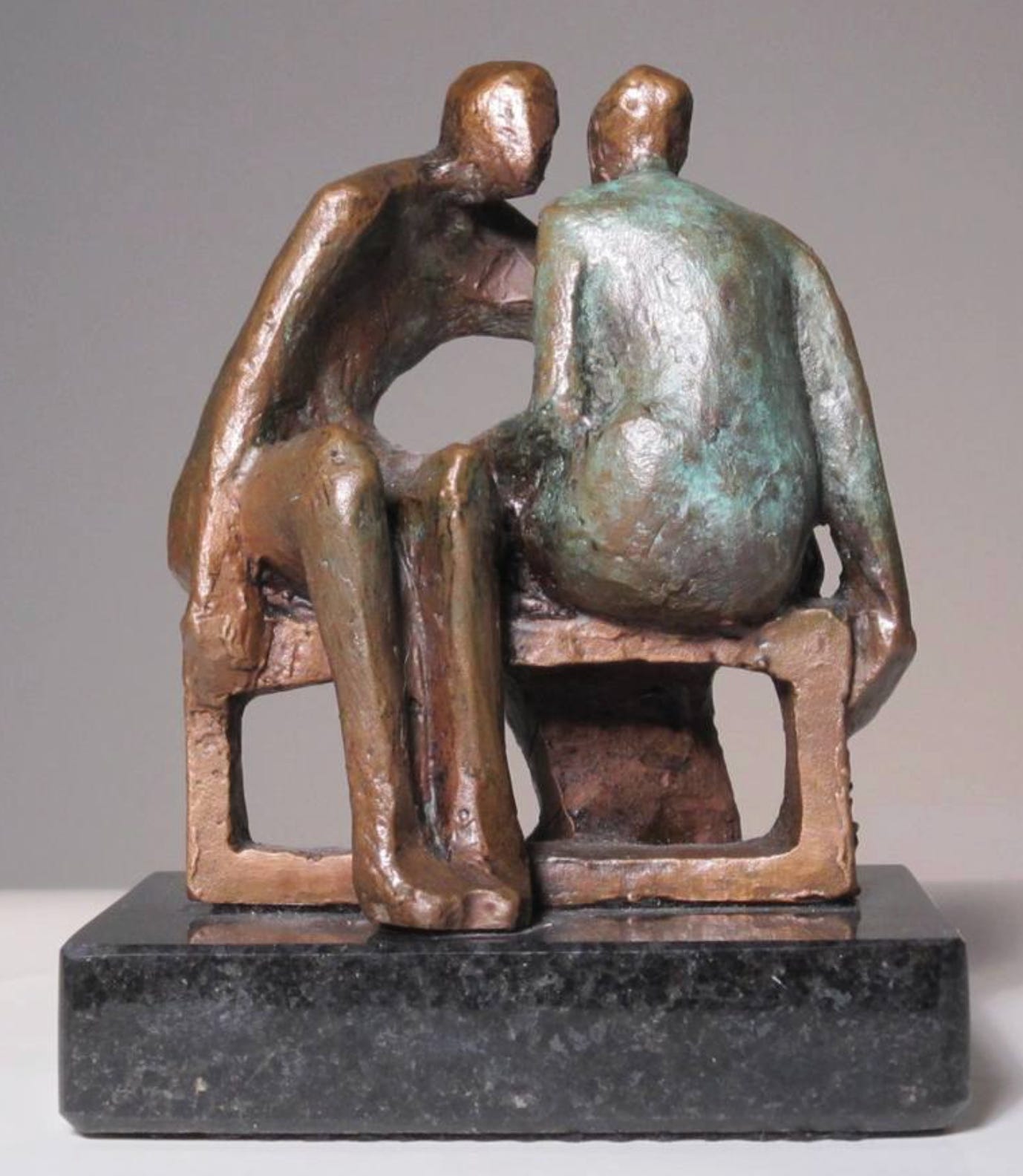
The header image for this post is the sculpture ‘Old Love’ by Bozena Happach, a Canadian sculptor of Polish origin (permission requested), who describes this work as follows: ‘Love is universal and does not have age barriers. With age Love tends to be more about caring and expressing emotions. My sculpture was inspired by my parents and in-laws and their love, which did not change with time.’
No posts
Comments
Nothing yet. Say the first thing.
Sign in to join the conversation.