

One of the highest compliments one scholar can pay another is to debate their ideas at length in print, with respectful disagreement a sign that you think the other’s work important enough to devote time and effort to engaging with in detail.
The last few weeks have seen the publication of two journal articles which take issue with aspects of the work of the feminist philosopher and care theorist Eva Feder Kittay, who was my guest for the most recent episode of the Careful Thinking podcast. The authors of both articles emphasise their deep admiration for Kittay’s writing and their sympathy with the general direction of her thinking, while thoughtfully disagreeing with one or other of her arguments.
Text within this block will maintain its original spacing when published
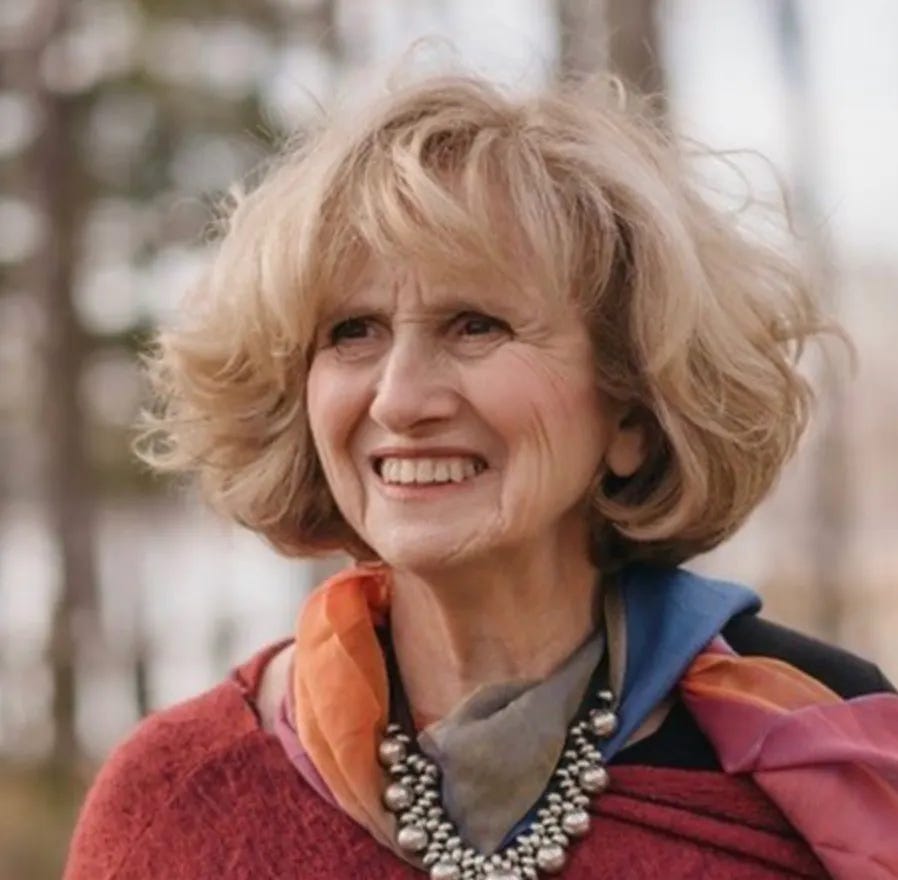
Eva Feder Kittay
One of the articles is by another of my recent podcast guests, the legal scholar Erika Bachiochi. In my interview with Erika, she emphasised ‘how much I love Kittay’s work’ and in particular the latter’s ground-breaking book Love’s Labor: Essays on Women and Equality. Bachiochi explained that she sees herself and Kittay ‘as both critics of liberalism and the idea of this kind of mythical, autonomous individual as being the lode star in our thinking about politics and economics’, adding that ‘I really just think that the way she articulates responsibilities for others is the exact right one, so that they arise out of need and vulnerability…I just think talking about that we are each some mother’s child is a really beautiful way of putting that’.
However, in our conversation on the podcast, we also discussed an article that Erika published in 2016, in which she criticised Kittay’s tendency, as she saw it, to minimise the distinctive role of fathers in families and to overemphasise the supportive role of the state: ‘Kittay...doesn’t want to look to the traditional provider...who was for centuries the husband, but she wants to right away go to the modern state’. Instead, Erika argued, ‘there’s a way in which we can elevate that paternal ethic of care. We can call more upon men to engage in an ethic of care in the family.’
Here I should add the caveat that, in her most recent book, Learning from My Daughter: The Value and Care of Disabled Minds, and in her conversation with me on the podcast, Kittay presented a more nuanced view of the role of the state in care, emphasising the valuable part that can be played by ‘caring communities’, and suggesting ‘maybe keeping the state pretty far away from the actual dependency relationships themselves’.
The title of Bachiochi’s new article, ‘We are all some father’s child: toward a paternal ethic of care’, which was published last month in the Hungarian Journal of Legal Studies, pays tribute to Kittay’s phrase ‘some mother’s child’, while the essay itself expands on her earlier critique and at the same time develops in some detail the alternative ideas about paternal care that Bachiochi hinted at in the podcast. I was honoured when Erika asked me to review an early draft of the paper and also gratified that she cites the article I wrote on ‘Men’s Care: Same or Different’ for the online journal Fairer Disputations, though my treatment of the topic there was brief and superficial compared to Erika’s in-depth exploration in this latest piece.
Text within this block will maintain its original spacing when published
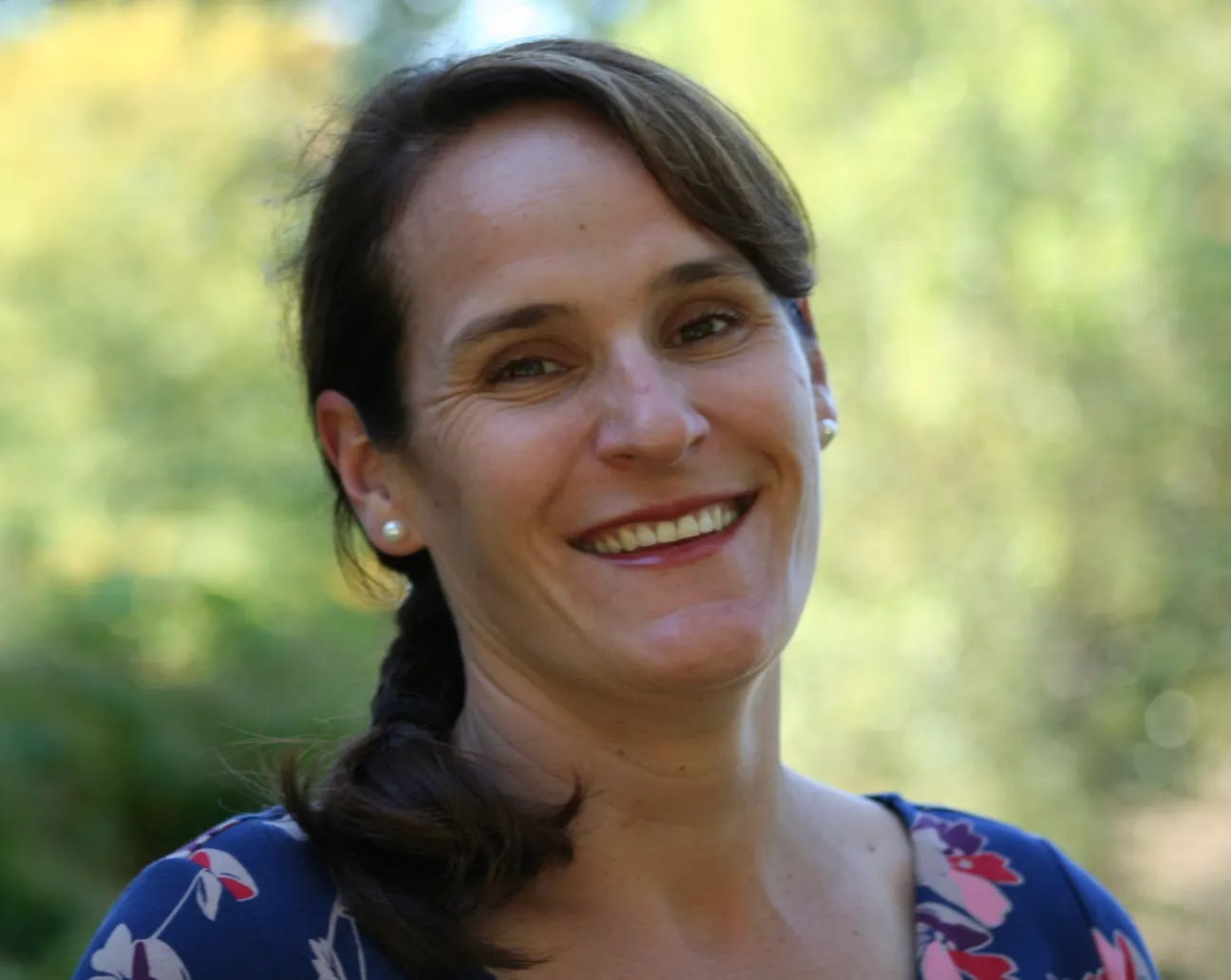
Erika Bachiochi
Leaving aside its debate with Kittay, Bachiochi’s essay is also a brilliant defence of fatherhood as an embodied practice of care, one that is distinctive from motherhood in important ways, and in my view it constitutes a valuable contribution to the ongoing debate about gender and care. It’s one of those pieces of writing where you want to quote all of it, but for reasons of space, I’ll just share the abstract here, and encourage you to make time to read the whole thing:
Motherhood assumes fatherhood. This statement was long self-evident. But with high rates of non-marital childbearing, divorce and single motherhood across the Western world over the last half century, as well as the more recent development of reproductive technologies, a normative relationship of fatherhood to motherhood is no longer assumed. Yet even with these rapid technological and cultural shifts, the existence of a particular child today still transforms a particular woman into a ‘mother’ and a particular man into a ‘father’, at least as a matter of biological relation.
Engaging the classic work of care ethicist, Eva Feder Kittay, I seek in this article to offer a more capacious - and indeed, normative - account of fatherhood, or a paternal ethic of care. Like a maternal ethic of care, the paternal ethic of care is based on a unique personal relation of embodied care, an obligation that arises from being an equal (paternal) source of the child’s existence, one who is specially situated to care for this particular child and his or her mother. As such, paternal care is characteristically distinctive from maternal care in its uniquely situated, special responsibility to create the safe, secure and just conditions that caregiving mothers need to carry out their duties of care with freedom and confidence and that dependent children need to become mature, agentic adults.
The other recent article which engages with Kittay’s work was published online just last week in Hypatia, the journal of feminist philosophy. It’s by the political philosopher Daniel Engster, whose many publications include Care Ethics and Political Theory, which he co-edited with Maurice Hamington (my guest in Episode 6 of the Careful Thinking podcast) and the forthcoming Care and Moral Theory, which Engster is co-editing with Steven Steyl (whom I interviewed for Episode 10).

Text within this block will maintain its original spacing when published
Daniel Engster
Engster’s article, which has the title ‘Does care need completing?’, is a response to Kittay’s argument, in Learning From My Daughter, that ‘not only do we sometimes have a duty to care, but we also have a duty to receive care graciously if it’s offered with goodwill and with the requisite attention and competence insofar as we have the capacity to discharge such a duty’ and her claim that without such acknowledgement on the part of the one being cared for, care is not ‘complete’. As Eva said in her conversation with me on the podcast:
The carer needs that kind of recognition from the cared for in order to deal with the difficulties and yes, the sacrifices that they undergo...So I think there’s actually more responsibility to receive care graciously when offered with requisite skill and good faith, if you can, if it’s possible.
In his new article Engster explains at length why he thinks this is a flawed line of thinking. As with Bachiochi’s essay, it’s a closely argued piece of writing and it’s important to read the whole thing. But again, I’ll share the abstract here to give you a sense of his main argument:
Feminist, disability, and other theorists have long expressed concerns about the seeming paternalism implicit in care. In Learning From My Daughter, Eva Kittay aims to put these concerns to rest. Exploring more fully than previous care theorists the final phase of caregiving, she argues that good care requires ‘completion’, by which she means explicit or implicit subjective endorsement by the care receiver of the goods or benefits the caregiver provides them. Insofar as subjective endorsement is necessary for good care, good care by definition cannot be paternalistic.
This article argues, however, that Kittay’s attempt to distinguish care from paternalism is mired in problems. It does not provide a reliable standard for distinguishing good care from bad or even effective protection against paternalistic abuse. In place of Kittay’s completion standard, I defend an objective standard of good care based on Stephen Darwall’s theory of rational care but amended to include insights from care theorists about the importance of attentiveness, responsiveness, and respect in the practice of good care. Overall, the article clarifies the standards of good care with particular attention to the danger of paternalism implicit in it.
The reference here is to Darwall’s 2003 book Welfare and Rational Care which argues that good care involves successfully promoting a person’s welfare, which ‘is constituted, not by what the person values, prefers, or wants (or should value), but by what one (perhaps she) should want insofar as one cares about her.’
Engster’s argument, that it’s possible to develop an objective account of what constitutes ‘good’ care, regardless of the subjective response of those on the receiving end, is a compelling one. As he suggests, Kittay’s ‘subjective endorsement standard’ for good care can easily lapse into a problematic subjectivism and can be susceptible to forms of ‘paternalistic abuse’. I’m reminded of my conversation, in Episode 24 of Careful Thinking, with my Open University colleague Vince Mitchell, about his research on the ethics of dementia care, and the difficulties of determining the ‘real’ views of dementia sufferers regarding their care preferences.
However, I’m not sure I was completely persuaded by Engster’s counter-argument. Can we really assess the quality of an act of caregiving independently of how it ‘lands’? Perhaps we can express it like this:
We can never know if we have cared well.
We always know if we have been well cared for.
What I’m trying to capture here is the sense that, when we care for another person, there is no way of knowing or feeling intuitively whether we’ve got it ‘right’. On the other hand, when we’re on the receiving end of care, we do know instinctively, at a deep and somatic level, whether we have been well cared for. This suggests that, in some sense, we need the confirmation or acknowledgement of the one who is cared for in order to determine whether care has been achieved or accomplished.
I’ve written before about my research with grieving fathers who experienced healing and repair through participation in sports teams for bereaved men, and how in those settings, although it was clear that care had ‘happened’, it was difficult to say who were the caregivers and who the cared for. One might say that, rather than being something that was delivered, like a ready-made package, from one person to another, care was something - a quality, an experience - that emerged from the interactions and relationships between two or more persons.
Could we generalise this to all care, and say that care is an emergent property and that, because of its fundamentally relational nature, it requires the engagement and confirmation of all parties in an interaction for it to be achieved? This would suggest that searching for an ‘objective’ or ‘rational’ standard of care will always be flawed.
At the same time (and maybe here’s a radical thought to end with) perhaps care is always, by its very nature, incomplete - imperfect, unfinished – since it’s impossible to completely meet the needs of another human being? Over the summer I’ve been reading a biography of the sculptor and painter Alberto Giacometti, who maintained that all attempts in art were doomed to failure. As he said: ‘The more you fail, the more you succeed…the more one works on a picture, the more impossible it becomes to finish it.’ Or as his friend the playwright Samuel Beckett put it: ‘Ever tried. Ever failed. No matter. Try again. Fail again. Fail better.’ Could we say something similar about care: that all our attempts will always fall short of ‘perfect’ care, if such a thing could ever exist, so that searching for ‘completion’ in care is to pursue a chimera? In the words of the contemporary Italian philosopher Giusi Venuti: ‘Care cannot be fully grounded as a stable normative principle because it is structurally exposed to failure, ambiguity, and potential misuse.’ [1]
These are just a few initial, random thoughts suggested by reading these two articles. Feel free to add your own thoughts in the comments.
Note
‘On the Aporetic Nature of Care: A Practice-Based Contribution to the Medical Humanities’ (working paper). In her forthcoming book Il vero si tocca. Del gesto che pensa, Venuti describes the way in which ‘a gesture of care can be clinically correct and still leave the other person alone’ (personal communication).
In other news…
Speaking of Eva Kittay: publishing my interview with Eva in July led to the most successful month of the Careful Thinking podcast to date, attracting 364 unique listeners and 497 downloads in those four weeks alone. Since the podcast launched in late 2023, it has attracted more than 6,000 listeners in total, from 83 countries and from every continent. If you haven’t done so already, you can subscribe via Apple, Spotify, or wherever you get your podcasts.
And in just the past week, I was delighted to see that this Substack newsletter, which I launched at the beginning of 2024, gained its 400th subscriber. That may not seem a huge number compare to some other Substacks, but I’m gratified that there are 400 people out there who are interested in exploring ideas about care. If you’re not yet one of them, then please consider signing up, to ensure you don’t miss out on regular updates about the Careful Thinking podcast, as well as reviews of books, seminars, exhibitions, and other care-related news. It’s free and it always will be.
And finally…
Care is cool these days and it seems everyone wants a piece of the action, including commercial companies. Returning from a recent holiday in Portugal, I noticed this advertisement for Zurich Insurance at Lisbon Airport. It translates roughly as ‘we care, to make sure everything goes well.’

But can corporations really care? Maybe that’s a subject for another time.
In the meantime, on the slightly related topic of whether institutions, rather than individuals, can care, check out this brilliant recent post by Mélina Magdelénat.
…
The header image for this post is a reproduction of the painting ‘Communication Concept’ by Stella Levi (via istockphoto.com).
No posts
Comments
Nothing yet. Say the first thing.
Sign in to join the conversation.