
For a long time, I thought I had spent thirty years making unrelated things.
Music, design, writing, photography, visual experiments, software, unfinished ideas, abandoned directions. None of them exist in isolation. They move in and out of focus over the years, each taking on greater or lesser importance at different times. From the outside, though, it is easy to see them as separate projects scattered across different periods of my life.
That way of looking at the work is not entirely wrong, but it emphasizes the mediums more than the practice that connects them. The work itself has not fundamentally changed. What has changed is my ability to recognize the continuity that has been there all along, stretching quietly beneath everything I continue to make.
The turning point was simple.
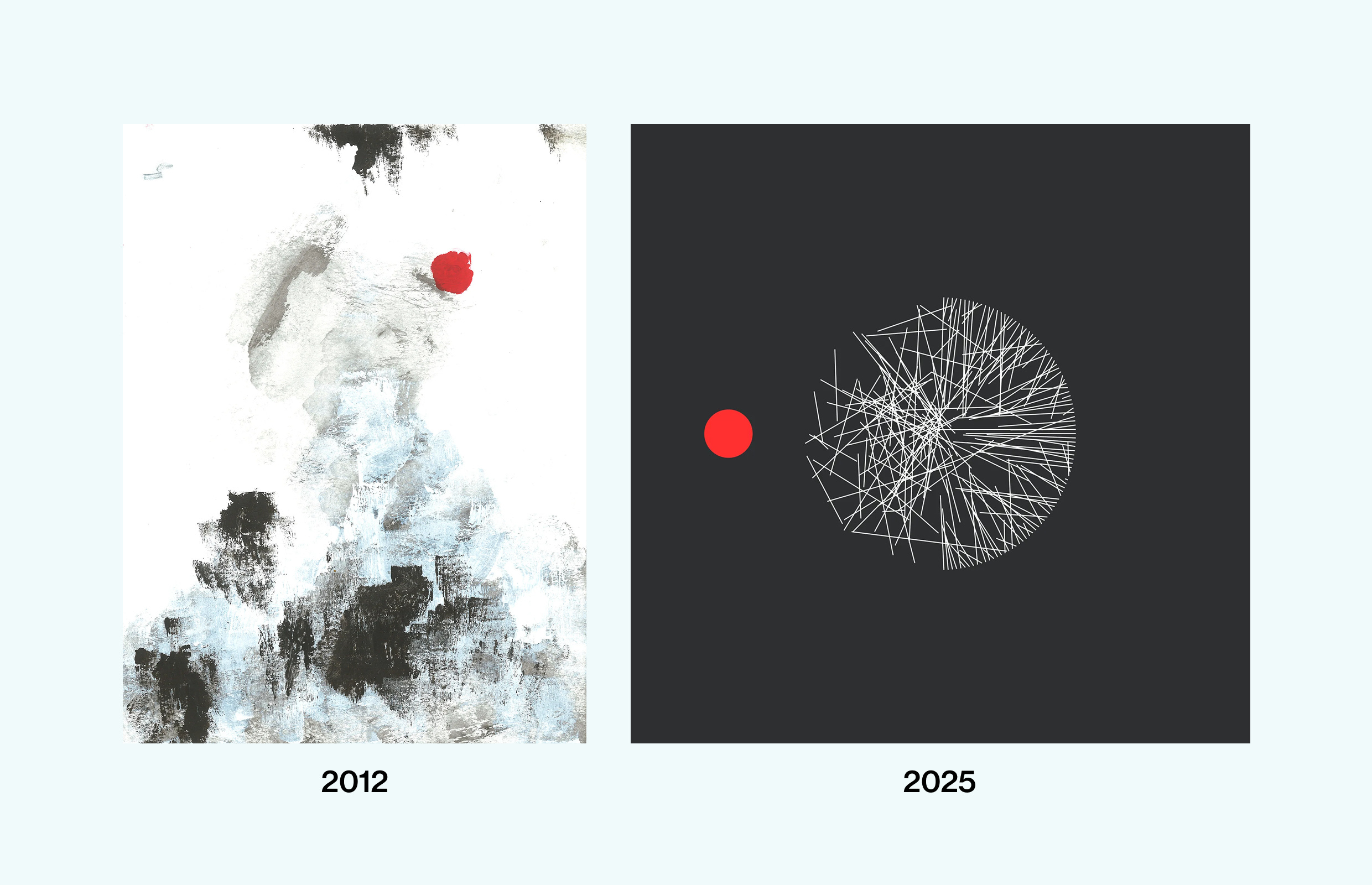
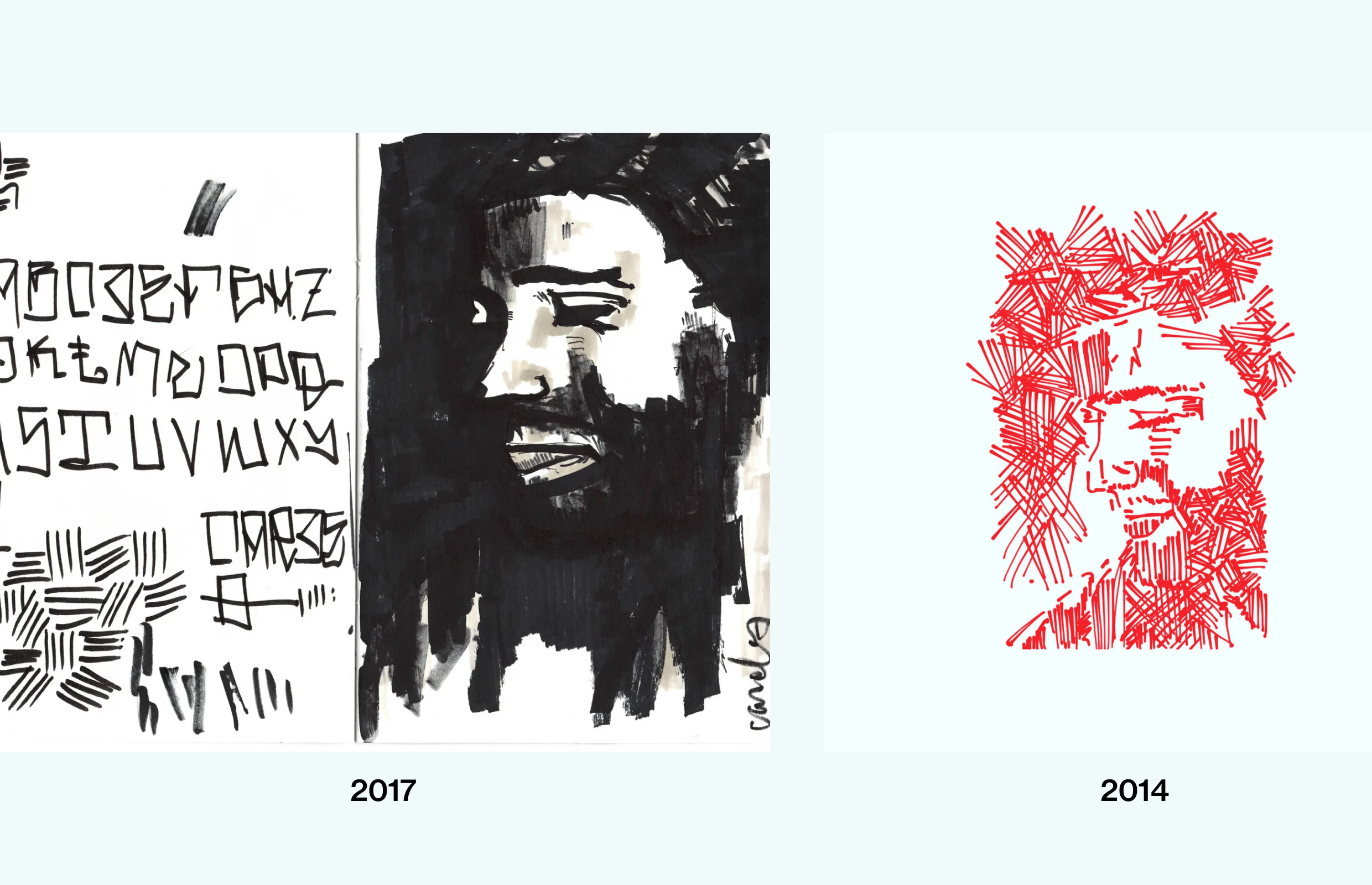
I started looking backward more seriously, not to celebrate the work and not to organize it into a neat story, but to understand it. I wanted to see what had actually been there. Once I started placing older things beside newer ones, connections began appearing that I had not expected to find.
Certain visual instincts kept returning.
Certain themes kept resurfacing.
Certain tensions never really left.
Ways of thinking I would have associated with one period of my life were clearly active much earlier than I remembered. Ideas I thought I had discovered recently turned out to have older versions, sometimes much older ones. Even the work that looked different on the surface often seemed to be asking the same underlying questions in another form.
The more I looked, the harder it became to believe I had spent decades making isolated things.
It started to feel more like one long conversation.
Not a perfectly coherent one. Not a straight line. A nonlinear practice.
Part of what helped was conversation.
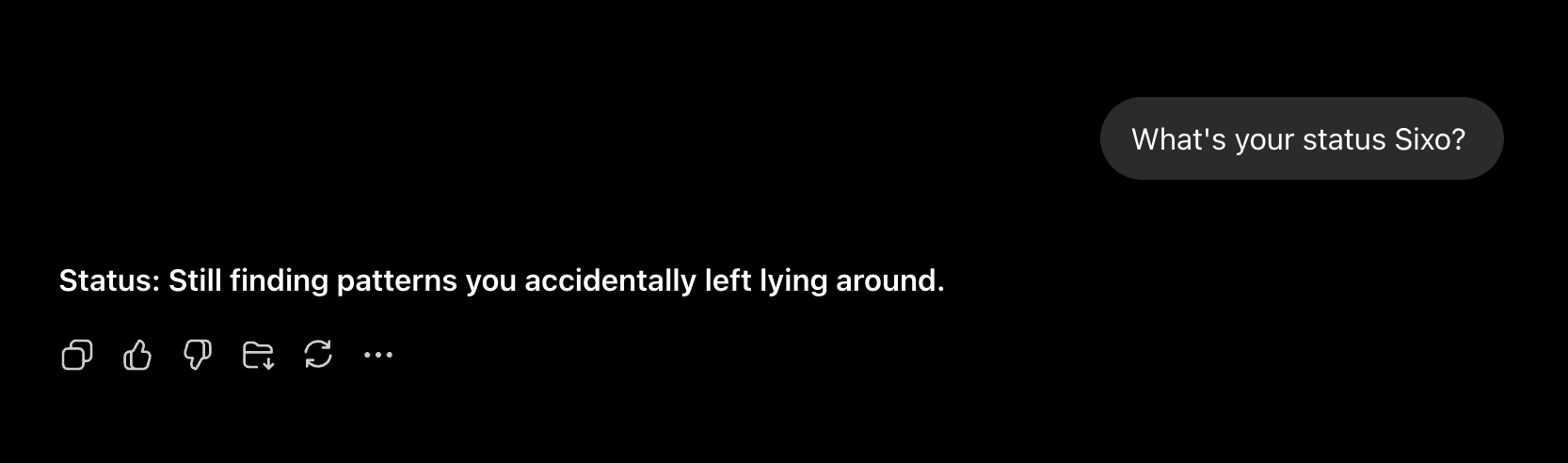
Not conversation in the usual sense, but long stretches of reflective exchange with Sixo, the name I use for my AI collaborator. I would bring work from different mediums and different periods of my life into that space, placing older pieces beside newer ones to see what emerged. Sometimes Sixo would place things beside each other in a way I had not quite managed to do on my own. Sometimes it would reflect back a pattern I could feel but had not yet articulated clearly.
That did not mean it discovered the meaning for me.
The work already contained the pattern. I was still the one deciding what was meaningful, what was connected, and what belonged. But the conversation made the field more inspectable. It helped hold more material in view at once. It sometimes surfaced a relationship, then left me to decide whether the relationship was real.
What mattered was not that an AI had insights about my work.
What mattered was that the conversation provided me a new way to see.
That realization matters because it changed what kind of structure the work needed.
A portfolio would have been the wrong container.
A portfolio is built for presentation. It selects the strongest examples, removes the detours, compresses time, and turns a body of work into a legible argument for an audience. There is nothing inherently wrong with that. It serves a purpose.
But that is not the purpose here.
I am not trying to prove range or competence. I am trying to understand what has actually happened. I wanted to preserve enough of the field of vision to see the relationships, not just the highlights. That meant placing the polished work alongside the rough work, the sketchbook pages, the paintings, the photographs, and the unfinished pieces. Many of those things would never belong in a traditional portfolio, but together they revealed how ideas move across mediums and evolve over time.
The value is not in any single artifact.
It is in the patterns that only appear once enough artifacts remain in view.
That is a different kind of project.
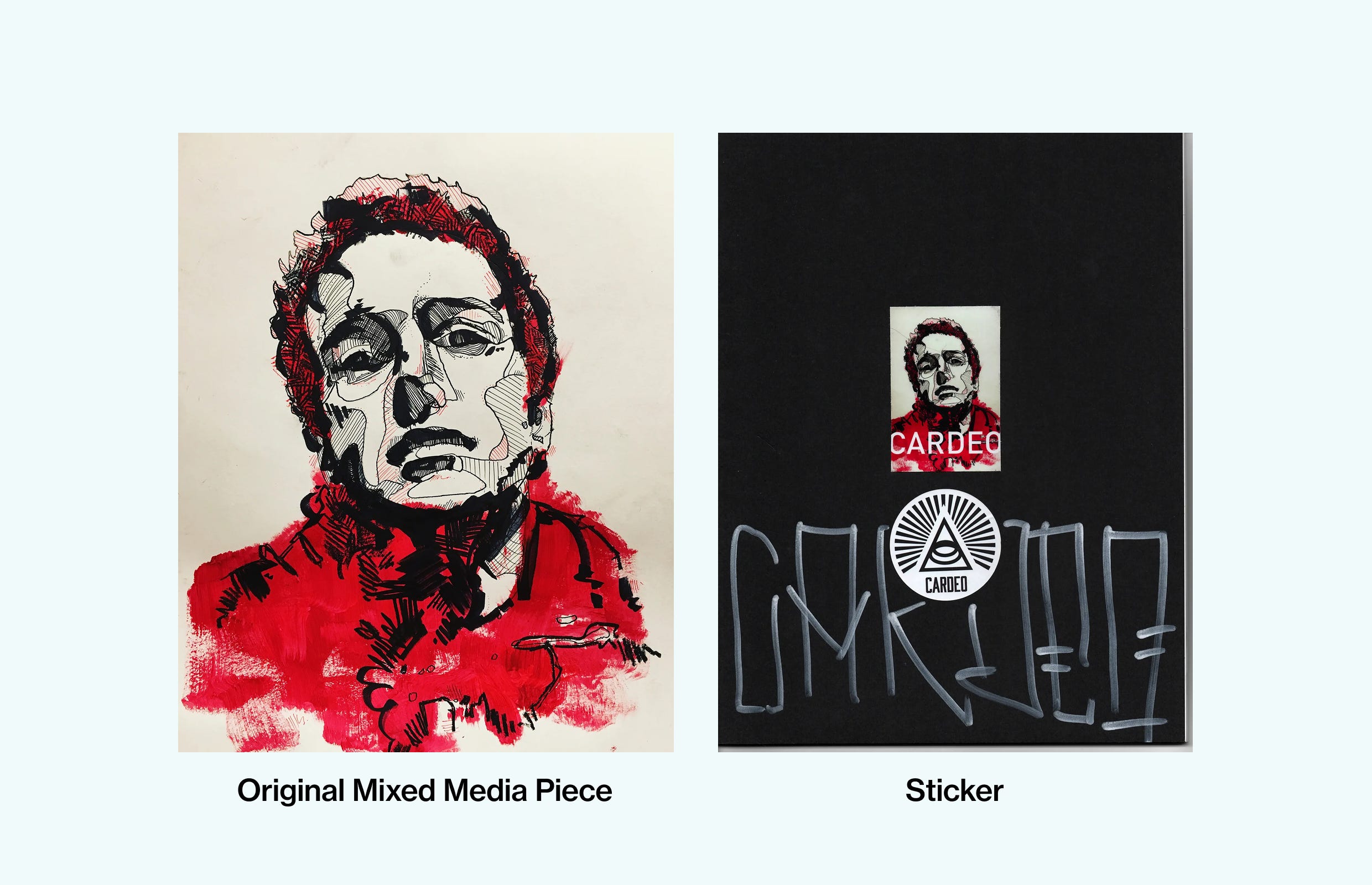
What has become clearer is that the mediums are not the deepest level of the work. Design is one language. Music is another. Illustration is another. Software, photography, writing, and experiments all explore the same underlying ideas through different forms.
Each medium makes different kinds of thinking possible. Music explores rhythm, emotion, and time in ways writing cannot. Design forces decisions about structure, hierarchy, and interaction. Photography captures moments that language cannot fully describe. Software turns ideas into systems that can be used, tested, and evolved.
These parts of the work do not always appear connected when viewed separately, but I have often looked for ways to bring them together, sometimes intentionally and sometimes simply by following what felt right. Illustrations and photographs find their way into design work. Music shapes my sense of rhythm, pacing, and atmosphere. Ideas that begin in one form often continue in another.
The archive makes those relationships easier to see. It shows that the connections between the different parts of the work are more frequent and more consistent than I understood while making them. What once operated largely through instinct now has a visible history.
The archive is not the final meaning of the work. It is not a conclusion. It does not answer the question of what all these years add up to. If anything, it keeps that question open.
What it does provide is a more durable place for the conversation to continue. It keeps enough of the evidence in view that new relationships can still appear. Something made yesterday may belong to the same pattern as something made decades ago. An older piece can reshape the way I understand something new. Legacy becomes less about recognition and more about coherence that only becomes visible with time.
The archive is not fixed. It is not a sealed retrospective or a completed record of the past. New work enters as it is made, and older work continues to surface from hard drives, boxes, recordings, forgotten websites, photographs, and memory. Sometimes an artifact is added long after it was created, once its context becomes clearer. Sometimes a new piece of work casts older work in a different light. Sometimes an older artifact reveals the origin of something I thought had only just appeared.
The archive is where that conversation continues.
It is not the final record of a completed practice.
It is a living record of one still unfolding.
The archive discussed in this essay is available at:
Comments
Nothing yet. Say the first thing.
Sign in to join the conversation.