
This week’s article is by Jeffrey Wainwright, author of New and Collected Poems, which is published this month. Get 15% off New and Collected Poems with code JUNEBOOKS15 here.
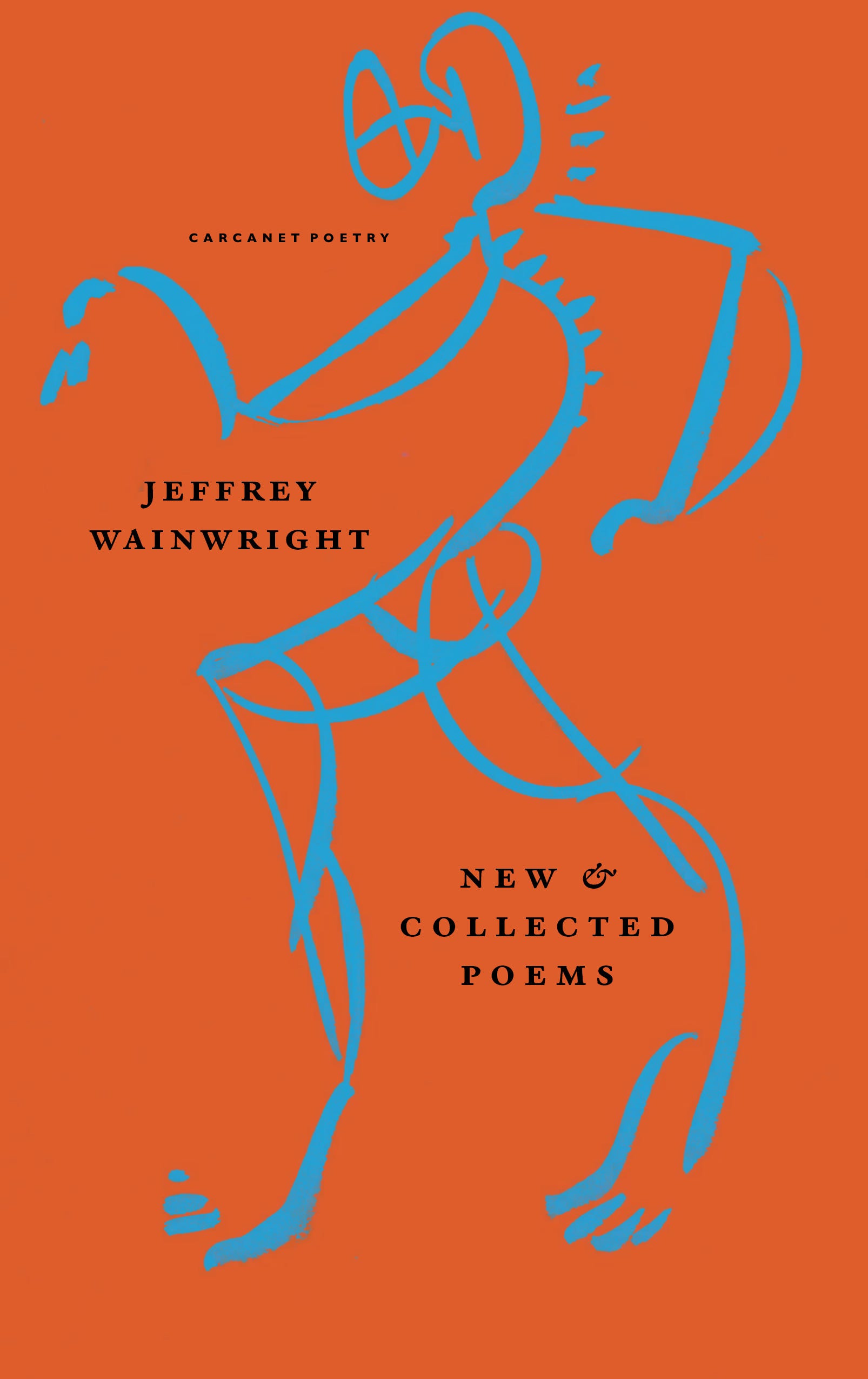
This volume contains all the poems that I have published since 1967 and have been collected in various volumes by Carcanet beginning with Heart’s Desire in 1978. In writing these notes I have concentrated on my early years as I think this time, especially that at Leeds University, was especially formative.
I began writing poetry under the important influence of an English teacher at school, Ken Lowe, and pursued this ever more seriously at Leeds University. Leeds at this time in the 1960s was a possibly unique place for aspiring poets. It was the first university to have a resident writing fellowship and although the Gregory Fellow’s activity had no curricular presence he - it was always he in those days – spoke for the significance of contemporary poetry and involved himself with student writing through voluntary group work and especially the magazine Poetry and Audience which was sold around the campus every Friday for 1d. Typically, I became involved with P&A by helping staple copies on Thursday afternoons and eventually became its editor.
Only a small minority of students bothered with P&A, but for those of us who were involved it was the focal point of our interest and the site of often vigorous discussion centring round the merits of poems, many of which were submitted from outside the university and by poets of repute. I still remember the roasting my schoolday poems received from the editor and others.
Among my principal influences during my time at Leeds were Ken Smith whose first book The Pity was published by Cape whilst he was a mature undergraduate and Jon Silkin, a former Gregory Fellow and graduate of the university who stayed on editing his magazine Stand. I recall one occasion when I met Silkin by accident in the department office and was presented with a poem which he had written the night before for my immediate judgement. This was rather demanding for a first year undergraduate but typical of the kind of milieu of which Silkin significantly contributed to poetry at Leeds. Geoffrey Hill, a member of department staff, was very unlikely to seek opinion in such fashion, but was nonetheless was a cynosure of Leeds poetry and probably became my greatest influence from this time and subsequently.
Since that time I have been a university teacher of English, a career not always as congruent with writing poetry as might be assumed but does offer substantial vacations which I used to further my work. I have never been prolific, especially in the 1980s, when I all but forgot that I wrote poetry at all. That drought was broken in 1994 with the publication of The Red-Headed Pupil which marked for me an important development in that the way of working with poetic sequences or series that I had used before was extended to book length. This is a book that I still regard with particular affection, partly because it represents a renewal of activity and because it extends my range of subject matter. Before that time I had concentrated on historical and political themes but the Pupil brought in more philosophical ideas. I don’t think that I have abandoned the political themes of early poems such as ‘1815’ or ‘Thomas Muntzer’ but tried to recognise the immense variety of subject that the poem is capable of in such series volumes as The Reasoner (2012) or Here on Earth (2022).
A poem is not its subject but the words that it contains. This is not a theoretical position I would have recognised at the beginning but I hope this summative volume shows that this is so.
This week’s article is by Jeffrey Wainwright, author of New and Collected Poems, which is published this month. Get 15% off New and Collected Poems with code JUNEBOOKS15 here.
No posts
Comments
Nothing yet. Say the first thing.
Sign in to join the conversation.