

1. This Week’s Top CDR Highlights
2. Commercial News
3. Research Papers
4. Web Posts
5. Reports
6. Upcoming Events
7. Job Opportunities
8. Podcasts
9. YouTube Videos
10. Deadlines

Research Paper: A new model-based study published in Nature Sustainability warns that using Bioenergy with Carbon Capture and Storage (BECCS) with wood from existing forests is unlikely to deliver negative emissions for up to 150 years due to slow forest regrowth and emissions from land use change. The research indicates that such projects could emit more than natural gas with CCS for decades and increase electricity costs by roughly 3.5 times.
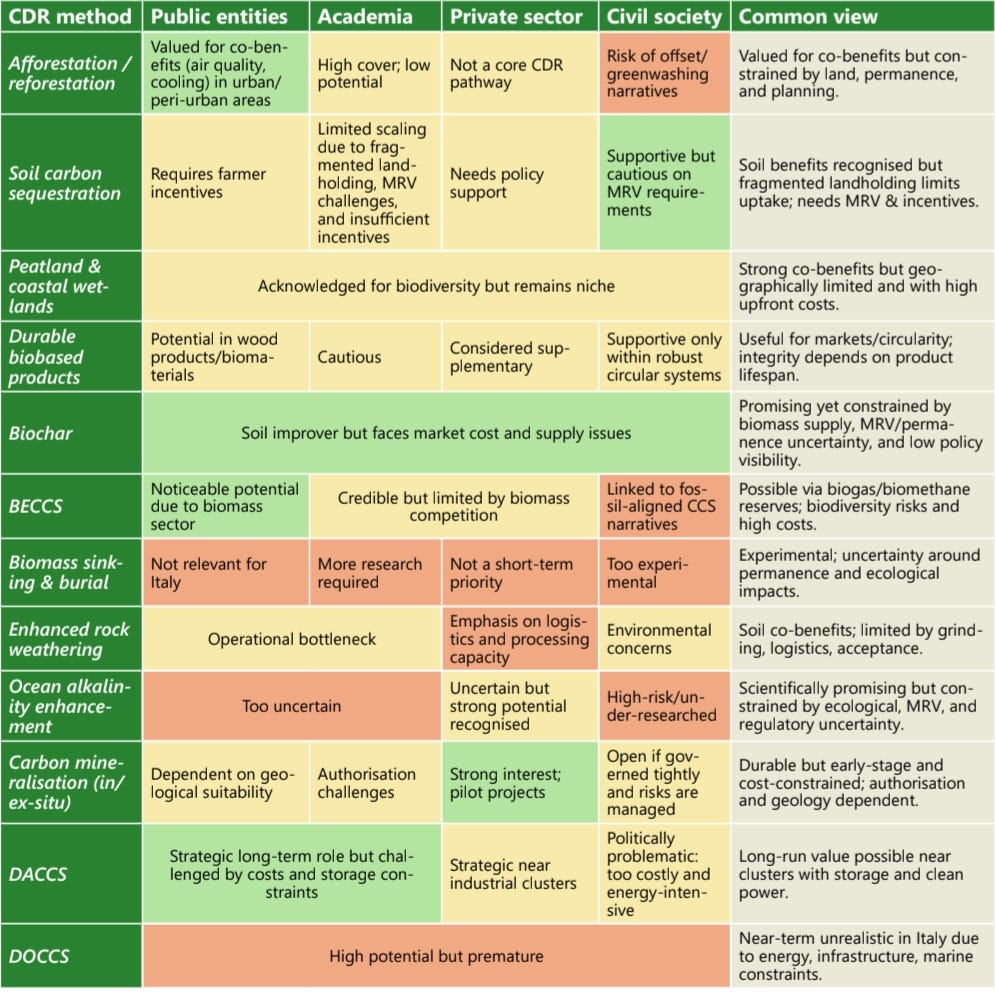
Report: A Carbon Gap and B3Carbon report highlighted that Italy can only achieve 2050 net-zero targets by rapidly scaling CDR to address hard-to-abate emissions. While having a potential capacity of up to 91 million tonnes annually, success hinges on swiftly overcoming challenges in governance, public support, and technological implementation.
New Resource: Kita partnered with Gallagher to launch an industry-first risk intelligence consulting service for carbon removal projects.
Impact Report: XPRIZE Carbon Removal released its Post-Prize Impact Report, highlighting major progress like 2,800+ jobs created, 243,552 tonnes of CO₂ removed, and over $3.3B in capital mobilized.
ERW Symposium: Carbon Drawdown Initiative announced to organize the 2026 Symposium, a two-day event showcasing findings from the world’s largest enhanced weathering greenhouse experiment. Scientists will present results on 16 June via livestream, followed by hands-on workshops on 17 June exploring applications of the data and insights.
Call for Consultations: The Rainbow Biogenic carbon capture and storage methodology is open for public consultation. Deadline: 21 May 2026
Analysis: CDR.fyi published a new article examining how Biochar, BECCS, DACCS, Enhanced Weathering, Alkalinity Enhancement, and other CDR methods have measured up against what was projected in 2021 - across permanence, scale, measurability, and cost.
Call for Input: Gold Standard has launched its first methodology for biochar-based carbon removal, establishing a tiered framework to ensure durable sequestration. Consultation closes: 22 May 2026
Innovation Challenge: The UpLink-World Economic Forum Innovation Challenge is open, focusing on scaling CDR with the First Movers Coalition. It targets startups working on CDR finance, bankability, and market design. Winners gain access to WEF networks, strategic support, and expert guidance. Applications close 4 June 2026.
Read on to unpack more updates:
For those building, investing, or leading in CDR, Carbon Removal Updates aims to deliver a consistent edge. Please consider supporting its continued growth with a paid subscription.
Get 20% off a group subscription
Carbonyx raised $1.2M to convert mining waste into silica & carbonates for CDR (Betakit)
Alt Carbon delivered 2,500t ERW credits to Mitsui O.S.K. Lines (Alt Carbon)
BCarbon issued 80,000 verified CDR credits from Carbon Rho’s Red River pilot project (Decarbon Fuse)
CURA Climate and TITAN Group partnered to validate low-carbon cement technology (Cura Climate)
Mangrove Systems acquired biochar CDR platform Grain Ecosystem (ESG Today)
Kita & Gallagher launched risk intelligence service for CDR projects (Kita)
Capture6 secured financing to scale brine-to-freshwater while removing up to 25,000 tCO₂/yr (LinkedIn)
Verra issued the first credits under its afforestation, reforestation, and revegetation (ARR) methodology, VM0047 (Verra)
Elkem sold biocarbon assets to CHAR Technologies, entering a 5-year supply agreement for 62,500 tonnes (Biochar Today)
Altitude partnered with Engrow for +425,000t CDRs from Biochar Facilities in India (Altitude Carbon)
Isometric expanded into Environmental Attribute Certificates, becoming the first certifier to support CDR, superpollutant reduction, and EACs on a single registry (Isometric)
Chestnut Carbon doubled its footprint in Southeast U.S. to nearly 70,000 acres of restored forests (PR Newswire)
Three Tigasfera biochar facilities added to Puro.earth’s supplier list (LinkedIn)
Climate Impact Partners partnered with Aviva Investors on Colombian afforestation project (Climate Impact Partners)
Climeworks & Stockholm Exergi partnered on BECCS project and targets 800,000 tCO₂/yr from 2028 (LinkedIn)
Verde Resources & Oregon Biochar Solutions partnered to integrate biochar into asphalt (Biochar Today)
NoviqTech’s Coralia and A Healthier Earth launched 2Mt biochar project generating 550k credits (Biochar Today)
Canadian Discovery Ltd. released the geological carbon storage atlas of Eastern Canada (CDL)
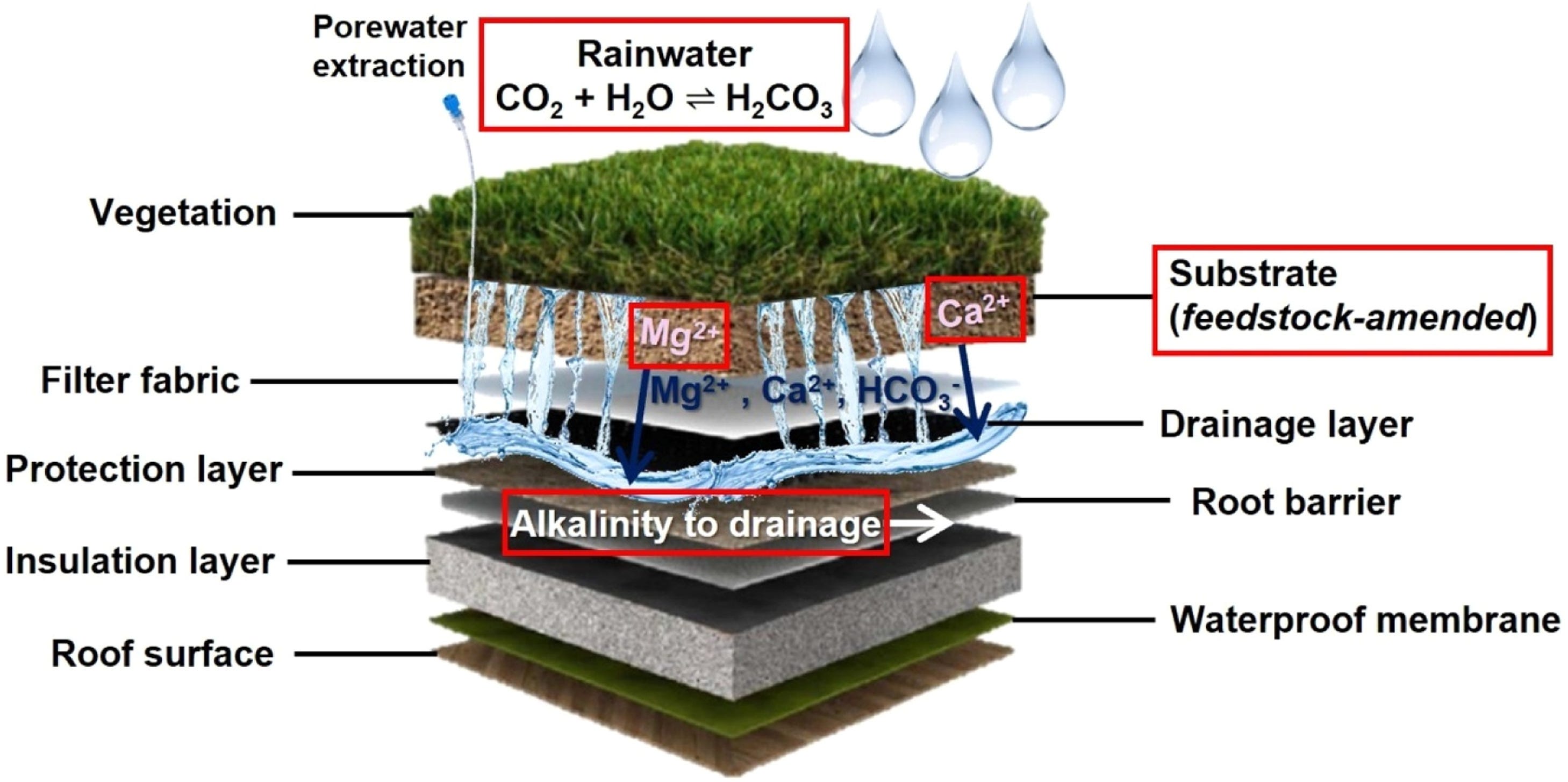
Assessing Urban Green Roofs for CO2 Removal via Enhanced Rock Weathering in Europe
Authors: Liam A. Bullock, Rasesh Pokharel, Amy Lewis, et al.
Synopsis: This conceptual study evaluates ERW applied to urban green roofs as a carbon dioxide removal strategy. It estimates that, under ideal conditions, European rooftops could remove tens of millions of tonnes of CO₂ by 2060, with global potential reaching hundreds of millions of tonnes annually. Beyond CDR, ERW green roofs may improve energy efficiency and reduce evaporation, but real-world feasibility depends on structural limits, climate conditions, costs, and policy support.
The Legal Framework for Direct Ocean Carbon Capture and Storage (Volume 1: International Law)
Authors: Romany M. Webb, Korey Silverman-Roati
Synopsis: This paper examines the governance of direct ocean carbon capture and storage (DOCCS), a marine carbon dioxide removal approach that enhances ocean CO₂ uptake by extracting dissolved carbon. While potentially high in CDR capacity, DOCCS raises environmental and operational risks linked to infrastructure, water handling, and CO₂ storage. The study reviews international legal frameworks, identifying governance gaps and emphasizing the need for careful regulation to ensure safe, just, and responsible deployment.
Greenhouse gas budget and net carbon sequestration of different afforestation types of the “Grain for Green” Project
Authors: Tianren Yu, Fei Lu, Binbin Huang, Xiaobiao Zhang, Shishuai Yang, Bojie Li, Xiaoke Wang, Yafei Yuan, Lu Zhang, Zhiyun Ouyang
Synopsis: This study quantifies greenhouse gas sequestration and emissions across afforestation types in China’s “Grain for Green” project (2000–2020) using a CANM-GGP framework. Total net carbon sequestration reached 5097 TgCO₂, though emissions offset part of this benefit. Firewood and ecological forests showed the highest mitigation rates, while economic forests acted as net emitters. Overall, afforestation delivered substantial climate benefits with strong variation by forest type.
A Modular BECCS Process Chain Framework from Biomass to Carbon Removal
Authors: Viola Schaber, Ronja Wollnik, Malgorzata Borchers, Daniela Thrän
Synopsis: This paper presents a modular framework for Bioenergy with Carbon Capture and Storage (BECCS) developed within the German “CDR-Atlas” initiative. It breaks BECCS into transparent, adaptable components spanning biomass sourcing, conversion, CO₂ transport, storage, and governance. Designed to improve clarity and comparability, the framework supports planning, stakeholder engagement, and identification of deployment bottlenecks to enhance BECCS governance and scalability.
A comprehensive design framework for nature-based solutions projects focused on carbon dioxide removal: a systematic literature review of approaches, models and tools
Authors: COMBE Mathieu, BRIARD Tristan, HARAMBAT Fabien, SEGONDS Frédéric, JEAN Camille
Synopsis: This study reviews design methodologies for Nature-based Solutions (NbS) targeting CDR, addressing gaps in practical implementation guidance. Based on 118 articles, it develops a structured framework covering definition, assessment, optimization, and implementation stages, with associated models and tools for carbon accounting and ecosystem analysis. The study highlights increasing use of modelling and machine learning, and calls for more systematic, resilient NbS design approaches for effective CDR deployment.
Hemispheric contrast in summer season duration responses to CO2 removal
Authors: Bo-Joung Park, Seung-Ki Min, Soon-Il An, et al.
Synopsis: This study uses climate model simulations with CO₂ ramp-up and ramp-down scenarios to show that summer season length does not fully revert as CO₂ declines, revealing hysteresis in the climate system. Extratropical lands experience longer summers during cooling than warming, with stronger effects in the Southern Hemisphere due to delayed Southern Ocean cooling. In the Northern Hemisphere, both Southern Ocean conditions and Atlantic circulation changes contribute to asymmetric recovery and persistent heat extremes.
Decades of increased emissions from forest-fuelled BECCS
Authors: Timothy D. Searchinger, Liqing Peng, Daniela Russi & Charles Canham
Synopsis: This study evaluates BECCS using wood from existing forests and finds it is unlikely to deliver negative emissions within 150 years. It may generate higher emissions than natural gas without CCS for decades and significantly increase electricity costs. Because most emissions occur upstream and cannot be captured, and wood is carbon-intensive with lower efficiency, the results suggest caution against forest-based BECCS policies.
Scaling Carbon Removal to Gigaton Capacity using Pressurized Direct Air Capture
Authors: Ahmed Elsayed and Thaier Alawadh
Synopsis: This study proposes a high-pressure DAC system that shifts focus from lowering energy per unit CO₂ to increasing air-processing throughput. The design reduces contactor size significantly and boosts performance through improved absorption capacity and rate using a scalable solvent system. By leveraging mature industrial technologies, it aims to enable gigaton-scale CO₂ removal, highlighting turbomachinery and membranes as key areas for future cost reductions.
Potential Impact of Fires on Enhanced Rock Weathering: Learning from the Effects of Fires on Soil Properties and Nutrients
Authors: Karam Abu El Haija, Rafael M Santos
Synopsis: This perspective examines how wildfires may influence enhanced rock weathering (ERW) as a carbon dioxide removal strategy. It finds that fire effects on soil chemistry are highly variable and nonlinear, with temporary ash-driven alkalinity, altered mineral behavior, and increased erosion potentially disrupting weathering processes and carbon accounting. The study highlights fire history as a critical but currently overlooked factor in ERW deployment and monitoring frameworks.
In-depth direct air capture integration to achieve zero-carbon and water data center
Authors: Yuxuan Zhang, Sheng Chen, Mincheng Gao, Xiaojie Lin, Binjian Nie, Yongzhen Wang, Long Jiang
Synopsis: This study proposes integrating DAC with data center operations to reduce both carbon emissions and water use. By using data center waste heat to support DAC desorption, the system improves energy efficiency and enables partial environmental balancing. Case results suggest that zero-carbon operation is achievable under certain electricity emission factors, while additional CO₂ capture is needed to offset water use, supporting the concept of zero-water and zero-carbon data centers.
Microalgae-Based Direct Air Capture Systems for Carbon Dioxide Emission Reductions in Developing Megacities: A Techno-Economic and Policy Analysis
Authors: W.M.S. Dayanath, I.M.S.K. Ilankoon, Shafeeq Ahmed Syed Ali, Meng Nan Chong, Su Chern Foo
Synopsis: This article reviews microalgae-based DAC as an urban carbon mitigation strategy for developing megacities. Compared to trees and conventional DAC, microalgae systems offer higher photosynthetic efficiency and greater CO₂ uptake per biomass while fitting within constrained urban space. The study highlights their potential for carbon neutrality and economic co-benefits, but emphasizes the need for stronger economic analysis, technical validation, and supportive policy frameworks for large-scale deployment.
Investigating the effects of co-applied basalt and biochar on carbon removal efficiency and grain yield in rice paddy
Authors: Xueliu Gong, Jiarong Wu, Jingsong Qin, Jinkai Zhao, et al.
Synopsis: This study evaluates enhanced silicate weathering in rice paddies using basalt and biochar. Basalt alone delivers substantial CO₂ sequestration (~11.3 t CO₂/ha) and yield gains, while adding biochar reduces methane and nitrous oxide emissions and improves soil microbial dynamics. However, combined treatment lowers net mineral-based CDR efficiency compared to basalt alone, highlighting trade-offs between greenhouse gas mitigation, crop yield, and optimal amendment design in flooded agricultural systems.
Rhenium isotopes reveal enhanced rock organic carbon oxidation over the Toarcian Oceanic Anoxic Event
Authors: Madeleine Stow, Alexander J. Dickson, Julie Prytulak, et al.
Synopsis: This study uses rhenium isotope records from Early Jurassic marine sediments to reconstruct changes in organic carbon weathering during the Toarcian Ocean Anoxic Event. Results indicate that 6–7°C global warming intensified oxidation of rock organic carbon, releasing large amounts of CO₂ (estimated 7600–20,490 PgC). This shows that chemical weathering can act as a strong positive climate feedback during extreme warming, rather than a stabilizing one.
Low-cost copper ore oxygen carrier for Bio-CLOU systems: performance assessment and potential for negative-carbon bioenergy (BECCS)
Authors: Tiago Roberto Costa, Amirhossein Filsouf, et al.
Synopsis: This study evaluates a low-cost natural copper ore (CuB) as an oxygen carrier for Bioenergy with Carbon Capture and Storage (BECCS) using Chemical Looping with Oxygen Uncoupling (CLOU). Experiments show high oxygen transport capacity, stable redox cycling, and effective performance under biomass conditions up to 950°C. CuB’s reactivity, durability, and low cost make it a promising material for scalable negative-emission energy systems.
Recognition in climate justice: Lessons from land-based carbon dioxide removal
Authors: Elisa Paiusco
Synopsis: This article re-evaluates the ethics of CDR by extending beyond distributive justice to include recognition justice. Using Fraser’s status-based framework and Caney’s integrationist perspective, it argues that land-based CDR (e.g., BECCS) can overlook Indigenous identities, values, and knowledge systems - especially in regions vulnerable to land grabs. It concludes that recognition is essential for ethically assessing CDR deployment.
Fluid–rock interaction experiments on basaltic volcanic rocks at 90 bar and 50 °C for potential carbon storage in Patagonia, Chile
Authors: Carolina Henríquez, Klebson C. Silva, Luis Mancini, Paulo Quezada, Mauricio Calderón, Leonardo Fadel Cury, Anelize Bahniuk
Synopsis: This study presents the first laboratory-scale CO₂ mineralization experiments on basalts from the Pali Aike Volcanic Field in Patagonia for carbon capture and storage (CCS). Results show rapid basalt dissolution and carbonate formation (calcite) within 30 days under CO₂-rich conditions, confirming strong reactivity. The findings highlight the region’s potential as a strategic site for long-term, stable CO₂ sequestration via basalt mineralization.
Potential and Challenges for CDR in the European pulp and paper sector
Authors: Kristin Jordal, Rahul Anantharaman, Michaël Becidan, et al.
Synopsis: This perspective assesses the European pulp and paper sector’s potential for large-scale carbon dioxide removal (up to 50 Mtpa) via CO₂ capture and storage (CCS), particularly in kraft pulp mills. While promising, recovery boiler flue gases contain complex impurities that may hinder capture performance and system stability. The study highlights the need for further research, supportive regulation, long-term investment certainty, and large-scale CDR markets to unlock sector-wide deployment.
INTERVIEW: Uncertainty over Microsoft CDR purchases unlikely to derail nature-based carbon removal market (Carbon Pulse)
Questions about Lithos’ first ERW credit issuance (CarbonPlan)
Reality check: Scaling carbon dioxide removal requires a compliance market, not just voluntary commitments (Carbonaide)
Accounting for Impact: Insights from Ryan Waddington, CEO of Cowboy Clean Fuels (Abdolute Climate)
FEATURE: Canadian CDR stands on compliance precipice, needs support to kick voluntary ‘training wheels’ (Carbon Pulse)
Who buys next? (Negative Emissions)
Is heavy industry the future of carbon removal in the US? (Latitude Media)
EDF Launches New Research Program on Phytoplankton Carbon Solutions (Environmental Defense Fund)
QC Intel - ERW developer set to publish data amid critique of removal rate (QC Intel)
ERW developer defends quantification of CO2 removal that achieved 8.3 tonnes per hectare (Carbon Pulse)
Researchers to measure atmospheric benefits of restored San Francisco Bay wetland (UC Santa Cruz)
AI Could Trigger New Demand for Carbon-Removal Sector, Report Says (WSJ)
Ocean pH Project Produces Carbon Uptake Results (The Province Town Independent)
The Balearic Islands have the largest CO2 storage capacity in the western Mediterranean, thanks to posidonia (Forbes)
The Carbon Removal Market Was Built On One Customer. Now What? (Forbes)
Can the carbon removals market keep pace with the AI boom? (Financial Times)
How to Save the Planet Without Screwing Over Poor People (Persuasion)
Is heavy industry the future of carbon removal in the US? (Latitude Media)
Carbon removal certification needs to catch up with carbon-storing science (Paebbl)
Offset project paperwork should be internally consistent. It’s not. (Carbon Plan)
Sylvera’s Biochar Framework: Ensuring Quality and Trust in Carbon Projects (Sylvera)
INTERVIEW: Soil restoration could unlock overlooked climate cooling pathway (Carbon Pulse)
EV Battery Production Process Inspires New Direct Air Carbon Capture Technology (DongA Science)
How Microsoft spooked the global carbon removal market (Politico Pro)
Response to “Direct Measurement of Carbon Dioxide Removal Due to Enhanced Weathering” (ACS Publications)
Meeting the moment: how scientific philanthropies are expanding their reach (Nature)
New Zealand seeks to scale carbon removal solutions, ministry priorities report says (Carbon Pulse)
Microsoft CDR purchasing pause “naturally alarming” but can “ultimately prove constructive” -whitepaper (Carbon Pulse)
VCM Project: Anglo American lists ERW project on Isometric (QC Intel)
EU mulls annual calls to spur crediting under removals framework (QC Intel)
Carbon Removal Ireland Highlights Great National CDR Potential, Urging For Swift Action (Carbon Herald)
Soil Carbon Dioxide Removal Estimates from Enhanced Weathering Deployments in the Southeastern United States Are Likely Tied to Cation Mobility (ACS Publications)
Clean Air Task Force and Penn State Researchers Outline Framework for Robust Biomass Carbon Removal Standards (Biochar Today)
VCM Project: Verra registry now lists over 6,000 projects (QC Intel)
How carbon removal tech is adapting to Trump’s energy agenda (Axios)
Can the European “tortoise” and the US “hare” both finish the carbon management race in time for net-zero 2050? (Everything & The Carbon Sink)
Thinking about carbon dioxide like an accountant (One Percent Brighter)
Soil tillage and carbon sequestration – time to break with the paradigm (Carbon Readings)
“You Don’t Need to Have All the Answers Before You Start” (CDRJobs)
Italy’s potential to deploy CDR at scale and speed - Background report (Carbon Gap & B3 Carbon)
Scaling CDR: Opportunities to collaborate across the UK, EU, US and beyond (CO2RE)
No Wasted Opportunities - Embedding Carbon Removal in the Management of Wastewater, Concrete and Mine (Carbon Gap and Deloitte North and South Europe)
Post-Prize Impact Report: XPRIZE Carbon Removal (XPRIZE Carbon Removal)
Durable CDR: Reality vs Expectations: How are CDR methods performing relative to expectations? (CDR.fyi)
Biochar applications for petroleum hydrocarbon Sorption & bioremediation (Myno Carbon)
What’s Hot in Carbon Dioxide Removal – A Peek into the Future of Climate Tech by AirMiners | 28 April 2026 | Online
(NEW) Geological Carbon Storage Atlas of Eastern Canada: Part 1 by CDL | 28 April 2026 | Online
Why biochar is top of mind for buyers and why quality is worth the premium by Climeworks | 28 April 2026 | Online
2026 Annual Convening by Carbon to Sea Initiative | 28-30 April 2026 | Halifax, Nova Scotia
AfricArena Nairobi Summit 2026 by AfricArena | 29 April 2026 | Nairobi County
(NEW) Knowledge Exchange Webinar: Carbon Dioxide Removal in Urban Contexts | 30 April 2026 | Online
Climeworks Summit 2026 | 04 May 2026 | Online | Zyrich Switzerland
Inside NextGen CDR Buyers Club: Lessons on Carbon Removal Purchasing by NextGen | 04 May 2026 | Switzerland
Reducing Risk, Time & Cost in Carbon Removal Purchasing Agreements by OSCAR | 04 May 2026 | Switzerland
(NEW) CDR Events at Climate Week Zurich | 4-9 May 2026
Upgrade Your Carbon Procurement Strategy: Building a High-Integrity Carbon Portfolio by Trellis | 05 May 2026 | Online
Getting Carbon Removal Right: A Buyer’s Guide to Quality, Strategy, and First Steps by Unbound | 05 May 2026 | Online
Inside Carbon Storage: A Guided Tour Underground by Flums Switzerland | 05 May 2026
(NEW) Getting Carbon Removal Right: A Buyer’s Guide to Quality, Strategy, and First Steps by Carbon Unbound | 05 May 2026 | Online
(NEW) Geological Carbon Storage Atlas of Eastern Canada: Part 2 by CDL | 05 May 2026 | Online
Unlocking Value in Lower-Carbon Cement by Sylvera | 06 May 2026 | Online
(NEW) Building Africa as a Global CDR Hub: Innovation & Entrepreneurship by Emerging Climate Frontiers | 06 May 2026 | Online
(NEW) Operational net zero by Milkywire | 07 May 2026 | Online
From Waste to Carbon Removal: Biochar Coffee & Tea in Nature by BCHAR | 07 May 2026 | Switzerland
Two events. One day for CDR by First Climate | 07 May 2026 | Zurich
(NEW) Evolutions in measurement tools and guidance: understanding Verra’s soil sampling handbook and its implications on SOC measurement by ChrysaLabs | 07 May 2026 | Online
YCNCC Spring Symposium + Fifth Anniversary by Yale Center for Natural Carbon Capture | 7-8 May 2026 | New Haven
Achieving net zero: CO₂ removal in focus by Swiss Carbon Removal Platform | 09 May 2026 | Zurich
Carbon Removal Investment Summit 2026 | 13 May 2026 | London
(NEW) Carbon Removal Investment Summit 2026 by CCarbon | 13 May 2026 | London, UK
(NEW) The path to net zero: Carbon dioxide removals for businesses by Removall Carbon | 13 May 2026 | Online
Scaling CDR in the Global Hub for Finance, Policy, and Innovation by Carbon Unbound east coast | 19 & 20 May, 2026 | New York
APACdr SUMMIT by Emerald Climate | 20 May 2026 | Singapore
Carbon Removal and Carbon Farming “CRCF” | 20-21 May 2026 | Brussels
10 International Symposium on Soil Organic Matter | 25-29 May 2026 | Brazil
(NEW) Remote sensing of the land biosphere to support quantification of carbon emissions and removals by the EU projects Avengers, Eye-clima & Paris | 26 May 2026 | Online
Negative Emissions Summit 2026 | 04 June 2026 | Brussels
(NEW) Carbon Drawdown Symposium 2026 by Carbon Drawdown Initiative | 16–17 June 2026 | Online & Hotel Luise, Erlangen
Carbon Removal London 2026 by Supercritical | 22 June 2026 | London
Scaling CDR Summit by Isometric | 23 June 2026 | London, England
23rd International Conference on Carbon Dioxide Utilization | 6-10 July 2026 | St.Louis, Missouri
Nordic Climate Finance Summit | 3-4 September 2026 | Oslo, Norway
CDR26–CDRANet’s 2026 conference on the future of carbon dioxide removal | 20-21 October 2026 | Vancouver
(NEW) 2026 North American Biochar Conference - Setting the Standard for Biochar by American Biochar Institute | November 16-18, 2026 | New Orleans, Louisiana
We have curated a “Carbon Removal Events Calendar.” Explore and stay informed about upcoming events, conferences, and webinars on Carbon Dioxide Removal technology. Sync specific events / all events to your default calendar to ensure you never miss out on important CDR updates.
Carbon Removal Events Calendar
Add our Carbon Removal Events Calendar to your default calendar in 2 ways:
Head to this link: https://teamup.com/kshqbfhrqkw36sxymd
Sync specific event: Click the event → menu (≡) → Share → choose your calendar → Save.
Or sync all events: Menu (≡) → Preferences → iCalendar Feeds → Copy URL → Add to your calendar settings → Subscribe.

Postgraduate Research Associate – Blue Carbon OAE at The Yale Center for Natural Carbon Capture | Deadline: 11 May 2026
“The Yale Center for Natural Carbon Capture (YCNCC) is seeking up to two Postgraduate Research Associates to join the Center’s new Blue Carbon Ocean Alkalinity Enhancement (OAE) project. This ambitious project sits at the intersection of coastal ecology, geochemistry, and carbon markets.”
Science Lead - Research & Innovation at UNDO | UK
“UNDO is tackling the greatest challenge of our time: climate change. We are a fast-growing for-profit business that is already one of the biggest carbon removal companies in the world.”
Intern in Sorbent Structures Characterization (80-100%) at Climeworks | Opfikon, Zurich, Switzerland
“Climeworks is a leading high-quality carbon removal provider, combining decades of expertise in Direct Air Capture (DAC) technology with a holistic approach to carbon removal solutions.”
Head of Carbon at InPlanet | Remote
“InPlanet is a mission-driven, remote-first ClimateTech startup headquartered between Germany and Brazil with hubs in Sao Paulo, Rio de Janeiro, New York and London. We’re scaling Enhanced Rock Weathering (ERW) in tropical agriculture as a powerful method to remove carbon, regenerate soils, and transform the way food is grown in the tropics.”
Process Engineer at A Healthier Earth | Royal Wootton Bassett, England, United Kingdom
“A Healthier Earth is a climate-tech catalyst delivering profitable, planet-positive projects at speed and scale.”
Project Development Manager at Living Carbon | Remote
“Living Carbon is a public benefit company with a mission to fight climate change by transforming marginal land into high-value environmental assets. Our team specializes in restoring abandoned mineland and degraded agricultural land into diverse, thriving forests.”
Climate Hardware Engineer at TerraFixing | Ottawa, ON
“TerraFixing is a Canadian company developing Direct Air Capture (DAC) systems designed to operate efficiently in cold climates.”
Operations Intern at Brineworks | Amsterdam
“Brineworks’ Direct Air Capture solution can operate anywhere and reach ultra-low costs around the world, with a clear path to <$100/ton-CO₂.”
Executive Director at Carbon Plan | U.S. Remote
“CarbonPlan is a nonprofit research organization using science and data to accelerate climate action.”
Postdoctoral Researcher - coastal carbon cycling, marine Carbon Dioxide Removal at Institut für Kohlenstoff-Kreisläufe
“Institut für Kohlenstoff-Kreisläufe is seeking a postdoc with interest in coastal carbon cycling, marine Carbon Dioxide Removal (mCDR), and its Measurement, Reporting, and Verification (MRV). Within the Horizon Europe project MAR-CO2, this postdoc will focus on direct measurements of air–sea exchange in the context of pilot-scale mCDR interventions and explore the role of equilibration timescales in MRV
Senior Geoscientist at Mati Carbon | Bangalore
“Mati Carbon is an award-winning durable carbon removal enterprise with a mission to empower 100 million smallholder farmers by 2040.”
Mechanical Engineer at Sponge | Boston area, MA
“Sponge is an early-stage climate technology company. Sponge has a simple direct air capture (DAC) process that removes carbon dioxide from the atmosphere at a fraction of the energy and cost required by others. This cost advantage unlocks huge markets in utilization and sequestration.”
Geochemical Modeler at InPlanet | Remote
“Inplanet is an impact-driven, remote-first, ClimateTech (CDR) startup headquartered in Germany and Brazil to reverse climate change and make tropical agriculture more regenerative, low-carbon, and sustainable.”
Looking for your dream job in CDR? There are 530 jobs available *right now*: check them all out at:

Cement Innovation with CURA | Constructing Tomorrow
“How do we innovate and decarbonize one of construction’s most established and carbon intensive materials? This week on Constructing Tomorrow, Adam Borgatti and Prabh Banga are joined by Phil De Luna from CURA to explore how circular, low-carbon cement technologies are translating research into practical, scalable solutions.”
mCDR: Can the Ocean Store Our Carbon for Centuries? with Dr. Morgan Raven | Oceanography
“We may need to remove carbon from the atmosphere—can the ocean help? Biomass-based marine carbon dioxide removal (mCDR) explores whether natural ocean processes can help store carbon for the long term. Oceanographer and biogeochemist Dr. Morgan Raven explains how organic carbon moves through marine systems, why low-oxygen environments like deep-sea brines and fjords may enable long-term carbon sequestration, and what scientists still need to understand before these approaches can scale. This episode explores marine carbon dioxide removal, carbon sequestration, blue carbon, and ocean biogeochemistry, while addressing uncertainty, environmental risk, and the role these strategies might play alongside emissions reduction. A clear, grounded look at one of the most complex and debated frontiers in climate science.”
The challenger turning DAC’s water problem on its head | Powering Sustainable Ideas
“They extract CO2 direct from the air, but direct air capture technologies typically drink up massive quantities of water and energy while doing so. An alternative offered by New Jersey-based Avnos actually generates water. In this episode of Powering Sustainable Ideas, Avnos founder Will Kain explains how it’s done, and why he believes his innovation will be especially attractive to datacenter operators.”
Why We All Keep Going to Carbon Unbound—w/ Oli Katz, Unbound Summits | Reversing Climate Change
“Every industry needs a Schelling point. For carbon dioxide removal, it’s Carbon Unbound.
Unbound Summits’ CEO and Founder Oliver Katz joins host Ross Kenyon to chat about building the CDR industry’s flagship in-person events, the economics of conference organizing, why the adaptation event series didn’t work, the pay-to-play dynamics of industry speaking slots, and whether carbon removal professionals need to take themselves less seriously.
Listeners can get themselves 10% off of Carbon Unbound East Coast in New York City on May 19th-20th by using the discount count: “ReversingClimateChange”.”
A Carbon Removal Experiment at NYU’s Urban Farm | New York University
“On April 3, 2026, Jonathan Lambert, a Gallatin visiting assistant professor, joined Melissa Metrick, the manager of NYU’s Urban Farm Lab, to create the first enhanced rock weathering site in New York City. To achieve this, they spread 10 pounds of volcanic rock called basalt over a soil bed at the Urban Farm Lab for carbon sequestration.”
Dr. Antonius Gagern on the evolution and impact of Carbon to Sea | Carbon to Sea
“As Carbon to Sea heads into our 2026 Annual Convening, Executive Director Dr. Antonius Gagern sat down with Senior Manager for Communications and Policy, Danny Gawlowski, to discuss Carbon to Sea’s founding, evolution, and its role in the rapidly-developing ocean-climate field.”
Cementing a more sustainable alternative to concrete | CBS Sunday Morning
“The process of making 30 billion tons of concrete every year produces more carbon pollution than all the world’s ships and planes put together. Now, the North Carolina and Denmark-based Biomason is using biotechnology, including naturally-occurring microbes, to create “biocement” that’s just as sturdy but emits much less CO2. David Pogue reports.
“CBS News Sunday Morning” features stories on the arts, music, nature, entertainment, sports, history, science and Americana, and highlights unique human accomplishments and achievements. Check local listings for “CBS News Sunday Morning” broadcast times.”
Beyond Microsoft | Tito - AirMiners
No Wasted Opportunities | Embedding carbon removal in waste management | 21April, 2026, Brussels | Carbon Gap
“On April 21, Carbon Gap and Deloitte are launched a report examining the transformative potential of carbon removal in three industries where removal capacity matches or exceeds existing GHG output: wastewater, concrete and demolition waste, mining waste
These sectors offer an opportunity to design regulatory frameworks that not only scale carbon dioxide removal (CDR) technologies, but build competitiveness and resilience and transition these sectors toward net-negative profiles.
We hear from project developers and policymakers in each industry with a discussion on main opportunities and barriers they face in building a business case for these decarbonisation strategies.”
This is CDR: Carbon Removal: The Next Generation - CRC 20226 Webinar #7 | OpenAir
“The seventh webinar in the OpenAir Collective’s 2026 Carbon Removal Challenge monthly webinar series began with the announcement of this year’s winning teams! Then we will had a discussion with three people who have their fingers on the pulse of carbon removal: Ben Rubin from Carbon Business Council (CO2BC), Oli Katz from Carbon Unbound, and Joanna Klitzke from Frontier.
Topics included carbon removal’s latest happenings, global trends, and predictions; the themes planned for the upcoming Carbon Unbound East Coast conference in NYC, where Challenge winners will present; as well as recently announced CO2BC initiatives. “
Public Consultation – Global Biochar C-Sink (Version 4.0) | Carbon Standards International AG
Bad Idea #49 “We can stop worrying about the climate” with Zeke Hausfather | WePlanet
“In this episode of Saving the World from Bad Ideas, Mark Lynas speaks with climate scientist Zeke Hausfather about a dangerously complacent idea: we can stop worrying about the climate. As recent years have broken temperature records and warming appears to be accelerating, they explore why that conclusion is badly mistaken.
The conversation unpacks the hidden role of aerosols in masking warming, what recent spikes in temperature do and do not mean, whether net zero really stops further warming, and how seriously we should take tipping points, geoengineering, and carbon removal. The result is a clear-eyed discussion that pushes back against both panic and complacency, and argues for staying focused on the scale and complexity of the climate challenge.”
Weekly Carbon Removal Updates from 20 April - 26 April 2026 | Carbon Removal Updates Bulletin
Ireland launched a biochar socio-economic impact framework tender | Deadline: 29 April 2026
Isometric released draft biochar mobile reactor module for public consultation | Deadline: 30 April 2026
The Office of the United Nations High Commissioner for Human Rights has launched a call for input on climate-related technologies, including geoengineering (CDR & SRM), to assess their potential impacts on human rights | Deadline: 30 April 2026
EU Commission launched consultations on post-2030 climate policy | Feedback due 04 May 2026
Government of Canada launched a call for bids to enable the federal departments to buy $10M CAD CDR credits from Canadian projects | Deadline: 11 May 2026
(NEW) The Rainbow Biogenic carbon capture and storage methodology is open for public consultation | Deadline: 21 May 2026
(NEW) Gold Standard has launched its first methodology for biochar-based CDR | Consultation closes: 22 May 2026
Deloitte launched an EU survey to design a carbon farming Buyers’ Club under CRCF | Deadline: 26 May 2026
(NEW) Carbon Removall launched its 2026 RFP for carbon removal projects | Deadline: 29 May 2026
SICTOM PEZENAS-AGDE in southern France issued a €13.7M biochar facility tender | Submission deadline: 29 May 2026
(NEW) The UpLink–World Economic Forum Innovation Challenge is open for CDR startups | Applications close 4 June 2026
Call for Proposals: Sweden’s Energy Agency launched a $1B BECCS funding round for CO₂ capture from bioenergy | Deadline: 13 August 2026
Swedish Energy Agency opened 15M SEK funding for negative emissions R&D | Deadline: 31 August 2026
Carbon Management journal calls for CDR papers | Deadline: 13 November 2026
Twitter | Bluesky | LinkedIn | YouTube | Substack | Podcast 1 | Podcast 2
Comments
Nothing yet. Say the first thing.
Sign in to join the conversation.