

1. Top Highlight of the Week
2. Commercial News
3. Research Papers
4. Web Posts
5. Theses
6. Reports
7. Upcoming Events
8. Job Opportunities
9. Podcasts
10. YouTube Videos
11. Deadlines
TOP HIGHLIGHT OF THE WEEK
Q2 2026 CDR Market Review (ClimeFi)
ClimeFi released its Q2 2026 CDR Market Review, highlighting an 83% quarter-on-quarter increase in carbon removal commitments. While Microsoft remained the largest buyer, non-Microsoft commitments reached a record high in Q2 2026, rising 136% compared with the same period last year.
Read on to unpack more updates from past week:
Carbon Removal is one of the most important climate topics of our time.
If you value accessible, independent coverage of CDR research, governance, experiments, and policy developments, consider subscribing to Carbon Removal Updates.
Paid subscriptions directly support keeping this resource public, independent, and growing.
Get 20% off a group subscription
The European Commission adopted three carbon farming certification methodologies under the CRCF Regulation, covering agriculture and agroforestry on mineral soils, rewetting and restoration of peatlands, and afforestation (European Commission)
Spiritus signed a Joint Development Agreement with Aramco R&DC to engineer and develop a 100 tCO₂/yr direct air capture pilot deployment (LinkedIn)
Thryve.Earth secured 10-year offtake deals with Google and McKinsey via the Symbiosis Coalition for over 335,000 tonnes of nature-based CDR, with Google purchasing 260,000 tonnes and McKinsey buying 75,000 tonnes (Google)
Tencent agreed to buy 300,000 CDR credits from Thryve.Earth, its first CDR deal outside China (Bloomberg)
Shoosmiths signed a five-year forward CDR offtake agreement with Carbonaires for biochar removals supplied by HUSK (Shoosmiths)
Idex and Nuada launched a 10,000-tonne BECCS hub in France (Gas World)
Pratt Zero Carbon completed the Puro.earth preliminary assessment for its PECCUS-1 BECCS project targeting 132,000 tCO₂ removals annually (LinkedIn)
Isometric launched the Evidence Library, simplifying supplier submissions and speeding verifier reviews (Isometric)
Arrhenius AG closed a seed funding round to scale its microalgae-based carbon removal technology (LinkedIn)
Octavia Carbon unveiled Africa’s first real-world green concrete deployment in Nairobi with Zen Carbon (LinkedIn)
Global Carbon Council and CCS+ partnered to develop high-integrity CDR and CCS methodologies (Global Carbon Council)
Natural Resources Canada (NRCan) announced over C$26 million for 17 clean energy projects, including one led by Carbon Upcycling (LinkedIn)
Remove opened applications for its India CDR startup accelerator, offering mentoring and up to €15,000 in pre-purchase support. Deadline: 23 August 2026 (Remove)
Authors: Paul G. Rozzi, JeongA Lee, Vu Quoc Do, Timothy S. Arthur, Charles A. Roberts, Kyle C. Smith
Synopsis: This study presents an electrochemical direct air capture (DAC) system that captures and releases atmospheric CO₂ by using proton-intercalation electrodes to control the pH of an alkaline electrolyte. The approach achieved efficient CO₂ enrichment with relatively low electrical energy requirements, particularly at higher enrichment levels. The findings also show that minimizing electrolyte mixing and optimizing electrode materials and microstructures could further improve the efficiency, productivity, and scalability of electrochemical DAC systems.
Guidance on integrating marine environmental impacts of ocean alkalinity enhancement into life cycle assessment
Authors: Mona H. Delval, Patrik J. G. Henriksson, Paul Behrens, Laura Scherer, Pablo Trucco-Pignata, Patricia Grasse, Phil Renforth & Nils Thonemann
Synopsis: Addressing a key gap in life cycle assessment (LCA), this study develops a methodology to identify the marine environmental impact pathways of OAE. The analysis finds that existing LCA models only partially capture impacts such as marine ecotoxicity, eutrophication, and ocean acidification, highlighting the need for improved characterization factors and multidisciplinary research to better assess OAE and other marine carbon removal technologies.
Direct air capture integrated with urban energy network for building decarbonization
Authors: Sheng Chen, Ruiqi Wang, Mingchen Gao, Jielin Luo, Tao Wang, Binjian Nie, Carolina Font Palma, Long Jiang
Synopsis: Exploring the integration of DAC with buildings, this study examines how coupling DAC with urban energy systems could reduce emissions while improving indoor air quality. The analysis suggests building-integrated DAC can cut HVAC energy use by 20–60% and lower CO₂ capture costs to around $200 per tonne by using waste heat. The findings highlight the potential of DAC to support net-zero buildings and cities through coordinated energy, carbon, and building system design.
Subsoil acidity causes long delays in inorganic carbon sequestration by Enhanced Weathering
Authors: Søren Jessen, Rasmus Jakobsen, Majken Looms, Per Ambus, Dieke Postma
Synopsis: Using a century-long agricultural liming experiment as a proxy for enhanced weathering (EW), researchers show that acidic subsoils can delay carbon sequestration far longer than previously recognised. The study finds that alkalinity generated in topsoil may take 30–100 years to reach groundwater through acidic sandy subsoils, limiting EW’s effectiveness as a near-term carbon removal strategy. The findings highlight the need to account for subsoil chemistry when planning EW deployment.
CO2 removal by applying the adsorption process to biochar from waste materials
Authors: Maria Angelica Martins Costa, Geisa Albini, Lucas Freitas de Oliveira, et al.
Synopsis: Investigating biomass-based carbon capture materials, this study compares spent coffee grounds biochar (SCGB) with commercial activated carbon and other modified biochars for CO₂ adsorption in dynamic column systems. SCGB achieved the highest adsorption capacity among tested materials, reaching 7.17 mmol CO₂/g under optimal conditions. The findings show that capture performance depends on more than surface area, with pore accessibility, surface chemistry, and gas residence time also playing key roles in developing low-cost carbon capture solutions.
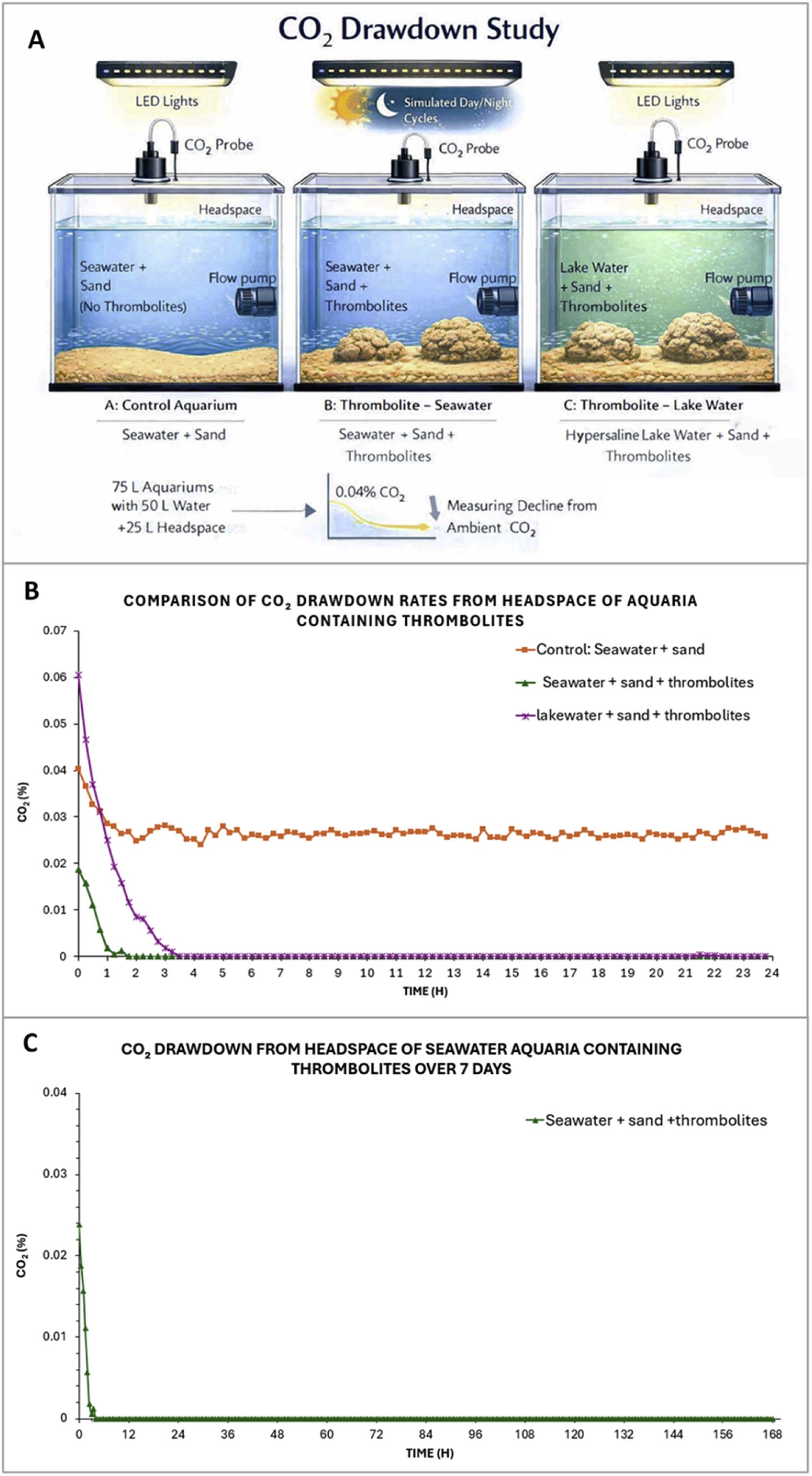
Thrombolites as a potential nature-based solution for carbon dioxide removal
Authors: Veena Nagaraj, Daniel Gorman, M. James McLaughlin, Santonu K. Sanyal, Thomas Jones, et al.
Synopsis: Investigating microbialites as an emerging CDR pathway, this study evaluates the ability of thrombolite communities to survive, grow, and sequester carbon under marine conditions. Experiments show seawater-acclimatised thrombolites increase biomineralisation, rapidly reduce CO₂ concentrations in controlled systems, and colonise engineered substrates. The findings suggest microbialite-based approaches could offer a promising biological route for long-term carbon storage, although further scaling research is needed.
Why does policy design matter when integrating permanent carbon removals into the EU ETS? Assessing the outcomes through dynamic modelling
Authors: Haavisto, Jami
Synopsis: Examining the integration of permanent carbon removals into the European Union Emissions Trading System (EU ETS), this thesis uses a dynamic emissions trading model to assess the effects of different policy designs. The results show that allowing removal credits without reducing allowances could weaken emissions reductions and lower carbon prices, while replacing allowances with removals can improve climate outcomes. The study recommends careful market oversight and supportive policies to encourage investment in permanent removals.
A sequential gated research framework for addressing potential impacts of marine carbon dioxide removal on fisheries, aquaculture, and Indigenous communities
Authors: Kalina C Grabb , Gabriella D Kitch , Helen S Findlay , et al.
Synopsis: Presenting a research framework for evaluating mCDR, this study outlines how developers can assess ecological, social, and economic impacts beyond carbon removal performance. The stage-gated approach covers planning, experiments, pilot trials, scaling, and long-term monitoring, with a focus on marine ecosystems, fisheries, and aquaculture. The framework aims to support responsible mCDR development by identifying potential benefits, risks, and trade-offs.
Vacuum Moisture Swing Direct Air Capture: A Low-Thermal, Water-Managed Pathway for Scalable CO2 Removal - Preprint
Authors: Stephano Sinyangwe, Sierra Binney, Gray Becker, Peter Schulze, Jennifer L. Wade
Synopsis: Introducing a low-temperature DAC approach, this study evaluates a vacuum moisture swing (VMS) process that uses water vapour-driven regeneration instead of energy-intensive heating. Modelled across different humidity conditions, the system achieves CO₂ productivities comparable to high-temperature DAC technologies while avoiding external heat requirements. The findings demonstrate the potential of moisture-based DAC, while highlighting the importance of managing water consumption and energy use during scale-up.
A nonlinear lumped chemical kinetics model for carbon dioxide emission and removal dynamics: mathematical analysis, numerical simulation and global sensitivity investigation
Authors: James Gathungu Gicheru, Cyrus Gitonga Ngari & Peter Wanjohi Njori
Synopsis: This study develops a nonlinear chemical kinetics model to simulate atmospheric CO₂ emissions from hydrocarbon fuels while incorporating natural carbon removal processes such as photosynthesis and carbonic acid formation. Mathematical analysis and numerical simulations confirm the model is stable, robust, and physically consistent. Sensitivity analysis identifies oxygen replenishment as the most influential parameter, suggesting the model could serve as a useful tool for evaluating carbon dynamics and informing greenhouse gas mitigation and climate policy.
Design and Implementation of Direct Air Capture Systems Based on Moisture Swing Adsorption for Efficient Carbon Dioxide Removal
Authors: Oluwatosin O Adewole, Taopheeck Yusuf, Victor Hammed, Abdulrahman M. Hassan
Synopsis: Presenting a design framework for large-scale DAC, this study explores moisture swing adsorption (MSA) as a lower-energy alternative for regenerating CO₂ sorbents. The proposed system combines modular air contactors, structured sorbents, compression systems, and humidity-controlled regeneration to enable continuous operation. Results indicate MSA-DAC could reduce energy requirements by 50–70% compared with thermal approaches, with projected costs declining through technological learning and wider deployment.
Ammonia hydrate-excited PASP chelation of calcium in electrolytic manganese residue: Synergistic mechanisms for enhanced CO2 mineralization and desulfurization with environmental co-benefits
Authors: Fan Lin, Jiancheng Shu, Huimin Yang, Shaoqin Chen, Zhuoqi Liu, Shuhua Guo, Yanyan You, Yong Yang, Yihong Liu
Synopsis: Developing a chelation-enhanced approach for CO₂ mineralization, this study uses electrolytic manganese residue (EMR) as a calcium-rich industrial waste source for carbon storage. The proposed NH₃·H₂O–PASP system accelerates calcium extraction, achieving high desulfurization efficiency and CO₂ mineralization capacity while producing valuable by-products. Life cycle assessment shows significant reductions in greenhouse gas and sulfur dioxide emissions, highlighting a pathway toward carbon-negative waste management.
‘Taking inaction on carbon sinks to court’1 in Ireland? Comparative analysis of Finnish and German cases
Authors: Alessandra Accogli, Amelia Burnette
Synopsis: Examining the growing role of carbon sinks in climate litigation, this article analyses legal challenges brought against Finland and Germany over alleged failures to protect land-use carbon storage. The study explores how statutory climate obligations can be used to address ecosystem degradation and highlights the relevance of carbon sinks in future climate cases. It also discusses the limits of legal strategies that focus solely on carbon reduction while balancing biodiversity and broader social objectives.
The Race to Negative Emissions Technologies and the Centrality of Fossil Fuel Companies
Authors: Giorgio Tripodi, Linda Sabattini, Martina Iori, and Francesco Lamperti
Synopsis: Analysing the role of fossil fuel companies in carbon sequestration technologies, this article compares established carbon capture and storage (CCS) with emerging DAC. Using project data, corporate networks, and patent analysis, the study finds that fossil fuel firms remain central to CCS but are largely disconnected from DAC innovation. The findings suggest DAC represents a disruptive, competence-destroying technology requiring different capabilities and knowledge pathways from traditional carbon capture approaches.
Mechanism-based framework enables consistent assessment of carbon offsetting projects
Authors: Elena Huber, Peter Holzapfel & Matthias Finkbeiner
Synopsis: Proposing a new way to classify carbon offset projects, this study introduces a mechanism-based framework that categorizes projects according to how they reduce emissions or enhance carbon storage. The framework uses three decision trees to assign projects into two primary and 20 detailed categories, better reflecting project-specific risks and impact calculations. Case studies demonstrate that the approach can improve the consistency, transparency, and robustness of carbon credit classification across diverse sectors.
Rewilded scrubland as a carbon sink: allometric models to improve biomass estimation under herbivory
Authors: Nancy C Burrell , Marc Macias-Fauria, Elizabeth Jeffers and Katherine J Willis
Synopsis: Using destructive sampling of 290 shrubs from five dominant species at the UK's Knepp Estate, researchers developed taxon-specific equations to estimate above- and belowground biomass in rewilded scrublands. The findings reveal substantially higher belowground carbon storage than predicted by conventional forest models, particularly in heavily browsed plants. The new approach improves carbon accounting for scrub ecosystems and supports their inclusion in greenhouse gas inventories, rewilding initiatives, and carbon offset programmes.
The inconvenient truth about direct air capture: Realigning climate strategy with physical reality
Authors: Charles Q. Jia, Donald W. Kirk
Synopsis: Challenging the large-scale reliance on DAC, this analysis argues that current energy requirements make widespread deployment difficult under global clean-energy constraints. It highlights the risk that DAC could divert resources from emissions reduction and direct decarbonization efforts. The article advocates prioritising emissions prevention, natural carbon sinks, and lower-energy carbon removal approaches such as biochar that align better with energy and thermodynamic limitations.
How Uncertain Are Estimates of Marine Carbon Dioxide Removal? Insights from a Simplified Model
Authors: Ruth Musgrave
Synopsis: Using a one-dimensional ocean model and Monte Carlo simulations, this study investigates uncertainties in predicting carbon removal from mCDR approaches such as ocean alkalinity enhancement and direct ocean removal. The results show that early carbon drawdown estimates are influenced by surface ocean conditions, while long-term uncertainty is dominated by mixing, gas exchange, and deployment depth. The findings highlight challenges for monitoring, verification, and carbon crediting of mCDR projects.

The role of carbon removals and credits in the ETS reform — and beyond (Contexte)
UC Santa Cruz team helps state better understand how wetlands sequester carbon and improve air quality (UC Santa Cruz)
Since 2012, Iceland has been pumping captured carbon dioxide into volcanic rock so it permanently turns into stone instead of escaping back into the atmosphere (INKL)
SBTi Standard V2.0: What EAC and SAFc buyers need to know (Ceezer)
The UK needs a carbon removal industry. Right now, it is nascent (Part 2) (CO2RE)
The UK needs a carbon removal industry. Right now, it is in its infancy (CO2RE)
Preserving the integrity and enhancing the effectiveness of the EU ETS: Priorities for the 2026 review (Carbon Management Europe)
Ocean Alkalinity Enhancement (OAE) in En-ROADS (Climate Interactive)
Earning Leadership status with SBTi could cost companies billions (Trellis)
Can a Petrolhead Ever Be Net Zero? (Remove Carbon Today)
From Engineering to the Frontlines of African CDR (CDRJobs)
Climate Projects Team Appears Before The Joint Committee on CORSIA and CDR (Philip Lee)
European Commission sets second quarterly EU CBAM price at €75.28 (Carbon Pulse)
mCDR company hands off US pilot project to philanthropic initiative (Carbon Pulse)
Carbon accumulation of tropical peatlands over millennia: a modeling approach (Landscape Alliance)
How LongStraw Carbon scales biochar carbon removal across India with BlueLayer’s dMRV platform (Blue Layer)
The potential role of state and local governments to drive the scale-up of carbon dioxide removal (Illuminem)
To produce high weathering effects, we turned our greenhouse “up to 11”: but where on Earth would that be? (Carbon Drawdown Initiative)
What the room said: three groups, one urgent problem (Part 3) (CO2RE)
KIBECO Concrete - Concrete as a CO₂ storage medium (KIBECO)
Towards a “legacy emissions” climate accord (Everything & The Carbon Sink)
What if removing carbon dioxide permanently from the atmosphere was really cheap? (One Percent Brighter)
Three futures for carbon removal (Everything & The Carbon Sink)
Temporal variations in carbon fluxes in European rivers and their implications for River Alkalinity Enhancement (RAE) scenarios
Authors: Tian, Mingyang
Synopsis: Combining historical records, laboratory experiments, and regional modelling, this thesis evaluates the feasibility of RAE as a carbon dioxide removal strategy. The findings suggest many European rivers could transport substantial amounts of captured CO₂ to the ocean as alkalinity, although capacity varies with river chemistry and environmental conditions. The research also highlights the importance of robust monitoring, geochemical constraints, and ecological safeguards before large-scale RAE deployment.
Enabling the Global Deployment of Carbon Dioxide Removal (CRIA)
VCM Market Outlook 2026: Supply, Demand & Price (Climate Decode)
Market Insights Brief: Carbon Deal Dynamics, June 2026 (Ecosystem Marketplace)
Sylvera Carbon Market Data Snapshot Q2 2026 (Sylvera)
CDR Market Review: Q2 2026 (ClimeFi)
2025 United States Biochar Market Report (American Biochar Institute)
Capturing the Greenhouse Gas Removal (GGR) opportunity: Recommendations on a well-functioning GGR market in the UK (Carbon Capture and Storage Association)
How much carbon dioxide removal does the world need and what does the latest science mean for European climate policy? by DVNE | 14 July 2026
(NEW) Toronto Built Environment Happy Hour: CURA x Zacua Ventures by Zacua Ventures | 14 July 2026 | Canada
(NEW) Finance, Governance, and Indigenous Participation in mCDR | 15 July 2026 | United States
(NEW) Oceans as Climate Heroes: mCDR Day | 15 July 2026 | United States
Building the Silicon Valley of Carbon in BC by Centre for Climate and Business Solutions | 16 July 2026 | Vancouver, Canada
Carbon Removal Day - Cleaning Up Climate Pollution by Mast Reforestation | 16 July 2026 | University of Washington
Scaling Carbon Dioxide Removal Through Policy: Lessons for Türkiye and the Wider Region by COP31 Türkiye Brief | 23 July 2026 | Online
(NEW) 3rd International Conference on Biochar Research and Application and the 2026 IBI Biochar World Congress by International Biochar Initiative | 7–10 August, 2026 | Zhengzhou, China
(NEW) Second LATAM Congress on Biochar by International Biochar Initiative | 13-14 August 2026 | Bogotá, Colombia
Nordic Climate Finance Summit | 3-4 September 2026 | Oslo, Norway
Carbon Removal Policy Summit by Carbon Gap | 16 September 2026 | Brussels
(NEW) COMPASS Workshops for mCDR Professionals - Three free virtual workshops designed specifically for the mCDR community
Developing Your Message | 16 September 2026 | Online
Communicating Risk | 07 October 2026 | Online
Engaging with the Media | 28 October 2026 | Online
Carbon Unbound Europe 2026 | 20-21 October 2026 | London, United Kingdom
2026 North American Biochar Conference - Setting the Standard for Biochar by American Biochar Institute | November 16-18, 2026 | New Orleans, Louisiana
Massachusetts Carbon Dioxide Removal Study Workshop for the Executive Branch by RMI | 17 November 2026 | Online
AGU26 Annual Meeting | 7–11 December 2026 | San Francisco, CA | Abstract Submission Deadline: 05 August 2026
Ocean Visions 2027 Summit | 02-04 March 2027 | Hilton Cartagena
We have curated a “Carbon Removal Events Calendar.” Explore and stay informed about upcoming events, conferences, and webinars on Carbon Dioxide Removal technology. Sync specific events / all events to your default calendar to ensure you never miss out on important CDR updates.
Carbon Removal Events Calendar
Add our Carbon Removal Events Calendar to your default calendar in 2 ways:
Head to this link: https://teamup.com/kshqbfhrqkw36sxymd
Sync specific event: Click the event → menu (≡) → Share → choose your calendar → Save.
Or sync all events: Menu (≡) → Preferences → iCalendar Feeds → Copy URL → Add to your calendar settings → Subscribe.

Vice President, Global Policy Position at Carbon to Sea Initiative | Remote
“Carbon to Sea Initiative is a 501(c)(3) nonprofit working to determine whether ocean alkalinity enhancement (OAE) can be a safe, scalable, and durable approach to carbon dioxide removal, and to lay the groundwork for a responsible sector.”
Product Manager at Puro.earth | Finland
“Puro.earth is a leading carbon removal marketplace and registry, building trusted digital infrastructure connecting suppliers, auditors, buyers and partners.”
Accounting Manager at Chestnut Carbon | Remote
“Chestnut Carbon is a leading developer of nature-based carbon removal solutions, focused on generating high-quality, U.S.-based forest carbon projects that are additional, verifiable, and designed to accelerate the path to net zero.”
Content Creator (part time) at Milkywire | Stockholm
“Milkywire sits at the intersection of climate, technology, and business. Since our start in 2017, we have helped some of the world’s most prominent companies turn their climate ambitions into concrete projects and initiatives.”
Québec Project Development Lead at CarbonRun | Québec
“CarbonRun’s mission is to restore the health of rivers and their natural ability to draw carbon from land-to-ocean.”
Policy & Research Lead at Carbon Removal India Alliance | India
“Carbon Removal India Alliance is a consortium of organisations and individuals developing carbon removal technology, conducting research and engaging with policy in India.”
Senior Technical Product Manager - Carbon and Environmental Models at Klim | Berlin, Germany
“At Klim, we work with farmers and food companies to make regenerative agriculture scalable and financially rewarding for farmers.”
R&D Characterization & Test Engineer at Atoco
“Atoco, Inc. is a startup company founded by the distinguished scientist Prof. Omar Yaghi, the inventor of MOF and COF chemistry. Atoco is currently working on technologies in the fields of atmospheric water harvesting and CO2 capture.”
Senior Data Engineer at AirCapture | Berkeley, CA
“AirCapture supply commercial and industrial customers with clean CO₂ captured from our atmosphere to radically improve the environment, our economy, and our lives.”
Head of Sales at Andes | Alameda, CA
“Andes empowers biology to enable positive action against climate change.”
Operation Manager at CarbonCraft | Bangalore, India
“CarbonCraft’s ambitious mission is to build 1 Million Carbon-negative homes by 2035.”
R&D Scientist — Alkalinity & Carbonate Chemistry at Planteer | Hamburg
“Planteers’ mission is to capture CO₂ in water and unleash the potential of the oceans as the largest carbon sink on our planet.”
Assistant Manager -Design at Varhad | Nagpur, Maharashtra, India
“Varhad’s industrial Pyrolyzer technology offers a scalable, cost-effective carbon dioxide removal solution while improving farmer incomes and supporting food security.”
Head of Nature-based Science at goodcarbon | Berlin, Remote
“goodcarbon empower leading companies to achieve their net-zero goals with confidence through high-integrity Nature-Based Solutions (NbS).”
Looking for your dream job in CDR? There are 581 jobs available *right now*: check them all out at:

The high cost of vacuuming carbon from the sky | Marketplace Tech
“Mitigating climate change likely requires not only lowering emissions, but removing existing carbon dioxide from the atmosphere. And while the Trump administration has cut many climate initiatives, it’s continued to fund some carbon removal projects. Marketplace’s Amy Scott reports.”
One year of the NCRA with Valter Selén and Alexander Mälekä | What goes up, must come down
“A year ago, the Nordic Carbon Removal Association (NCRA) didn’t exist. Today, it has 37 members, a seat at the table in Brussels, and a founding story that reads a lot like a startup’s. In this episode of What Goes Up Must Come Down, Klimate’s Simon sat down with Valter Selén, co-founder and Secretary General of the NCRA, and Alexander Mäkelä, Chief Policy Officer at Carbon Gap and NCRA co-founder, to talk through how the association came together, where Nordic carbon dioxide removal (CDR) stands today, and what’s needed to turn the region’s potential into real, permanent removal capacity.”
Ocean-climate research series episode one: Miriam Zitner from Carbon to Sea Canada | Climate Stories Atlantic
“In this first episode of our six-part series focusing on ocean-climate research, we reconnect with Miriam Zitner, of Carbon to Sea Canada, who kindly walks us through what’s new in the field of Ocean Alkalinity Enhancement (OAE), which is, in a roundabout way, a method whereby we help oceans (and in some cases, rivers) increase their ability to help us fight climate change by lowering the acidity of the water to be able to absorb even more CO2 from the atmosphere. Confused yet? Sound more like science fiction than reality? Think again...and listen in. Miriam will explain all.”
From the Vault: Plantation Carbon Forestry in Australia with Andrew Morgan | Forest Invest Podcast
“From the Asset Vault: In this conversation, I’m joined by Andrew Morgan, Managing Director of SFM Agribusiness, one of Australia’s leading forest management operators - both for traditional timberland management and more recently, in plantation forest carbon projects. We explore the evolution of Australia’s compliance carbon forestry market and the benefits and challenges of the system’s standards and methodological approaches for generating Australian Carbon Credit Units (or ACCUs). Andrew explains the mechanism of the market, pricing, and who the main buyers are. He goes on to describe SFM’s “ActivAcre” model and how it is enabling landowners to partner with institutional investors for new forest investments. Andrew walks us through the logistic, regulatory, and social factors impacting land aggregation and how carbon credits are reshaping institutional forestry portfolios in Australia.”
Hank Dearden on Reforestation Needs More Than Tree Counts: What Businesses Should Understand Before Funding Tree-Planting Projects | Net Zero Compare Podcast
“In this episode: Hank Dearden joins Net Zero Compare to discuss what makes reforestation credible, why tree planting should not be reduced to a simple tree count, and how companies can support restoration projects without overstating their climate claims.
The conversation explores how reforestation can support ecosystems, biodiversity, coastal resilience, local livelihoods, and climate goals when projects are designed carefully. Hank Dearden explains ForestPlanet’s model of funding experienced local planting partners rather than operating every project directly. This approach focuses on working with organizations that already understand local land conditions, native species, nurseries, community relationships, and long-term planting challenges. A key focus of the episode is the importance of planting the right trees in the right place, at the right time, and for the right reason. Dearden highlights why nurseries matter, how seedling quality affects survival, and why local economic incentives are often essential to keeping trees alive. The discussion also covers mangrove restoration, including its role in coastal ecosystems, fisheries, shoreline protection, and carbon storage. The episode also examines the difference between supporting tree planting and purchasing verified carbon credits. Dearden makes clear that ForestPlanet’s standard model is not a formal carbon-credit program. While reforestation can sequester carbon, companies should not claim offsets, carbon neutrality, or verified climate impact unless the project has gone through recognized carbon-credit methodologies, monitoring, and third-party verification. For sustainability, ESG, and procurement teams, the conversation offers practical guidance on due diligence. Companies should ask who plants the trees, where seedlings come from, who owns the land, who benefits locally, what reporting is available, what monitoring is included, and what claims can be made responsibly. The episode shows that reforestation can be a valuable part of a broader sustainability strategy, but it should sit alongside direct emissions reduction, not replace it.”
Getting CDR Right in the EU ETS: What’s at Stake - with Francesca Battersby and Louis Uzor | The CDR Policy Scoop
“In this episode, Eve Tamme sits down with Carbon Gap’s ETS experts, Francesca Battesby and Louis Uzor ahead of the European Commission’s ETS proposal, expected on 17 July. CDR is about to gain access to the world’s biggest compliance market for carbon, and this conversation lays out what is actually at stake.
The discussion opens on the integration model: a public authority managing CDR procurement, or covered entities acting on their own. Francesca and Louis explain why a public authority could bring mandate and long term credibility, and they unpack the open question of credit vintage, including whether pre-2031 activity could be grandfathered in.
From there the conversation turns to where CDR sits relative to the ETS cap, and why Carbon Gap favours staying below the cap for now. They also tackle the price gap between DAC and BioCCS and EU allowances, pointing to the UK’s combined CfD and ETS model as a possible blueprint.
The episode closes on the numbers that will decide whether integration is meaningful: the Commission’s 75 megaton estimate for 2040, Isometric’s higher 100 megaton suggestion, and Carbon Gap’s own analysis of CDR’s share of ETS emissions. Francesca and Louis flag what to watch for on 17 July, from biochar and enhanced weathering to the EU’s 90 percent domestic reduction ambition.”
Buffer Pools Aren’t Enough: The Case for Contracted Durability - with Luke Pritchard | The CDR Policy Scoop
“In this episode, Eve Tamme digs into contracted durability with Luke Pritchard, Director at Beyond Alliance, a coalition of major carbon dioxide removal buyers.
Last month, Beyond Alliance published a white paper with RMI and the American Forest Foundation, developed with input from both engineered and nature based CDR developers, setting out what contracted durability could look like and how it fits into the wider policy landscape.
The conversation opens on why durability has stayed unresolved for so long. Luke explains that setting the threshold too low leaves open questions about who holds liability after the monitoring period ends, while setting it too high, without a mechanism like a permanence trust or horizontal stacking, locks nature based solutions out of the market entirely. Buffer pools and insurance, he argues, were never built to guarantee the long duration outcomes that durability requires on their own.
Eve and Luke get into what a permanence trust would actually cost, with Luke citing anecdotal buyer estimates of around 15 percent on top of the credit price, and the tension this creates: cheaper nature based credits paired with contracted durability could pull demand away from engineered removals unless separate price support policy exists. They also map contracted durability against the live policy moments where it could land next, from the Paris Agreement Crediting Mechanism and California’s SB 905 process to the EU, SBTi’s Net Zero Standard, and ICVCM’s continuous improvement work.”
“I do believe deep down that society will one day achieve net-negative emissions” | Climate Workers Anonymous
ProPublica’s False Promises: Climate and Labor Perspectives | A Credible Path
Scaling enhanced weathering in Brazil for climate and agriculture. | InPlanet - Measurable. Scalable. Certified Credits
“Discover how enhanced weathering can help remove CO₂ while supporting agricultural productivity in Brazil.
In this edition of the InPlanet Vesta Lecture Series, Dr. Christina Larkin, VP of Science & Research at InPlanet, explores the science behind enhanced weathering, its role in durable carbon dioxide removal (CDR), and its potential to deliver benefits for both climate and agriculture.
In this webinar, you’ll learn about:
The fundamentals of enhanced weathering
How enhanced weathering works in agricultural systems
Why Brazil is uniquely positioned to scale this climate solution
The latest scientific insights and research
Audience Q&A with Dr. Christina Larkin”
Domestic implementation of international legal requirements for Marine Carbon Dioxide Removal | Sabin Center for Climate Change Law
“The third webinar in our series explored the way in which different countries have sought to regulate mCDR activities, including the permitting and other requirements they have imposed. Whether and how international rules have been incorporated into their domestic regulatory regimes will be discussed. Panelists will include experts on the domestic legal framework in Germany, Iceland, Australia, and the U.S.”
The Carbon Community publishes first results from its landmark carbon sequestration research. | The Carbon Community
“Charles Nicholls, Heather Allen and Dr Bonnie Waring of Imperial College talk about The Carbon Community’s first scientific paper and what we’ve learned about carbon sequestration as a result. “
Three Reports, One Survey: The State of Biochar in 2025 | International Biochar Initiative (IBI)
“What does the latest data tell us about the growth of the global biochar industry, the evolution of the U.S. market, and biochar’s expanding role in carbon dioxide removal?
Join the International Biochar Initiative (IBI), the American Biochar Institute (ABI), and researchers from the University of Oxford’s State of Carbon Dioxide Removal project for a special webinar exploring insights from three major reports informed by the 2025 Global Biochar Survey.
Drawing on one of the most comprehensive datasets available to the biochar sector, this session provides a multi-dimensional view of the industry, including production capacity and market growth to carbon removal deployment and carbon credit trends.”
Carbon In Their Hands | Decentralised Biochar Project | Equilibrium | Carbon Removal in India
“Carbon in Their Hands” documents the decentralised artisanal biochar production system built by Equilibrium Earth across rural Maharashtra, India.
Biochar carbon removal is often discussed at the level of markets, credits, and climate targets. This film goes to where the work actually happens — to the Artisan Pros who run production sites, the feedstock that is checked before a kiln is lit, the documentation that travels with every batch, and the standard that holds across every site simultaneously.
The film covers the full production process: feedstock integrity and moisture verification, kiln operation, pyrolysis, output quantification, and soil application. It also documents the monitoring and verification systems — including third-party audit by CSI — that underpin every tonne of carbon removal Equilibrium produces.
This is what high-integrity, community-rooted carbon removal looks like in practice.”
The World Needs To Remove 8 Billion Tonnes Of Carbon A Year! We’re Nowhere Close! | Luke Baldwin | Oxygen Conservation
“Luke Baldwin started a carbon credit business in 2023 — by his own admission, the worst possible year to do it. The market was in freefall, trust was gone, and nobody was buying. Two years later, his business closed the first deal in the world to capitalise future carbon removals as an intangible asset on a corporate balance sheet.
This conversation goes into why the environmental sector still hasn’t built a product good enough to compete for capital, why “voluntary carbon markets” is the wrong name for the wrong reasons, and why nature-based credits are about to become one of the scarcest assets on the planet — rarer than diamonds, in Luke’s words. We get into the mechanics of the Clyde & Co deal, why insurance is quietly becoming the backbone of the entire carbon market, and why nobody buys a house because it’s “high integrity.”
This is a masterclass in the financial architecture nobody in this sector wants to talk about — and why that architecture is the only thing that will actually move institutional money.”
Weekly Carbon Removal Updates from 06 July - 12 July 2026 | Carbon Removal Updates Bulletin
California Energy Commission opened $11M funding for pre-commercial DAC projects | Deadline July 31, 2026
Enova launched consultation on NOACCS, Norway’s planned carbon capture and storage auction scheme, including DAC | The deadline for input is 06 August 2026
Call for Proposals: Sweden’s Energy Agency launched a $1B BECCS funding round for CO₂ capture from bioenergy | Deadline: 13 August 2026
(NEW) Remove opened applications for its India CDR startup accelerator, offering mentoring and up to €15,000 in pre-purchase support | Deadline: 23 August 2026
Swedish Energy Agency opened 15M SEK funding for negative emissions R&D | Deadline: 31 August 2026
Vietnam’s Net Zero Challenge, the country’s largest climate technology innovation competition, has opened applications for its fourth edition, offering over $800,000 in prizes | Applications close 31 August 2026
Germany launched €5B Carbon Contracts for Difference program to support CCS and CDR | Tender submission deadline: 07 September 2026
ISO has opened its draft ISO 14060 carbon credit procurement rules for consultation until 09 September 2026, proposing durable CDR purchases within five years of setting a net-zero target.
Carbon Management journal calls for CDR papers | Deadline: 13 November 2026
The Ocean Science Equity Initiative announced to offer travel grants for individuals to attend mCDR conferences and meetings | Applications deadline: 15 November 2026
CIEIF announced another round of three grants with award amounts of $75,000 each | Deadline for applications is December 1, 2026
Call for Manuscripts | Research Topic: Forest Carbon Sinks: Fluxes and Storage Capacity | 31 January 2027
Twitter | Bluesky | LinkedIn | YouTube | Substack | Podcast 1 | Podcast 2
Comments
Nothing yet. Say the first thing.
Sign in to join the conversation.