
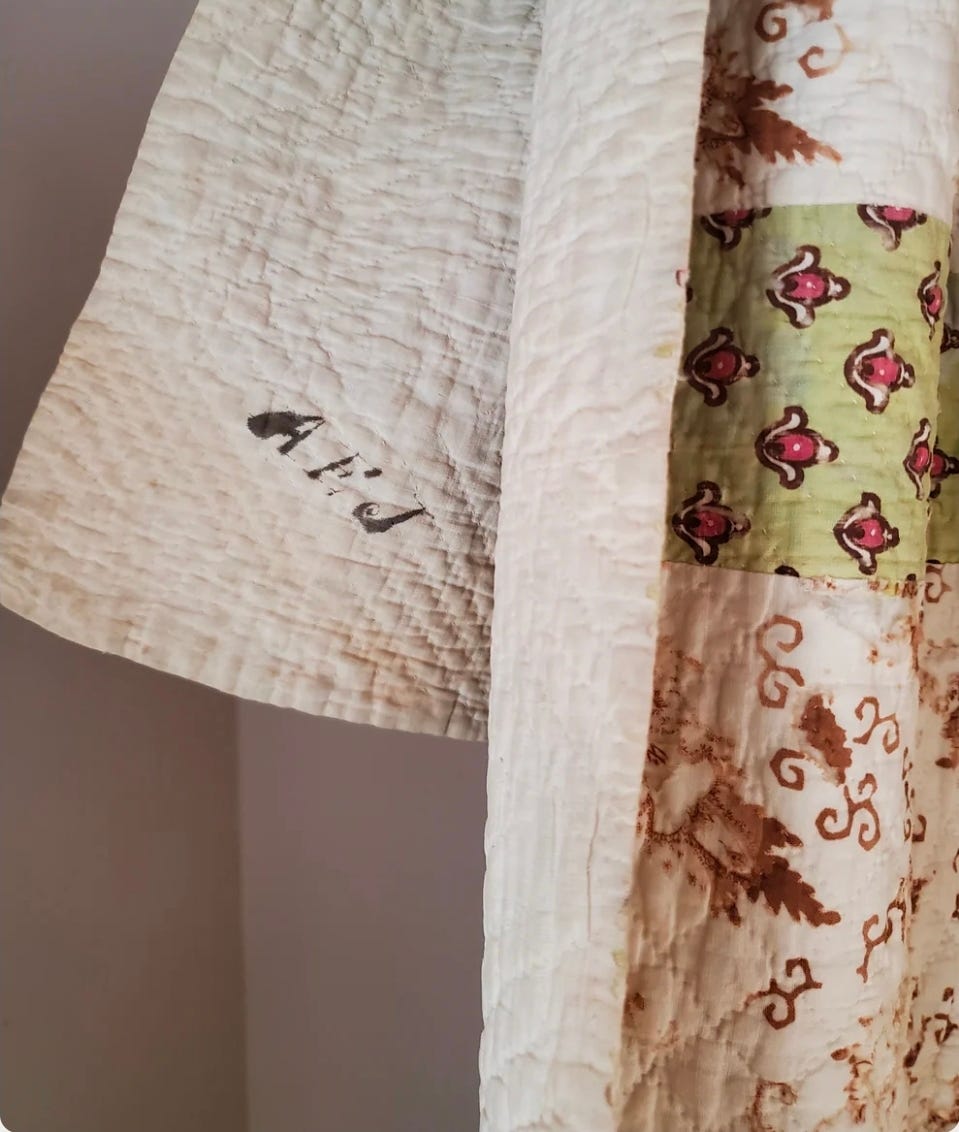
A name on a quilt! How rare and rewarding! Details on a quilt that help us glean any information whatsoever about the quiltmaker are a rare treat, especially on older quilts like those from the 19th century. But what were they using back then to sign their quilts? And why have some inscriptions remained bold and fast while others have faded away or, worse, degraded the fabric?
The answer to why some quilt inscriptions last through the centuries and other don’t depends on factors like exposure to water, sunlight, and even wear and tear through use. But what really affects their sustainability are the ingredients that make up the ink itself. Not all inks are considered equal in terms of indelibility and longevity; in fact, some inks can actually eat away at the fabric itself leaving a ghost of what once was in the form of holes etched through the cotton.
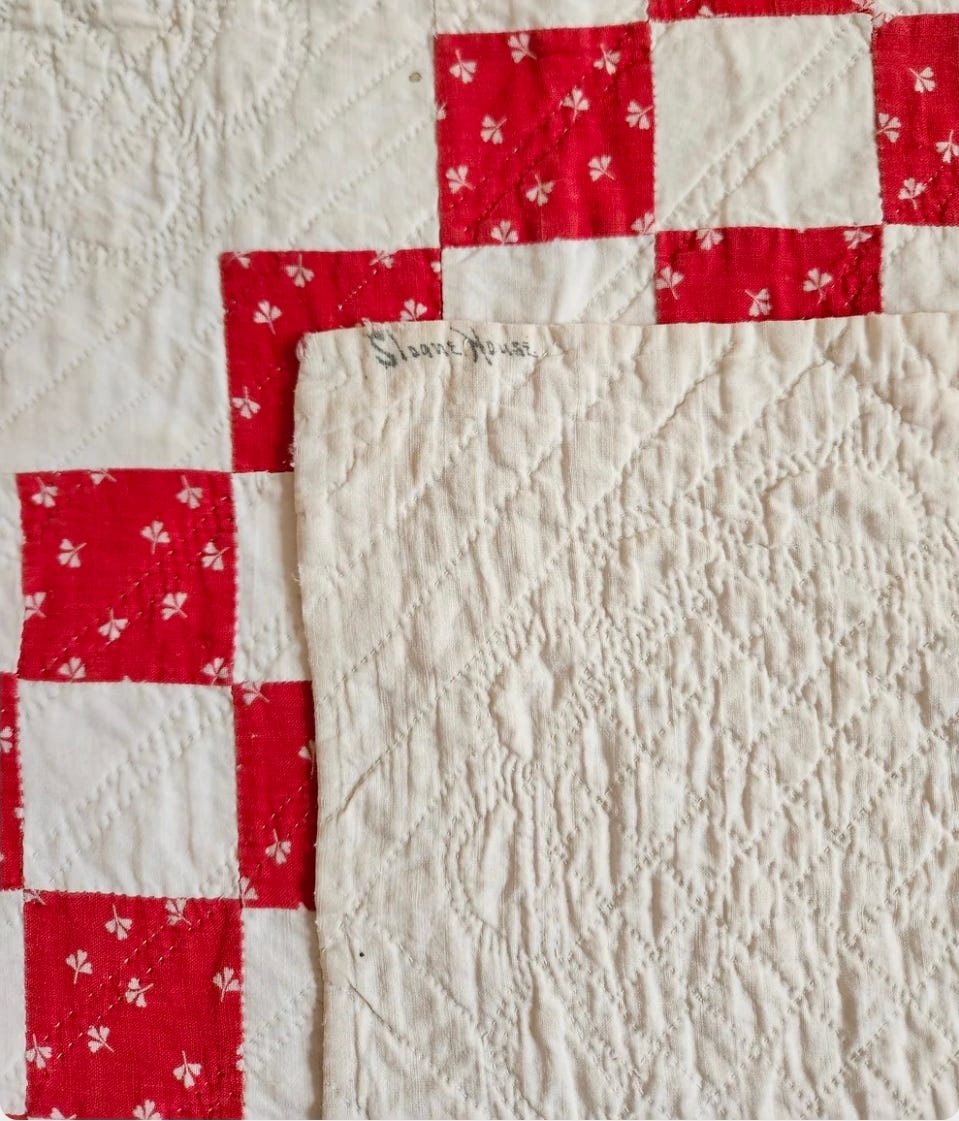
Typically, there were three main types of ink being used by quiltmakers in the 19th century for their inscriptions:
Comments
Nothing yet. Say the first thing.
Sign in to join the conversation.