

When most people think about moving to Greece, they picture whitewashed villages, crystal-clear water, incredible food, and endless sunshine. And while all of those things are absolutely true, it’s the little everyday moments that have made me fall in love with life here.
After living in Greece for the past two years, I’ve discovered that it’s often the small cultural differences, the afternoon quiet hours, the neighborhood cats, the coffee culture, the ferry rides, and even remembering to turn on the hot water before taking a shower, that make living here so unique. Some of these things surprised me, some made me laugh, and others have completely changed the way I think about work, family, and slowing down.
Whether you’re planning a vacation, considering moving to Greece, or simply curious about what daily life is really like, I hope this guide gives you a behind-the-scenes look at what it’s actually like to call this beautiful country home.
Before we dive in, if you enjoy practical guides like this, I’d love for you to subscribe to my Substack! Free subscribers receive my latest articles and updates, while paid members unlock my full Moving Abroad Resource Library, including relocation guides, country comparison resources, webinars with immigration and tax experts, weekly remote job leads, and other tools designed to help make your own move abroad a reality.
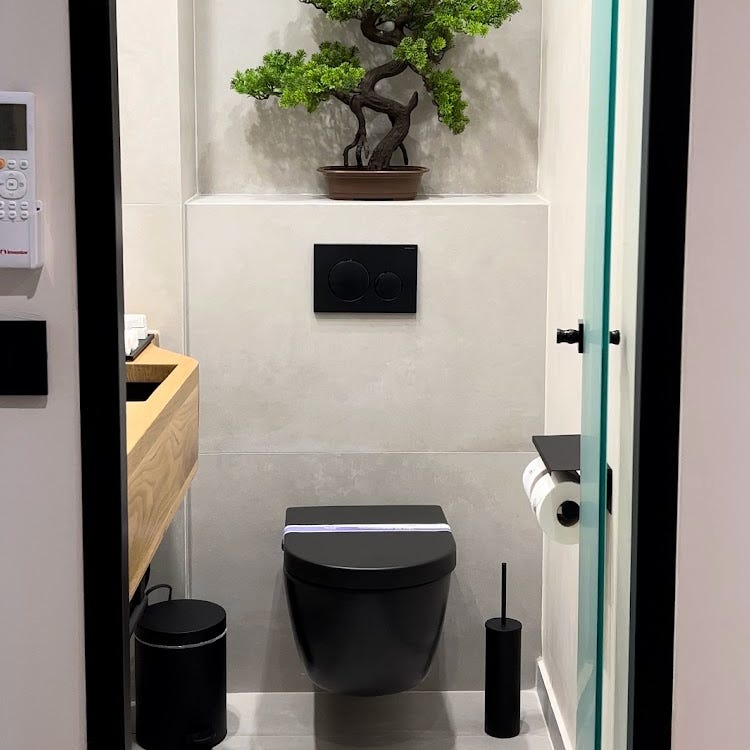
If you’re planning to visit, or even move to, one of the Greek islands, one thing that often catches people by surprise is that you generally can’t flush toilet paper. Instead, you’ll find a small trash bin next to the toilet where you’ll dispose of your used toilet paper.
The reason for this is that many of the Greek islands have older, narrower plumbing and sewage systems that weren't designed to handle toilet paper. Flushing it can lead to clogged pipes, backups, and expensive plumbing repairs, which is why locals and visitors are asked to use the bin instead.
If you’re staying in a hotel or vacation rental, don’t worry, housekeeping typically empties the bin regularly, so it’s kept clean and odor-free.
I’ll admit, this was one of the biggest adjustments for me at first. It felt a little strange in the beginning, but honestly, after a few days it simply became part of our routine. It’s one of those cultural differences that seems like a big deal before you arrive, but you adapt to it much more quickly than you might expect.

Another thing that often surprises people is that tap water isn’t considered safe to drink on many islands. While the water is generally safe for showering, washing dishes, and brushing your teeth, it’s not typically recommended for drinking due to the islands’ limited freshwater supply.
Many Greek islands rely on desalinated seawater or water that’s transported from the mainland, and the taste can vary significantly depending on where you are. Because of this, most locals and visitors choose to drink bottled or filtered water instead.
If you’re staying in an Airbnb or hotel, it’s always worth asking whether the property has a reverse osmosis or other water filtration system. If you’re planning to live on a Greek island, you can also ask the property owner if a filtration system has already been installed. If not, installing one is a worthwhile investment, with systems ranging from relatively affordable under-sink filters to more comprehensive whole-home systems that can cost around €1,500 or more, depending on the type and installation.

One of the first cultural differences we noticed after moving to Greece was how late people eat dinner. By American standards, dinner in Greece starts much later.
If you arrive at a restaurant around 6:30 or 7:00 p.m., don’t be surprised if it’s nearly empty. Many Greeks don’t head out for dinner until 9:00 p.m. or even later, especially during the warmer months when the evenings are cooler and people naturally stay out longer.
As an American who was used to eating dinner around 6:00 p.m., it definitely took some getting used to! But now, I actually enjoy the slower pace of the evenings and love seeing restaurants come alive after sunset.
The good news is that if you prefer eating earlier like we often do, you’ll usually have no trouble finding a table without a reservation. If you’re hoping to dine during the busier hours around 9:00 p.m. or later, especially in popular tourist destinations or during the summer, it’s always a good idea to make a reservation in advance.

One of the things that has touched me the most since moving to Greece is how genuinely welcomed children are. Before we moved, I had heard that Greece was a family-oriented culture, but experiencing it firsthand has been even more special than I imagined.
Children here are seen as an important part of everyday life. It’s very common to see families enjoying long dinners together at restaurants, strolling through town late in the evening, or spending time at cafés and public squares. While there are, of course, places that are intended primarily for adults, such as bars, nightclubs, and certain beach clubs, children are generally welcomed in most public spaces and aren’t viewed as an inconvenience.
As a parent, I’ve noticed that people often take the time to smile at Zozo, wave hello, or stop to chat with her. Those small interactions have made us feel incredibly welcome and have helped Greece feel like home.
If you’re traveling internationally with children for the first time, I genuinely think Greece is one of the easiest and most family-friendly destinations to visit. The relaxed pace of life, the emphasis on family, and the warmth we’ve experienced from so many people have made raising a child here a truly wonderful experience.
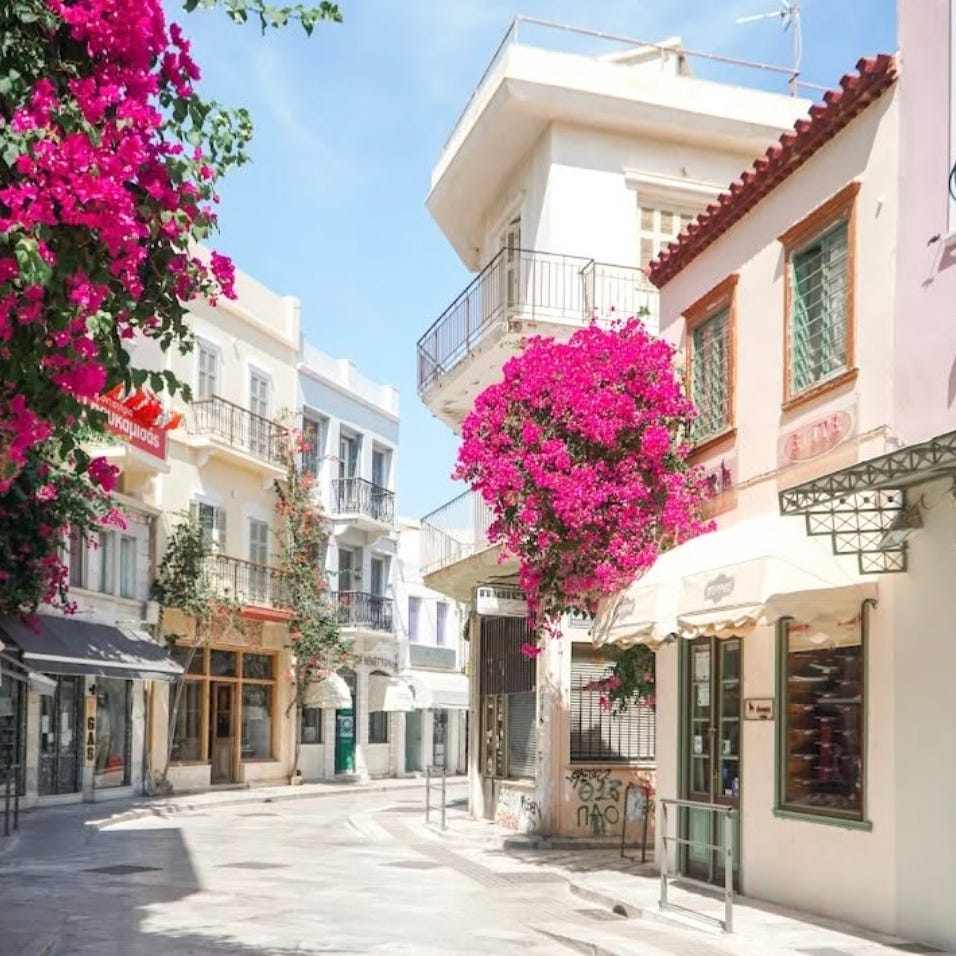
One of my favorite things about living in Greece is the slower pace of life and the emphasis on work-life balance. It’s something you’ll notice almost immediately once you move here.
Many locally owned shops and businesses close each afternoon, typically from around 2:00 PM to 6:00 PM, during what’s known as the quiet hours. Traditionally, this break allowed people to go home for lunch, spend time with their families, and rest during the hottest part of the day. Even today, especially in smaller towns and on the islands, many business owners still follow this schedule because it reflects the Greek value of prioritizing family time and a balanced lifestyle over constantly being open.
Because of this, it’s a good idea to plan your errands accordingly. Many local shops are open from approximately 10:00 AM to 2:00 PM, then reopen from 6:00 PM until around 9:00 PM. Pharmacies often follow a similar schedule, although there is always a designated pharmacy on duty that’s available for urgent needs. Larger chain stores, such as Jumbo, supermarkets, and shopping centers, are generally open continuously throughout the day.
Sundays are even quieter. Most retail stores are closed, giving employees and business owners a day to rest and spend with family. Cafés, restaurants, and many tourist-focused businesses remain open, and you’ll usually find a few grocery stores, mini markets, and kiosks operating where you can pick up essentials like milk, fresh produce, snacks, bottled water, ice, and other convenience items.
It can take a little getting used to if you’re coming from a country where stores are open all day and every day, but I’ve actually grown to love it. It encourages you to slow down, enjoy a long lunch or coffee, and embrace the more relaxed rhythm of life that makes Greece so special.

Just like many local businesses, doctor’s offices in Greece often follow the country’s afternoon quiet hours, which means it’s completely normal to have a medical appointment in the evening. When I lived in the U.S., I was used to scheduling appointments between 9:00 AM and 5:00 PM, so I was surprised the first time I booked an appointment for 8:00 PM here in Greece. Now it feels completely normal!
Another thing I’ve really appreciated is how easy it can be to book appointments. Many doctors, particularly in larger cities like Athens and Thessaloniki, allow you to schedule online, making it quick and convenient to find an available appointment without having to call the office. In my experience, I’ve also found it much easier to get appointments on shorter notice than I often could in the U.S., especially for routine visits.
It may seem unusual at first, but the evening office hours fit naturally into the Greek rhythm of life. Rather than trying to squeeze appointments into a traditional workday, many doctors simply shift their schedules later, allowing both physicians and patients to enjoy the afternoon break before returning to work.

Don’t like coffee? You just might after moving to Greece. 🤣
I was never much of a coffee drinker back in the U.S., but after moving here it’s safe to say I’ve become completely hooked. Greece has some of the best coffee I’ve ever had. It’s smooth, rich, and often has a naturally chocolatey flavor that makes it easy to understand why coffee is such an important part of everyday life here.
What I love most, though, isn’t just the coffee, it’s the culture surrounding it. In Greece, grabbing a coffee isn’t something you rush through on your way to work. It’s an experience. Friends meet for coffee and chat for hours, people work from cafés, families gather together, and you’ll often see the same familiar faces visiting their neighborhood café every single day. It’s one of my favorite parts of living here because it encourages you to slow down and enjoy the moment.
My personal favorite order is a Freddo Cappuccino with a little sugar. If you’ve never had one before, I highly recommend trying it, especially during the warmer months!
Here are a few of the most common coffee drinks you’ll find at cafés throughout Greece:
Coffee Types
Freddo Espresso – An iced espresso served over ice.
Freddo Cappuccino – An iced espresso topped with cold, frothy milk foam. (My favorite!)
Cappuccino – Similar to what you’d find elsewhere but often a bit stronger.
Greek Coffee – Finely ground coffee slowly brewed in a small pot and served unfiltered.
Latte – Less common than Freddos but available at many cafés.
Sugar Levels
Sketo (Σκέτο) – No sugar
Ligi Zahari (λίγη ζάχαρη) - Little Sugar
Metrio (Μέτριο) – Medium sweetness (about one teaspoon of sugar).
Glyko (Γλυκό) – Sweet.
Polý Glyko (Πολύ Γλυκό) – Very sweet.
Milk Options
Whole Milk – Usually the default.
Gála Vrómis (Γάλα Βρώμης) – Oat milk.
Gála Amygdálou (Γάλα Αμυγδάλου) – Almond milk.
Soy milk is also available at many cafés, particularly in larger cities.
One thing that surprised me is how simple coffee orders are here. Unlike ordering at Starbucks, you generally won’t hear long lists of flavored syrups, extra pumps, and endless customizations. Instead, you’ll simply choose your coffee, how sweet you want it, and what type of milk you’d like. It may seem simple, but that’s part of the charm. The focus is on the quality of the coffee itself and the experience of enjoying it, rather than creating an overly customized drink.
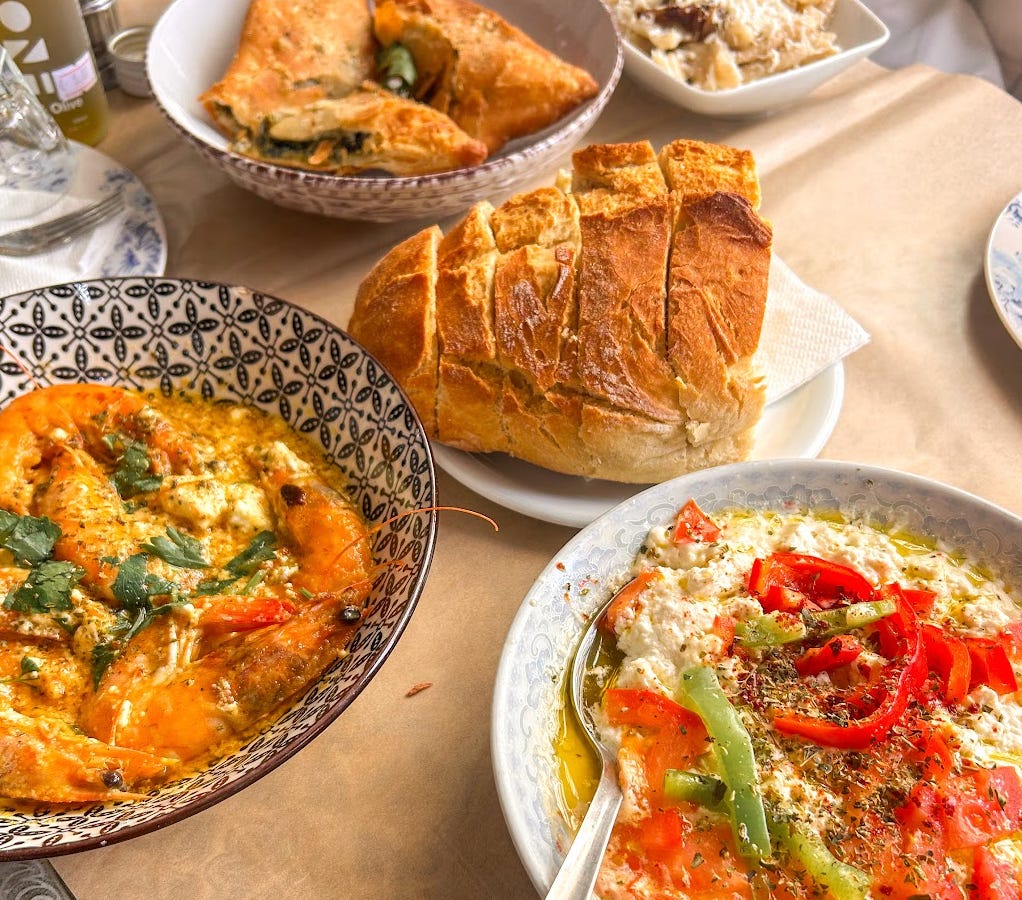
No one prepares you for just how incredible the food is in Greece. Seriously... Greek food is what people think Italian food is. 😂 I said what I said!
In the two years I’ve lived here, I can honestly say I’ve had very few disappointing meals, especially at locally owned tavernas. The food is simple, fresh, incredibly flavorful, and made with so much love and care. Rather than relying on heavy sauces or processed ingredients, Greek cuisine lets high-quality ingredients shine. Fresh vegetables, locally produced olive oil, herbs, seafood, cheeses, and grilled meats are the stars of almost every meal.
One thing I especially love is how the cuisine changes depending on where you are in the country. In the mountainous regions of northern Greece, you’ll find heartier comfort foods like slow-cooked stews, roasted meats, handmade pasta, and rich pies. On the islands, meals tend to be lighter and centered around the Mediterranean diet, with fresh seafood, grilled fish, Greek salads, stuffed vegetables (gemista), zucchini fritters (kolokithokeftedes), spinach pie (spanakopita), cheese pie (tiropita), grilled octopus, calamari, and plenty of seasonal vegetables.
One thing you’ll quickly notice at a traditional taverna is that meals are meant to be shared. It’s common to order several dishes for the entire table rather than everyone ordering their own entrée. A typical meal might include tzatziki, horiatiki (Greek salad), saganaki, fresh bread, grilled meats, seafood, roasted potatoes, and a few vegetable dishes for everyone to enjoy together. Dining in Greece is just as much about spending time together as it is about the food itself.
And then... there are the sweets.
Greeks absolutely love dessert, and you’ll find beautiful zacharoplasteia (pastry shops and confectioneries) in nearly every neighborhood. Walking into one feels a bit like stepping into a bakery and dessert boutique combined. Glass display cases are filled with beautifully decorated cakes, cookies, pastries, chocolates, ice cream, and traditional Greek desserts.
Some of my favorite treats include baklava, galaktoboureko (a creamy custard pastry soaked in syrup), portokalopita (orange cake), loukoumades (Greek honey doughnuts), kataifi, and buttery Greek cookies like kourabiedes and melomakarona during the holidays.
One of the best parts? The prices are incredibly reasonable. For just a few euros, you can walk out with a beautiful box of cookies, pastries, or slices of cake to enjoy at home or bring when visiting friends or family. Picking up a small box of sweets on your way to someone’s house is a common tradition here, and it’s one of those little cultural details that I’ve really come to love.
If you’re moving to Greece, be prepared: the food alone might convince you never to leave.
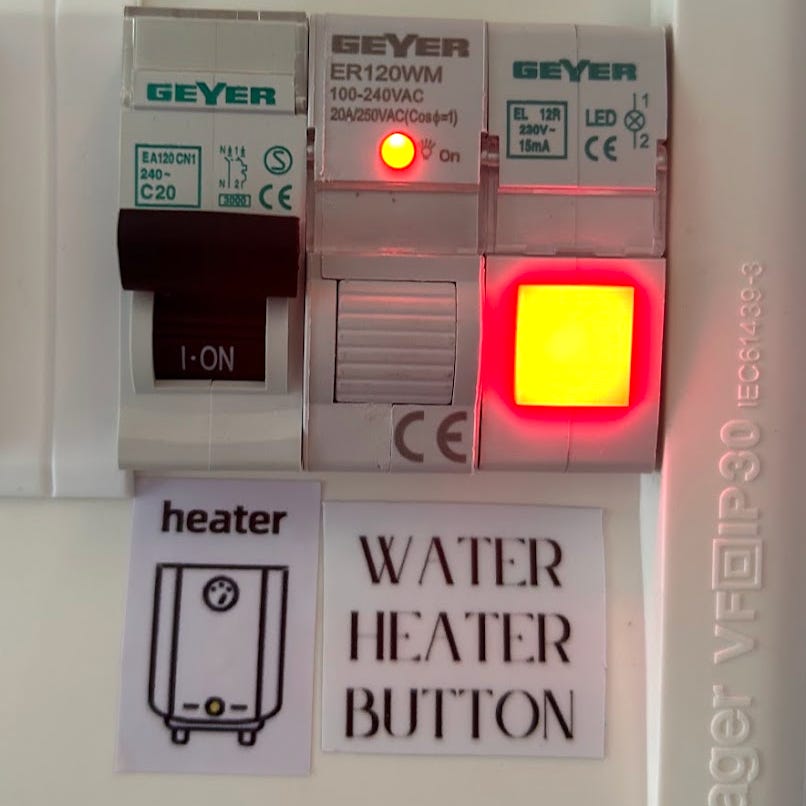
This is one of those things that still catches me off guard sometimes, even after living in Greece for two years: the hot water button!
If you’re staying in a hotel, you’ll probably never notice it. But if you’re renting an Airbnb, vacation rental, or moving into your own apartment, there’s a good chance your host or landlord will tell you something like, “Be sure to turn on the hot water 30–45 minutes before your shower.”
At first, I was so confused. Why doesn’t the hot water just... work?
The reason is that many homes in Greece use an electric water heater rather than a large tank that constantly keeps water hot. To save electricity and reduce energy costs, the heater is only turned on when it’s needed. You’ll usually find a switch labeled “Boiler” or “Hot Water” near the front door or on your electrical panel. Simply switch it on about 30–45 minutes before you want to shower, then turn it back off afterward.
Many homes also have solar water heaters, which are incredibly common throughout Greece. On sunny days, the sun heats the water naturally, meaning you may have plenty of hot water without ever touching the switch. During the summer, I’ve gone days without needing to turn the boiler on at all because the solar system did all the work. On cloudy days or during the winter, however, you’ll likely need to use the electric heater to top it up.
It definitely takes a little planning if you’re used to having unlimited hot water available whenever you want it. If you’re heading out for dinner and want to shower beforehand, you’ll need to remember to switch the boiler on ahead of time. It felt unusual at first, but now it’s just another part of daily life, and honestly, it’s a pretty energy-efficient system once you get used to it.
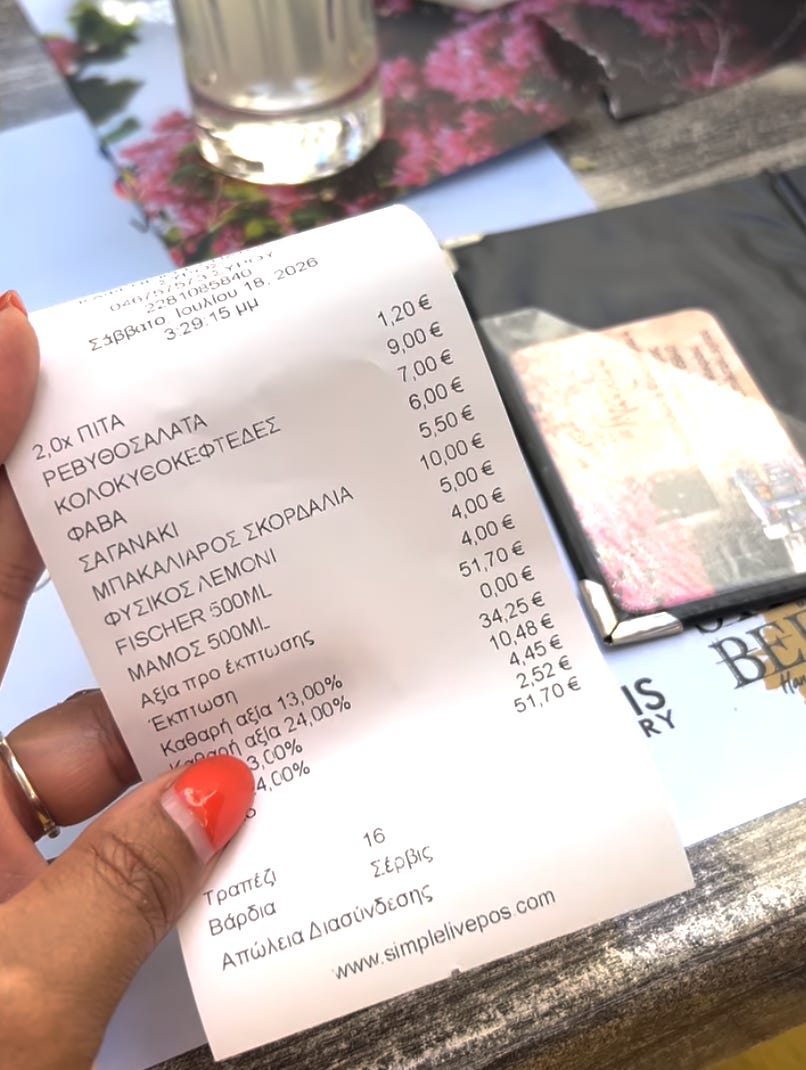
One thing you’ll quickly notice when dining out in Greece is that every time you order something, your server will usually bring you a receipt almost immediately. If you’re from the U.S., it can be a little confusing because you might think they’re trying to give you the bill before you’ve even finished eating!
In reality, these are fiscal receipts that businesses are required to issue for each order. They’re part of Greece’s tax system and help ensure that every purchase is properly recorded. If you decide to order another coffee, dessert, or appetizer later in your meal, you’ll often receive another receipt for those items as well.
Don’t worry though, these receipts don’t mean you’re being rushed. In Greece, dining is meant to be enjoyed slowly, sometimes over several hours. When you’re actually ready to leave, you’ll simply ask for the bill.
You can say:
“Ton logariasmó, parakaló.” (Τον λογαριασμό, παρακαλώ.)
“The bill, please.”
Your server will then bring the final bill and ask whether you’d like to pay with cash or card.
One of my favorite Greek traditions happens right before you pay. At many traditional tavernas, your server will bring over a complimentary treat, often a small dessert like cake, fruit, or ice cream, or sometimes a small glass of raki, tsipouro, or another local spirit. It’s the restaurant’s way of saying thank you for dining with them, and it’s such a warm touch that perfectly reflects Greek hospitality.
It’s one of those little traditions that reminds me why I love living here. Meals in Greece aren’t just about eating, they’re about slowing down, enjoying the company you’re with, and making people feel genuinely welcome.
One misconception I often hear about Greece is that it’s inefficient or inconvenient. While it’s true that Greek bureaucracy can sometimes move at its own pace (trust me, I’ve experienced that firsthand! 🤣), day-to-day life has actually been far more convenient than I ever expected, even living on a small island like Syros.
Yes, life here moves at a slower pace than it does in the U.S., but that doesn’t mean it’s less modern or less convenient. In fact, I’ve found many aspects of everyday life to be surprisingly easy.
Need groceries? I can have them delivered right to my door.
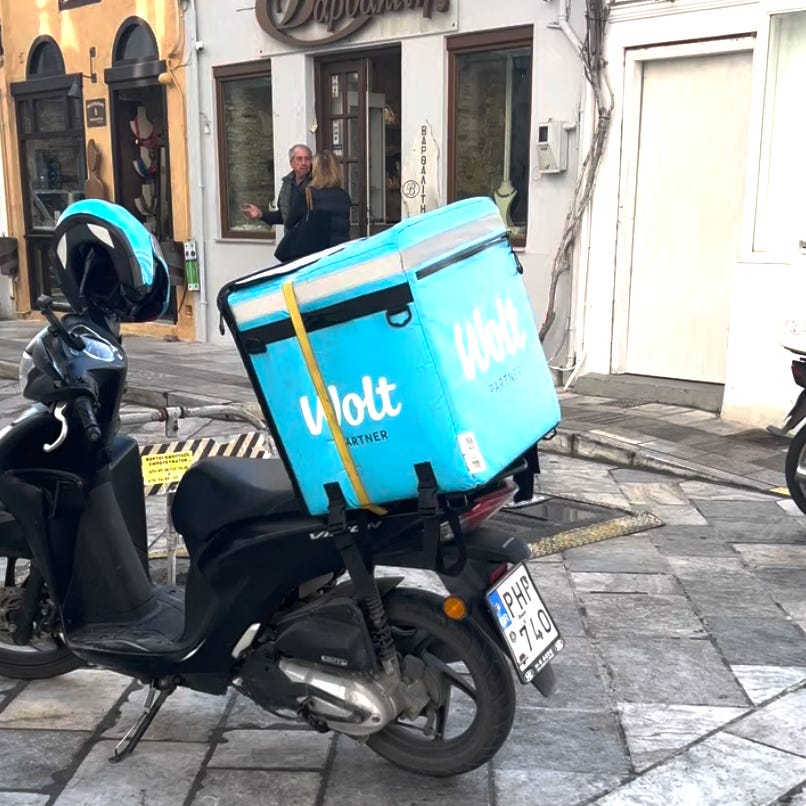
Don’t feel like cooking? Apps like Wolt work much like Uber Eats or DoorDash, making it easy to order from local restaurants, cafés, bakeries, and even grocery stores, and the delivery fees are usually much lower than what I was used to paying in the U.S.
I can also order fresh, prepared meals from local takeaway restaurants, have pharmacy items delivered, and shop online from stores like Zara, IKEA, H&M, and countless other retailers. For almost everything else, Skroutz (which is often compared to Amazon) makes it easy to order products from hundreds of Greek retailers, and even on an island, my packages typically arrive within just two or three days.
One thing I absolutely love about Greece is how community-oriented it is. If I need a plumber, electrician, contractor, or someone to fix just about anything, chances are someone I know has a friend, cousin, uncle, or neighbor who does exactly that. Before you know it, they’ll often be at your house the very same day. 🤣 It’s amazing how quickly things can happen through personal recommendations.
Another question I get all the time is whether Greece is still a cash-based society. While it’s always a good idea to carry a little cash (especially for very small purchases or in the rare case a payment terminal isn’t working) I pay by card or with Apple Pay almost everywhere. Restaurants, cafés, grocery stores, taxis, ferries, pharmacies, retail shops, and even many public transportation services accept contactless payments.
So while you may not have Amazon Prime delivering a package to your door in a few hours, I’ve never felt like I was missing out on modern conveniences. Greece has simply found its own way of doing things: a little slower, a little more personal, and, in many ways, a lot more enjoyable.

As an American, I wasn’t exposed to much public transportation growing up, so I was honestly a little intimidated by the idea of relying on it. But after moving to Greece, I quickly realized just how easy, affordable, and convenient it can be.
Here on the island of Syros, we have several bus routes, including a free shuttle that loops around Ermoupoli and public buses that travel to many of the island’s villages and beaches for as little as €2–3 each way. It’s an inexpensive and relaxing way to explore the island without worrying about parking or driving.
In larger cities like Athens and Thessaloniki, the public transportation network is even more extensive. Between the metro, trams, buses, and suburban rail, it’s easy to get around without a car. The Athens Metro is clean (aside from the graffiti), reliable, and one of my favorite ways to travel through the city. You can simply tap your contactless credit card, debit card, or Apple Pay at the fare gates, making it incredibly convenient for both residents and visitors.
One of the biggest surprises for me has been how little I actually miss driving. I haven’t driven regularly in over a year because I rely so much on public transportation, walking, and the occasional taxi when I need one. Living in a walkable community has been such a refreshing change from the car-dependent lifestyle I had in the U.S.
Of course, one of the best parts of living in Greece is the ferry network. If we decide we want to spend a weekend in Athens or explore another island, it’s as simple as checking the schedules on Ferryhopper, booking our tickets, and hopping on a ferry. Within just a few hours, we can be exploring an entirely different destination. It’s one of my favorite things about living here and makes weekend adventures incredibly easy.
Although Greece has become a very card-friendly country and I use my credit card or Apple Pay for the vast majority of my purchases, it’s still a good idea to carry a little cash with you.
One thing that often surprises visitors is that some locally owned businesses, particularly small boutiques, family-run shops, and independent retailers, may offer a small discount if you pay in cash instead of by card. This isn’t something you’ll encounter everywhere, but it’s common enough that it’s worth asking, especially if you’re making a larger purchase.
I’ve noticed this most often while shopping for clothing or home goods, where paying in cash can sometimes save you a few euros. It’s never guaranteed, but if you’re planning to do a bit of shopping, having some cash on hand can occasionally help you get a better price.
Even so, don’t feel like you need to carry large amounts of cash. In my experience, restaurants, cafés, grocery stores, pharmacies, ferries, taxis, and most other businesses readily accept cards and contactless payments. Having a small amount of cash is simply helpful for the occasional discount, very small purchases, or those rare times when a card terminal isn’t working.
One of the questions I get asked the most is, “How do you get around if you don’t speak Greek?”
The answer honestly surprises a lot of people: it’s much easier than you might expect.
While Greek is, of course, the official language, you’ll find that many people throughout Greece—especially younger generations, those working in tourism, and residents of larger cities and the islands—speak English very well. English has long been taught in Greek schools, and because many movies and television shows are shown in English with Greek subtitles rather than being dubbed, people are exposed to the language from a young age.
Because of that, I’ve found it surprisingly easy to navigate everyday life. Whether I’m ordering at a restaurant, visiting the doctor, shopping, or running errands, I’m almost always able to communicate in English.
That said, I always encourage anyone moving to Greece to learn a few basic Greek words and phrases. You don’t need to be fluent, but making the effort goes a long way. I’ve found that locals genuinely appreciate it when you greet them in Greek or say “thank you” in their language. Even if your pronunciation isn’t perfect, people are usually incredibly kind and happy to help.
Here are a few phrases I recommend learning before you arrive:
Hello
Greek: Γεια σας
Greeklish: Yia sasGood morning
Greek: Καλημέρα
Greeklish: KalimeraGood evening
Greek: Καλησπέρα
Greeklish: KalisperaGood night
Greek: Καληνύχτα
Greeklish: KalinychtaHave a good day
Greek: Καλή σας μέρα
Greeklish: Kali sas meraHow are you?
Greek: Τι κάνετε;
Greeklish: Ti kanete?Thank you
Greek: Ευχαριστώ
Greeklish: EfharistóYou’re welcome / Please
Greek: Παρακαλώ
Greeklish: ParakalóWhat is your name?
Greek: Πώς σε λένε;
Greeklish: Pos se lene?My name is...
Greek: Με λένε...
Greeklish: Me lene...Do you speak English?
Greek: Μιλάτε Αγγλικά;
Greeklish: Milate Anglika?How much is it?
Greek: Πόσο κάνει;
Greeklish: Poso kani?Can I have the bill, please?
Greek: Τον λογαριασμό, παρακαλώ.
Greeklish: Ton logariasmo, parakalo.Where is the bathroom?
Greek: Πού είναι η τουαλέτα;
Greeklish: Pou ine i toualeta?
One of my favorite parts about learning Greek has been seeing people’s faces light up when I make the effort to speak their language. Even if the conversation quickly switches back to English, those small moments help you feel more connected to the community, and that’s one of the most rewarding parts of living here.
If you’re anything like me and have always been more of a dog person than a cat person, this is one thing that might take a little getting used to when you first arrive in Greece.
Cats are everywhere! 🤣
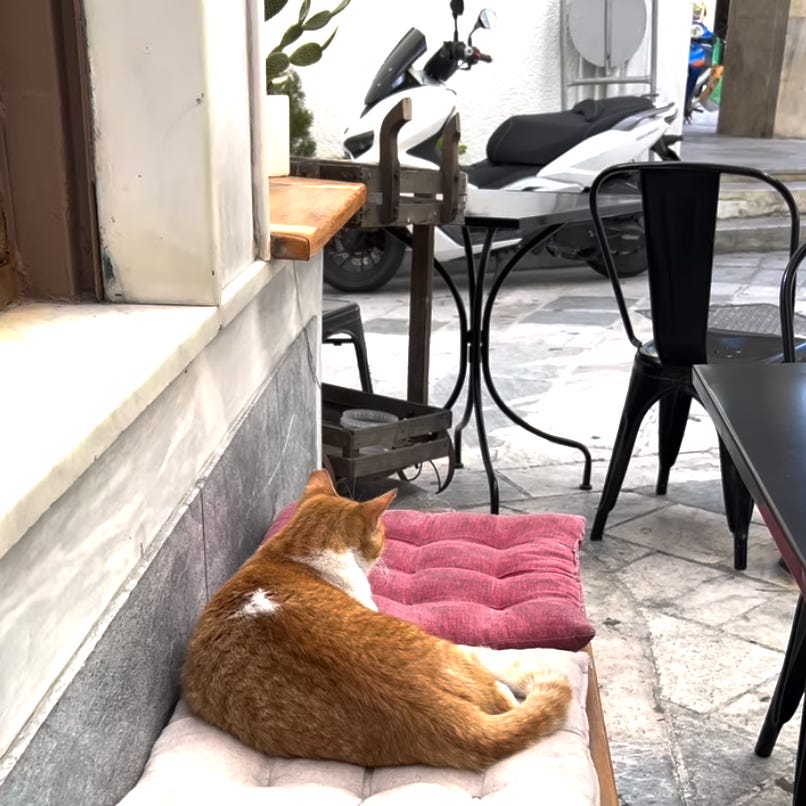
You’ll see them lounging in the sun outside cafés, wandering through narrow alleyways, napping on scooters, greeting customers outside bakeries, and yes... sometimes even hanging out inside shops and restaurants as the unofficial “resident cat.”
One thing I quickly learned is that many of these aren’t stray cats in the way we often think of them. They’re community cats that are cared for by local residents and business owners. It’s very common to see bowls of fresh water and food left out for them, and many neighborhoods collectively look after the cats that live there.
Historically, cats have also played an important role by helping control rodents, particularly around homes, farms, and fishing villages. Today, they’re simply part of the fabric of everyday life in Greece. You’ll often find locals stopping to pet them, chatting with them, or making sure they have something to eat.
Over time, I’ve completely fallen in love with seeing them around. They add so much character to the streets and have become one of those little things that makes Greece feel so charming. Now, it wouldn’t feel like Greece without spotting a sleepy cat curled up on a windowsill or soaking up the afternoon sun in the middle of a cobblestone street.
Moving to a new country can feel overwhelming at first, especially when everyday life looks a little different than what you’re used to. But I’ve found that it’s often these small cultural differences, the afternoon quiet hours, long coffee breaks, community cats, family-run tavernas, ferry rides between islands, and even remembering to turn on the hot water, that end up becoming the very things you fall in love with.
Living in Greece has taught me to slow down, be more present, and appreciate a way of life that places such a high value on family, community, and enjoying the simple moments. It isn’t perfect (no place is!), but for our family, it’s been one of the best decisions we’ve ever made.
I hope this guide has helped give you a better idea of what everyday life in Greece is really like beyond the beautiful beaches and postcard-perfect sunsets. Whether you’re planning a vacation, considering moving abroad, or are simply curious about life here, I hope it answered a few of your questions and made Greece feel just a little more familiar.
If you enjoyed this article, I’d love to invite you to subscribe to my Substack. Free subscribers receive my latest articles and updates, while paid members unlock my full Moving Abroad Resource Library, including in-depth relocation guides, webinars with immigration and tax experts, country comparison resources, weekly remote job leads, and practical tools to help you make your own move abroad a reality.
Thank you so much for reading and for being part of this community. I can’t wait to share more of our life in Greece and help you navigate your own journey abroad.
See you in the next post! 🇬🇷
No posts
Comments
Nothing yet. Say the first thing.
Sign in to join the conversation.