
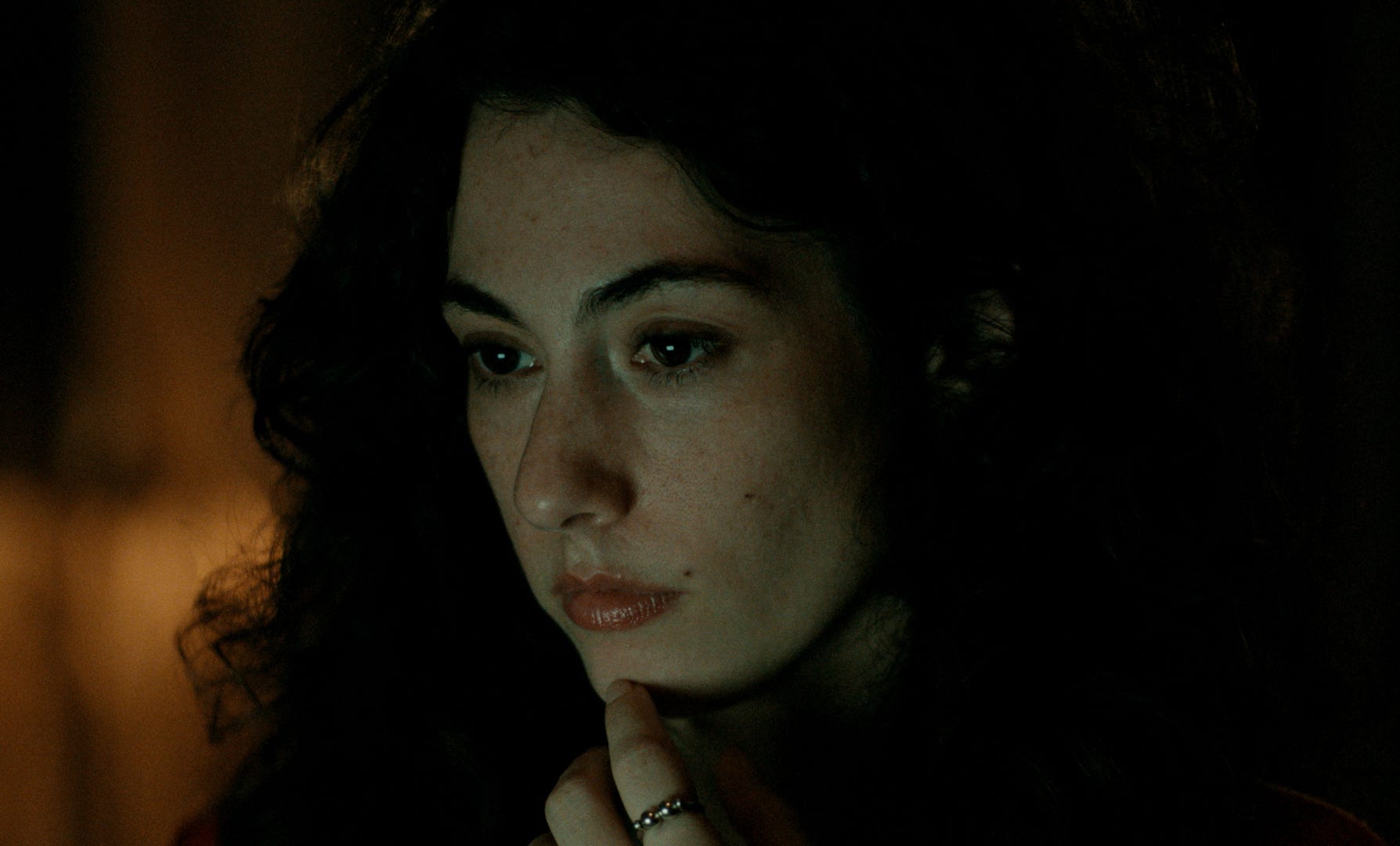
Nobuhiko Obayashi made a lot of movies about the act of remembering. One of his best—and most unheralded—is 1983’s The Deserted City. The film begins with an adult academic named Eguchi hearing the news that the small canal town where he spent a summer as a college student has been destroyed in a fire, and as he makes his way back to the town in a montage, Obayashi (in one of his favorite techniques) mixes color and black-and-white to give the sensation that Eguchi is physically walking into his own memories. Just as when he would later use similar devices in His Motorbike, Her Island and The Discarnates, Obayashi explores the overwhelming temptation to re-enter one’s past.
In Sophy Romvari’s Blue Heron, young Sasha and her brothers are shown how to develop photographs in a dark room by her typically reserved father. As the image slowly fades into view, the children are awed. “Time is going backwards,” their father tells them. “It’s a time-warp.” Since the invention of the photograph (or maybe even cave paintings) it’s been a common sentiment that the recorded image offers an escape from the linear march of time. Watching footage from the past is the next-best thing to being there, better even than human memory, which is unreliable and prone to emotional confusion. Through film, countless films have told us, we can re-experience history. The brilliance of Blue Heron is Romvari’s skepticism that such a mechanism is sufficient.
Comments
Nothing yet. Say the first thing.
Sign in to join the conversation.