
CAPTAIN PAUL WATSON
RAP SHEET
A History of Opposing Political and Corporate Corruption
1971 - 2026
The History of Interventions by, Arrests, and Kidnapping of Captain Paul Watson’s crew and for Aggressive Non-Violent Actions to protect Marine life and Diversity.
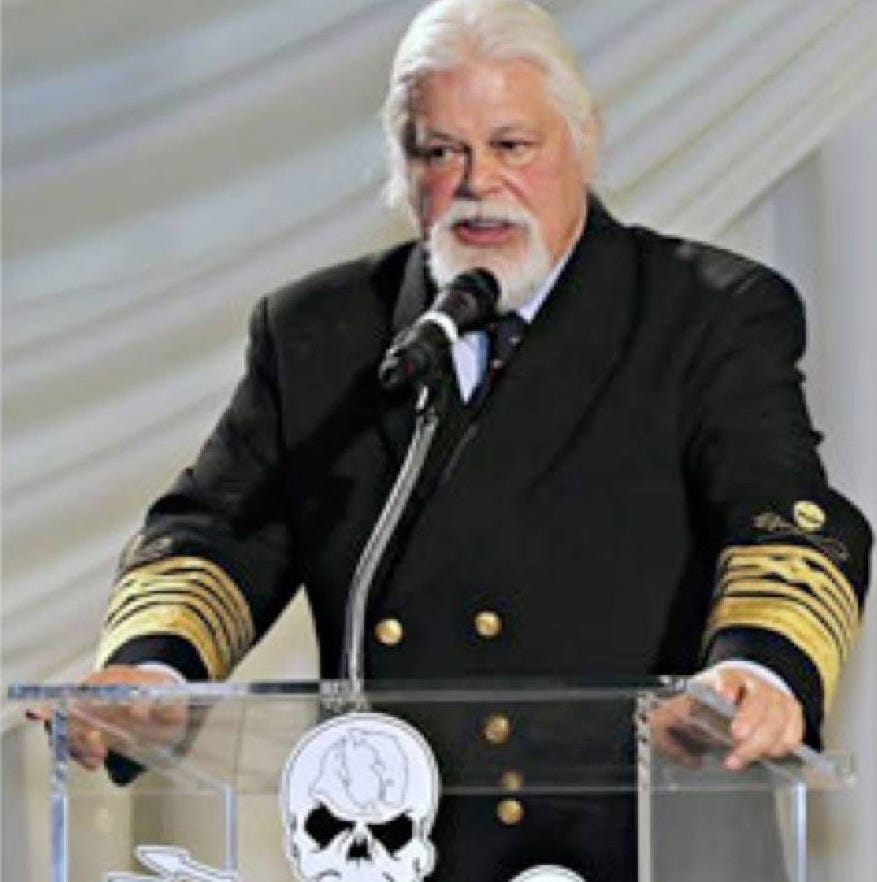
1971 – 2026
1971 – Arrested in Vancouver, British Columbia for removing the construction fence for the Four Season Hotel Development at the entrance to the Stanley Park, this began a yearlong occupation of the site where the occupying group proclaimed the liberation of All Season’s Park. Paul Watson was charged with Destruction of Private Property and creating a disturbance. Trial by Judge and Jury. Acquitted on all charges. The hotel was not built and the site officially made into a city park. His attorney was Peter Leask Verdict: Not Guilty
March 1973 – Detained for a day at the Pine Ridge, South Dakota jail by U.S. Marshalls for attempting to access Wounded Knee to join the American Indian Movement Occupation. After being released, Paul Watson was able to access Wounded Knee and spent a month serving as a volunteer medic. He was awarded an honorary citizenship to the Independent Oglala Nation of Wounded Knee.
1977 – Arrested and charged with trespassing for protesting at the Bangor, Washington Trident Submarine base. A half day held in jail with dozens of other protestors. Trial by judge. Convicted. Overturned on Appeal. Most protestors were found guilty. Watson’s crew appealed on the grounds they approached the site by waters and did not actually touch the land. Appeal verdict: Not guilty.
1979 - Intervention Against the Canadian Seal Hunt with the British registered Sea Shepherd with a crew of 32
Captain Paul Watson and seven crewmembers were arrested in March 1979 during the Canadian seal hunt in the Gulf of St. Lawrence for actions that violated the Seal Protection Act/Regulations.
Essential details:
Sea Shepherd’s first direct action against the Canadian seal hunt took place in the Gulf of St. Lawrence in March 1979.
A crew of 32 aboard the Sea Shepherd protested the hunt; eight members were arrested after going onto the ice to spray seal pups with organic indelible dye to render the pelts commercially worthless.
The crew had to be escorted to the airport because of threats by sealers.
These actions led to charges under Canada’s seal protection rules (often referred to as the Seal Protection Act or Seal Protection Regulations). An Orwellian name for what is essentially the seal hunt protection regulations.
All eight were convicted, and the penalties were short jail terms, fines, and probation/ban on protesting the seal hunt.
From the legal and historical analyses:
All eight crew members arrested in the 1979 Gulf of St. Lawrence action were found guilty under the Canadian Seal Protection Act (1966) for painting harp seal pups with red dye to destroy the commercial value of their pelts.
Seven crew members (other than Paul Watson) were each fined $1,000 and sentenced to 5 days in jail.
Paul Watson received a heavier sentence: a fine of $8,000 and 10 days in jail under the Seal Protection Act for the same dye-spraying actions.
In addition, they were given three years of probation and were prohibited from protesting the Canadian seal hunt until 1983, effectively a ban on participating in or approaching the hunt during that period.
Those convictions were then appealed and ultimately quashed. A legal analysis of Sea Shepherd’s history notes that they “were arrested, put on trial and initially convicted. They appealed and won,” and that the Canadian government’s further appeal led to a higher-court ruling that the Seal Protection Act was unconstitutional, which eliminated those convictions and associated penalties.
So, while the sentences (jail, fines, and probation) were imposed and partially served, the key seal-hunt convictions were overturned on appeal, and the underlying law was found unconstitutional by the Canadian courts. However, the Seal Protection Regulations were later reinstated.
July 1979: Captain Paul Watson, Engineers Peter Woof and Jerry Doran were brought before the Port Captain in Leixoes, Portugal and charged with “gross criminal negligence” for intentionally ramming and disabling the pirate whaler Sierra. Captain Watson told the Port Captain that there was nothing negligent about it and he had hit the ship exactly where he intended to hit it. The Port Captain laughed and replied that they were unable to determine the ownership of the Sierra and told Captain Watson and released Captain Watson and his crew without charges.
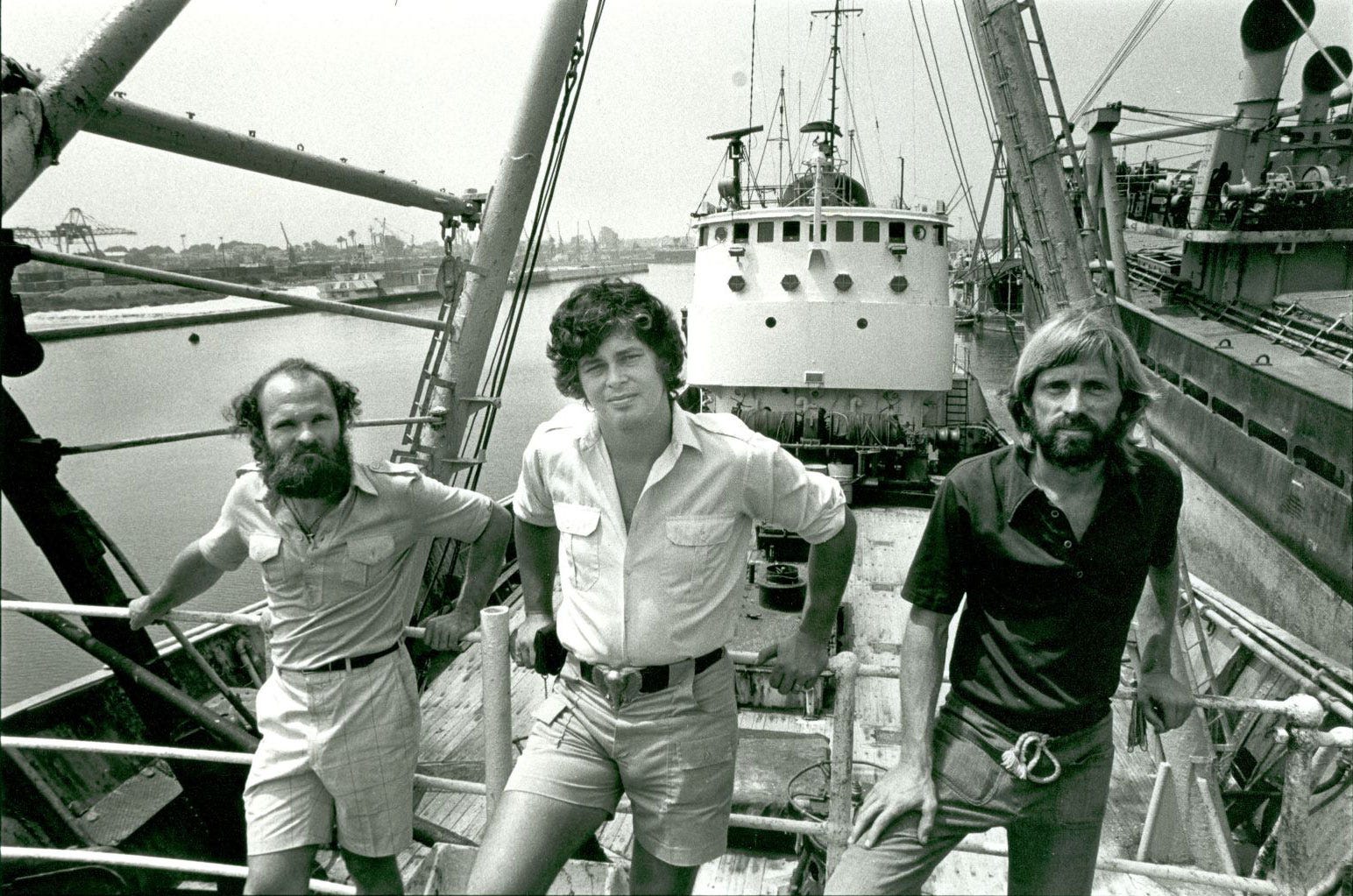
(Photo: Chief Engineer Peter Woof, Captain Paul Watson and Engineer Jerry Doran in Leixoes Portugal on the original Sea Shepherd. 1979)
February 1980: Captain Watson oversees the sinking of the pirate whaler Sierra in Lisbon. No charges
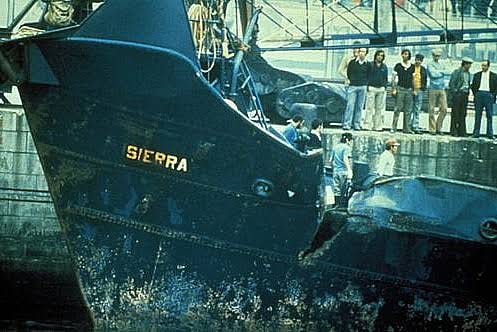
(Photo: The Pirate whaler Sierra after Captain Watson rammed it with the Sea Shepherd.)
April 1980: Captain Watson oversees the sinking of the outlaw whaling ships Isba I and Isba II in Vigo harbor, Spain. No charges.
August 1981: Captain Watson and his crew “invade” Soviet Siberia to gather evidence on illegal Soviet whaling operations. The ship Sea Shepherd II was pursued by the Soviet Navy that failed to apprehend the Sea Shepherd ship. The Soviet captain ordered captain Watson to stop his ship and be prepared to be boarded by the Soviet Union. Captain Watson replied. “we don’t have room for the Soviet Navy” and refused to stop and was able to reach U.S. waters in the Bering Sea.
September 1982: Captain Watson, pilot Al Johnson and Carroll Vogel drop paint bombs and messages against whaling on a Soviet Spy ship of the coast of Washington State and British Columbia. Paul Watson was charged in a Vancouver Court and was ordered to trial. He appealed the order to the Canadian Supreme Court that ruled he had to stand trial. Watson returned to the lower court where the judge dismissed the charges as frivolous because the only witnesses were Soviet citizens who could not attend a trial.
October 1982: The United Nations World Charter for Nature was adopted and solemnly proclaimed by the U.N. General Assembly on October 28, 1982, through Resolution A/RES/37/7.
Section 21 states that States—and, to the extent they are able, public authorities, international organizations, individuals, groups, and corporations—shall:
1. Cooperate in conserving nature through joint activities, information exchange, and consultation;
2. Establish standards for products and manufacturing processes that may harm nature, along with methods for assessing those effects;
3. Implement applicable international legal provisions for nature conservation and environmental protection;
4. Ensure that activities under their jurisdiction or control do not damage natural systems in other States or in areas beyond national jurisdiction; and
5. Safeguard and conserve nature in areas beyond national jurisdiction.
The Charter calls for broad cooperation and places a responsibility on actors to prevent environmental harm—including harm beyond national borders.
March 1983: The Sea Shepherd II blockaded the harbor of Saint John’s Newfoundland preventing the Canadian sealing fleet from leaving for two weeks. The ship then moved to the Gulf of Saint Lawrence and escorted sealing ships away from the harp seal nursery. The Royal Canadian Mounted Police and Canadian Coast Guard units rammed and boarded the Sea Shepherd II in a tear gas assault arresting 19 crew members. Captain Watson and three others crew members Ben White, Paul Pezwick and Bernard Carlais had left the ship and walked over 13 miles of ice to the shore with a plan to steal the ship back in Sydney, Nova Scotia. Unfortunately, the ice was breaking up and moving and the planned 8 hour hike took 12 hours and the four were arrested upon arrival on shore in Cape Breton.
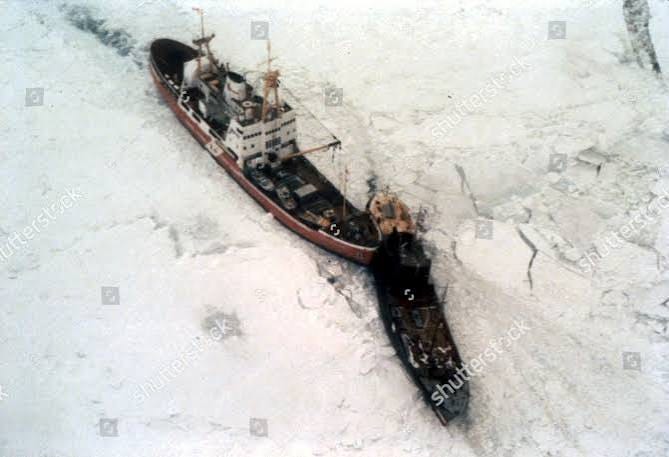
(Photo: Canadian Coast Guard Icebreaker John A. MacDonald ramming the Sea Shepherd II in the Gulf of St. Lawrence in 1983)
The Nova Scotia Crown Prosecutor decided there was no jurisdiction to charge the crew. Forty-four Mounties escorted 23 crewmembers to a Canadian forces troop plane where they were flown to Perce, Quebec. A prison was opened and the crew were confined for 10 days awaiting a bail hearing. A trial was scheduled in the summer of 1983 before the notorious Judge Yvon Mercier, the same judge that had found Captain Watson and his crew and guilty (later overturned) in 1979. Watson demanded that the judge recuse himself, Judge Mercier refused.
At the trial Paul Watson advised the crew to be hostile to the judge and to work to make him angry because we knew he was biased and it was 100% certain he would convict.
As a result, the Sea Shepherd II was confiscated, and Watson was fined $75,000 and sentenced to 15 months in prison for conspiracy to violate the seal protection act and another six months for approaching within 1/2 a nautical mile of a seal hunt thus violating the seal Protection Act. Watson was also ordered to not communicate in any manner with any journalists anywhere in the world on any subject for a period of three years and banned from the eastern Canadian provinces for three years. Engineer Paul Pezwick (also arrested previously in 1979) was given a 7-month prison sentence and fined 7000 dollars. All other crew members were fined $3000 each. However, the Quebec Court of Appeal viewed the penalty as excessive and Paul Pezwick and Paul Watson were both released after nine days in Orsainvile Prison in Quebec City, pending appeal. In 1984 the Appeal Court ruled in our favor of and all convictions were quashed. The government however maintained possession if the Sea Shepherd II. Watson sued the Federal government, and the ship was released in a damaged condition after two years in government custody in Halifax. Watson then sued for damages and was awarded a large cash settlement. The ship was then made ready for Iceland and the Faroe Islands,
1985 – 2023 Faroe Islands
Over the years numerous crews have been arrested beginning in 1985 until 2023. In 1985, 1986, 2000, 2014, 2023. Crew charged and deported for interfering with the slaughter of pilot whales. No jail sentences.
1986: The International Whaling Commission declares a global ban on all commercial whaling operations. Captain Watson informs Iceland, Japan and Norway he intends to enforce the moratorium.
November 1986: Captain Paul Watson leads a team composed of Rod Coronado, David Howitt, Ben White and Sarah Borg to destroy the whale processing station in Icleand and to scuttle two of the four Icelandic whaling ships, the Hvalur’s 6 and 9.
January 1988: Captain Paul Watson flies to Iceland to turn himself in and to confess to the sinking of the whaling ships. He is ordered deported without any charges laid because Iceland knew that to put him on trial would be to put Iceland on trial for illegal whaling.
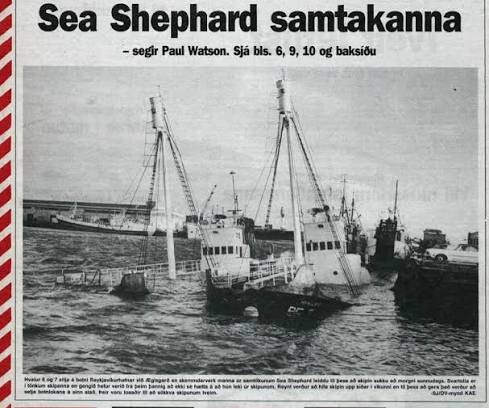
1992: Captain Watson oversees the sinking of the Norwegian outlaw whaling ship Nybraena in Loften Islands, Norway. The Norwegian police arrange for Captain Watson to be interviewed in the FBI office in Seattle. Captain Watson admitted to scuttling the ship. No charges.
1994: Captain Watson oversees the sinking of the Norwegian outlaw whaling ship Senet in Southern Norway. No charges.
1994: Captain Paul Watson and his crew are intercepted off the Northern Coast of Norway by the Norwegian Coast guard vessel Adennes. Ordered to stop, Captain Watson refused. The Adenes fired a deck Gun over the ship and across the bow, deployed a small boat to drop four depth charges and then the Adenes rammed the ship Whales Forever causing major damage to the Andenes. The Norwegian Coast Guard failed to stop the Whales Forever after a five hundred mile chase to the Shetland Islands.
1993-1994: Captain Paul Watson was arrested outside the Canadian 200-mile limit and charged with two counts of criminal mischief endangering life and one count of criminal mischief endangering property despite no injuries or property damage. This was in response to intimidating Spanish and Cuban drag trawlers into leaving the fishing grounds of the Grand Banks. Newfoundland fishermen held a surprise protest in support of his intervention. A very costly trial by jury for the government. Attorney Brian Casey was Captain Watson’s attorney. Captain Watson was acquitted on all three felony charges.
1995: Magdalen Islands. Captain Watson and his crew with attacked and assaulted by a mob of angry sealers. The Quebec Provincial Police and the Canadian Fisheries officers escorted Captain Watson to the airport and ordered him to leave. No charges against the sealers who assaulted him. No charges against Captain Watson.
Germany and Netherlands 1997
Captain Paul Watson was arrested in Germany on a Norwegian extradition request for the sinking of the Norwegian whaler Nybraena. The German court in Bremen released him after five days and refused the Norwegian request. Watson was then arrested in the Netherlands a few days later at the Amsterdam airport under the same Norwegian extradition request and held for 120 days at Lelystad Prison until released by the Dutch court that ruled that he would not be extradited to Norway.
April 2005 Seal Hunt
Twelve crew were arrested in the Gulf of St. Lawrence in 2005. All were fined $1,000 each. Two of the crew did a one-week hunger strike in Charlottetown jail and refused the fines. Watson was not arrested, only the twelve that had been attacked on the ice by sealers. Although the assault was filmed the Canadian government refused to charge the sealers.
2002 – Costa Rica Shark Finning
In 2002, Captain Watson stopped a Costa Rican fishing boat in Guatemalan waters engaged in illegal shark finning. At the request of the Guatemalan government Watson intervened to shut down the operation and to escort the fishing vessel Veradero I out of Guatemalan waters. Upon arrival two days later in Puntarenas, Costa Rica, Captain Paul Watson was arrested and charged with eight counts of attempted murder on a complaint by the eight fishermen on the Veradero. Rob Stewart was onboard working on his film Sharkwater and had recorded the actions. The film evidence demonstrated that there was no attempted violence against the fishermen. Watson was released by the court but a few days later was arrested again and charged with eight counts of attempted assault. Once again the film evidence was brought into court and once again Watson was released and his ship the Farley Mowat was given clearance to depart. There were no further charges until 2012 when Costa Rica at the urging of Japan decided to charge Captain Watson with new charges based on the same incident.
Galapagos 2004
In June 2004, armed mobs of Galápagos fishermen rioted over catch quotas for sea cucumbers, occupying National Park offices and holding unarmed Sea Shepherd Conservation Society crew members and park ranger’s hostage on Isabela and Santa Cruz islands during a violent multi-day standoff.
Background of the Conflict
The “Gold Rush”: High Asian market demand for sea cucumbers turned the Galápagos marine reserve into a lucrative poaching ground.
Quotas and Bans: Strict catch limits and seasonal closures imposed by the government and park rangers triggered intense backlash from local fishers.
Previous Riots: Similar violent uprisings occurred in 1995 and 2000, where fishers took captive giant tortoises and researchers’ hostage to force government concessions.
The June 2004 Standoff
Takeover: Protestors armed with clubs, lead pipes, and Molotov cocktails seized park offices on Santa Cruz and Isabela islands.
Hostages: The mob trapped park staff and visiting Sea Shepherd crew members who were assisting authorities with marine reserve patrols.
Resolution: The crisis eased after the Ecuadorean government intervened, leading to the removal of politically appointed park officials and subsequent arrests of riot leaders.
2007 -2015: Confrontations between Sea Shepherd ships and Japanese whalers in the Souther Ocean Whale Sanctuary.
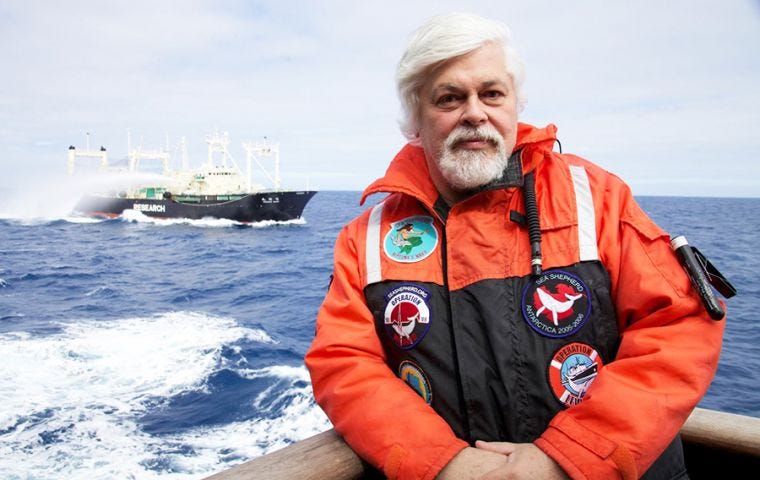
(Photo: Captain Paul Watson with the Japanese whaling ship Nisshin Maru in 2008)
2008 Canadian Seal Hunt.
The crew on the Farley Mowat were arrested for breaking the Canadian Seal Protection Act by approaching within a half a nautical mile of the seal hunt. The Captain and First Officer were the only two charged. Watson bailed them out with 5,000 Double Loons ($2 coins) They were deported and not allowed to return for trial. Nevertheless, the trial took place, and both crewmembers were found guilty. This was later overturned. The ship Farley Mowat was fined $75,000 Cdn dollars which Watson refused to pay because it was his wish to retire the ship and seizure by the Canadian government was the less expensive option.
2011 – Captain Watson was invited to speak before the F.B.I. at Quantico on the strategy of aggressive non-violence. AT the end of the presentation, an F.B.I. Special Agent said that Sea Shepherd was walking a very fine line with the law. Captain Watson replied; “does it matter how fine the line is if we don’t actually cross the line.
2012 – The crews of the Brigitte Bardot and the Farley Mowat freed 800 Blue fin tuna from a net in the Mediterranean off the coast of Libya. The owners of the fishing operation, a company called Fish and Fish sued for damages. The Farley Mowat was impounded and released on bond. Sea Shepherd won the case, and Fish and Fish had to pay damages.
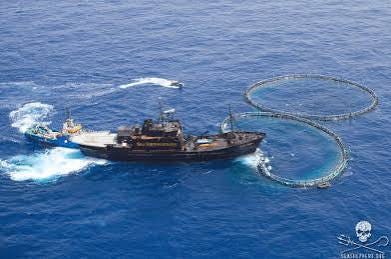
(Photo: The Farley Mowat ramming a Blue Fin Tuna Net to free 800 illegally caught fish. 2012 off the coast of Libya)
2012 – Germany: When captain Paul Watson arrived in Frankfurt Germany in 2012 he was detained and held in custody based on a Costa Rican extradition warrant for something called “shipwreck endangerment” This was related to the 2002 charges that had been previously dropped but the President of Japan had met with the Prime Minister of Costa Rica in 2011 and this new charge was a result of that meeting. Nobody really knew what that charge meant although apparently it was related to terrorism. Watson retained renowned Frankfurt attorney Oliver Wallasch. Watson was held for two months under house arrest, having to report to the German police every day. During that time the Japanese delivered an extradition request to the Germans based on interference with the killing of whales in the Southern Ocean Whale Sanctuary. At the end of July 2012 our German attorney was informed by a source within the German Ministry of Justice that Watson would be detained upon reporting to the Frankfurt police on his daily reporting visit and would be extradited immediately to Japan, not Costa Rica. As a result, Captain Watson decided to jump bail and leave Germany. Without papers he was able to cross the North Atlantic with the assistance of Sea Shepherd France, landing at night in Nova Scotia, making his way across into the United States, crossing the United States and joining the vessel Brigitte Bardot off of Catalina Island and then voyaging to American Samoa to rejoin the flagship Steve Irwin and then proceeding to another intervention against illegal Japanese whaling in the Southern Ocean Whale Sanctuary. It was just after Watson left Germany that both Costa Rica and Japan secured Interpol Red Notices against Watson. After the campaign Watson spend eight months in exile in the South Pacific until then Secretary of State John Kerry saw the Japanese Red Notice as politically motivated and gave the green light for his return.
February 2012: Seattle judge Richard A Jones of the U.S. District Court for the Western District of Washington dismissed the Japanese request for an injunction to stop Sea Shepherd and Captain Watson from interfering with Japanese whaling operations in the Southern Ocean Whale Sanctuary.
December 2012: 9th Circuit Court judge Alex Kozinski overturned Judge Jones’ rulling and gave the Japanese their injunction without a legal justification.
2013: Sea Shepherd and Captain Paul Watson were charged with 21 counts of violating a U.S. Federal Court injunction prohibiting our Dutch registered ships operating out of Australia from approaching within 500 meters of a Japanese whaling ship At the trial in Seattle in November 2013, Judge Peter Shaw found Sea Shepherd and Captain Watson not guilty but a few months later the 9th Circuit Court under Chief Judge Alex Kozinski reversed the decision by Judge Shaw and declared us guilty of violating the injunction despite never meeting us or hearing our evidence.
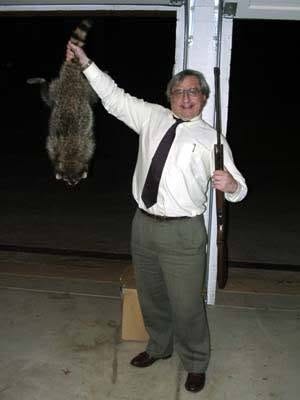
(Photo: U.S. Federal Judge Alex Kozinski who ruled that Captain Watson could not interfere with illegal Japanese whaling operations. An animal hater who resigned from the bench after alegations of sexual misconduct.)
2014: Federal the Circuit Court Judge Alex Kozinski overturned the verdict by Peter Shaw and declared us to be guilty. We never stood before Judge Kozinski. He awarded damages to the Japanese whalers, but the whalers did not want damages because it would mean opening their books publicly. The whalers demanded payment of their legal fees. Sea Shepherd paid 2.5 millio. The whalers asked for mediation and because of the enormous cost of litigation we agreed. In Mediation Sea Shepherd USA agreed to abide by the injunction but all other Sea Shepherd entities were unaffected. As part of the agreement, the Japanese paid back the legal expenses. The campaign against illegal Japanese whaling continued. Captain Watson accused Judge Kozinski of bias against environmentalists and favoring the Japanese complaint.
2014: The International Court of Justice in the Hague ruled that Japanese “research” whaling in the Southern Ocean Whale Sanctuary banned in 1986 was in violation of the moratorium and the Court declared it illegal.
November 19, 2015: the Australian Federal Court fined Kyodo Senpaku Kaisha, a Japanese whaling company, A$1 million for contempt of court after it continued hunting whales in the Australian Whale Sanctuary, contrary to earlier court injunctions. The fine was A$250,000 for each of four occasions. The Japanese refused to pay the fine and it is unlikely to be collected.Ho because Kyodo was not represented in court, did not recognize Australia’s jurisdiction over the Antarctic waters, and had no readily enforceable Australian assets. However Japanese whaling ships were prohibited from entering Australian or New Zealand Courts.
2015: Operation Icefish. The Sea Shepherd ships Bob Barker and Sam Simon intercept the toothfish poacher Thunder to begin the longest pursuit of a poaching vessel in Maritime history (110 days) At the same time that Captain Paul Watson was listed with Interpol on the Red List he was working with Interpol to collect evidence of poaching for Interpol. The captain of the Thunder scuttled his own ship in the waters of Sao Tome. The crew of the Thunder were rescued and delivered to the authorities in Sao Tome where they were charged with sinking their ship in the waters of San Tome. The captain of the Thunder was sentenced to three years.
2017: 9th Circuit Federal Court Judge Alex Kozinski resigned and retired effective December 18, 2017, amid allegations of sexual misconduct.
2018: With a change of government in Costa Rica, the Costa Rican Interpol Red Notice was dismissed leaving only the Japan Red Notice in effect. Environment Minister Carlos Manuel Rodríguez stated: “Paul Watson deserves to return to Costa Rica as a hero and hopefully the judicial process will end soon “The circumstance that Paul Watson has suffered is a real injustice,” said Environment Minister Carlos Manuel Rodríguez. The Minister described Watson as a “hero of conservatism” despite facing a complaint of “danger of shipwreck”, an action stipulated in article 251 of the Penal Code and that establishes a prison sentence ranging from two to six years.
2024 Greenland: The ship John Paul DeJoria was detained in July 24th. Captain Watson was the only person arrested because of the Japanese issued Interpol Red Notice. He was transferred to Nuuk Prison for 5 months awaiting a decision of extradition. On December 17th, 2024, he was released and not extradited.
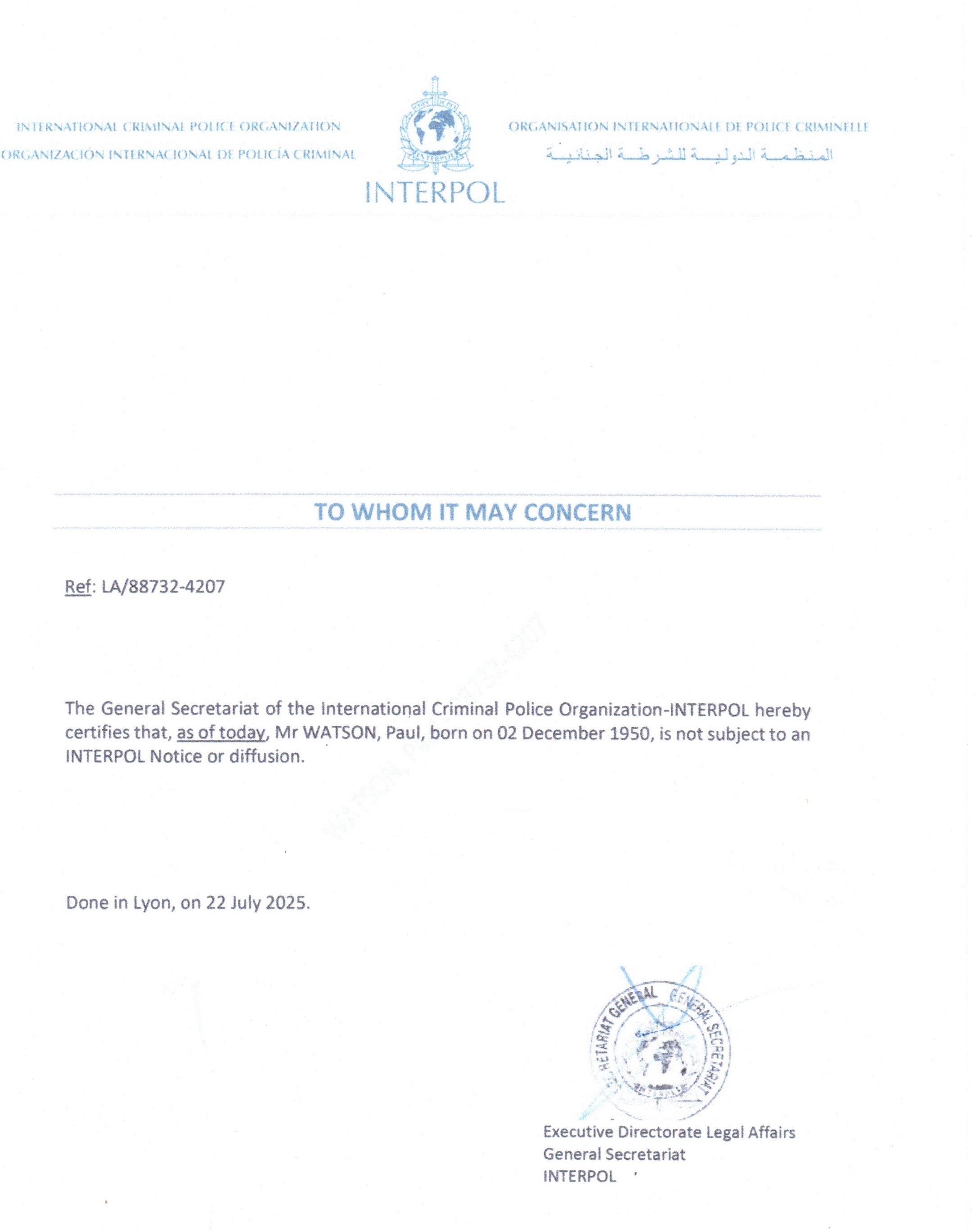
2025: In July 2025 Interpol dismissed the Japanese Red Notice stating it was politically motivated.
2025 - VINDICATED IN COSTA RICA
The judge that tried to put me in prison in Costa Rica in 2012 was extradited to the USA for trafficking in narcotics Back in 2012, Costa Rica issued an Interpol Red Notice against Captain Paul Watson for interfering with a shark fin poaching operation by a Costa Rican fishing boat in the waters of Guatemala in 2002. Captain Watson intervened at the request of the government of Guatemala. In 2012, all the charged based on accusations by fishermen were dropped. The charges were 8 counts of attempted murder and attempted assault. Captain Watson was given legal clearance to leave with his ship from Costa Rica. Ten years later when he arrived in Germany, he was arrested on a Costa Rican charge of something called “shipwreck endangerment.” He escaped from Germany and Costa Rica along with Japan requested that an Interpol Red Notice be issues against him. In 2015 Costa Rican attorney Abraham Stern filed a complaint to say that the statute of limitations for the incident had expired. Celso Gamboa was the judge with the Supreme Court of Costa Rica, and he dismissed the claim delaying and complicating the case until 2017 when with a change of government, the charges against Captain Watson were dismissed and the Costa Rican Red Notice was withdrawn. At the time Abraham Stern said that the ruling was not lawful and the judge was biased. Judge Celso Gamboa the magistrate that tried to have Captain Watson imprisoned in Costa Rica was arrested on drug trafficking charges and was extradited to the USA at the request of the DEA.
This has come as a shock to the Costa Rican public because Gamboa was a powerful figure within the Costa Rica judicial system.
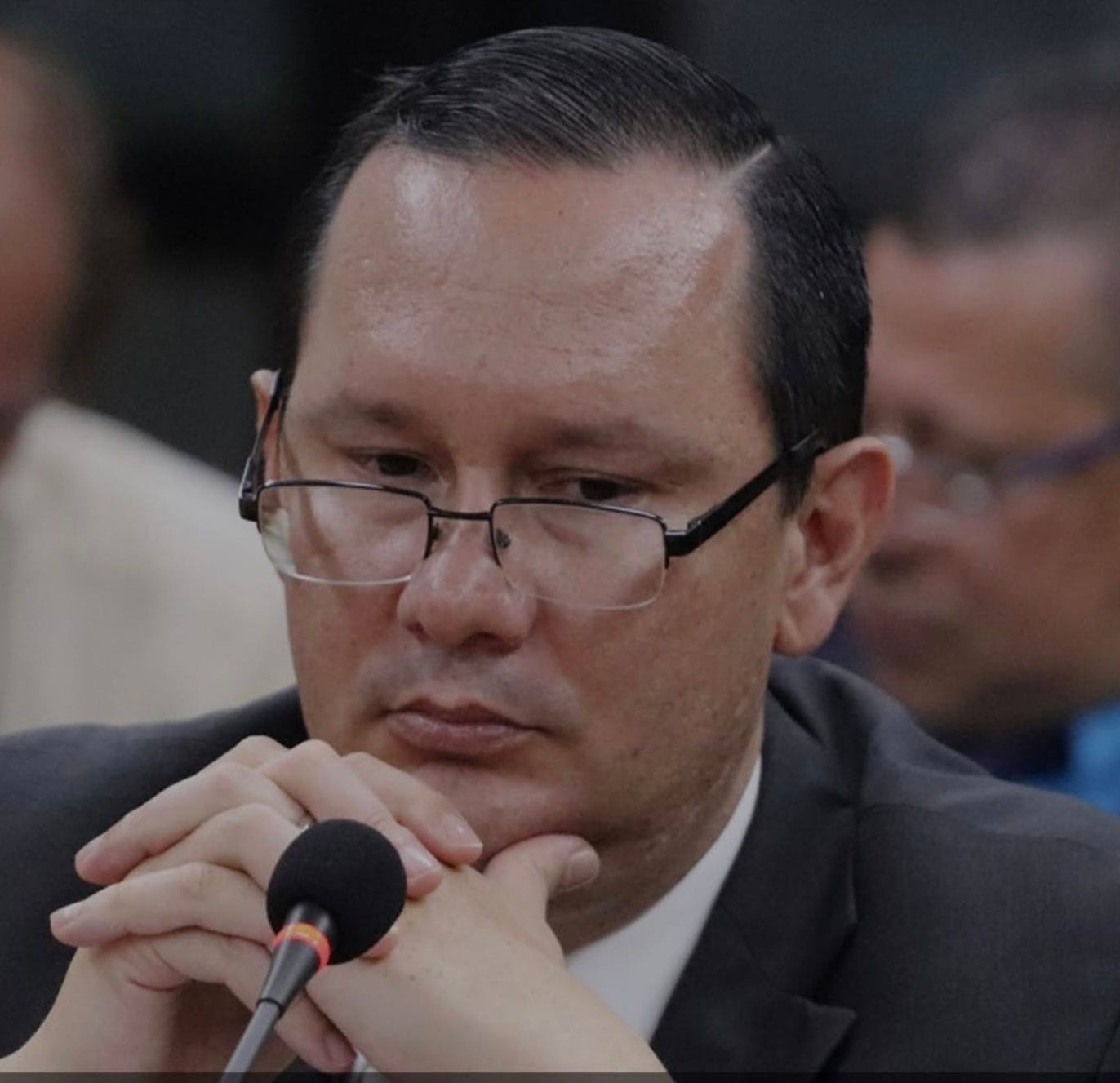
(Photo: Costa Rican Judge Celso Gamboa who refused to dismiss the Costa Rica Interpol Red Notice. Later he was arrested and extradited to the USA for trafficking in narcotics on fishing boats like the one intercepted by Captain Watson.)
Victor Boza, the chapter leader for the Captain Paul Watson Foundation in Costa Rica said, “His arrest not only exposes troubling signs of corruption within the judicial system but also reinforces the narrative around the challenges Paul Watson faced in seeking justice. This judge involved with smuggling drugs ruled against Captain for opposing illegal shark finning. The connection: Much of the narcotics trade is done by fishing vessels moving drugs through Costa Rican waters. The fishing community wanted to stop Captain Watson head and Gamboa was trying to give it to them. The most difficult thing about being a conservationist is dealing with the incredible corruption in government and the courts where criminal operations are protected by powerful vested interests.
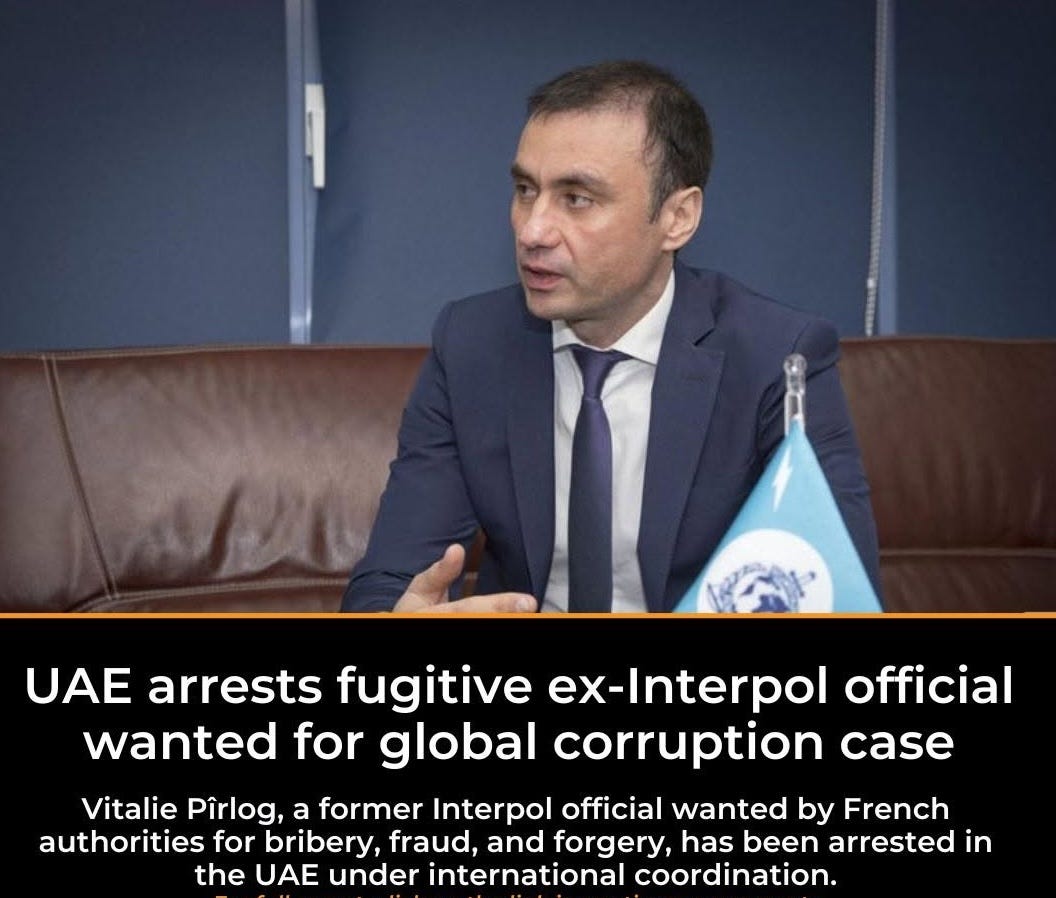
2025 - Vitalie Pîrlog served as chairman of INTERPOL’s Commission for the Control of INTERPOL’s Files (CCF)—an independent body overseeing data protection and challenges involving INTERPOL records—from 2017 until early 2022. This was a senior role within an INTERPOL body. France accused him of schemes involving Red Notices. Captain Watson had accused Interpol of corruption in connection with Japanese influence to keep Captain Watson on the Red Notice. Pirlog was arrested in the UAE in June 2025 and extradited to France in July 2025. He remains in pretrial detention.
June 2025: The United Nations Conference on the Ocean ratified the High Seas Treaty on the Protection of Biodiversity Beyond National Jurisdiction.
July 2025: In July 2025 Interpol dismissed the Japanese Red Notice stating it was politically motivated.
November 2025: Japan attempted to detain and extradite Captain Watson in Brazil. Brazilan authorities denied their request.
2026 Iceland
The Captain Paul Watson Foundation ship Bandero entered Icelandic waters to confront the Icelandic whaling ship Hvalur 9. The Icelandic Coast Guard using special forces, a ship, three small boats, an airplane and a helicopter forcefully boarded the ship, seized the vessel and detained 21 crew. Only Captain Beck Straussner was arrested but not charged. Phones, cameras, laptops were seized without warrants, the crew were detained for days without being charged and we denied the right to a lawyer while being interrogated. Finally, the decision was made to deport all crewmembers and to keep custody of the ship Bandero without charges or justification.
The CPWF is now contesting the seizure of the ship and a civil suit brought by Kristján Loftsson.
1971 -2026
Zero Felony Convictions
No Civil law Suit Case losses
No Injuries
Numerous poaching operations shut down. 9 outlaw whaling ships sunk.
No posts
Comments
Nothing yet. Say the first thing.
Sign in to join the conversation.