
There is a moment in every war when hesitation stops being caution and becomes a strategic liability.
For Ukraine, that moment is now.
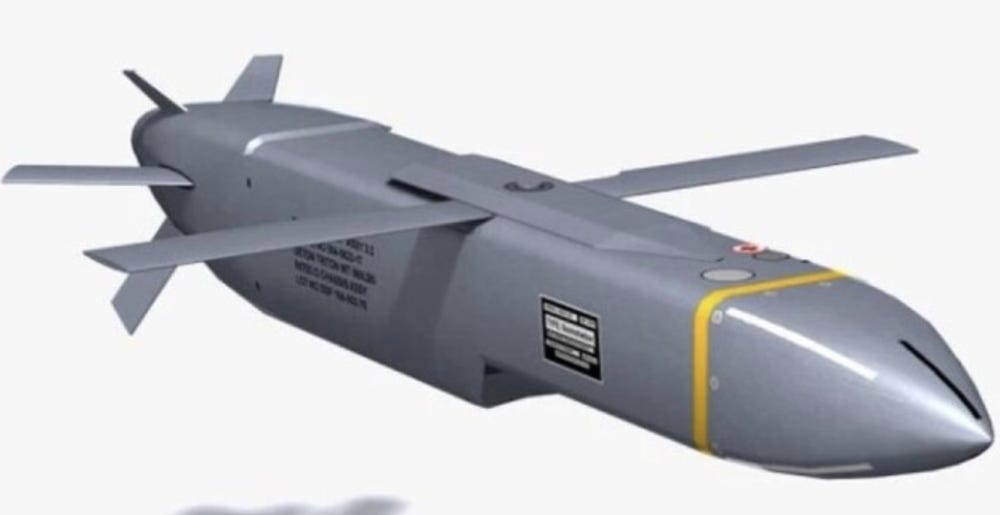
The announcement of British and French support for Ukrainian production of Storm Shadow/SCALP cruise missiles is important. It demonstrates something that Moscow desperately does not want Europe to understand: Ukraine does not have to remain permanently dependent on foreign weapons factories. With political will, technology transfers, industrial cooperation and investment, Ukraine can become one of Europe’s most important defence-production centres.
But let us be brutally honest.
A blueprint does not stop a ballistic missile.
A production line does not protect a Ukrainian power station tonight.
A promise of future cooperation does not intercept a Russian missile heading toward Kyiv, Kharkiv, Odesa or Dnipro tomorrow morning.
And Storm Shadow alone will not save Ukraine from another winter of Russian missile and drone attacks.
This is where Western policy needs to wake up.
Because while Europe debates quantities, procedures, export permissions and political sensitivities, Vladimir Putin is preparing for another campaign designed to break Ukraine’s civilian infrastructure, exhaust its population and demonstrate to the world that Russia can outlast the West.
That is the calculation we must destroy.
Not next month.
Not after another summit.
Not after another Russian escalation.
Now.
The decision to expand Ukrainian production of Western-designed long-range weapons is therefore more than an industrial agreement. It is a declaration that Europe is finally beginning to understand the nature of this war.
Ukraine cannot simply be supplied forever.
Ukraine must be enabled to produce.
It must be enabled to repair.
It must be enabled to innovate.
It must be enabled to defend itself.
And, crucially, it must be enabled to strike legitimate military targets at the depth necessary to disrupt Russia’s ability to wage its war.
That is not recklessness.
That is deterrence.
The most frustrating part of the current situation is that the United States still possesses enormous military capabilities that could materially change the balance of the war , yet political hesitation continues to undermine their use.
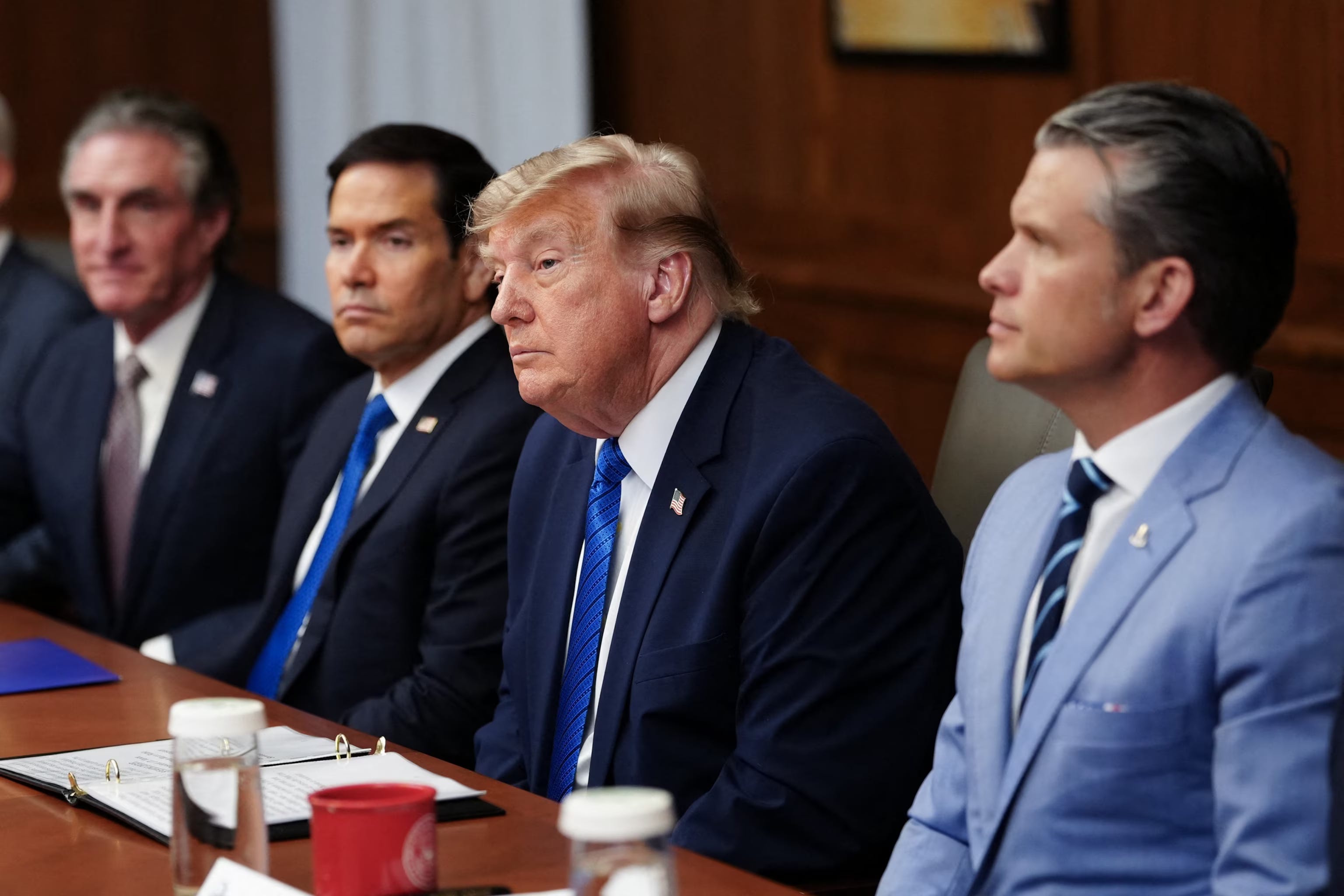
Donald Trump needs to understand a simple reality: repeatedly signalling uncertainty to Putin does not create peace.
It creates opportunity.
Every time Washington hesitates, Moscow studies the hesitation.
Every time the Kremlin threatens escalation and the West retreats, Putin learns that threats work.
Every time Ukraine is told to endure another shortage of air-defence interceptors, Moscow learns where the pressure points are.
That is not diplomacy.
That is conditioning.
And it is dangerous.
Trump should also understand that Ukraine is not asking American soldiers to fight Russia on the ground. Ukrainians have repeatedly demonstrated their willingness to do the fighting themselves. They are asking for the tools necessary to prevent Russia from destroying their cities and eventually threatening the wider European security architecture.
That distinction matters.
Ukraine is carrying an enormous part of the burden of defending Europe.
Ukrainian soldiers are not fighting for some abstract geopolitical prize. They are fighting because an invading state crossed their borders and attempted to destroy their sovereignty.
And every Ukrainian air-defence crew operating a system supplied by the West is helping prevent Russian missiles from becoming another step toward a wider European security crisis.
Trump should be looking at that strategically.
Instead of asking how much America can avoid giving Ukraine, the question should be:
How much more dangerous will the world become if Russia concludes that military aggression works?
That is the question Washington cannot afford to dodge.
The argument becomes even more urgent when we look at air defence.
Ukraine’s Patriot systems are among the most valuable assets protecting its population and critical infrastructure against ballistic missiles. They are not interchangeable with ordinary short-range systems, and they certainly cannot simply be replaced by political speeches.
The coming winter could be brutal.
Russia has repeatedly demonstrated its willingness to attack Ukraine’s energy infrastructure, civilian infrastructure and industrial capacity. The objective is obvious: make normal life increasingly impossible, force millions of Ukrainians to endure cold, darkness and uncertainty, and create political pressure for Kyiv to accept an agreement favourable to Moscow.
That strategy must fail.
And it will fail only if Ukraine has sufficient air defence.
This is where the West needs to stop thinking in terms of minimum assistance.
Minimum assistance is not a strategy.
Minimum assistance is how wars are prolonged.
If Ukraine needs additional Patriot interceptors, then allies should examine every available stockpile, production contract and industrial option.
If production capacity is limited, increase production.
If export restrictions are the obstacle, remove unnecessary restrictions.
If money is the obstacle, find the money.
If industrial capacity is the obstacle, mobilise industry.
If technology transfer is the obstacle, accelerate technology transfer.
There are always problems.
But none of them are more important than preventing Russia from winning through exhaustion.
The Storm Shadow/SCALP capability is important because it gives Ukraine the ability to reach legitimate military targets far behind the front line.
Russian command centres, logistics hubs, ammunition storage, military infrastructure and other critical targets are not protected simply because they sit away from the battlefield.
A war is sustained by logistics.
Destroy the logistics, and the front becomes harder to sustain.
Disrupt command and control, and Russian forces become less effective.
Attack military infrastructure, and Moscow must spend more resources defending it.
This is precisely why long-range weapons matter.
But there is a fundamental problem if Ukraine is expected to depend primarily on them while its air-defence shield remains under pressure.
Long-range strike and air defence are complementary capabilities.
One prevents the enemy from operating freely.
The other prevents the enemy from destroying your ability to fight.
Ukraine needs both.
And it needs them in sufficient quantities.
The West should therefore stop treating every additional weapon as a political favour to Kyiv.
These are instruments of collective European security.
There is another dimension that Western governments consistently underestimate: information warfare.
Putin does not need to defeat every Ukrainian soldier on the battlefield to claim victory.
He needs to convince Russians, Europeans and Americans that the West is divided, frightened and unwilling to sustain the cost of resistance.
That is why every political argument in Washington and Europe is watched carefully in Moscow.
Every disagreement becomes propaganda.
Every delayed weapons package becomes propaganda.
Every shortage of ammunition becomes propaganda.
Every public argument between allies becomes propaganda.
The Kremlin wants Europeans to believe that supporting Ukraine is somehow more dangerous than allowing Russia to continue its aggression.
That is precisely backwards.
The danger is not supporting Ukraine.
The danger is allowing Russian aggression to establish a precedent that borders can be changed by force while democratic countries eventually lose their nerve.
That would be a catastrophic strategic message.
And it would not end in Ukraine.
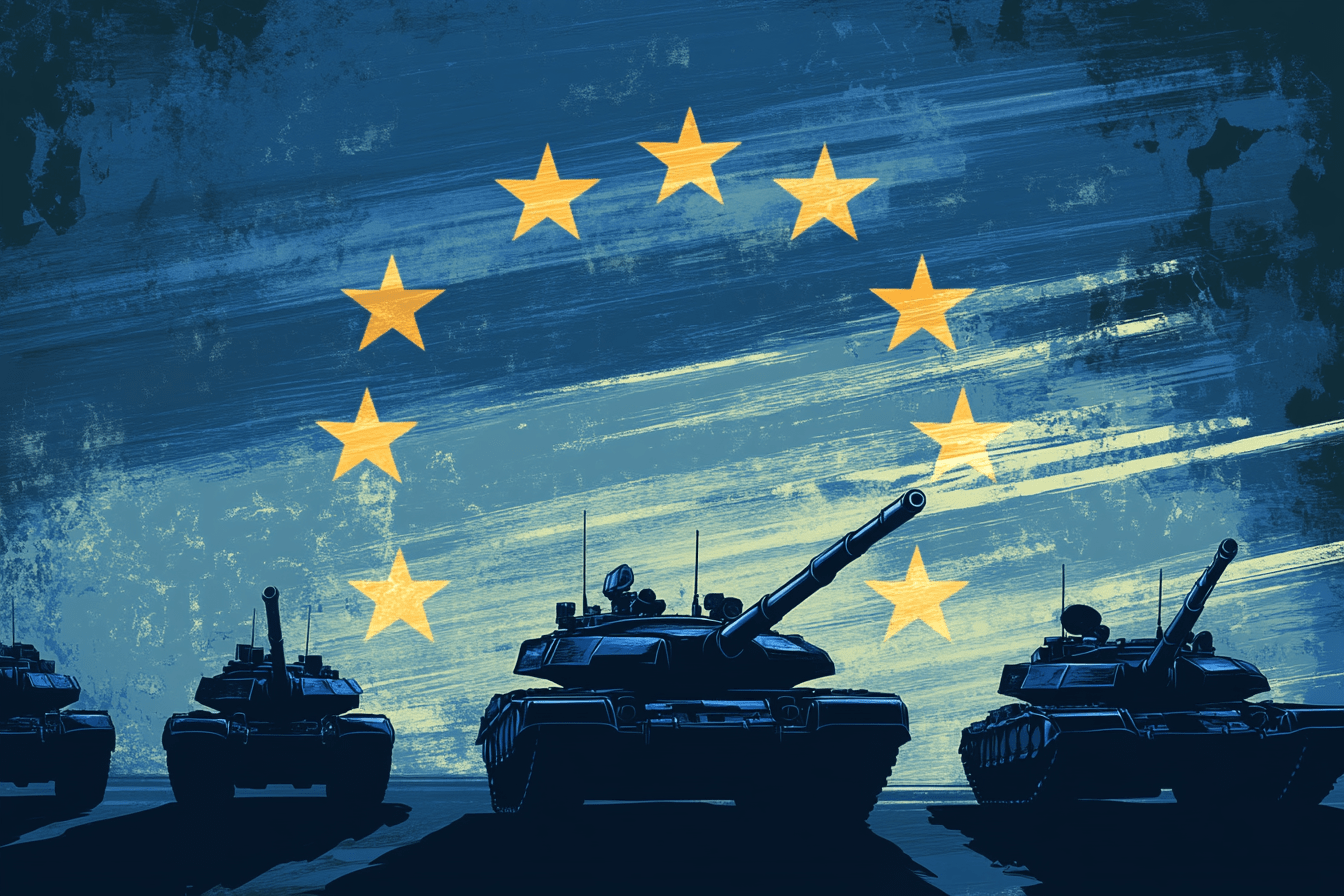
The uncomfortable truth is that Europe must increasingly prepare to defend Europe.
That does not mean abandoning the United States.
It means becoming capable of acting when American political leadership becomes uncertain.
European security cannot depend indefinitely on the political mood of one administration in Washington.
The European Union and its allies have enormous economic, industrial and technological resources. What has been missing is not capacity.
It is coordination.
Europe needs a genuine defence-industrial mobilisation.
Not another document.
Not another slogan.
Not another committee.
Production.
Air-defence missiles.
Artillery ammunition.
Drones.
Electronic warfare.
Counter-drone systems.
Long-range strike capabilities.
Armoured vehicles.
Medical equipment.
Repair facilities.
Communications.
Intelligence.
Logistics.
Training.
And above all, integration.
Ukraine has already demonstrated what happens when military innovation, civilian industry and battlefield necessity collide.
The country has become a laboratory of modern warfare at extraordinary speed.
Small companies develop new systems.
Engineers modify existing platforms.
Soldiers provide immediate feedback.
Software developers adapt technology.
Drone manufacturers scale production.
Military units innovate under pressure.
This is not an accident.
It is a model.
Europe should learn from it.
The images of Ukrainian-made drones, unmanned ground vehicles and maritime systems moving through Kyiv on Independence Day were more than patriotic theatre.
They represented something much more important.
A country under sustained attack is building a defence-industrial ecosystem while simultaneously fighting a major war.
That should be viewed by Europe as an opportunity, not merely as evidence of Ukrainian desperation.
Ukraine possesses battlefield experience that no European laboratory can replicate.
Its engineers understand the Russian threat from direct experience.
Its soldiers understand what works and what fails.
Its companies have learned to innovate under conditions that would shut down conventional defence programmes.
That knowledge is strategically valuable.
The West should integrate Ukrainian industry into a wider European defence ecosystem.
Build factories.
Share technology.
Create joint ventures.
Protect production facilities.
Develop distributed manufacturing.
Establish secure supply chains.
And create the financial mechanisms necessary to sustain the process for years rather than months.
Because this war may end one day.
But the security environment created by Putin’s Russia will not disappear simply because a ceasefire is signed.
Europe needs to prepare for the world that comes after this war.
This is where governments also need to abandon an outdated understanding of national defence.
The defence of Europe cannot be left exclusively to soldiers.
It requires soldiers, certainly.
But it also requires police.
Emergency services.
Medical professionals.
Cybersecurity specialists.
Engineers.
Transport companies.
Energy companies.
Telecommunications providers.
Manufacturers.
Universities.
Technology companies.
Intelligence professionals.
Legal experts.
Humanitarian organisations.
And responsible private security and defence organisations operating within clear legal frameworks.
The security environment has become too complicated for governments to pretend that they can do everything themselves.
Initiatives such as the AEGIS Guardian Initiative can potentially contribute to this wider architecture where their activities remain lawful, defensive, accountable and properly overseen.
The principle should be simple:
Every legitimate capability that can strengthen civilian protection, infrastructure resilience, humanitarian access, logistics, emergency response and defensive security should be brought into the wider security ecosystem.
Not because governments are irrelevant.
Because governments need partners.
Ukraine has demonstrated the power of national mobilisation.
The West needs to demonstrate that it can mobilise the same way.

There is an important distinction that must never be lost.
The objective should not be the destruction of the Russian people.
It should not be collective punishment.
It should not be revenge.
It should be the defeat of Russian aggression and the restoration of Ukrainian sovereignty.
Military pressure must remain directed against legitimate military objectives and conducted in accordance with international law.
That is precisely why the West should not be intimidated by Russian rhetoric whenever Ukraine receives another defensive or long-range capability.
Moscow will complain.
Of course it will.
The Kremlin has complained about almost every major weapon system supplied to Ukraine.
The question is not whether Putin will be angry.
The question is whether European governments are prepared to allow Russian threats to dictate European security policy.
They should not.
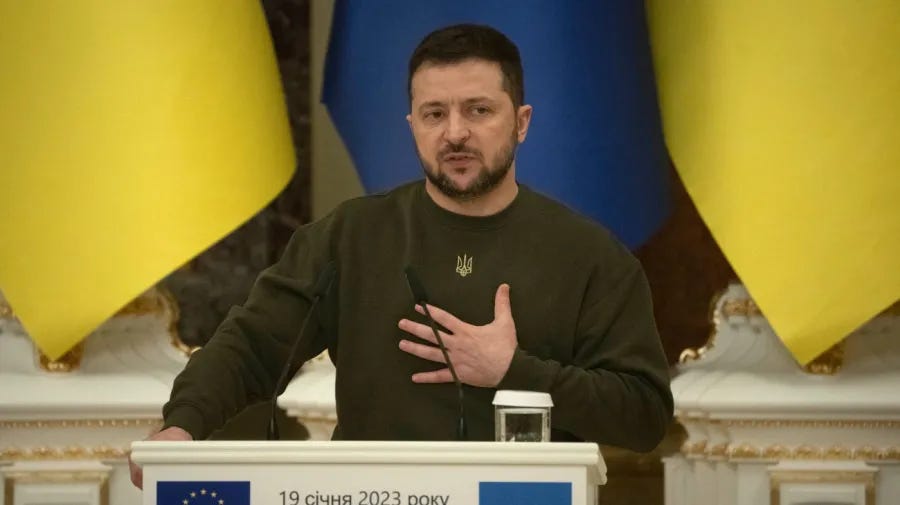
Volodymyr Zelensky does not need another photograph with another European leader.
He needs ammunition.
He needs air defence.
He needs industrial capacity.
He needs long-range capabilities.
He needs financial support.
And he needs the certainty that the countries standing beside Ukraine will still be there tomorrow.
Zelensky has remained in Kyiv through years of war.
Ukraine’s soldiers have remained at their positions while missiles and drones attacked their cities.
Ukrainian civilians have continued working, studying, repairing infrastructure and rebuilding communities under conditions that most Europeans cannot imagine.
That courage deserves more than speeches.
It deserves action.
When Zelensky tells the West that Ukraine is not asking foreign soldiers to fight its war but is asking for the tools necessary to stop it, Western governments should listen.
Because there is enormous strategic value in having a country willing to fight for its own survival while asking its allies primarily for the means to do so.
That is precisely what an alliance should look like.
The West has spent years trying to calibrate its response.
How much?
How fast?
How far?
Will Putin escalate?
Will Russia react?
Will Washington approve?
Will Moscow interpret this as a red line?
Enough.
Russia already escalated.
Russia invaded.
Russia attacked Ukrainian cities.
Russia attacked infrastructure.
Russia mobilised.
Russia expanded its military production.
Russia sought assistance from states hostile to the existing international order.
The West cannot continue responding as though escalation began with the latest Western weapons package.
The escalation began when Russia chose war.
The strategic response must therefore be based on reality.
Europe and its genuine allies need to become harder, faster and more coordinated.
Not reckless.
Not lawless.
Not blindly aggressive.
Strategically determined.
That means overwhelming Ukraine with the means to defend itself.
It means accelerating European defence production.
It means expanding air-defence capacity.
It means providing the long-range capabilities required to disrupt Russian military logistics.
It means protecting Ukrainian energy infrastructure.
It means strengthening sanctions enforcement.
It means making Russia’s war increasingly expensive and increasingly difficult to sustain.
And it means removing the assumption that Moscow has an automatic veto over every decision made in European capitals.
Winter does not care about diplomatic timetables.
Russian missiles do not wait for parliamentary committees.
Ballistic missiles do not wait for another summit.
Ukrainian families cannot heat their homes with promises.
The time to prepare for the next Russian winter campaign is before it begins.
That means the decisions must be made now.
The factories must be expanded now.
The contracts must be signed now.
The air-defence stocks must be reviewed now.
The industrial partnerships must be created now.
The logistics networks must be strengthened now.
The political message must be unmistakable now.
Ukraine will not be abandoned.
And Russia will not be allowed to win simply because the West became tired.
This is where the British and French decision on missile production matters.
It is a step in the right direction.
But it is only a step.
Europe must walk much faster.
There are ultimately two futures.
In one, Europe continues hesitating.
Ukraine receives enough weapons to survive but not enough to decisively change the strategic equation.
Russia continues attacking.
Western politicians continue arguing.
Air-defence shortages remain.
The Kremlin continues threatening escalation.
And eventually Putin tells his population that Russia defeated a divided and frightened West.
That would be a strategic disaster.
The other future is different.
Europe decides that Ukrainian security is European security.
It expands defence production.
It integrates Ukrainian industry.
It provides the air defence necessary to protect Ukrainian cities.
It supplies the long-range capabilities necessary to impose serious costs on Russia’s military infrastructure.
It coordinates governments, industry, emergency services, technology companies, law enforcement, humanitarian organisations and legitimate private security capabilities.
And it does all of this together.
Fast.
Disciplined.
Legally.
Relentlessly.
That is how deterrence works.
Not through empty threats.
Through capability.
Through resilience.
Through unity.
Through the unmistakable knowledge in Moscow that aggression will produce the opposite of what Putin wanted.
Ukraine has already demonstrated something the rest of Europe should understand.
A nation under existential pressure can innovate at extraordinary speed when its society decides that survival is non-negotiable.
The question is whether Europe has the courage to do the same.
We should not wait for the next missile strike to discover that our ammunition stocks were insufficient.
We should not wait for the next winter blackout to discover that our air-defence production was too slow.
We should not wait for another Russian mobilisation to discover that Europe underestimated the threat again.
And we certainly should not wait for Washington to make every decision for us.
The United States remains an indispensable ally.
But Europe must also be capable of standing on its own feet.
If Trump chooses to understand that reality and fully support Ukraine, then America can remain an indispensable pillar of the Western alliance.
If Washington continues wavering, Europe must not collapse with it.
That is the lesson of this moment.

Ukraine is fighting.
Russia is mobilising.
Europe is beginning to wake up.
But waking up is not enough.
We need to move.
We need to build.
We need to produce.
We need to defend.
We need to coordinate.
And we need to stop allowing threats from the Kremlin to determine the speed at which democracies defend themselves.
Ukraine does not need pity.
It needs power.
Not power to conquer Russia.
Power to prevent Russia from conquering Ukraine.
Power to protect its cities.
Power to protect its people.
Power to defend its sovereignty.
Power to ensure that Putin’s war does not become the blueprint for the next war.
The future of Europe’s children should not be decided in Moscow.
And it should not be decided by whether Washington happens to be politically comfortable with confronting Putin.
It should be decided by Europeans and their allies who understand that peace without credible deterrence is merely an invitation to the next aggressor.
So yes: accelerate the Storm Shadow/SCALP production programme.
Expand Ukrainian defence manufacturing.
Strengthen Patriot and other layered air-defence capabilities.
Increase ammunition production.
Build resilient European supply chains.
Integrate Ukrainian innovation into European defence.
Bring legitimate civilian, humanitarian, technological, industrial and security capabilities into the effort.
And make it clear that the Western alliance is not afraid.
Because that is ultimately what Putin is testing.
Not merely Ukraine.
Us.
Our unity.
Our courage.
Our political will.
Our willingness to defend the international order we claim to believe in.
The answer must be unmistakable.
We will not abandon Ukraine.
We will not allow Russia to dictate the limits of European security.
We will not confuse restraint with surrender.
And we will not wait until tomorrow to prepare for a war that is already happening today.
Europe needs to become the hammer.
Ukraine is already holding the line.
The United States should decide whether it intends to stand beside that line or watch from behind it.
Because history will not judge us by the speeches we gave while Ukraine was fighting.
It will judge us by what we actually did when it mattered.
And right now, it matters.
**Not tomorrow.
Not next week.
Now.**
Comments
Nothing yet. Say the first thing.
Sign in to join the conversation.