
History has a habit of screaming before it explodes.
The tragedy is that politicians often mistake the scream for background noise.
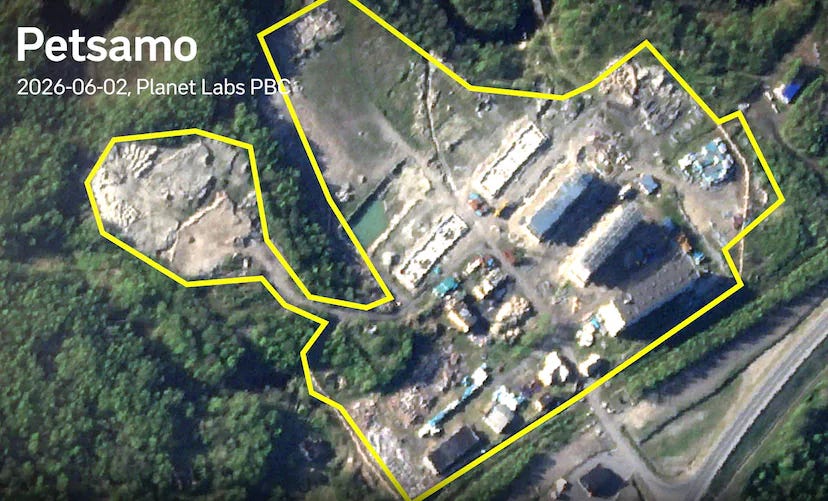
Across Russia’s western frontier, from the Arctic north bordering Norway to the forests facing Finland and the Baltic states, satellite imagery is revealing something that should send shockwaves through every government building in Europe.
New military camps.
Expanded barracks.
Massive vehicle storage facilities.
Renovated airfields.
Growing troop concentrations.
Fresh infrastructure capable of supporting tens of thousands of additional soldiers.
This is not speculation.
This is not rumor.
This is not social media hysteria.
These are physical structures visible from space.
Steel.
Concrete.
Fuel depots.
Aircraft facilities.
Armored vehicle storage compounds.
Military logistics networks.
The kind of infrastructure countries build when they are preparing for future military capabilities, not when they are preparing for retirement.
The question is no longer whether Russia is expanding military capacity along NATO’s borders.
The evidence has already answered that.
The real question is whether Europe will react before another crisis forces it to.
Because history repeatedly demonstrates one brutal truth:
The cost of preparation is always lower than the cost of surprise.
Europe Is Living Through Its Most Dangerous Security Environment Since 1945
Many Europeans still cling to an outdated belief.
They believe the war in Ukraine is an isolated event.
A regional conflict.
A tragic exception.
A storm that will eventually pass.
That belief is dangerously detached from reality.
Ukraine is not an exception.
Ukraine is a warning.
The war has demonstrated that large-scale conflict remains possible in Europe.
It has demonstrated that civilian infrastructure is a target.
It has demonstrated that missiles, drones, cyberattacks, sabotage operations, disinformation campaigns, and economic warfare can be deployed simultaneously.
Most importantly, it has demonstrated that peace cannot be preserved through optimism alone.
For decades Europe benefited from a strategic luxury.
The assumption that major war belonged to history books.
That assumption is now dead.
Buried beneath destroyed cities.
Buried beneath missile craters.
Buried beneath the graves of thousands of soldiers and civilians.
The world has changed.
The question is whether Europe is changing fast enough.
The Satellite Images Tell a Story Politicians Must Read Carefully
Military construction is expensive.
It requires planning.
Resources.
Personnel.
Logistics.
Engineering.
Long-term commitment.
Countries do not invest billions into military infrastructure because they have run out of hobbies.
Military infrastructure represents intent.
Not necessarily intent to attack.
But certainly intent to possess options.
And options matter.
The Russian military suffered enormous losses in Ukraine.
Many observers assumed those losses permanently weakened Russia.
That assumption ignored a fundamental reality.
Authoritarian regimes often emerge from military failures determined to rebuild.
They study mistakes.
They adapt.
They reorganize.
They rearm.
The Soviet Union did it.
Russia is showing signs of doing the same.
The construction activity now visible near NATO territory suggests a long-term military strategy extending far beyond Ukraine.
Whether Europe likes that reality is irrelevant.
Reality does not require approval.
The Age of Comfortable Illusions Is Over
Europe faces a harsh truth.
The strategic environment no longer rewards denial.
For too long, many governments operated under dangerous assumptions.
That geography would provide safety.
That diplomacy alone would guarantee stability.
That economic ties would prevent conflict.
That adversaries would think like democracies.
That military readiness could always be rebuilt later.
Ukraine shattered every one of those assumptions.
The warning signs were visible for years.
Many chose not to see them.
The consequences were catastrophic.
Europe cannot afford to repeat that mistake.
Not once.
Not ever again.
The Next Conflict Will Not Look Like the Last One
Many people still imagine war through images from the twentieth century.
Tank columns.
Trench lines.
Massive offensives.
While those elements remain important, modern warfare has evolved.
The battlefield now extends everywhere.
Power stations.
Ports.
Airports.
Telecommunications networks.
Water infrastructure.
Rail systems.
Data centers.
Hospitals.
Financial systems.
The first shots of future conflicts may not come from artillery.
They may come from keyboards.
Drones.
Sabotage teams.
Missile strikes.
Disinformation networks.
Artificial intelligence systems.
Critical infrastructure attacks.
The objective is simple.
Create confusion.
Create panic.
Create paralysis.
Then exploit it.
Ukraine has experienced every one of these methods.
Europe should treat those lessons as a field manual, not a news story.
Europe’s Greatest Vulnerability Is Not Military
It Is Psychological
The most dangerous weakness facing Europe today is not military.
It is political complacency.
Many leaders still behave as though time remains unlimited.
As though every warning can be studied indefinitely.
As though every decision can wait for another committee meeting.
Threats do not wait.
Missiles do not wait.
Crises do not wait.
History does not wait.
Europe’s adversaries are moving.
Building.
Expanding.
Training.
Planning.
The strategic clock continues ticking whether politicians acknowledge it or not.
That is what makes complacency so deadly.
It disguises itself as caution.
Until reality arrives.
Then it reveals itself as negligence.
Deterrence Is Not Aggression
One of the most dangerous misconceptions in modern politics is the belief that preparedness creates conflict.
The opposite is often true.
Prepared societies discourage aggression.
Weak societies encourage risk-taking.
History consistently shows that uncertainty invites opportunism.
Strength creates hesitation.
Capability creates caution.
Preparedness creates deterrence.
The objective is not war.
The objective is making war unattractive.
That distinction matters.
A nation that cannot defend itself becomes dependent on the decisions of others.
A continent that cannot defend itself becomes vulnerable to pressure, coercion, intimidation, and instability.
Europe should never place itself in that position.
The Layered Defense Revolution Must Begin Immediately
Europe requires more than larger defense budgets.
It requires a completely different mindset.
A layered defensive architecture.
Multiple overlapping systems.
Multiple redundancies.
Multiple responses.
Air defense.
Counter-drone systems.
Electronic warfare capabilities.
Critical infrastructure protection.
Cyber defense.
Emergency communication systems.
Strategic reserves.
Civil preparedness programs.
Resilient energy networks.
Rapid-recovery capabilities.
Protected logistics corridors.
The objective is straightforward.
Make Europe difficult to disrupt.
Difficult to intimidate.
Difficult to overwhelm.
Difficult to attack.
Every additional layer strengthens deterrence.
Every layer increases resilience.
Every layer buys valuable time during crises.
Time saves lives.
Time preserves stability.
Time prevents chaos.
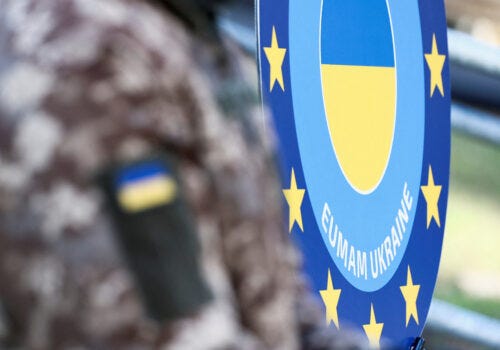
Ukraine Has Already Written the Manual
There is no need to guess what modern conflict looks like.
Ukraine has spent years fighting it.
Every lesson has already been paid for.
In blood.
In sacrifice.
In destroyed cities.
In shattered families.
Europe should study those lessons relentlessly.
Ukraine has become one of the world’s most experienced nations in drone warfare.
Missile defense.
Electronic warfare.
Civil resilience.
Emergency response.
Distributed command systems.
Critical infrastructure protection.
Europe would be foolish not to learn from that experience.
Ignoring hard-earned knowledge simply because it comes from a battlefield is strategic malpractice.
Twenty Seconds Before Midnight
The famous Doomsday Clock was created to symbolize humanity’s proximity to catastrophe.
Europe today faces its own version of that clock.
Not because war is inevitable.
But because complacency remains widespread.
The satellite images emerging from Russia’s military zones are not proof that conflict is coming tomorrow.
But they are proof that strategic realities are changing rapidly.
And changing realities demand responses.
Not panic.
Not hysteria.
Not fear.
Preparation.
Seriousness.
Urgency.
Responsibility.
The luxury of endless debate is disappearing.
The window for proactive action is narrowing.
Every month lost today may become a year regretted tomorrow.
The Cost of Waiting
The most dangerous sentence in politics is:
“We still have time.”
History is filled with governments that believed exactly that.
Many discovered their mistake only after disaster struck.
The warning signs were there.
The intelligence existed.
The indicators accumulated.
The evidence grew.
Yet action was delayed.
Not because leaders lacked information.
But because they lacked urgency.
Europe must not become another chapter in that story.
The continent possesses the resources.
The technology.
The industrial capacity.
The expertise.
The alliances.
The talent.
What remains uncertain is whether the political will exists.
That question must be answered now.
Not after another emergency.
Not after another invasion.
Not after another wake-up call.
Now.
The Final Warning
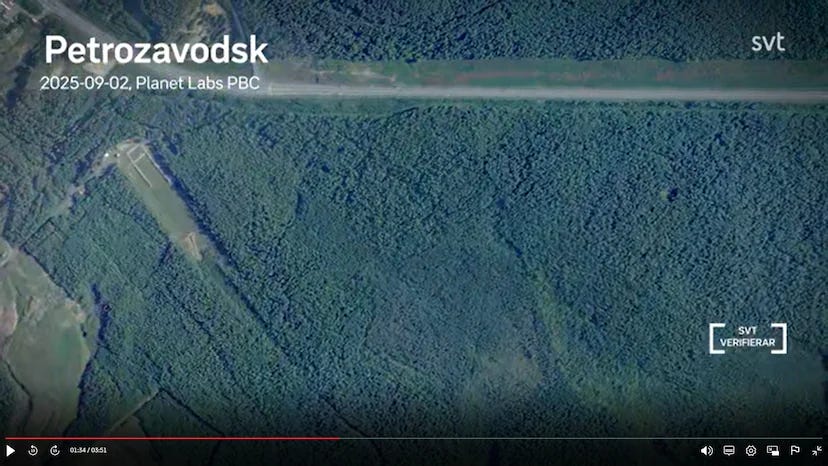
The forests being cleared along Russia’s borders.
The expanding military camps.
The renovated airfields.
The growing troop capacities.
The new storage facilities.
The increased military activity.
These are not opinions.
They are facts.
Visible facts.
Measurable facts.
Documented facts.
The debate should therefore no longer focus on whether Europe faces growing security challenges.
That debate is over.
The evidence has settled it.
The real debate is whether Europe will respond while choices still exist.
Because history offers a brutal lesson.
Nations rarely get punished for preparing too early.
They get punished for preparing too late.
The clock is moving.
The warning lights are flashing.
The evidence is accumulating.
And somewhere along Europe’s eastern horizon, bulldozers continue clearing land for tomorrow’s military infrastructure.
The question facing Europe is painfully simple.
Will it act while the warning remains a warning?
Or will it wait until the warning becomes reality?
The answer may define the future security of an entire continent.
And that is why this moment matters.
Not next year.
Not next month.
Not next week.
Today.
Comments
Nothing yet. Say the first thing.
Sign in to join the conversation.