
History has a habit of punishing those who refuse to learn from it.
Again and again, democratic societies convince themselves that danger is exaggerated, that warnings are political theater, that preparations for war are merely exercises, and that hostile regimes are bluffing.
Again and again, reality arrives with devastating force.
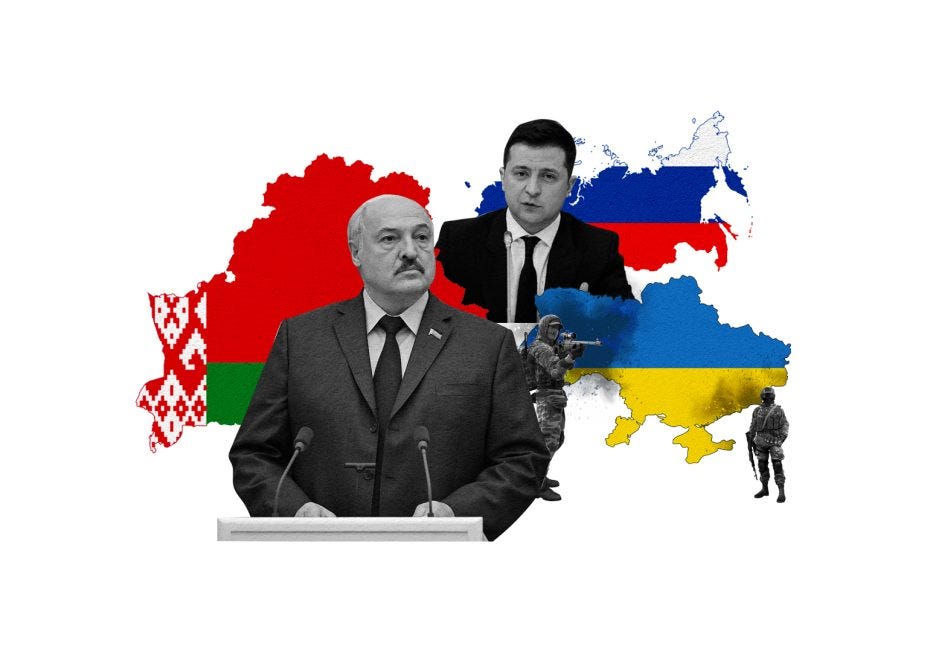
Today, a new warning is coming from Kyiv.
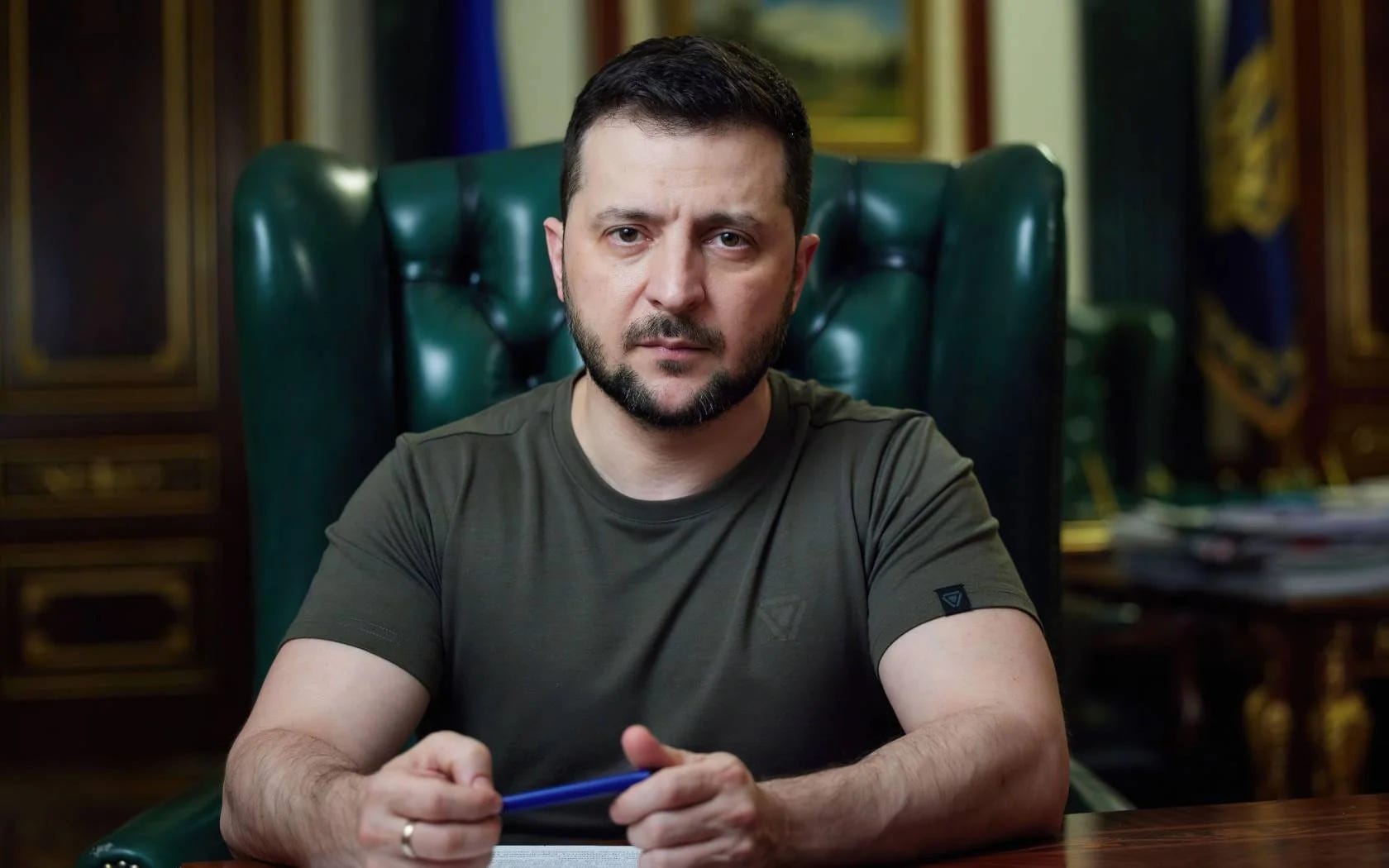
President Volodymyr Zelensky has once again sounded the alarm over growing military infrastructure projects in Belarus near Ukraine’s northern border. Roads are being expanded. Railway links are being strengthened. Bridges are being upgraded. Storage facilities for fuel and ammunition are appearing. Military training complexes are under construction.
The question facing Europe is brutally simple:
Why?
Military infrastructure is expensive. Governments do not pour millions into logistical networks because they enjoy spending money. They build them because they intend to create military capability.
Capability creates options.
Options create leverage.
Leverage creates pressure.
Pressure changes wars.
That is why the developments in Belarus matter.
Far too many observers are treating these projects as routine military modernization. That interpretation may ultimately prove correct.
But responsible security policy is not built around best-case assumptions.
It is built around worst-case possibilities.
The same mistake was made before February 2022.
The same voices that dismissed Russian troop concentrations around Ukraine as political theater were shocked when tanks crossed borders and missiles struck cities.
The lesson should have been learned.
Unfortunately, Europe has an astonishing ability to forget.
When Russian forces launched their full-scale invasion of Ukraine, one of the most important attack routes came through Belarus.
Russian armored columns poured southward.
Helicopters crossed the border.
Paratroopers attempted to seize strategic positions.
The infamous push toward Kyiv began.
Russian planners believed Ukraine would collapse within days.
They believed the government would flee.
They believed the army would disintegrate.
They believed resistance would crumble.
They were wrong.
Spectacularly wrong.
Ukraine fought.
Russian logistics collapsed.
Russian command structures faltered.
Russian casualties mounted.
What was supposed to be a swift victory became a humiliating retreat.
Yet one critical fact often gets overlooked.
The route itself did not disappear.
The roads remain.
The railways remain.
The geography remains.
Belarus remains.
The northern approach to Ukraine still exists exactly as it did before.
This reality alone should concern every military planner in Europe.
Russia does not need to repeat the exact same operation.
Military organizations learn from failure.
They adapt.
They evolve.
They search for alternative methods.
What failed in 2022 may be redesigned for 2026 or 2027.
History rarely repeats itself perfectly.
But it often rhymes.
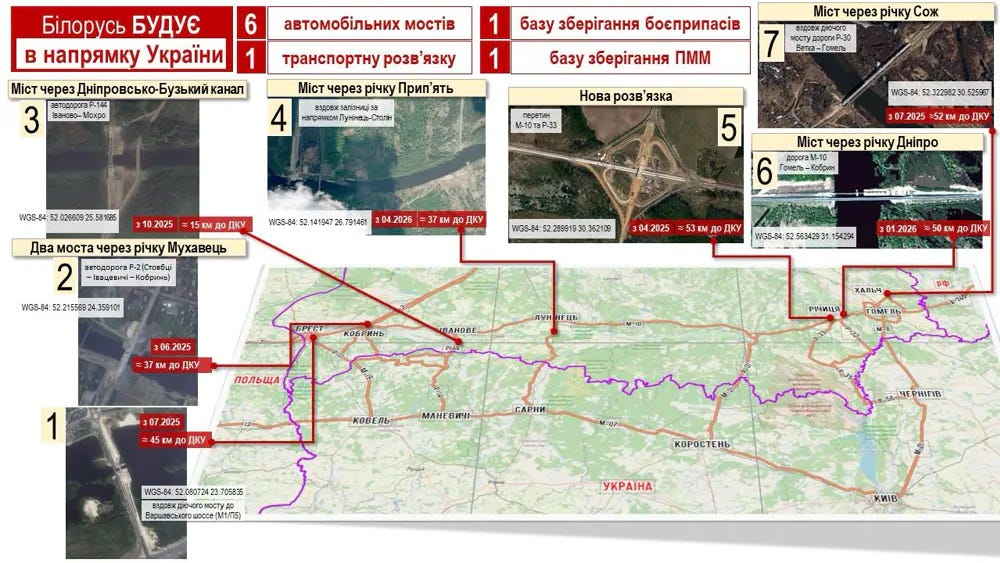
Many civilians hear terms such as road construction, rail upgrades, and fuel depots and assume these projects are boring administrative matters.
Military professionals understand something different.
Wars are won by logistics.
A tank without fuel is useless.
Artillery without ammunition is useless.
Soldiers without supplies are useless.
Infrastructure is the bloodstream of military power.
Every bridge increases mobility.
Every railway increases capacity.
Every fuel depot extends operational reach.
Every ammunition warehouse improves sustainability.
Every logistics hub expands options.
This is why military analysts pay close attention to construction projects.
Concrete can reveal intentions long before politicians do.
Steel often tells the truth when governments do not.
The current infrastructure expansion occurring inside Belarus raises legitimate questions because it appears focused on exactly the kind of capabilities needed for large-scale military operations.
Even if no invasion ultimately occurs, the infrastructure itself provides strategic flexibility.
And flexibility has value.
The mere possibility of a northern threat forces Ukraine to allocate resources.
Troops must remain stationed there.
Air-defense systems must remain positioned there.
Reconnaissance assets must remain focused there.
Military reserves must remain available there.
This means fewer resources elsewhere.
A threat does not need to materialize to achieve military effects.
Sometimes uncertainty is the weapon.
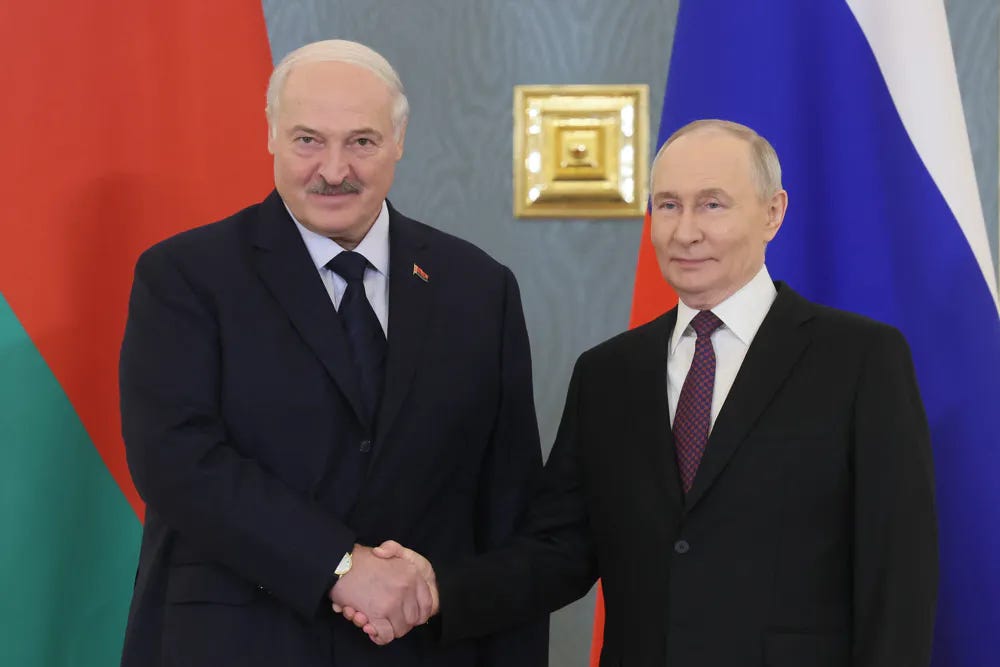
At the center of this geopolitical storm stands Belarusian President Alexander Lukashenko.
Few leaders in Europe face a more complicated strategic situation.
His survival depends heavily upon Moscow.
His economy depends heavily upon Moscow.
His security apparatus depends heavily upon Moscow.
His political future depends heavily upon Moscow.
Yet he also understands a dangerous truth.
Direct participation in Russia’s war could threaten the very stability he seeks to preserve.
Belarus has largely avoided sending large combat formations into Ukraine.
This has not happened by accident.
Lukashenko understands the risks.
The Belarusian military is relatively small.
Public enthusiasm for entering the war appears limited.
Economic consequences would be severe.
Domestic unrest could increase dramatically.
Military casualties could create political problems.
Most importantly, Belarus itself could become a direct target of Ukrainian military operations.
These realities help explain why Lukashenko has spent years walking a political tightrope.
He wants Russian support.
He needs Russian support.
But he also fears becoming fully trapped by Russian ambitions.
The problem is that balancing acts become increasingly difficult when one partner is far stronger than the other.
And Moscow has never been known for respecting the independence of weaker allies.
Russia faces a challenge that many Western commentators underestimate.
The Kremlin may control territory.
It may possess enormous resources.
It may maintain substantial military power.
But it also faces significant constraints.
The war has consumed manpower.
The war has consumed equipment.
The war has consumed money.
The war has consumed time.
Most importantly, the war has consumed strategic flexibility.
Opening additional pressure points can help offset those limitations.
A renewed threat from Belarus could force Ukraine to disperse forces across a wider area.
Military planners refer to this as stretching the battlespace.
The larger the area a defender must protect, the harder defense becomes.
This does not necessarily mean Russia intends an immediate invasion from the north.
There are many ways to exploit strategic pressure.
Demonstrations.
Exercises.
Mobilizations.
Infrastructure projects.
Psychological operations.
Military deployments.
All can force opponents to react.
All can consume resources.
All can create uncertainty.
And uncertainty is often worth almost as much as combat power itself.
Europe’s greatest strategic weakness is not a lack of resources.
It is not a lack of intelligence.
It is not a lack of technology.
It is a lack of urgency.
For decades, many European leaders treated security as a secondary concern.
Defense budgets shrank.
Military readiness declined.
Industrial capacity diminished.
Strategic thinking became unfashionable.
The assumption was simple.
Major war belonged to history.
The future would be peaceful.
Economic interdependence would prevent conflict.
Authoritarian powers would eventually become responsible stakeholders.
Those assumptions did not survive reality.
Georgia.
Crimea.
Donbas.
Syria.
The full-scale invasion of Ukraine.
Each event delivered the same message.
The world remains dangerous.
Power politics never disappeared.
Military force never disappeared.
Geopolitical competition never disappeared.
Only the illusion remained.
Today, the infrastructure projects in Belarus should be viewed through that lens.
The question is not whether war is inevitable.
The question is whether Europe is prepared if deterrence fails.
History judges nations harshly when they ignore warning signs.
The warning signs are visible today.
The only remaining question is whether leaders possess the courage to acknowledge them.
Wars do not begin when the first shot is fired.
Wars begin when governments reshape institutions, economies, infrastructure, and societies to make conflict possible.
That is why the developments inside Belarus deserve far more attention than they are receiving.
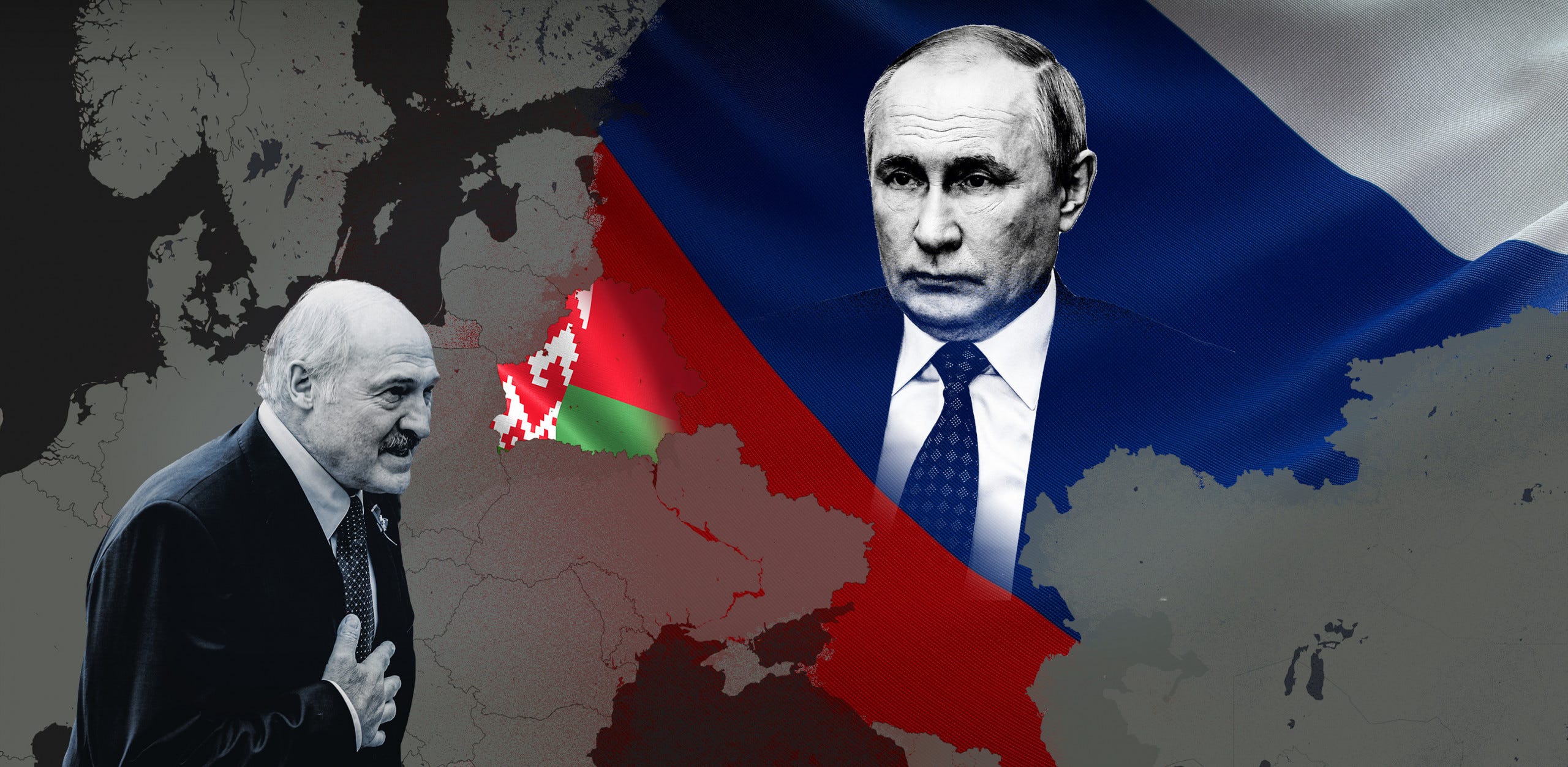
For years, Minsk attempted to maintain the image of a state that, while closely aligned with Moscow, retained a degree of independence in security affairs. That image has become increasingly difficult to sustain.
Military spending has risen.
Training programs have expanded.
Joint exercises with Russian forces have become more frequent.
Defense cooperation has deepened.
Military facilities have multiplied.
Perhaps most significantly, Belarus has gradually moved away from the concept of neutrality that once formed part of its official identity.
Constitutions matter.
Military doctrines matter.
Political declarations matter.
Not because they automatically trigger action, but because they reveal how governments think.
The removal of language emphasizing neutrality, combined with new military doctrines and closer integration with Russian defense planning, signals a country moving steadily toward deeper strategic dependence.
No serious observer should ignore that trend.
Belarus is not transforming overnight into an independent military superpower.
That is not the issue.
The issue is that Belarus increasingly provides strategic depth for Russian military planning.
Every new logistics hub.
Every upgraded railway.
Every training center.
Every ammunition facility.
Every integrated command structure.
All contribute to an environment where future military operations become easier to conduct.
The significance of such developments is often underestimated because they appear technical.
But military history teaches an important lesson.
The technical details often become the decisive details.
From the Kremlin’s perspective, Belarus is far more than a neighboring state.
It is geography.
It is logistics.
It is access.
It is leverage.
Most importantly, it is strategic depth.
Military planners have always understood the importance of terrain.
Maps shape wars.
Distances shape wars.
Borders shape wars.
Belarus occupies a position that gives Moscow options.
It sits between Russia and NATO.
It borders Ukraine.
It influences the security calculations of Poland, Lithuania, Latvia, and the broader alliance.
In strategic terms, Belarus functions as a giant pressure point.
The more tightly Russia integrates Belarus into its military architecture, the more options Moscow gains.
This does not automatically mean tanks will cross borders tomorrow.
Serious analysis requires avoiding sensationalism.
But it also requires avoiding complacency.
Russia may not need a full-scale offensive from Belarus to achieve strategic benefits.
Simply maintaining the possibility creates uncertainty.
Military planners in Kyiv must account for it.
Military planners in Warsaw must account for it.
Military planners in Brussels must account for it.
Every contingency plan becomes more complicated.
Every defense calculation becomes more difficult.
Every allocation of resources becomes more challenging.
Strategic pressure does not always require military action.
Sometimes the threat of action is sufficient.
And that reality makes Belarus valuable to Moscow regardless of whether a northern offensive ever materializes.

There is another reason developments in Belarus matter.
The Baltics.
For years, Estonia, Latvia, and Lithuania have warned that Europe underestimates the dangers posed by Russian revisionism.
Too often those warnings were dismissed as exaggeration.
Events proved otherwise.
Today the Baltic states occupy a unique position.
They are members of NATO.
They are firmly integrated into Western institutions.
Yet they sit directly beside a geopolitical fault line.
The military significance of Belarus extends beyond Ukraine because any increase in Russian military capacity there inevitably affects Baltic security calculations.
Military planners must consider worst-case scenarios.
That is their job.
What if Russian forces become permanently stationed in larger numbers?
What if logistics networks expand further?
What if missile systems increase?
What if command integration deepens?
What if future crises emerge elsewhere in Europe?
These questions do not imply inevitability.
They imply responsibility.
The purpose of deterrence is to prevent conflict before it starts.
That requires recognizing risks before they become emergencies.
Unfortunately, democratic societies often struggle with this concept.
They prefer reacting to crises.
Preparation receives little attention.
Reaction receives headlines.
History consistently rewards preparation and punishes delay.
The Baltic states understand this.
Many Western European governments are only beginning to relearn it.
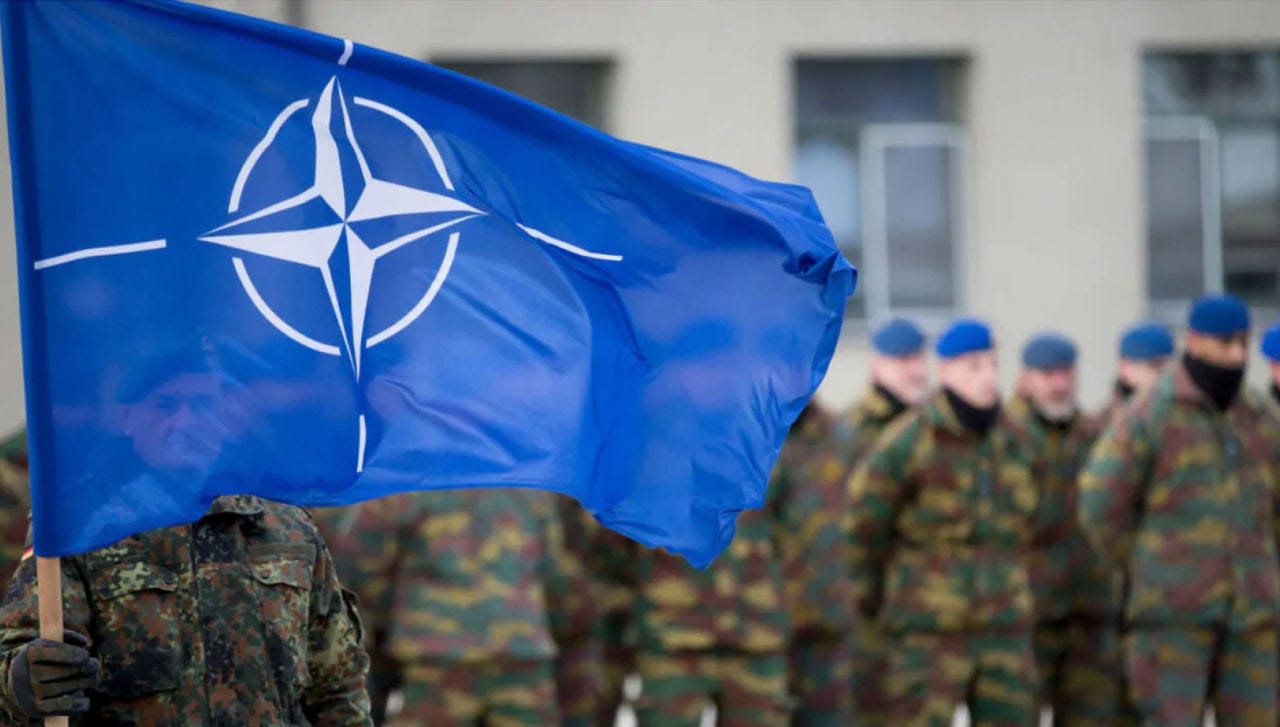
NATO remains the most powerful military alliance in modern history.
Its combined economic power is enormous.
Its technological advantages remain significant.
Its military resources dwarf those of its adversaries.
Yet strength can create its own danger.
Complacency.
Powerful institutions sometimes assume their superiority guarantees security.
History repeatedly demonstrates otherwise.
Military alliances succeed not because they are powerful on paper but because they remain credible in practice.
Credibility requires readiness.
Readiness requires investment.
Investment requires political will.
And political will requires public understanding.
The challenge facing NATO today is not one of panic.
There is no need for hysteria.
There is no need for exaggerated rhetoric.
There is a need for seriousness.
Every infrastructure project in Belarus.
Every military exercise.
Every deployment.
Every doctrinal shift.
Should be analyzed calmly, professionally, and without illusion.
Security policy built on denial is not security policy.
It is wishful thinking.
The alliance’s greatest responsibility is not preparing for the most likely scenario.
It is preparing for scenarios that leaders hope never occur.
That distinction matters.
The most dangerous surprises in history often emerge from developments considered unlikely.
Modern conflict rarely begins with armored columns crossing borders.
It begins in shadows.
Cyber operations.
Disinformation campaigns.
Economic coercion.
Political influence.
Sabotage.
Psychological pressure.
Hybrid warfare has become one of the defining features of twenty-first-century competition.
Belarus occupies an increasingly important role within this environment.
The country provides geographic proximity.
It provides logistical opportunities.
It provides political ambiguity.
This ambiguity creates challenges for democratic societies.
Hybrid operations thrive in uncertainty.
They thrive in hesitation.
They thrive in confusion.
The objective is often not victory in a traditional military sense.
The objective is disruption.
To consume attention.
To divide political systems.
To erode confidence.
To create strategic distractions.
This is why infrastructure developments matter even outside the context of conventional warfare.
Military power today operates across multiple domains simultaneously.
Physical infrastructure supports military options.
Military options create political leverage.
Political leverage shapes diplomatic outcomes.
Everything becomes interconnected.
The battlefield is no longer defined solely by trenches and front lines.
It includes information networks, transportation systems, energy infrastructure, and public perception.
Ignoring that reality would be a profound mistake.
Critics sometimes argue that Kyiv has incentives to emphasize threats.
Of course it does.
Governments at war routinely highlight security concerns.
That observation, however, does not invalidate the concerns themselves.
The important question is not whether Ukraine has reasons to issue warnings.
The important question is whether the warnings deserve examination.
They do.
Ukraine has spent years confronting Russian military planning directly.
Ukrainian intelligence services have accumulated extensive experience observing Russian behavior.
Ukrainian commanders understand better than almost anyone how Moscow combines military, political, economic, and psychological pressure.
That does not mean every warning automatically proves correct.
No intelligence service enjoys perfect foresight.
No government possesses complete information.
But dismissing warnings simply because they come from Kyiv would be strategically irresponsible.
The purpose of intelligence is not certainty.
The purpose of intelligence is awareness.
Warnings exist to reduce surprise.
They exist to force preparation.
They exist to encourage vigilance.
Zelensky’s repeated emphasis on Belarus should therefore be understood in that context.
He is not merely describing infrastructure projects.
He is describing possibilities.
And responsible governments pay attention to possibilities.
Especially when those possibilities involve war.
Europe finds itself at a crossroads.
One path leads toward preparation.
The other leads toward assumption.
Preparation acknowledges risk.
Assumption dismisses it.
Preparation invests in deterrence.
Assumption hopes deterrence will somehow maintain itself.
Preparation studies warning signs.
Assumption explains them away.
The developments in Belarus do not prove that a new offensive is imminent.
They do not prove that Lukashenko has decided to enter the war directly.
They do not prove that Russian forces will again surge toward Ukraine’s northern frontier.
What they prove is simpler.
Military capabilities are expanding.
Strategic options are increasing.
Uncertainty is growing.
Those facts alone justify attention.
Because history’s most costly mistakes are rarely caused by ignorance.
They are caused by leaders seeing warning signs and convincing themselves they do not matter.
The warning signs exist.
The question is whether Europe intends to learn from them.
One of the greatest mistakes made by Western observers since 2022 has been the assumption that Russia measures success according to the same timetable as democratic societies.
Democracies think in election cycles.
Authoritarian regimes think in decades.
This difference matters.
It matters enormously.
Every year since the invasion began, predictions have emerged claiming that Russia has reached its breaking point.
Every year those predictions have proven premature.
Russia has suffered extraordinary losses.
Its economy has endured severe sanctions.
Its military has consumed vast quantities of equipment.
Its international reputation has deteriorated.
Yet the Kremlin continues.
Why?
Because Moscow is not fighting for a single battlefield objective.
It is pursuing a broader strategic goal.
The Kremlin seeks to outlast.
To exhaust.
To divide.
To erode political will.
To convince democratic societies that supporting Ukraine is too expensive, too difficult, too inconvenient, or too risky.
That strategy does not require spectacular victories.
It requires persistence.
The objective is not necessarily to win quickly.
The objective is to make others tired.
This is why infrastructure projects in Belarus matter.
This is why military integration matters.
This is why pressure on multiple fronts matters.
Everything fits within a larger strategy designed to stretch opponents, complicate planning, and increase uncertainty.
The Kremlin understands that uncertainty creates hesitation.
And hesitation creates opportunity.
History contains countless examples of wars that nobody wanted.
Not because leaders desired peace.
But because leaders misunderstood each other.
Miscalculation remains one of the greatest dangers in international politics.
A military exercise can be interpreted as preparation.
A deployment can be interpreted as a threat.
A warning can be interpreted as a bluff.
A bluff can be interpreted as weakness.
Suddenly events begin moving faster than decision-makers can control.
This danger should concern everyone.
Russia.
Ukraine.
Belarus.
Europe.
NATO.
The risk is not simply deliberate escalation.
The risk is misunderstanding.
When military infrastructure expands, when troop movements increase, when tensions rise, the possibility of misinterpretation grows.
Each side begins viewing developments through the lens of suspicion.
Each side assumes the worst.
Each side prepares accordingly.
This is why transparency matters.
This is why communication matters.
This is why deterrence must be accompanied by clarity.
Strong defenses reduce temptation.
Clear messaging reduces confusion.
Both are essential.
Because once crises begin accelerating, political leaders often discover that events are no longer moving according to their plans.
History is filled with governments that believed they were managing risks right up until the moment disaster arrived.
Ukraine cannot afford the luxury of optimism.
No nation at war can.
The responsibility of military leadership is not to predict what is most likely.
The responsibility is to prepare for what is possible.
That means maintaining vigilance along the northern frontier.
It means continuing intelligence collection.
It means strengthening defensive infrastructure.
It means preserving strategic reserves.
Most importantly, it means refusing to be surprised.
Surprise is one of the most valuable weapons in warfare.
Ukraine has spent years denying Russia that advantage.
The defense of Kyiv in 2022 demonstrated what preparation can achieve.
The lesson remains relevant today.
Whether the threat from Belarus develops into something larger or remains a strategic pressure point, Ukraine must treat it seriously.
Not because panic is justified.
But because preparation is.
The difference between panic and preparation is discipline.
One creates fear.
The other creates security.
Europe faces a choice that extends far beyond Belarus.
The question is not whether another offensive will emerge from the north.
The question is whether Europe intends to prepare for a dangerous future or merely hope for a peaceful one.
Hope is not a strategy.
It never has been.
European governments have made significant progress since 2022.
Defense budgets have increased.
Military production has expanded.
Strategic awareness has improved.
Yet substantial challenges remain.
Ammunition production must continue growing.
Military readiness must continue improving.
Critical infrastructure must continue strengthening.
Cyber defenses must continue expanding.
Most importantly, political leaders must continue speaking honestly about the security environment.
Citizens are capable of handling difficult truths.
What they cannot handle are comforting illusions that collapse under pressure.
The lesson of the past decade is clear.
Threats ignored do not disappear.
They grow.
Problems postponed do not solve themselves.
They worsen.
The earlier risks are addressed, the lower the eventual cost.
The longer they are ignored, the higher the bill becomes.
History has issued this warning repeatedly.
The question is whether Europe intends to listen.
The strength of NATO has never been measured solely in tanks, aircraft, missiles, or warships.
Its true strength lies in credibility.
Adversaries must believe that commitments will be honored.
Partners must believe that promises will be kept.
Deterrence is ultimately psychological.
If potential aggressors doubt resolve, deterrence weakens.
If allies doubt resolve, deterrence weakens.
Credibility therefore becomes a strategic asset.
Maintaining that credibility requires consistency.
It requires readiness.
It requires unity.
Most importantly, it requires the willingness to confront reality.
The alliance does not need dramatic speeches.
It does not need panic.
It does not need sensationalism.
It needs seriousness.
The developments in Belarus should be evaluated calmly.
Professionally.
Objectively.
But they should be evaluated.
Ignoring warning signs has never been a successful security strategy.
The alliance’s duty is not to predict the future with certainty.
No institution can do that.
Its duty is to ensure that uncertainty never becomes vulnerability.
One of the most dangerous assumptions in modern Europe is the belief that war remains somebody else’s problem.
Many people still view the conflict in Ukraine as distant.
As regional.
As contained.
History suggests caution.
Major crises rarely remain isolated.
They spread through economics.
Through migration.
Through energy markets.
Through political systems.
Through security arrangements.
Distance provides less protection than many imagine.
The modern world is interconnected.
Instability travels.
The consequences of conflict travel.
The costs travel.
That is why developments in Belarus matter even to those living far from the border.
Security today is shared.
So are the consequences of failing to protect it.
The assumption that threats can be ignored because they appear geographically distant has repeatedly proven false.
The twenty-first century is no exception.
There are moments when nations face choices that appear small at the time.
A warning is issued.
An intelligence report arrives.
A military buildup is observed.
An infrastructure project raises questions.
A leader sounds an alarm.
The temptation is always the same.
To dismiss.
To delay.
To explain away.
To assume.
To hope.
Hope can be valuable.
But hope without preparation becomes negligence.
The tragedy of history is not that warning signs are absent.
The tragedy is that warning signs are often visible long before disaster arrives.
People simply choose not to see them.
Europe has experienced this before.
The twentieth century provides more than enough examples.
Warnings ignored.
Threats minimized.
Ambitions misunderstood.
Consequences paid in blood, treasure, and generations of suffering.
No serious observer should claim that history is repeating itself exactly.
It never does.
The world changes.
Technology changes.
Governments change.
Circumstances change.
Yet human nature changes far less.
Complacency remains complacency.
Wishful thinking remains wishful thinking.
Strategic blindness remains strategic blindness.
The developments in Belarus may ultimately prove to be precautionary.
They may remain part of a pressure campaign.
They may never lead to a major military operation.
Everyone should hope that is the case.
But responsible leaders do not build security policy around hope.
They build it around preparation.
That is the central lesson.
Not panic.
Not fear.
Not hysteria.
Preparation.
Because if history teaches anything, it is this:
Danger rarely announces itself with absolute certainty.
It arrives gradually.
Road by road.
Bridge by bridge.
Depot by depot.
Decision by decision.
Until one day the evidence that was once dismissed becomes impossible to ignore.
The warning from Ukraine is therefore about more than Belarus.
It is about vigilance.
It is about deterrence.
It is about recognizing that peace is preserved not by pretending dangers do not exist, but by confronting them before they grow beyond control.
The future has not yet been written.
No one knows whether the northern frontier will become the next flashpoint of this war.
No one knows whether Belarus will move closer to direct involvement or continue balancing between competing pressures.
No one knows what decisions will be made in Moscow, Minsk, Kyiv, Brussels, Warsaw, or Washington.
But one truth remains beyond dispute.
History is always watching.
And history is rarely kind to those who choose sleep over vigilance.
The price of preparation is often uncomfortable.
The price of complacency is often catastrophic.
Nations must decide which bill they are willing to pay.
Comments
Nothing yet. Say the first thing.
Sign in to join the conversation.