

The work of designers Charles and Ray Eames was a masterclass in eclectic and experimental thought, transcending single disciplines. A perfect example of this is their now-iconic 1977 film, Powers of Ten, which takes the viewer on an unforgettable journey of scale.
The film begins with a picnic blanket in Chicago, and every ten seconds the camera zooms out by a factor of ten, taking us to the edges of the known universe. It then returns at pace, diving inward to the picnicker’s hand and zooming in by factors of ten until it reaches the subatomic level inside a proton.
Powers of Ten is more than just a film; it’s a journey through different perspectives, showing us that our understanding of any single object or idea is entirely dependent on the context and scale we choose to view it from.
“Of all the picnics in all the solar systems in all the galaxies, you zoomed into mine…”
Image © Jake Nackos

Yoko Ono is an artist whose approach is rooted in the belief that the artwork is not the physical object itself, but the conceptual act that happens in the mind of the participant. This core principle, which she documented in her 1964 book, Grapefruit, invites us to see the world differently, simply by being told how to look at it.
This idea is embodied in her piece, A Hole to See the Sky Through. The artwork has taken on many forms, from a glass plate with a bullet hole shot through it to a postcard with a hole in the middle. The simple instruction is to look at the sky through the hole, and in doing so, to “see the sky” in a new way.
The conceptual purpose is to force a shift in perspective. The artwork encourages the viewer to focus on a single, small detail of the sky they might not otherwise notice. For Ono, it creates an opportunity for unlocking hope by changing your viewpoint.
It’s a powerful reminder that a simple shift in perspective can make you see your surroundings in a whole new way. You may, however, have to check the forecast for the next available opportunity.
See how the sky has featured in Yoko Ono’s work
Image © Engin Akyurt
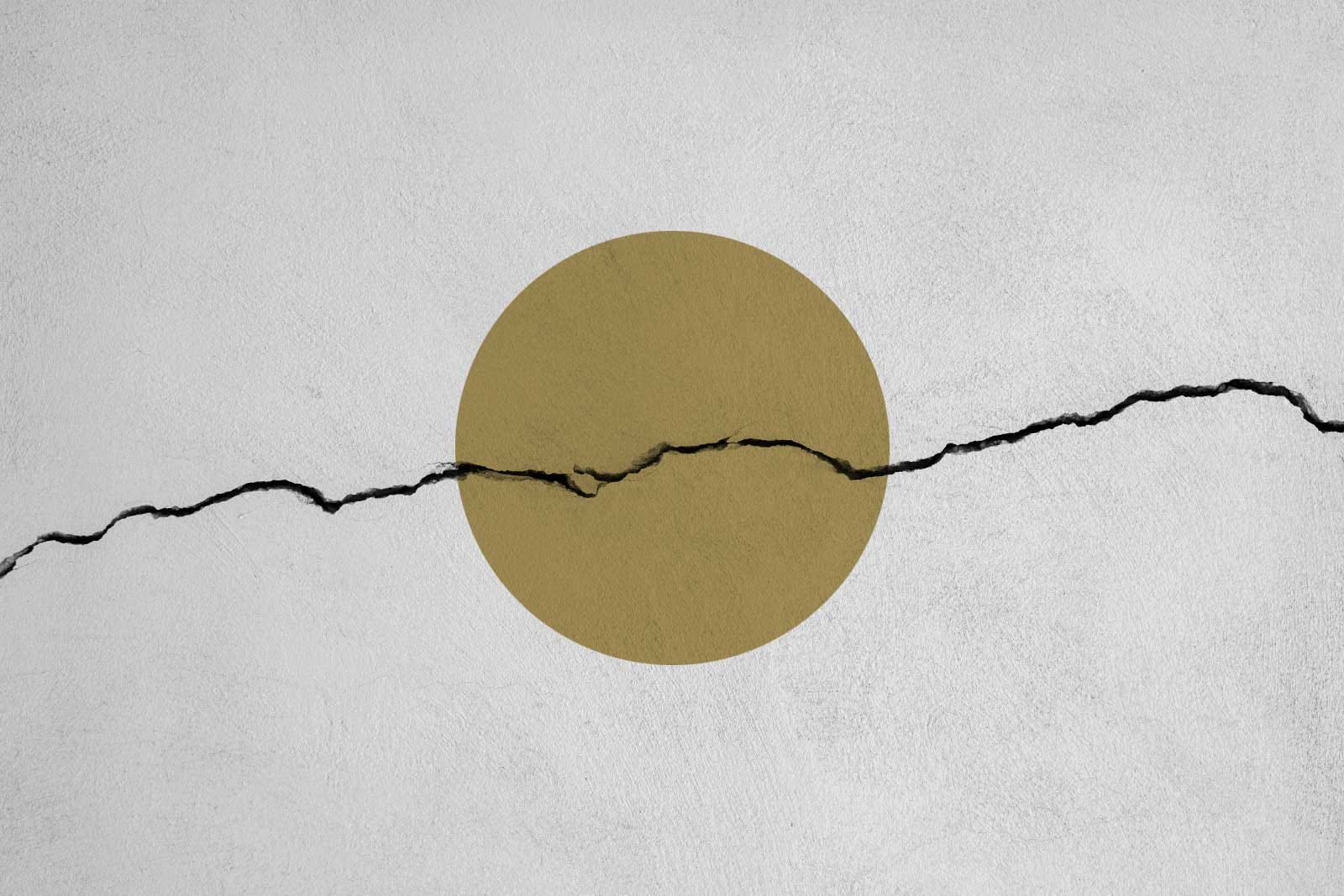
Japanese culture offers us a unique perspective on flaws, often diverging from the common approach of discarding or concealing what is broken. This different cultural lens teaches us to find beauty in imperfection and resilience in damage, a mindset that reframes the very idea of a flaw.
This principle is embodied in the art of Kintsugi, the Japanese practice of repairing broken pottery. Using a special lacquer mixed with powdered gold, silver, or platinum, artisans mend the breaks not to hide the repair, but to celebrate the breakage as a fundamental part of the object’s history and journey. In doing so, they make it even more beautiful than it was before.
The process encourages a liberating shift in mindset: from striving for impossible perfection to embracing a more authentic, and beautifully unique outcome. It is a profound lesson that at some point, and out of your control, things may be broken.
If you happen to find yourself at a Greek wedding and hear the joyful crash of a plate, don’t think of it as the end. Think of it as the perfect, gold-lined start to something even more beautiful.
No posts
Comments
Nothing yet. Say the first thing.
Sign in to join the conversation.